
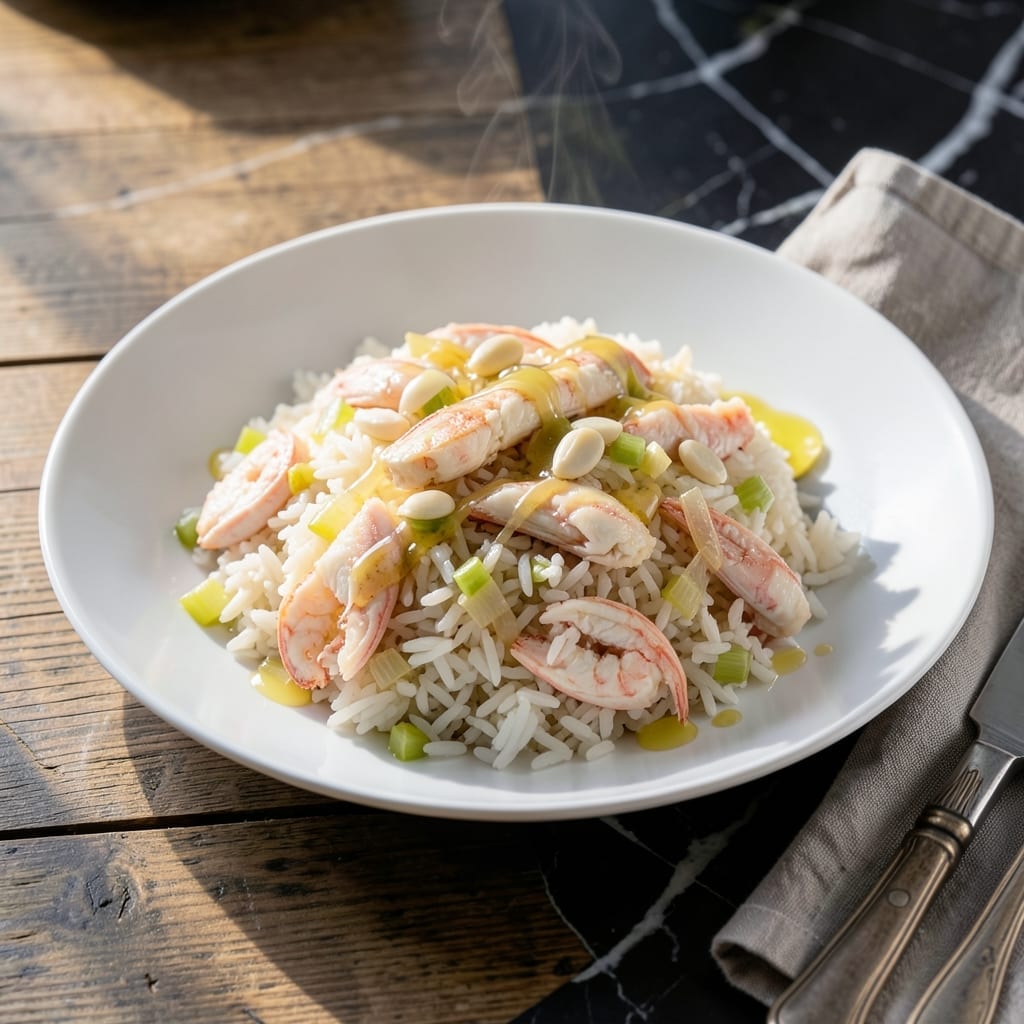
There’s something special about one-pot meals that bring coastal flavors to your kitchen table. This dish combines tender crab meat with perfectly cooked rice, creating a satisfying meal that’s both elegant and approachable.
The beauty lies in its simplicity. With just a few ingredients and a single pot, you can achieve layers of flavor that taste like they came from a seaside restaurant. The rice absorbs all the briny, buttery goodness from the crab.
What emerges is a dish with tender grains of rice, sweet lumps of crab, and a subtle savory depth that makes it irresistible. The one-pot method ensures every bite is infused with flavor.
Perfect for a weeknight dinner that feels special. Here’s how to make it.
Ingredients for Crab Rice
Fresh crab and rice come together in this one-pot dish with coastal flair.
| Ingredient | Amount | Notes |
|---|---|---|
| Lump Crab Meat 🦀 | 1 lb | Fresh or pasteurized, picked over |
| Long-Grain White Rice 🍚 | 1 ½ cups | Uncooked, rinsed before use |
| Unsalted Butter 🧈 | ½ cup | Divided for cooking and finishing |
| Yellow Onion 🧅 | 1 whole | Medium-sized, finely diced |
| Celery Stalks 🌿 | 2 pieces | Finely diced for base flavor |
| Garlic Cloves 🧄 | 3 cloves | Minced for aromatic depth |
| Chicken or Seafood Stock 🥣 | 2 ½ cups | Low-sodium preferred for control |
| Dry White Wine 🍷 | ½ cup | Optional but recommended for acidity |
| Old Bay Seasoning 🌶️ | 1 tsp | Classic seafood seasoning blend |
| Fresh Parsley 🌿 | ¼ cup | Chopped, for garnish and brightness |
| Lemon 🍋 | 1 whole | Zested and juiced for freshness |
| Salt 🧂 | 1 tsp | Kosher or sea salt preferred |
| Black Pepper 🌶️ | ½ tsp | Freshly ground for best flavor |
| Bay Leaf 🍃 | 1 whole | Dried or fresh for aroma |
The crab is the star here—fresh lump crab meat gives the best texture and sweetness. For pasteurized options, Whole Foods or Harris Teeter carry reliable brands. Look for crab labeled as ‘jumbo lump’ for the most tender pieces. If buying fresh, ask the fishmonger when it was harvested (same-day is ideal). The rice should be long-grain white for the right consistency—jasmine or basmati work beautifully.
No white wine? Substitute with extra stock and a tablespoon of lemon juice. Fresh parsley can be swapped for fresh chives or dill at the same ratio. For a richer broth, use homemade seafood stock if available. Old Bay is classic, but a pinch of cayenne plus paprika gets you close. Don’t skip the lemon zest—it brightens all the flavors in this one-pot wonder.
Cooked crab meat keeps in the fridge for 2-3 days before use. The finished dish reheats well and actually improves overnight. Store leftovers in an airtight container for up to 3 days. Freezing isn’t recommended for crab, but the rice base can be frozen separately.
Why You’ll Love This Recipe
- One Pot Meal: I love that everything cooks together—rice, crab, and the veggie base—so I’m not juggling multiple pans.
- Buttery Crab Bites: The lump crab soaks up that melted butter and celery-onion flavor in every tender bite.
- Weeknight Winner: Honestly, it’s my go-to for busy Tuesdays when I need something hearty without the fuss.
- Leftovers Shine: Tastes even better the next day, and the rice keeps its texture—my lunchbox secret.
Step-by-Step Instructions for Crab Rice
This one-pot method delivers perfectly cooked rice with tender crab in every bite.
Step 1: Sauté the Aromatic Base
Melt ¼ cup of the unsalted butter in a large pot over medium heat. Add the finely diced yellow onion and finely diced celery stalks, cooking for 5-6 minutes until the vegetables soften and become translucent. Stir occasionally to prevent browning.
Add the minced garlic cloves and cook for 30 seconds until fragrant. Be careful not to let the garlic burn—it should release its aroma without turning brown. This base builds the flavor foundation for the entire dish.
Step 2: Toast the Rice and Deglaze
Stir in the 1.5 cups long-grain white rice and cook for 1-2 minutes, stirring constantly. The rice grains should become slightly translucent at the edges. This toasting step enhances the nutty flavor of the rice.
Pour in the ½ cup dry white wine and scrape up any browned bits from the bottom of the pot. Let the wine simmer for 1-2 minutes until it has mostly evaporated. This deglazing step captures all the concentrated flavors from the sautéed vegetables.
Step 3: Add Liquids and Seasonings
Pour in the 2.5 cups chicken or seafood stock and add the 1 tsp Old Bay seasoning, 1 tsp salt, ½ tsp black pepper, and 1 whole bay leaf. Stir well to combine, then bring the mixture to a boil.
Once boiling, reduce the heat to low, cover the pot, and let it simmer for 15 minutes. Resist the urge to lift the lid—steam is essential for cooking the rice evenly. You should see small bubbles gently breaking the surface.
Step 4: Incorporate the Crab and Finish
After 15 minutes, remove the pot from heat and let it sit covered for 5 minutes. Then, gently fold in the 1 lb lump crab meat, the zest and juice of the whole lemon, and the remaining ¼ cup unsalted butter. The residual heat will warm the crab without overcooking it.
Cover the pot and let it rest for another 5 minutes. This allows the flavors to meld and the crab to absorb the aromatic broth. Taste and adjust seasoning if needed, then garnish with the ¼ cup chopped fresh parsley before serving.
Pro Tips For Making Crab Rice
- Sauté Veggies First: Cook the onion and celery in butter until soft—about 5 minutes—before adding rice. This builds flavor that raw veggies just can’t deliver.
- Rinse the Rice: Give the long-grain rice a quick rinse under cold water to remove excess starch. Skipping this can make your crab rice gummy instead of light and fluffy.
- Fold Crab Last: Stir in the lump crab meat at the very end, just to warm it through. Overmixing breaks up the delicate chunks and turns your prize ingredient into a mushy afterthought.
- Use Warm Broth: If your recipe calls for liquid, use warm broth or water instead of cold. I learned this the hard way—it cuts the cooking time in half and keeps the rice from turning out undercooked.
Common Mistakes When Making crab rice
Overcooking the Crab
This is the most common mistake I see. Crab meat only needs 2-3 minutes of gentle heat to warm through. Adding it too early turns it rubbery. Always fold it in at the very end, then let residual heat do the work. 💡
Skipping the Rice Toast
Toasting the rice for 1-2 minutes before adding liquids enhances its nutty flavor and prevents mushiness. I always watch for the grains to turn slightly translucent at the edges. This small step makes a huge difference in texture.
Peeking While Cooking
Resist lifting the lid during the 15-minute simmer. Every time you peek, you release valuable steam that the rice needs to cook evenly. Trust the process and keep that lid on tight.
Using Wrong Rice Type
Stick with long-grain white rice—jasmine or basmati work best. Short-grain varieties release too much starch and create a gummy texture. I learned this the hard way with my first attempt.
Neglecting the Deglaze
After sautéing the aromatics, always deglaze with ½ cup dry white wine. This step lifts all the flavorful browned bits from the pot bottom. Skip it and you’ll lose layers of taste.
Over-Seasoning Early
Crab meat absorbs salt quickly. I season lightly during cooking, then taste and adjust after adding the crab. The Old Bay and lemon juice can always be added at the end for perfect balance. 🌟
Nutrition Facts
Frequently Asked Questions
Can I use imitation crab instead?
Yes, but expect a different texture and flavor. Use 8 oz and add it at the same time as real crab. The dish will be less rich but still tasty.
How do I prevent mushy rice?
Toast the rice for 1-2 minutes before adding liquids and never lift the lid during the 15-minute simmer. This keeps grains separate and fluffy.
Can I make this ahead of time?
Prepare the rice base, then cool and refrigerate. Gently fold in the crab and reheat with a splash of stock when ready to serve.
What’s the best wine to use?
Any dry white works—try Sauvignon Blanc or Pinot Grigio. Avoid oaky Chardonnays as they can overpower the crab’s delicate flavor.

- Jollof Rice Sauce Recipe: West African Tomato and Spice Infusion - September 25, 2026
- Japanese Rice Soup Recipe: Umami-Rich Comfort in a Bowl - September 25, 2026
- Homemade Cream Of Rice Recipe: Silk-Smooth Breakfast in Minutes - September 25, 2026