
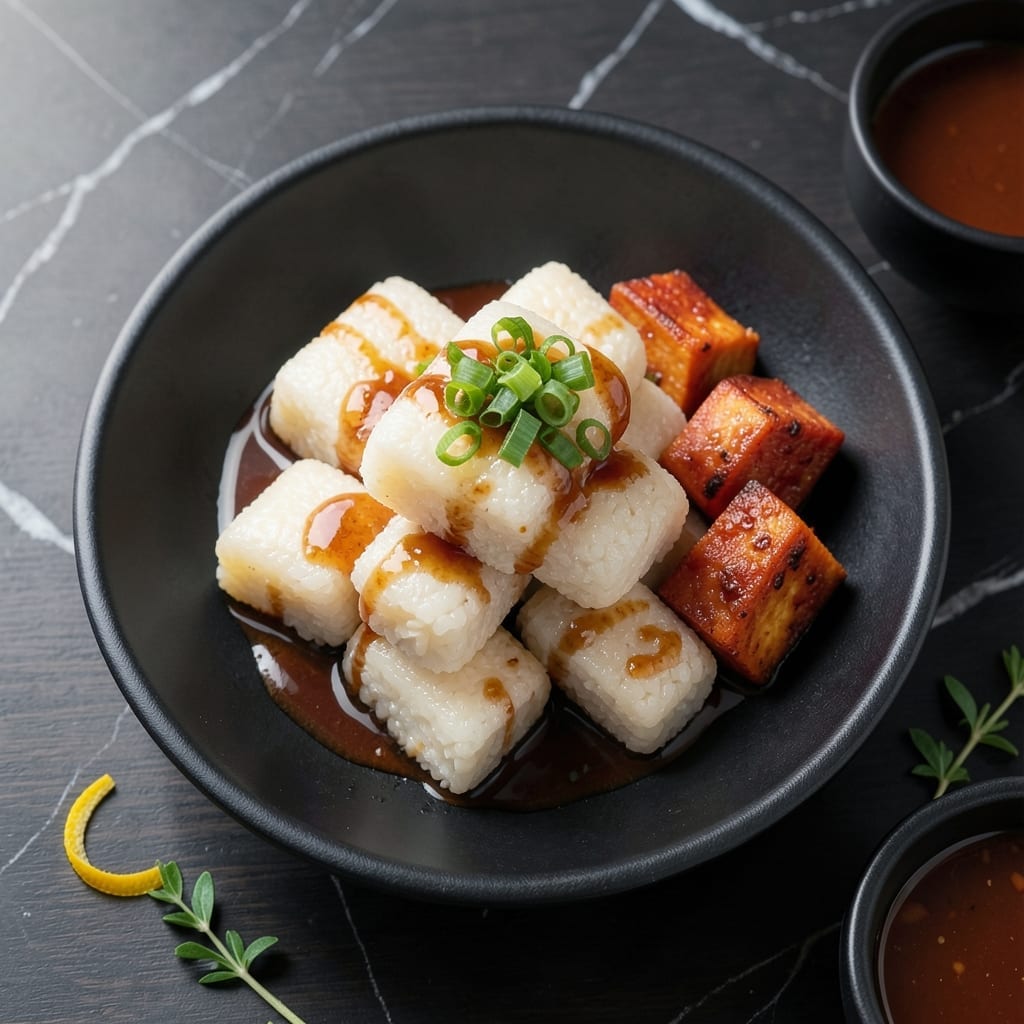
There’s something magical about the first time you make Korean rice cakes from scratch. The process transforms simple rice flour into chewy, pillowy bites that absorb flavors beautifully.
I developed this method after years of experimenting with textures and cooking times. The key is steaming the batter just until set, then cooling completely before slicing. This creates that signature bouncy consistency.
Once cooked, these rice cakes soak up the sweet-spicy glaze like little flavor sponges. The contrast between the soft interior and slightly sticky exterior makes them irresistible.
The best part? This version uses pantry staples and requires no special equipment. You’ll be surprised how easy it is to recreate this Korean street food favorite at home.
Ingredients for Korean Rice Cake Recipe with Rice Flour
Transform pantry staples into chewy, bouncy rice cakes with a sweet-spicy kick.
| Ingredient | Amount | Notes |
|---|---|---|
| Rice Flour 🌾 | 2 cups | Sweet rice flour preferred |
| Water 💧 | 1 ¾ cups | Warm, for batter |
| Salt 🧂 | ½ tsp | Fine sea salt preferred |
| Sugar 🍚 | 2 tbsp | For slight sweetness |
| Soy Sauce 🫒 | 3 tbsp | Low-sodium or regular |
| Gochujang 🌶️ | 2 tbsp | Korean chili paste |
| Rice Vinegar 🍋 | 1 tbsp | For tangy balance |
| Maple Syrup 🍁 | 2 tbsp | Vegan sweetener alternative |
| Garlic Cloves 🧄 | 3 cloves | Minced for glaze |
| Sesame Oil 🫒 | 1 tsp | Toasted preferred |
| Cornstarch 🌾 | 2 tbsp | For thickening glaze |
| Green Onions 🧅 | 4 whole | Thinly sliced for garnish |
| Sesame Seeds 🌰 | 1 tbsp | Toasted for garnish |
The rice flour is non-negotiable here. Sweet rice flour (mochiko) gives that signature chewy texture—regular rice flour won’t cut it. Find it at Asian markets or the international aisle at Whole Foods. For the gochujang, Sempio or Mother-in-Law’s brands are reliable. If your store doesn’t carry it, order online (worth it for the flavor). The batter should be smooth, so whisk out any lumps before steaming.
No gochujang? Sriracha plus 1 tsp sugar mimics the sweet heat (not perfect, but works). Out of maple syrup? Agave nectar or date syrup are great swaps. The sesame oil is toasted for depth—Kadoya is a solid brand. Green onions can be subbed with chives in a pinch. For extra chew, let the steamed batter cool completely before slicing (don’t rush this part).
The rice cakes keep 3-4 days in the fridge, sealed tight. Freeze for up to 3 months—thaw before reheating. The glaze thickens as it cools, so warm it gently with a splash of water if too sticky. Leftovers? Toss with extra sesame seeds for crunch.
Why You’ll Love This Recipe
- Five Minute Mix: I just stir rice flour, water, and a pinch of salt—no fancy steps, no waiting.
- Sweet-Savory Bite: The sugar and soy sauce balance is ridiculous. Chewy, salty-sweet, and impossible to stop eating.
- Endless Pairings: I toss these with veggies for dinner, pack them for lunch, or snack straight from the pan.
Step-by-Step Instructions for Korean Rice Cakes With Rice Flour
These simple steps transform basic ingredients into chewy, glossy rice cakes with irresistible sweet-spicy flavor.
Step 1: Create the Smooth Rice Cake Batter
In a large bowl, whisk together the 2 cups Rice Flour, 0.5 tsp Salt, and 2 tbsp Sugar until fully combined. I always sift the Rice Flour first to prevent lumps in the final batter.
Gradually pour in the 1.75 cups Water while whisking continuously until you achieve a smooth, thin batter. The consistency should resemble heavy cream—thick enough to coat the back of a spoon but still pourable. Let the batter rest for 10 minutes; this allows the Rice Flour to fully hydrate.
Step 2: Steam the Rice Cake Base
Prepare your steamer by bringing 1 inch of water to a boil in a pot. Lightly grease a heatproof dish that fits inside your steamer. Pour the batter into the dish and smooth the top with a spatula.
Place the dish in the steamer, cover, and steam over medium-high heat for 20-25 minutes. The Rice Cake is done when the center is set and a toothpick inserted comes out clean. The surface should look slightly glossy and feel springy to the touch.
Step 3: Prepare the Glossy Sweet-Spicy Glaze
In a saucepan, combine the 3 tbsp Soy Sauce, 2 tbsp Gochujang, 1 tbsp Rice Vinegar, 2 tbsp Maple Syrup, minced 3 cloves Garlic Cloves, and 1 tsp Sesame Oil. Stir well to break up the Gochujang paste.
Cook over medium heat for 3-4 minutes until the mixture begins to simmer. In a small bowl, mix the 2 tbsp Cornstarch with 2 tbsp of the steamed Rice Cake cooking liquid or water to create a slurry. Stir this into the saucepan and cook for 1-2 minutes until the glaze thickens to a honey-like consistency.
Step 4: Coat and Finish the Rice Cakes
Once the steamed Rice Cake has cooled slightly, cut it into bite-sized pieces. Transfer these to the saucepan with the glaze. Gently fold the pieces to coat them evenly in the thick, glossy sauce.
Cook for an additional 2-3 minutes on low heat, stirring occasionally, until the Rice Cakes absorb some of the glaze and become slightly translucent. The pieces should be well-coated and glisten under the sauce.
Step 5: Garnish and Serve Immediately
Transfer the glazed Rice Cakes to a serving dish. Sprinkle with the thinly sliced 4 whole Green Onions and toasted 1 tbsp Sesame Seeds. The Green Onions add a fresh contrast, while the Sesame Seeds provide a nutty crunch.
Serve warm for the best texture—the Rice Cakes should be chewy with a slight pull, and the glaze should cling beautifully to each piece. The flavors deepen as it sits, but it’s most enjoyable fresh from the pan.
Pro Tips For Making Korean Rice Cake Recipe With Rice Flour
- Steam, Don’t Boil: I learned this the hard way—boiling the rice flour batter makes it gummy, but steaming it for 20-25 minutes gives that chewy, bouncy texture Korean rice cakes are known for.
- Use Fine Rice Flour: Coarse rice flour leaves a gritty texture, so splurge on the fine-milled kind—it dissolves smoothly in water and creates a silky batter.
- Skip Cold Water: Mixing the rice flour with cold water first prevents lumps and gives you a smoother, more consistent batter before adding hot water.
- Salt the Batter: Sounds obvious, but a pinch of salt in the rice flour mixture actually enhances the sweetness of the sugar and balances the soy sauce glaze later.
Wine and Beer Pairings for This Recipe
Beer Pairings
I love pairing these rice cakes with a crisp Korean lager like Hite or OB. The light body and clean finish balance the sweet-spicy glaze perfectly. The carbonation helps cut through the richness of the sauce. 🍺
Wine Options
For wine lovers, try a slightly off-dry Riesling from Washington state. The touch of sweetness complements the gochujang heat while the acidity refreshes your palate. Chateau Ste. Michelle makes a reliable version.
Cocktail Match
A soju cocktail works beautifully here. Mix 2 oz soju with ½ oz yuzu juice and ½ oz honey syrup. The citrus notes echo the rice vinegar in the glaze, while the soju’s clean taste lets the rice cakes shine.
Non-Alcoholic Pairing
For a non-alcoholic option, sparkling yuzu soda from New Seasons Market is my go-to. The effervescence and citrus tang mirror the glaze’s brightness. Serve it ice-cold in small glasses for a refreshing contrast. ✨
Tea Companion
Barley tea, or boricha, is a traditional Korean choice. Its nutty, toasty flavor provides a grounding contrast to the dish’s spiciness. I brew mine strong and serve it chilled.
Nutrition Facts
Frequently Asked Questions
Can I use regular rice flour instead of sweet rice flour?
No, sweet rice flour (mochiko) is essential for the chewy texture. Regular rice flour will produce a grainy, crumbly result. Look for the glutinous variety labeled as sweet rice flour at Asian markets.
Why does my batter have lumps?
Sift the rice flour first, then whisk vigorously while adding warm water. Let the batter rest for 10 minutes to fully hydrate. This ensures a smooth consistency before steaming.
How do I store leftover rice cakes?
Keep them in an airtight container in the fridge for up to 4 days. Reheat gently in a pan with a splash of water to restore the chewy texture.
Can I make this without a steamer?
Yes! Use a colander or sieve set over a pot of boiling water. Cover with a lid or foil to trap steam. The key is maintaining consistent medium-high heat for 20-25 minutes.

- Jollof Rice Sauce Recipe: West African Tomato and Spice Infusion - September 25, 2026
- Japanese Rice Soup Recipe: Umami-Rich Comfort in a Bowl - September 25, 2026
- Homemade Cream Of Rice Recipe: Silk-Smooth Breakfast in Minutes - September 25, 2026