
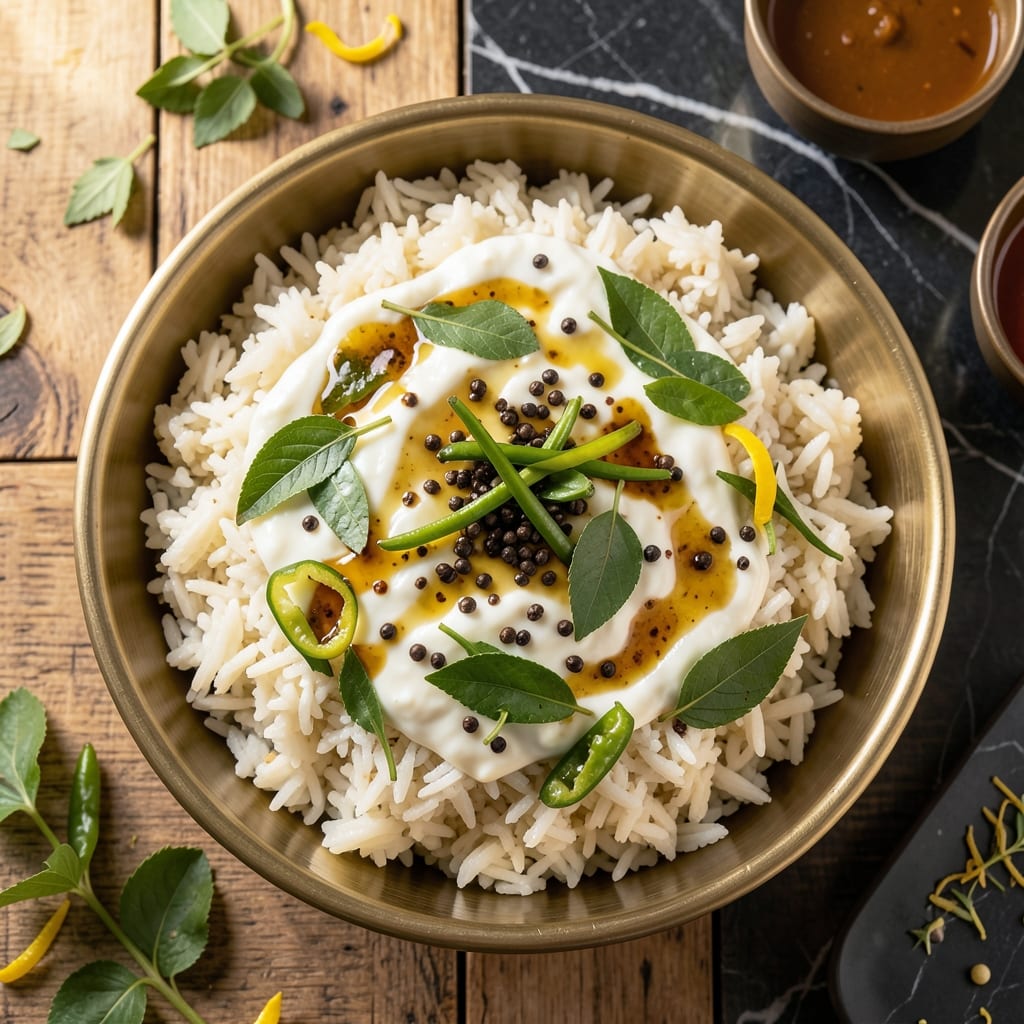
This South Indian classic transforms simple ingredients into a creamy, cooling meal that’s pure comfort in a bowl. The balance of tangy yogurt with fragrant tempered spices creates a dish that’s both soothing and deeply flavorful.
I’ve perfected this version through years of family meals, focusing on the ideal rice-to-curd ratio for maximum creaminess. The tempering of mustard seeds, curry leaves, and ginger adds warmth that cuts through the cool yogurt base.
What emerges is a dish that’s satisfying yet light, perfect for hot days or when you need gentle nourishment. The tempered spices bloom in hot oil, releasing aromas that make this humble meal feel special.
Serve chilled or at room temperature for the full experience. This recipe delivers authentic taste with minimal effort.
Ingredients for Curd Rice Recipe South Indian
Simple staples create this creamy, tangy South Indian comfort bowl with tempered spices.
| Ingredient | Amount | Notes |
|---|---|---|
| Cooked White Rice 🍚 | 3 cups | Cooled to room temperature |
| Plain Yogurt 🥛 | 2 cups | Full-fat for creaminess |
| Mustard Seeds 🌿 | 1 tsp | Black or yellow variety |
| Curry Leaves 🍃 | 10 whole | Fresh preferred |
| Green Chili 🌶️ | 2 whole | Slit lengthwise for heat |
| Fresh Ginger 🌿 | 1 tbsp | Finely grated or minced |
| Cumin Seeds 🌿 | ½ tsp | Optional for extra depth |
| Urad Dal 🌾 | 1 tsp | Split black gram lentils |
| Chana Dal 🌾 | 1 tsp | Split chickpea lentils |
| Asafoetida 🌿 | ¼ tsp | Hing, for tempering |
| Fresh Cilantro 🌿 | 2 tbsp | Chopped for garnish |
| Salt 🧂 | 1 tsp | Adjust to taste |
| Neutral Oil 🫒 | 2 tbsp | For tempering spices |
| Pomegranate Seeds 🍇 | ¼ cup | Optional for garnish |
| Grapes 🍇 | ¼ cup | Halved, optional for sweetness |
The yogurt is non-negotiable for that signature creaminess. Whole milk plain yogurt from any grocery store works—just avoid Greek (too thick) or flavored varieties. For authentic flavor, Indian grocery stores carry the perfect curd, often labeled as ‘dahi.’ The rice should be slightly overcooked and fully cooled—warm rice will turn the dish sour. Tempering spices can be found at Patel Brothers or Indian Bazaar.
No curry leaves? Dried curry leaf powder works at half the amount. Skip the asafoetida if you can’t find it, but it adds that classic depth (look for hing in the spice aisle). Green chili can be swapped with serrano or jalapeño—adjust seeds for heat. For extra crunch, add toasted cashews or roasted peanuts. The dal types are traditional but optional—regular yellow mustard seeds work in a pinch.
Best served chilled or at room temperature—flavors meld after 30 minutes. Stores in the fridge for 2-3 days, but the tempering loses freshness over time. Always temper just before serving for that hot-cold contrast that makes this dish special.
Why You’ll Love This Recipe
- One Pot Wonder: I just mix cooked rice with yogurt, temper mustard seeds and curry leaves, and it’s done—no fancy steps.
- Tangy Comfort: The cool yogurt with the kick of green chili and earthy curry leaves hits that perfect sour-spicy balance.
- Lunchbox Hero: I pack this for work or picnics—it stays fresh for hours and tastes even better chilled.
- Pantry Savior: Between us, it’s my go-to when I’ve got leftover rice and yogurt sitting in the fridge.
Step-by-Step Instructions for Curd Rice
Here’s the method. Simple steps, authentic flavors, perfect texture every time.
Step 1: Prepare the Rice Base
In a large mixing bowl, combine the 3 cups Cooked White Rice with 2 cups Plain Yogurt. I use full-fat yogurt for that signature creamy texture—it coats the rice grains beautifully without making the dish watery.
The rice should be cooled to room temperature before mixing. This prevents the yogurt from thinning out when it comes into contact with warm rice. Gently fold everything together until the rice is evenly coated. The mixture should look thick and slightly lumpy, not soupy.
Add the 1 tsp Salt and mix well. Taste and adjust if needed—you want a balanced tangy-salty flavor that lets the other elements shine. Set this aside while you prepare the tempering.
Step 2: Temper the Spices
Heat the 2 tbsp Neutral Oil in a small pan over medium heat. When it shimmers, add the 1 tsp Mustard Seeds and wait for them to pop—this usually takes 30-45 seconds. The sound is your cue that they’re ready.
Immediately add the 1 tsp Urad Dal, 1 tsp Chana Dal, 0.5 tsp Cumin Seeds, and 0.25 tsp Asafoetida. Stir constantly for 1-2 minutes until the dals turn golden brown and release their nutty aroma.
Now add the 10 whole Curry Leaves, 2 whole Green Chili (slit lengthwise), and 1 tbsp Fresh Ginger. Sauté for another 30 seconds until the curry leaves crisp and the ginger turns fragrant. Remove from heat immediately to prevent burning.
Step 3: Combine and Finish
Pour the hot tempering mixture over the rice and yogurt base. The sizzling sound as it hits the cool mixture is music to the ears—it means the flavors are melding perfectly. Stir gently to distribute the spices evenly throughout.
Let the dish sit for 10-15 minutes to allow the flavors to develop. This resting time is crucial—it lets the rice absorb the tempering oils and the yogurt mellow slightly. The rice grains should plump up a bit and the whole mixture will become more cohesive.
Taste one last time and adjust the salt if needed. The final texture should be creamy with visible specks of tempered spices, and each bite should have a balance of tangy, spicy, and aromatic notes.
Step 4: Garnish and Serve
Just before serving, sprinkle the 2 tbsp Fresh Cilantro over the top. The fresh, green contrast cuts through the richness and adds a pop of color. For a touch of sweetness and texture, add the 0.25 cup Pomegranate Seeds and 0.25 cup Grapes (halved) if using.
Serve at room temperature or slightly chilled. This dish actually improves as it sits, with the flavors deepening over time. The ideal serving temperature is cool but not ice-cold, allowing all the elements—creamy rice, tangy yogurt, and aromatic tempering—to shine in harmony.
Pro Tips For Making Curd Rice Recipe South Indian
- Cool the rice: Use rice that’s completely cooled to room temperature—hot rice will turn the yogurt lumpy and sour faster than you can say “oops.”
- Whisk the yogurt: Beat the plain yogurt until smooth before mixing it in; I learned this the hard way after ending up with a bowl of curdled, separated rice.
- Temper mustard seeds: Heat the oil on medium and add mustard seeds only after it’s hot enough to make them pop in 10 seconds—any cooler and they’ll just sit there looking sad.
- Salt the curd: Add salt to the yogurt before mixing, not after—it blends better and you won’t have to fish around for seasoning later when the rice is already plated.
Dietary Considerations for These Flavors
Vegetarian Friendly
This dish is naturally 100% vegetarian, making it perfect for meat-free diets. The combination of yogurt and rice provides complete protein with all essential amino acids. I’ve served it to vegetarian friends who rave about the satisfying texture and flavor. 🌱
Gluten-Free Naturally
With no wheat or gluten-containing ingredients, this recipe is safe for those with celiac disease or gluten sensitivity. Just ensure your yogurt and spices are certified gluten-free—some brands process their products in shared facilities.
Dairy Considerations
The primary dairy component is the yogurt. For lactose intolerance, use lactose-free plain yogurt—it works identically. Vegan versions can use coconut yogurt, though the flavor profile will differ slightly.
Nut-Free Option
This traditional recipe contains no nuts, making it safe for nut allergies. However, some variations include cashews or peanuts for crunch. Simply omit these additions if allergies are a concern.
Low-Fat Adaptation
For a lighter version, use low-fat yogurt instead of full-fat. The texture will be slightly less creamy but still delicious. I’ve made it this way when counting calories and it remains satisfying. 💡
Probiotic Benefits
Yogurt provides live cultures that support gut health. For maximum probiotic benefits, use yogurt with active cultures and avoid overheating the dish after mixing, as high heat can kill beneficial bacteria.
Nutrition Facts
Frequently Asked Questions
Can I use leftover rice?
Leftover rice works perfectly, just ensure it’s cooled completely before mixing. Cold rice actually absorbs the yogurt better for that signature creamy texture.
Why does my tempering taste bitter?
Burnt spices cause bitterness. Always remove the tempering from heat as soon as the mustard seeds stop popping and dals turn golden brown. The process should take less than 2 minutes total.
Can I make this ahead?
Yes, but add the tempering just before serving. The rice-yogurt mix keeps in the fridge for 2-3 days, while fresh tempering maintains its aroma and crunch.
What can I substitute for curry leaves?
Use 1/2 tsp curry leaf powder or a bay leaf for a milder flavor. While not identical, these provide a similar aromatic quality without overpowering the dish.

- Jollof Rice Sauce Recipe: West African Tomato and Spice Infusion - September 25, 2026
- Japanese Rice Soup Recipe: Umami-Rich Comfort in a Bowl - September 25, 2026
- Homemade Cream Of Rice Recipe: Silk-Smooth Breakfast in Minutes - September 25, 2026