
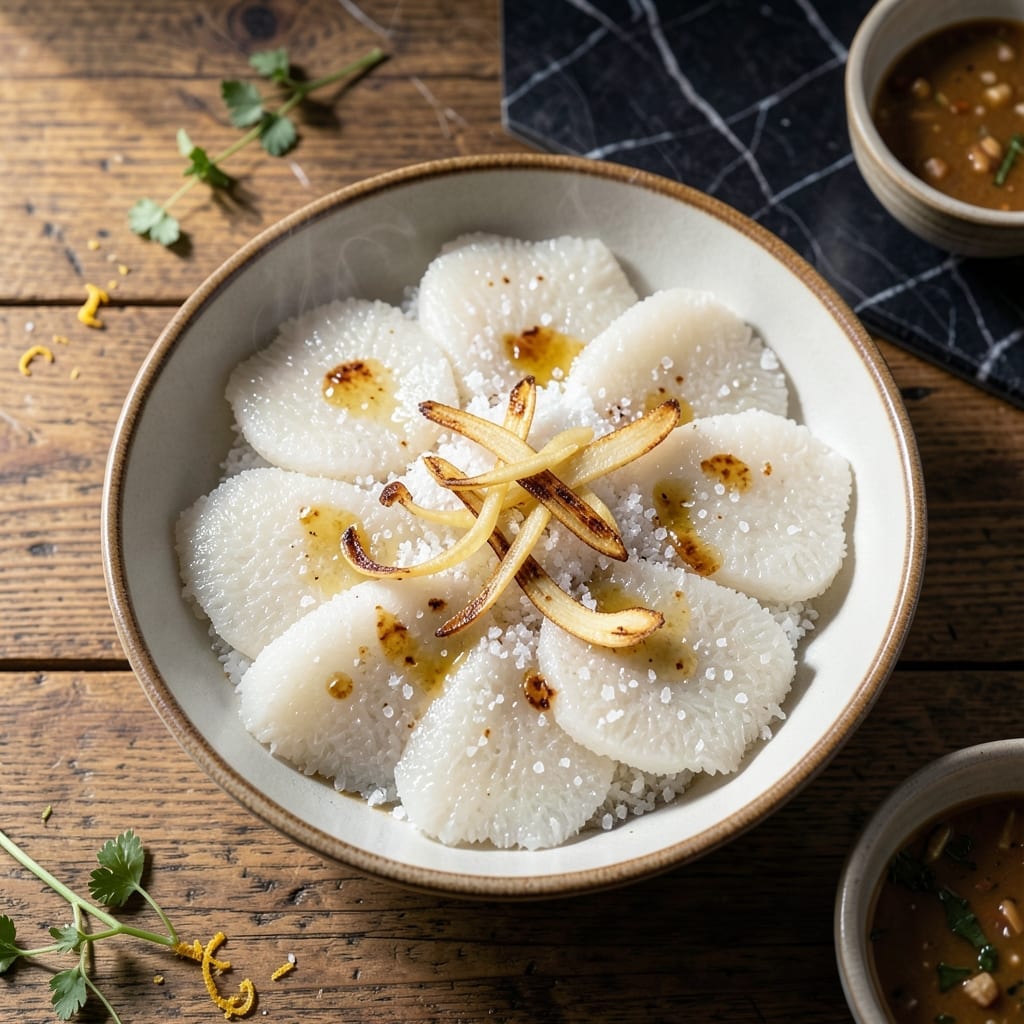
This daikon rice cake recipe delivers a satisfying texture that’s both chewy and slightly crispy. The savory depth comes from a simple yet effective combination of ingredients.
With a few basic steps, you’ll achieve perfectly tender rice cakes that pair beautifully with a variety of dishes. The process is straightforward and rewarding.
Ingredients for Daikon Rice Cake
Fresh produce and pantry staples create these chewy, savory rice cake bites with satisfying texture.
| Ingredient | Amount | Notes |
|---|---|---|
| Daikon Radish 🥬 | 2 lb | Peeled and grated finely |
| Glutinous Rice Flour 🌾 | 2 cups | Also called sweet rice flour |
| Water 💧 | ¾ cup | Warm, for mixing batter |
| Sea Salt 🧂 | 1 ½ tsp | Fine grain preferred for even distribution |
| Garlic Cloves 🧄 | 3 cloves | Minced for savory depth |
| Fresh Ginger 🌿 | 1 tbsp | Peeled and finely grated |
| Green Onions 🧅 | 4 whole | Thinly sliced for garnish |
| Soy Sauce 🫒 | 2 tbsp | Use low-sodium for control |
| Sesame Oil 🫒 | 1 tbsp | Toasted for nutty aroma |
| Neutral Oil 🫒 | 3 tbsp | For pan-frying rice cakes |
| Red Pepper Flakes 🌶️ | ½ tsp | Adjust for heat preference |
| Rice Vinegar 🍚 | 1 tbsp | For brightness and balance |
The daikon radish is non-negotiable here. Seek out firm, unblemished roots at Asian markets or well-stocked grocery stores—they’re sweeter and more tender than the larger, woody ones. Glutinous rice flour is essential (regular rice flour won’t bind properly). Bob’s Red Mill is widely available, but Erawan brand from Thai markets gives superior texture.
No daikon? Substitute with grated zucchini or carrot (squeeze out excess moisture first). For gluten-free, ensure your rice flour is certified. The soy sauce can be swapped for tamari or coconut aminos. Missing sesame oil? Toasted peanut oil offers a similar depth. The ginger and garlic must be fresh—dried versions lack the necessary punch for this recipe.
Uncooked daikon radish keeps 1 week refrigerated in a sealed bag. The rice cakes fry up best fresh but can be refrigerated 2-3 days and reheated in a pan. For longer storage, freeze uncooked batter in portions for up to 1 month.
Why You’ll Love This Recipe
- Minimal Effort: I just grate, mix, and steam—no fancy techniques, just simple steps with glutinous rice flour and daikon.
- Garlicky Comfort: The roasted garlic cloves and sea salt give these cakes a warm, savory depth that’s ridiculously good.
- Meal Prep Hero: They reheat beautifully, so I make a big batch for quick lunches or snacks all week.
- Budget Stretch: Honestly, daikon is cheap, and a little rice flour goes a long way—feeds my family for pennies.
Step-by-Step Instructions for Daikon Rice Cake
Master the technique for achieving the perfect chewy texture and balanced savory notes.
Step 1: Prepare and Grate the Daikon Radish
Start by peeling the 2 lb daikon radish thoroughly to remove the tough outer skin. Using a box grater or food processor with a fine grating attachment, grate the daikon into a fine, pulp-like consistency. This texture is crucial for binding with the glutinous rice flour.
Place the grated daikon in a clean kitchen towel and twist tightly to extract as much moisture as possible. You should yield about 1 cup of liquid. Discard the liquid or reserve it for another use, but ensure the grated daikon is as dry as possible to prevent a gummy batter.
Step 2: Form the Rice Cake Batter
In a large mixing bowl, combine the 2 cups glutinous rice flour with the 1.5 tsp sea salt. Create a well in the center and gradually add the 0.75 cup warm water while stirring with a wooden spoon or silicone spatula until a thick, sticky batter forms.
Add the prepared grated daikon to the batter and mix thoroughly. The consistency should be dense and slightly elastic, similar to a thick cake batter. If it appears too dry, add a teaspoon of water, but avoid making it too loose, as this will affect the final texture.
Step 3: Steam the Rice Cake
Line a 9-inch cake pan or steamer tray with parchment paper, leaving an overhang for easy removal. Pour the batter into the prepared pan and smooth the top with a wet spatula to create an even layer. Tap the pan gently on the counter to release any air bubbles.
Place the pan in a steamer set over boiling water. Cover with a lid and steam for 30-35 minutes until the rice cake is firm to the touch and a toothpick inserted in the center comes out clean. Avoid opening the lid during steaming to prevent condensation from dripping onto the cake.
Step 4: Pan-Fry for Crispy Edges
Once the rice cake has cooled slightly, turn it out onto a cutting board and slice it into 1-inch thick rectangles or squares. Heat 3 tbsp neutral oil in a large non-stick skillet over medium-high heat. Working in batches, pan-fry the rice cake pieces for 3-4 minutes per side until golden brown and crispy.
Transfer the fried pieces to a paper towel-lined plate to drain excess oil. The exterior should be crisp while the interior remains soft and chewy.
Step 5: Prepare the Savory Dipping Sauce and Garnish
In a small bowl, combine the 2 tbsp soy sauce, 1 tbsp sesame oil, 1 tbsp rice vinegar, 3 cloves minced garlic, 1 tbsp fresh ginger, and 0.5 tsp red pepper flakes. Stir well to blend the flavors. Taste and adjust seasoning if necessary.
Arrange the pan-fried rice cakes on a serving platter. Drizzle with some of the dipping sauce and garnish with the 4 whole thinly sliced green onions. Serve the remaining sauce on the side for dipping. The combination of crispy, chewy rice cake and the bold, aromatic sauce creates a perfect bite.
Pro Tips For Making Daikon Rice Cake
- Steam First, Grate Later: I learned this the hard way—steam the daikon for 10-12 minutes until fork-tender before grating, otherwise your rice cakes will turn out gummy no matter how much flour you add.
- Use Cold Water: Mix the glutinous rice flour with ice-cold water (about 1 cup per 1.5 cups flour) to prevent the batter from thickening prematurely while you work.
- Salt the Daikon: After grating, toss the daikon with 1 teaspoon sea salt and let it sit for 10 minutes, then squeeze out all the liquid—this keeps the cakes from falling apart during cooking.
- Mince Garlic Fine: Sounds obvious, but finely minced garlic (not just crushed) distributes better in the batter, giving every bite that sharp, savory kick without overpowering chunks.
Serving Suggestions for This Recipe
Hot Pot Companion
These chewy bites shine in a simmering hot pot broth, soaking up rich flavors. Add them during the last 5-7 minutes of cooking to prevent over-softening. I love how they absorb the aromatic spices and herbs from the broth. 🔥
Stir-Fry Star
Toss pan-fried pieces into your favorite vegetable stir-fry with bell peppers and snap peas. The crispy edges hold up well to quick cooking over high heat. Drizzle with extra dipping sauce for a flavor boost.
Soup Enhancer
Drop 1-inch cubes into a light miso or mushroom soup just before serving. They’ll soften slightly while maintaining their shape, adding hearty texture to each spoonful. Perfect for chilly evenings.
Appetizer Platter
Arrange fried pieces on a platter with cucumber slices, pickled radishes, and extra sauce for dipping. This makes a beautiful and interactive starter for gatherings. Guests always love the contrast of textures.
Salad Topper
Slice cooled rice cakes into thin strips and add to an Asian-inspired salad with shredded cabbage and carrots. The chewy texture pairs wonderfully with crisp vegetables and a tangy dressing.
Breakfast Twist
Pan-fry leftover pieces with a fried egg on top for a savory breakfast. The rice cakes develop a delightful crispness that complements the runny yolk beautifully. A sprinkle of green onions finishes it perfectly. ✨
Nutrition Facts
Frequently Asked Questions
Why is glutinous rice flour essential?
Glutinous rice flour binds the grated daikon, creating the signature chewy texture. Regular flour lacks the sticky quality needed to hold the cakes together during steaming and frying.
How do I prevent the batter from being gummy?
Squeeze all moisture from the grated daikon using a towel before mixing. Excess liquid makes the batter too wet, resulting in dense, gummy cakes instead of light, chewy ones.
Can I bake instead of pan-frying?
Baking at 375°F for 20-25 minutes works but won’t achieve the same crispy edges. Brush with oil first and flip halfway for even browning. Pan-frying is still best for texture.
How long can I store the uncooked batter?
Store batter in an airtight container in the fridge for up to 24 hours. For longer storage, freeze the batter in portions for up to 1 month before steaming.

- Jollof Rice Sauce Recipe: West African Tomato and Spice Infusion - September 25, 2026
- Japanese Rice Soup Recipe: Umami-Rich Comfort in a Bowl - September 25, 2026
- Homemade Cream Of Rice Recipe: Silk-Smooth Breakfast in Minutes - September 25, 2026