
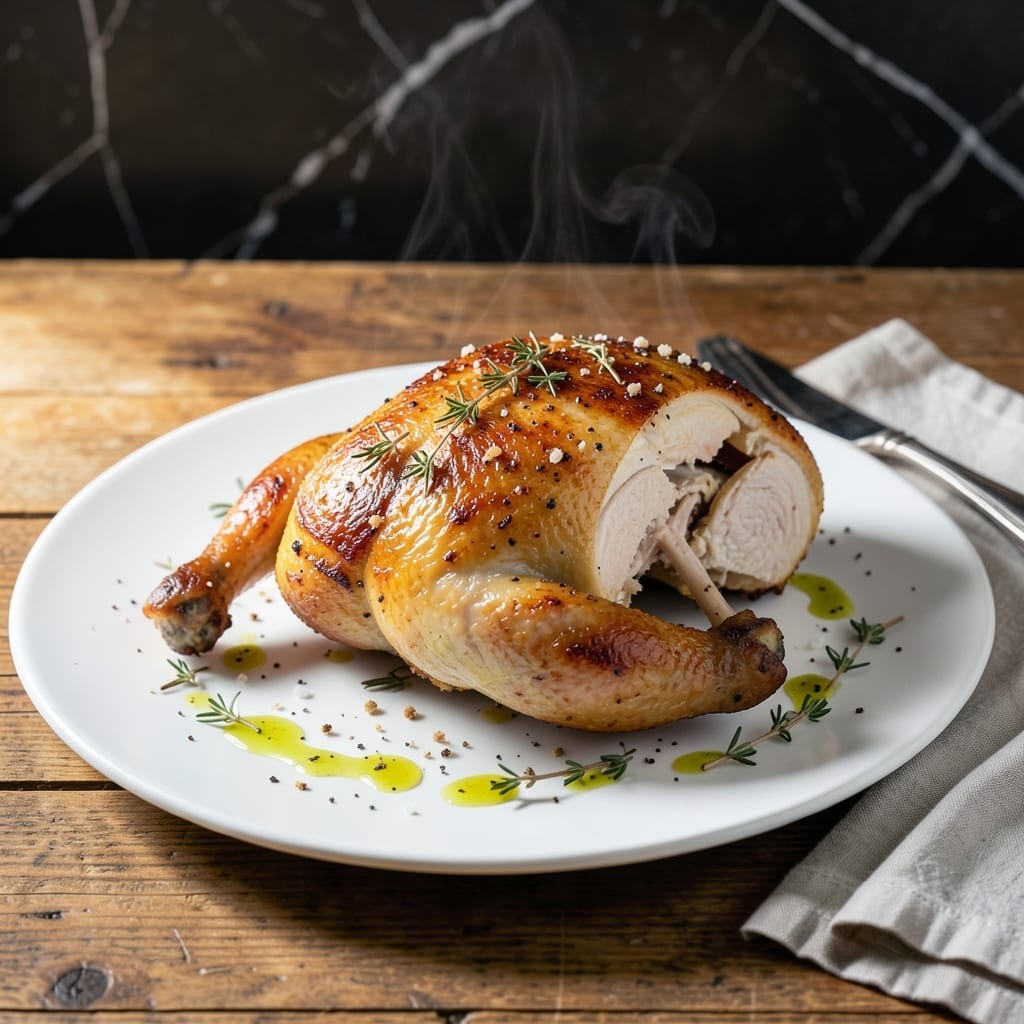
There’s a better way to enjoy chicken without the hassle of bones getting in your way. This method delivers tender meat every time, with a clean, fuss-free experience from start to finish.
Deboning chicken at home might seem intimidating, but with the right technique, it becomes a simple process that elevates your cooking. The result is juicy, flavorful meat that cooks evenly and absorbs marinades beautifully.
You’ll end up with perfectly cooked chicken that’s easy to eat and even easier to serve. Whether you’re prepping for a weeknight dinner or a special occasion, this approach ensures professional-quality results.
Serve it with your favorite sides or use it in salads, wraps, or stir-fries. Here’s how to make it happen.
Ingredients for Deboned Chicken
Simple ingredients for juicy, bone-free chicken that cooks evenly every time.
| Ingredient | Amount | Notes |
|---|---|---|
| Whole Chicken 🍗 | 1 whole | 3-4 lbs, fresh or thawed |
| Kosher Salt 🧂 | 1 ½ tsp | Diamond Crystal preferred |
| Black Pepper 🌶️ | 1 tsp | Freshly ground for best flavor |
| Garlic Powder 🧄 | 1 tsp | Not garlic salt |
| Onion Powder 🧅 | 1 tsp | Balances the seasoning blend |
| Dried Thyme 🍃 | 1 tsp | Crushed between fingers |
| Dried Rosemary 🌿 | 1 tsp | Crushed to release oils |
| Paprika 🌶️ | 1 tsp | Sweet or smoked variety |
| Olive Oil 🫒 | 2 tbsp | Extra-virgin for richness |
| Lemon 🍋 | 1 whole | Zested and juiced |
| Fresh Parsley 🌿 | ¼ cup | Chopped, for garnish |
| Butter 🧈 | 2 tbsp | Unsalted, for basting |
The chicken itself is the star. Look for a plump, 3-4 lb bird with smooth skin and no bruising—Whole Foods or your local butcher are great sources. Fresh is ideal, but frozen works fine (thaw it completely first). The skin should be pale with a slight sheen. If you’re buying pre-cut, ask for it to be left whole so you can debone it yourself for the best texture.
No fresh herbs? Dried at one-third the amount works in a pinch, but fresh really shines here. Short on lemon? Lime or orange zest adds a nice twist. The olive oil can be swapped for avocado oil if that’s what you’ve got. For the butter, ghee adds a nutty depth, but regular unsalted is perfect. Skip the salt if you’re using salted butter though.
Deboned chicken keeps 3-4 days in the fridge, or freeze for up to 3 months. Let it come to room temp before cooking—30 minutes on the counter does the trick. Leftovers? Shred for tacos or slice for salads.
Why You’ll Love This Recipe
- One Pan Magic: I just season the chicken, debone it, and let the oven do the work—minimal cleanup, maximum flavor.
- Garlic-Pepper Punch: The mix of garlic powder, onion powder, and black pepper gives every bite that cozy, savory depth I crave.
- Feeds the Week: I make this Sunday and we’ve got lunches covered—shreds beautifully for tacos, salads, or sandwiches.
- Budget Stretcher: A whole chicken costs pennies per serving, and deboning it myself saves even more. Honestly, my wallet thanks me.
Step-by-Step Instructions for Deboned Chicken
Here’s how I create perfectly tender meat with minimal effort and maximum flavor.
Step 1: Debone the Chicken Carefully
Place the whole chicken on a stable cutting board, breast-side up. Using a sharp boning knife, start by removing the legs and thighs in one piece. I like to pull the leg away from the body to expose the joint, then slice through it cleanly.
Next, separate the thigh from the drumstick by cutting through the natural joint. For the wings, locate the joint where they attach to the body and slice through it with a firm motion. The breast meat can be removed by running your knife along the ribcage, keeping the blade close to the bone.
Take your time with this step—rushing can lead to uneven cuts or wasted meat. The goal is to end up with four main pieces: two leg-thigh combos, two breasts, and two wings.
Step 2: Season the Meat Thoroughly
Pat all the chicken pieces dry with paper towels to ensure the seasoning adheres well. In a small bowl, combine the 1.5 tsp kosher salt, 1 tsp black pepper, 1 tsp garlic powder, 1 tsp onion powder, 1 tsp dried thyme, 1 tsp dried rosemary, and 1 tsp paprika.
Rub this seasoning blend evenly over every piece of chicken, making sure to coat all sides. I always crush the dried herbs between my fingers as I sprinkle them to release their aromatic oils, which enhances the flavor.
Let the seasoned chicken sit at room temperature for 15-20 minutes while you preheat your cooking surface. This allows the salt to begin penetrating the meat, ensuring a well-seasoned result.
Step 3: Sear the Chicken to Lock in Juices
Heat the 2 tbsp olive oil in a large skillet over medium-high heat until it shimmers. Add the chicken pieces, starting with the thighs and legs, as they take the longest to cook. Sear them for 5-6 minutes per side until they develop a deep golden-brown crust.
Once the dark meat is seared, add the chicken breasts and wings to the skillet. Sear the breasts for 4-5 minutes per side, until they’re golden and just cooked through. Avoid overcrowding the pan—if necessary, cook the chicken in batches to ensure even browning.
As the chicken cooks, add the 2 tbsp butter to the skillet and baste the pieces with the melted butter. This adds richness and helps achieve a beautiful, glossy finish.
Step 4: Add Aromatics and Finish Cooking
Zest the 1 whole lemon directly over the chicken, then cut the lemon in half and squeeze the juice into the skillet. The acidity from the lemon brightens the flavors and balances the richness of the butter and olive oil.
Reduce the heat to medium-low and cover the skillet. Let the chicken cook for an additional 5-7 minutes until it’s fully tender. The internal temperature should reach 165°F when tested with a meat thermometer.
If any pieces finish cooking early, transfer them to a warm plate and tent with foil to keep them warm while the rest of the chicken finishes.
Step 5: Rest and Garnish Before Serving
Transfer the chicken to a serving platter and let it rest for 5-10 minutes. Resting is crucial—it allows the juices to redistribute throughout the meat, ensuring every bite is moist and flavorful.
While the chicken rests, chop the 0.25 cup fresh parsley and sprinkle it over the top as a garnish. The parsley adds a fresh, vibrant touch that complements the rich, savory flavors of the dish.
Serve the deboned chicken hot, with any pan juices spooned over the top. This dish pairs beautifully with roasted vegetables or a simple salad for a complete meal.
Pro Tips For Making Deboned Chicken
- Dry the Skin First: Pat the deboned chicken completely dry with paper towels before seasoning—this guarantees a crispier finish, especially with just salt and spices.
- Season Under the Skin: Gently loosen the skin and rub some of the kosher salt, garlic powder, and onion powder directly onto the meat for deeper flavor in every bite.
- Don’t Overcrowd the Pan: I learned this the hard way—give each piece space in the pan or they’ll steam instead of brown, even with high heat.
- Rest Before Carving: Let the deboned chicken rest under foil for 5-10 minutes after cooking so the juices redistribute—skipping this leaves it dry, no matter how perfectly it’s seasoned.
Best Sauces and Condiments for This deboned chicken
Classic Gravy
Use the pan drippings from cooking your chicken as the base. Skim off excess fat, then whisk in 2 tbsp flour over medium heat to create a roux. Gradually add 1½ cups chicken broth while whisking constantly. Simmer for 5-7 minutes until thickened. 💛
Lemon-Herb Sauce
Combine the reserved lemon zest and juice with ¼ cup olive oil, 2 minced garlic cloves, and 2 tbsp chopped parsley. Drizzle this bright, fresh sauce over the chicken just before serving. It cuts through the richness beautifully.
Garlic Butter Glaze
Melt 4 tbsp butter with 3 minced garlic cloves and 1 tsp dried thyme in a small pan. Cook on low heat for 2-3 minutes until fragrant. Spoon this luxurious glaze over the chicken while hot.
Spicy Harissa Paste
Mix 2 tbsp harissa paste with 1 tbsp olive oil and 1 tsp honey for a North African twist. Brush it on during the last 5 minutes of cooking. I love the smoky heat it adds.
Creamy Dijon
Whisk together ½ cup sour cream, 2 tbsp Dijon mustard, and 1 tbsp lemon juice. This tangy sauce pairs especially well with the herby notes in the chicken. Thin with a splash of water if needed. ✨
Fresh Chimichurri
Blend 1 cup parsley, 3 garlic cloves, ¼ cup olive oil, 2 tbsp red wine vinegar, and ½ tsp red pepper flakes. This vibrant green sauce adds a bright, herby kick.
Nutrition Facts
Frequently Asked Questions
What’s the easiest way to remove bones?
Use a sharp boning knife and work slowly along the ribcage. Pull the meat away from bones as you cut for cleaner separation. Practice makes this process faster over time.
Can I use pre-cut pieces instead of a whole chicken?
Yes, but whole chickens give better results. Pre-cut often includes bone fragments. If using pieces, check each thoroughly and remove any remaining small bones.
How do I keep the meat from drying out?
Don’t overcook—remove from heat at 165°F. Basting with butter and letting it rest for 5-10 minutes preserves juices beautifully.
What if I accidentally leave small bones in?
Run your fingers carefully over the meat to feel for any missed pieces. Cooking makes bones more visible—double-check before serving.

- Jollof Rice Sauce Recipe: West African Tomato and Spice Infusion - September 25, 2026
- Japanese Rice Soup Recipe: Umami-Rich Comfort in a Bowl - September 25, 2026
- Homemade Cream Of Rice Recipe: Silk-Smooth Breakfast in Minutes - September 25, 2026