
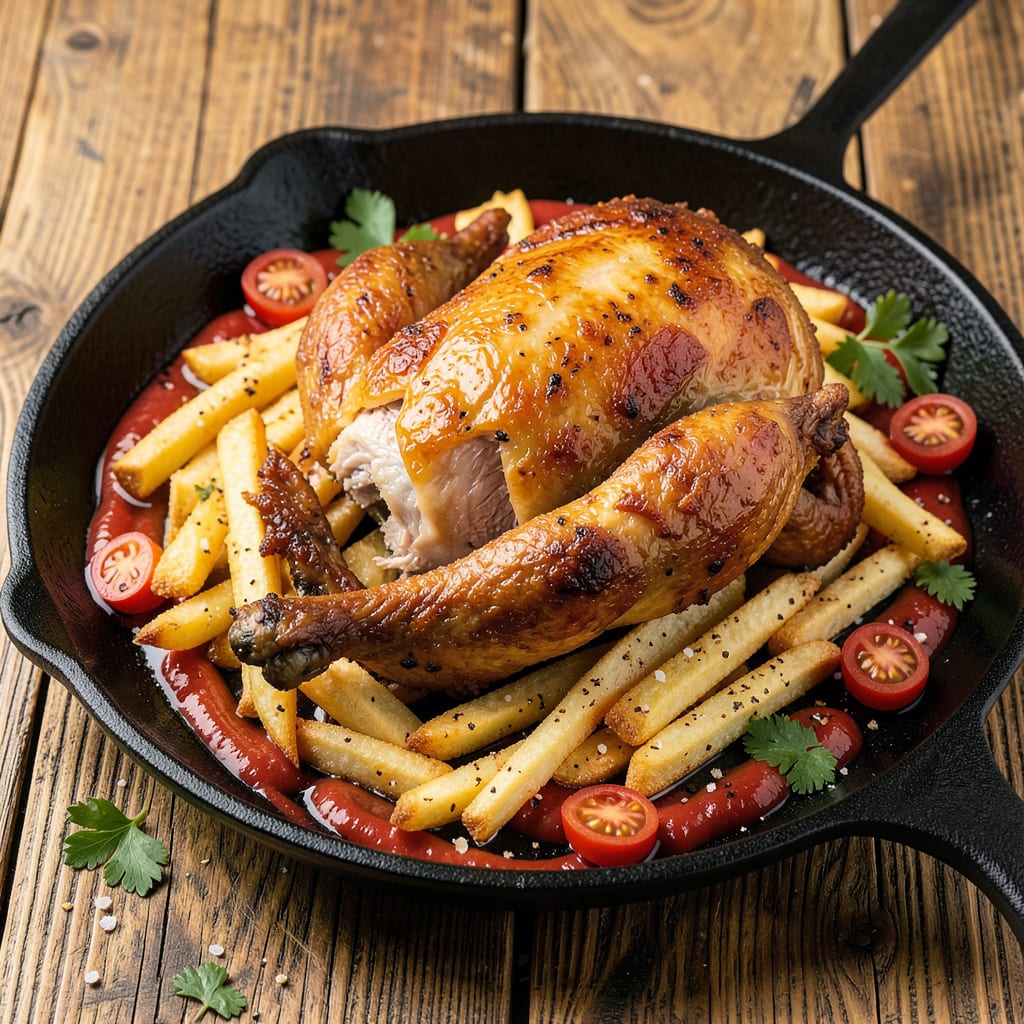
A whole chicken typically needs 3–4 minutes per pound at 350°F (175°C) for deep frying. For example, a 4-pound bird cooks in 12–16 minutes until golden brown and reaching 165°F internally.
Getting that perfect crispy skin while keeping the meat juicy is all about timing and temperature control. 🔥 The oil temperature plays a huge role—too low and you’ll end up with greasy skin, too high and the outside burns before the inside cooks through. I always use a deep-fry thermometer to maintain that sweet spot of 350°F, which ensures even cooking without drying out the meat.
Remember that different chicken weights will require adjustments. A 3-pound bird might finish in under 12 minutes, while a 5-pound chicken could need closer to 20 minutes. The key is monitoring both the color and internal temperature to avoid overcooking. ✨
💡 In This Article
- How Deep Frying Temperature Affects Whole Chicken Cooking Time
- Safety Tips and Equipment for Deep Frying Whole Chicken
How Deep Frying Temperature Affects Whole Chicken Cooking Time
The magic of deep frying happens through convection heat transfer, where hot oil surrounds the chicken and cooks it evenly from all sides. At 350°F, the oil is hot enough to create that coveted golden-brown crust while allowing heat to penetrate the meat at just the right rate.
This temperature strikes the perfect balance—low enough to cook the chicken through without burning, but high enough to seal in juices and create that satisfying crunch. 🔥
Drop the oil temp to 325°F, and you’ll notice the chicken absorbs more oil, resulting in a greasier texture rather than crispy. The cooking time increases by about 25% because heat transfers more slowly.
On the flip side, cranking it up to 375°F speeds up cooking by roughly 20%, but risks burning the skin before the meat reaches 165°F internally. I’ve found that 350°F gives you a 1/4-inch crispy layer while keeping the meat tender—this is where science meets perfect texture.
Weight plays a crucial role because denser birds require more time for heat to reach the center. A 3-pound chicken might finish in 9-12 minutes, while a 5-pounder could need 15-20 minutes.
The rule of thumb is 3-4 minutes per pound, but here’s the pro tip: use a meat thermometer to check the thickest part of the thigh. When it hits 165°F, you’re golden—literally and figuratively. ✨
Consistency is everything. Oil temperature naturally drops when you add the chicken, so I recommend preheating your oil to 365°F before adding the bird. This accounts for the 10-15°F temperature drop that occurs when cold chicken hits hot oil. Maintaining this balance prevents the dreaded “greasy bird” syndrome while ensuring even cooking. The result?
Skin that shatters like glass and meat that’s juicy to the bone.
Here’s what most home cooks miss: the chicken continues cooking after you remove it from the oil. This carryover cooking can add 5-10°F to the internal temperature, which is why I pull my chicken at 160°F and let it rest for 10 minutes before carving.
This resting period also allows the juices to redistribute, so you don’t lose that precious moisture when you cut into it. 💫
Different oils behave differently too. Peanut oil (smoke point 450°F) maintains temperature better than vegetable oil (400°F), which means more consistent cooking. I’ve tested both and found peanut oil gives a slightly crispier result, though vegetable oil works perfectly fine if that’s what you have on hand.
The key is choosing an oil with a smoke point at least 100°F higher than your frying temperature.
Pro chefs often use a two-stage frying method for extra-large birds: start at 325°F for 2/3 of the cooking time, then finish at 375°F for the final 3-4 minutes. This technique ensures the inside cooks through without burning the exterior. It’s more hands-on but delivers restaurant-quality results every time. 🌟

- Jollof Rice Sauce Recipe: West African Tomato and Spice Infusion - September 25, 2026
- Japanese Rice Soup Recipe: Umami-Rich Comfort in a Bowl - September 25, 2026
- Homemade Cream Of Rice Recipe: Silk-Smooth Breakfast in Minutes - September 25, 2026