
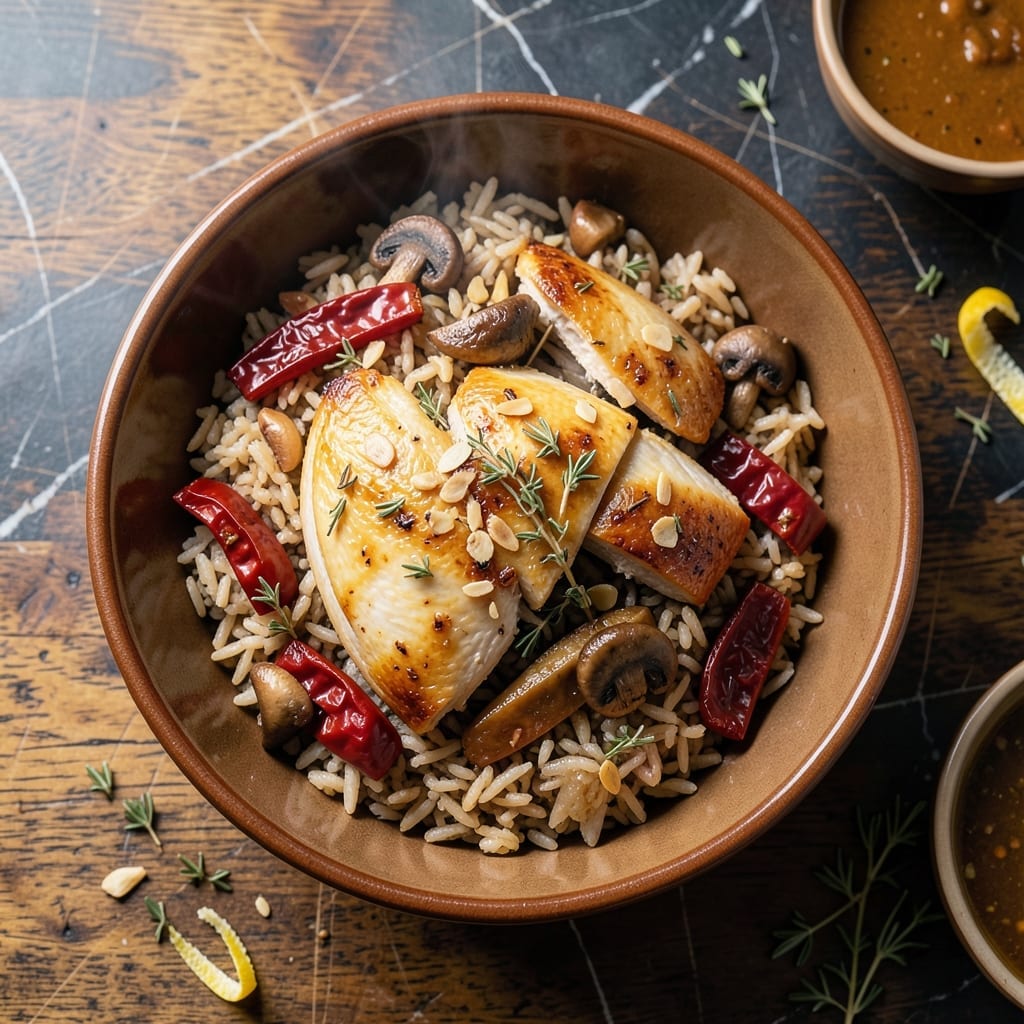
Backcountry meals require precision, and this dish delivers balanced nutrition with minimal weight. The dehydrated chicken maintains its flavor while the rice rehydrates to perfectly fluffy texture, creating a harmonious meal in the wilderness.
I developed this method during years of camping, refining the process to ensure consistent results. The chicken is dehydrated at 145°F for 6-8 hours, preserving protein without compromising taste. The rice is par-cooked before drying to reduce cooking time on the trail.
When you’re ready to eat, simply add boiling water and wait 10-12 minutes. The result is a hot, satisfying meal that tastes like it came from a kitchen, not a backpack. The nutty grain harmony comes from using long-grain brown rice.
This recipe scales easily for solo trips or group expeditions. The components store well for months when properly sealed.
Ingredients for Dehydrated Chicken and Rice
Precision ingredients for wilderness meals that rehydrate to perfection every time.
| Ingredient | Amount | Notes |
|---|---|---|
| Chicken Breast 🍗 | 1 ½ lb | Boneless, skinless, dehydrated at 145°F |
| Long-Grain Brown Rice 🍚 | 2 cups | Par-cooked and dehydrated |
| Chicken Bouillon Granules 🧂 | 2 tbsp | For rehydration flavor boost |
| Dried Onion Flakes 🧅 | ¼ cup | Rehydrates with rice |
| Dried Garlic Flakes 🧄 | 1 tbsp | Enhances savory depth |
| Dried Thyme 🌿 | 1 tsp | Crushed for even distribution |
| Dried Rosemary 🌿 | 1 tsp | Crushed for even distribution |
| Salt 🧂 | 1 tsp | Diamond Crystal kosher preferred |
| Black Pepper 🌶️ | ½ tsp | Freshly ground preferred |
| Olive Oil 🫒 | 2 tbsp | For rehydration richness |
| Dried Bell Peppers 🌶️ | ½ cup | Rehydrated for texture contrast |
| Dried Mushrooms 🍄 | ¼ cup | Rehydrated for umami depth |
The chicken must be boneless, skinless breast—thighs retain too much moisture for proper dehydration. USDA Grade A from Whole Foods ensures consistent protein content. For rice, long-grain brown provides the promised nutty harmony. Par-cook to al dente before dehydrating—this reduces trail cooking time while maintaining texture. REI carries pre-dehydrated components if you’re short on prep time.
No dried onion flakes? Fresh onion powder at half the volume works, but texture suffers. For herbs, dried Italian seasoning can replace thyme and rosemary. The bouillon granules are non-negotiable for flavor concentration—Better Than Bouillon paste (dehydrated first) is my backup. Olive oil can be avocado oil; it’s more stable at high altitudes.
Store components in Mylar bags with oxygen absorbers for 6-12 months shelf life. Keep in cool, dark conditions. Rehydrate with 16 oz boiling water per serving—cover and wait 10-12 minutes. Double the water for higher altitudes.
Why You’ll Love This Recipe
- Minimal Prep: I just toss the dried ingredients together—no chopping, no fuss.
- Rich Savory Depth: The bouillon, garlic, and onion flakes pack so much flavor into every bite.
- Trail-Ready Meal: Honestly, it’s my go-to for backpacking or a quick desk lunch.
- Pantry Staples: Between us, it’s all shelf-stable ingredients I already keep on hand.
Step-by-Step Instructions for Dehydrated Chicken and Rice
This method ensures proper rehydration and balanced flavors for your backcountry meal.
Step 1: Rehydrate the Chicken and Vegetables
Combine the 1.5 lb Chicken Breast with the 0.5 cup Dried Bell Peppers and 0.25 cup Dried Mushrooms in a large bowl. Pour in 3 cups of boiling water, ensuring all pieces are fully submerged. Cover tightly and let stand for 15-20 minutes.
The chicken should become tender and the vegetables plump, with no dry spots remaining. This step restores moisture while preserving the concentrated flavors from dehydration. Drain any excess liquid after rehydration to prevent a watery final dish.
Step 2: Prepare the Rice Mixture
In a separate heatproof container, combine the 2 cups Long-Grain Brown Rice, 2 tbsp Chicken Bouillon Granules, 0.25 cup Dried Onion Flakes, 1 tbsp Dried Garlic Flakes, 1 tsp Dried Thyme, and 1 tsp Dried Rosemary.
Add 3.5 cups of boiling water, stir to distribute the seasonings evenly, then cover. Let it sit for 20 minutes until the rice absorbs all liquid and becomes tender with a slight chew. The grains should expand fully and the bouillon should dissolve completely.
Step 3: Incorporate Olive Oil and Final Seasonings
Once both the chicken and rice mixtures are rehydrated, drain any remaining liquid from each. Stir the 2 tbsp Olive Oil, 1 tsp Salt, and 0.5 tsp Black Pepper into the rice mixture first, ensuring even distribution. The oil should glisten on the surface, and the salt should be fully dissolved.
Then, gently fold in the rehydrated chicken and vegetables. The mixture should be moist but not soupy, with all components evenly coated. Taste and adjust seasoning if necessary—this is your final opportunity to balance flavors before serving.
Step 4: Rest and Serve
Cover the combined mixture and let it rest for 5-10 minutes. This allows the flavors to meld and the rice to finish absorbing any residual moisture. The chicken should be fully tender, and the rice grains should hold their shape without being mushy.
Serve warm, with each portion containing an equal distribution of chicken, rice, and vegetables. The dish should have a cohesive texture, with the nutty brown rice complementing the savory chicken and the rehydrated vegetables adding depth to every bite.
Pro Tips For Making Dehydrated Chicken And Rice
- Pre-cook the rice: I learned this the hard way—parboil the brown rice for 10 minutes before dehydrating, or it’ll stay rock-hard even after rehydrating. Drain it well, then spread it thin on the tray.
- Slice chicken thin: Cut the chicken breast into ¼-inch strips against the grain so it dries evenly and rehydrates faster. Any thicker and you risk chewy bits that won’t soften.
- Skip the clumps: Mix the bouillon, onion, and garlic flakes into a fine powder before layering—nothing ruins a meal like biting into a salty granule. A quick pulse in a spice grinder works wonders.
- Use hot water: When rehydrating, pour boiling water over the mix and let it sit covered for 10 minutes. Cold water just makes the chicken tough and the rice gummy—I was skeptical until I tried it.
Serving Suggestions for This Recipe
Backcountry Presentation
Serve this dish directly from your insulated container to retain heat. The nutty brown rice and rehydrated chicken look rustic yet appealing in the wilderness. I use a collapsible silicone bowl for easy packing and serving. 💛
Garnish Options
Pack freeze-dried chives or parsley flakes to sprinkle on top before serving. A drizzle of olive oil from a small bottle adds richness. For extra crunch, include toasted pine nuts in a separate bag.
Portion Control
Divide into 1-cup servings per person for balanced portions. The dish is hearty enough for dinner but light for lunch. I find 2 servings per Mylar bag works well for solo trips.
Pairing Ideas
A cup of instant coffee or hot cocoa complements the savory flavors. For dessert, dehydrated fruit like apples or apricots cleanses the palate. These pairings add minimal weight to your pack. 🍫
Trail Tips
Eat within 30 minutes of rehydration for best texture. If serving a group, prep individual portions in advance. The dish tastes best when consumed immediately after resting.
Cleanup
Use biodegradable soap and a small sponge for easy cleanup. A bandana works as a makeshift towel. Pack out all waste to leave no trace in nature.
Nutrition Facts
Frequently Asked Questions
How long does the dehydrated chicken last?
Stored in Mylar bags with oxygen absorbers, it stays fresh for 6-12 months in cool, dark conditions. Always check for moisture or off smells before use.
Can I use white rice instead of brown?
Yes, but reduce par-cooking and dehydrating time by 25% since white rice cooks faster. Brown rice provides the promised nutty flavor and better texture.
What if my rice is still crunchy after rehydrating?
Add 1/4 cup more boiling water, cover, and wait 5-10 minutes longer. This usually fixes under-hydrated grains without making the dish mushy.
Is it safe to dehydrate chicken at home?
as long as you reach 145°F internal temperature during dehydration and store it properly. This temperature ensures bacteria are eliminated.

- Jollof Rice Sauce Recipe: West African Tomato and Spice Infusion - September 25, 2026
- Japanese Rice Soup Recipe: Umami-Rich Comfort in a Bowl - September 25, 2026
- Homemade Cream Of Rice Recipe: Silk-Smooth Breakfast in Minutes - September 25, 2026