
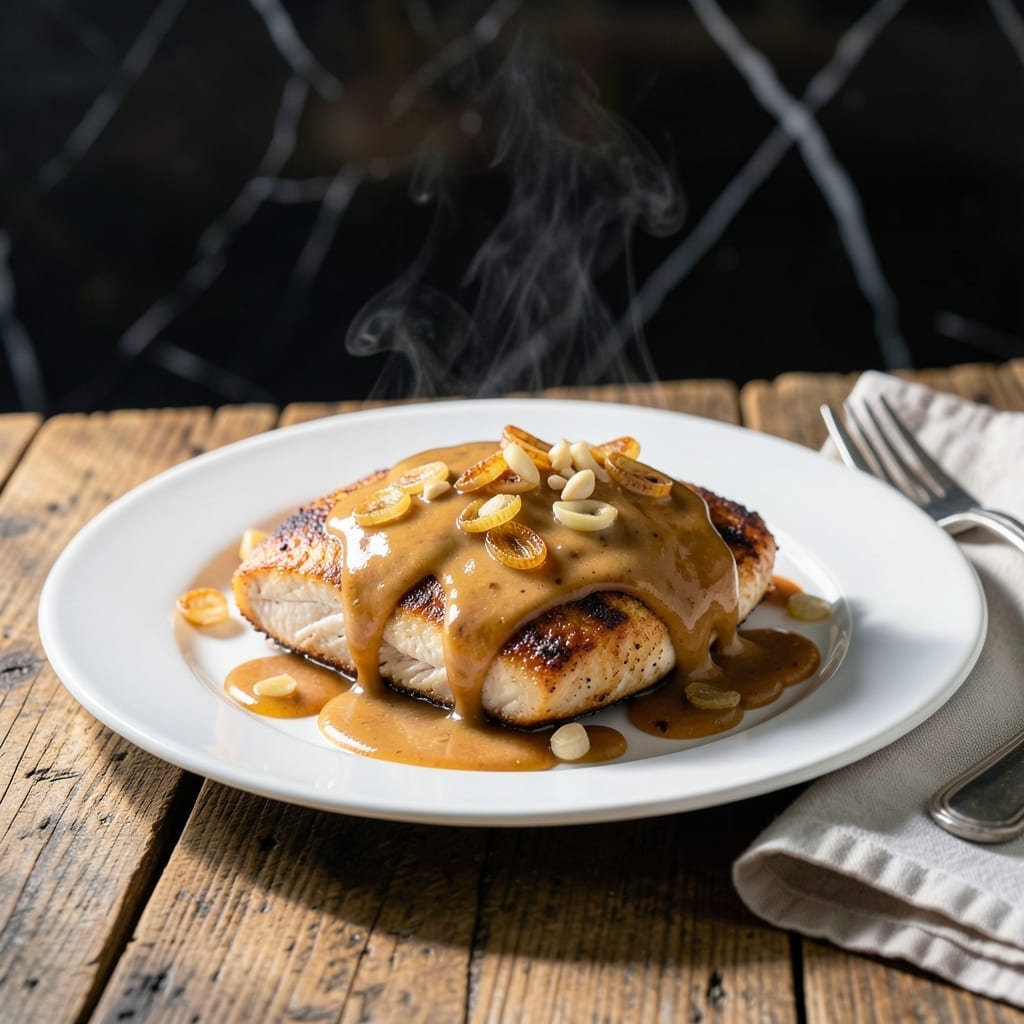
This professional method delivers tender chicken with a rich, creamy mustard pan sauce that comes together in one skillet. The technique ensures juicy meat and a velvety finish every time.
I developed this approach to balance bold Dijon flavor with smooth creaminess, creating a sauce that clings perfectly to each bite. Simple ingredients transform into restaurant-quality results with minimal effort.
The chicken emerges perfectly cooked, while the sauce reduces to a luxurious consistency. Pair with roasted potatoes or steamed vegetables for a complete meal.
This dish proves that elegant flavors don’t require complicated techniques. The pan sauce develops depth as it simmers, absorbing all the chicken’s savory essence.
Ingredients for Dijonnaise Chicken
Professional ingredients deliver restaurant-quality results with minimal effort in one skillet.
| Ingredient | Amount | Notes |
|---|---|---|
| Boneless Skinless Chicken Breasts 🍗 | 1 ½ lb | Pounded to even thickness |
| Dijon Mustard 🟡 | ⅓ cup | Smooth, high-quality preferred |
| Heavy Cream 🥛 | 1 cup | Full-fat for richness |
| Unsalted Butter 🧈 | 3 tbsp | Divided for cooking and sauce |
| Shallots 🧅 | 2 whole | Finely minced |
| Garlic Cloves 🧄 | 3 cloves | Minced for sauce |
| Dry White Wine 🍷 | ½ cup | Sauvignon Blanc recommended |
| Chicken Stock 🥣 | ½ cup | Low-sodium preferred |
| All-Purpose Flour 🌾 | 1 tbsp | For thickening sauce |
| Fresh Thyme Sprigs 🌿 | 4 sprigs | Leaves stripped, stems discarded |
| Kosher Salt 🧂 | 1 tsp | Diamond Crystal preferred |
| Freshly Ground Black Pepper 🌶️ | ½ tsp | Coarse grind recommended |
| Olive Oil 🫒 | 1 tbsp | For searing chicken |
| Fresh Parsley 🌿 | 2 tbsp | Chopped, for garnish |
The chicken quality is paramount. Boneless, skinless breasts from Whole Foods or a trusted butcher ensure tenderness. Pounding to even thickness (about ½-inch) prevents dryness. For the Dijon, Maille or Grey Poupon offer consistent boldness. The heavy cream should be full-fat—low-fat versions can curdle when reduced. Fresh thyme adds depth that dried cannot replicate.
No white wine? Substitute chicken stock with 1 tbsp lemon juice. Shallots can be replaced with yellow onion at a 1:1 ratio. For a gluten-free version, use cornstarch instead of flour. The butter must be unsalted to control seasoning. If avoiding alcohol entirely, apple cider vinegar (1 tbsp) in stock mimics wine’s acidity.
Store raw chicken in its original packaging on a plate for up to 2 days. The sauce keeps for 3 days refrigerated but is best fresh. Reheat gently to avoid separating the cream. Fresh herbs (thyme, parsley) should be wrapped in damp paper towels and kept in a sealed container.
Why You’ll Love This Recipe
- One Pan Wonder: I love that everything cooks in a single skillet—chicken, shallots, and that creamy Dijon sauce.
- Rich and Tangy: The sharp Dijon mellows into the heavy cream for a sauce so good I could drink it.
- Weeknight MVP: It’s my go-to for busy evenings when I need dinner fast but still impressive.
- Leftovers? No Problem: The flavors deepen overnight, so tomorrow’s lunch tastes even better. Honestly, I make extra just for that.
Step-by-Step Instructions for Dijon Chicken with Creamy Pan Sauce
Master the technique behind this velvety sauce and perfectly cooked chicken with professional precision.
Step 1: Prepare and Sear the Chicken Breasts
Begin by patting the 1.5 lb boneless skinless chicken breasts completely dry with paper towels. Season both sides evenly with the 1 tsp kosher salt and 0.5 tsp freshly ground black pepper. Pounding to even thickness ensures uniform cooking and prevents dry spots.
Heat the 1 tbsp olive oil in a large skillet over medium-high heat until shimmering. Add the chicken and sear undisturbed for 5-6 minutes per side until golden brown and cooked through to an internal temperature of 165°F. Transfer to a plate and tent loosely with foil to retain warmth.
Step 2: Build the Aromatic Base for the Sauce
Reduce heat to medium and add 1 tbsp of the 3 tbsp unsalted butter to the same skillet. Once melted, add the 2 whole finely minced shallots and cook for 3-4 minutes, stirring frequently, until softened and translucent. Avoid browning—this develops sweetness without bitterness.
Add the 3 minced garlic cloves and the stripped leaves from the 4 sprigs fresh thyme sprigs. Sauté for 30 seconds until fragrant. Sprinkle the 1 tbsp all-purpose flour over the aromatics and stir constantly for 1 minute to cook out the raw taste—this creates the roux that will thicken your sauce.
Step 3: Deglaze and Develop the Sauce
Pour in the 0.5 cup dry white wine and scrape up all the browned bits from the bottom of the pan with a wooden spoon. This deglazing step captures the fond—those concentrated flavor compounds that define a great pan sauce. Simmer for 2-3 minutes until the liquid reduces by half.
Add the 0.5 cup chicken stock and bring to a gentle simmer. Stir in the 0.33 cup Dijon mustard until fully incorporated, then pour in the 1 cup heavy cream. Return to a simmer and cook for 3-4 minutes until the sauce thickens slightly and coats the back of a spoon.
Step 4: Finish and Serve
Reduce heat to low and whisk in the remaining 2 tbsp unsalted butter one tablespoon at a time, allowing each addition to melt completely before adding more. This mounting technique gives the sauce a glossy finish and rich mouthfeel. Taste and adjust seasoning if needed.
Return the chicken to the skillet and spoon the sauce over the top, simmering for 1-2 minutes to heat through. Garnish with the 2 tbsp chopped fresh parsley just before serving. The sauce should be creamy and velvety, with a balanced tang from the mustard that complements the tender chicken perfectly.
Pro Tips For Making Dijonnaise Chicken
- Pound the Chicken: Beat those breasts to an even ½-inch thickness with a rolling pin—this guarantees they cook through at the same time without drying out the thinner parts.
- Bloom the Shallots: Cook the finely diced shallots in butter over medium-low until translucent, about 3-4 minutes. Rushing this step leaves them raw and harsh in the finished sauce.
- Temper the Cream: I learned this the hard way—whisk a splash of the hot pan sauce into the heavy cream before adding it all in, or it’ll curdle on contact.
- Use Full-Fat Dijon: Skip the low-fat mustard; the oil in a good Dijon emulsifies with the cream for a richer, smoother sauce that actually clings to the chicken.
Make-Ahead Tips for dijonnaise chicken
Prep Ahead
Pound and season the 1.5 lb chicken breasts up to 24 hours in advance. Store in an airtight container in the fridge. This lets the salt penetrate deeply for extra juiciness. I often prep this the night before for stress-free cooking.
Sauce Base Prep
Mince the 2 shallots and 3 garlic cloves together and store in a small container. Strip the thyme leaves and refrigerate. Having these ready means the sauce comes together in 10 minutes while the chicken rests. 💡
Partial Cooking
Sear the chicken completely but stop at 150°F internal temperature. Cool and refrigerate for up to 2 days. Finish cooking in the sauce when ready to serve. This method preserves texture while saving time.
Sauce Storage
Make the full sauce (without butter finish) and store separately for 3 days. Reheat gently on low heat, then whisk in the final 2 tbsp butter fresh. The flavors deepen beautifully overnight.
Reheating Tips
Place chilled chicken in a skillet with ¼ cup chicken stock, cover, and warm on medium-low for 8-10 minutes. Add pre-made sauce and heat through. This prevents drying while restoring that velvety texture. 🔥
Garnish Last
Always add fresh parsley just before serving. The vibrant color and herbaceous note are best fresh. I keep a small bunch wrapped in a damp paper towel for up to 5 days.
Nutrition Facts
Frequently Asked Questions
Can I use chicken thighs instead of breasts?
Boneless, skinless thighs work beautifully and stay extra juicy. Reduce cooking time to 4-5 minutes per side since they cook faster than breasts. The sauce pairs perfectly with the richer thigh flavor.
Why did my sauce curdle?
This usually happens if the cream gets too hot too fast. Keep the heat at medium or lower when adding cream, and stir constantly. If it separates, whisk in 1 tsp ice water to bring it back together.
What’s the best wine substitute?
Use ½ cup chicken stock mixed with 1 tbsp lemon juice or apple cider vinegar. The acidity mimics wine’s role in balancing the sauce’s richness. Avoid plain stock—it needs that tang.
How do I make this gluten-free?
Swap the 1 tbsp flour for cornstarch or arrowroot powder. Mix it with 1 tbsp cold water first, then stir into the sauce. It thickens just as well without gluten.

- Jollof Rice Sauce Recipe: West African Tomato and Spice Infusion - September 25, 2026
- Japanese Rice Soup Recipe: Umami-Rich Comfort in a Bowl - September 25, 2026
- Homemade Cream Of Rice Recipe: Silk-Smooth Breakfast in Minutes - September 25, 2026