
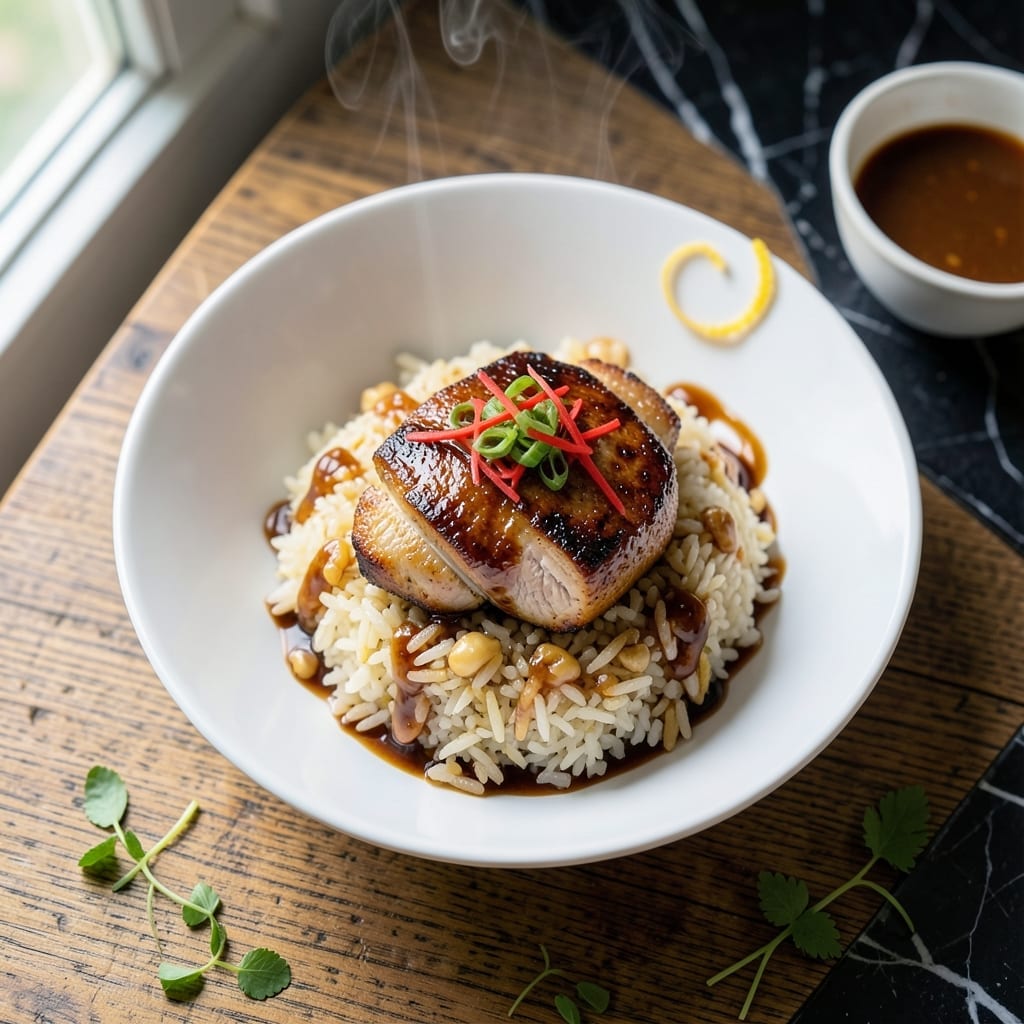
This dish brings the legendary flavors of Din Tai Fung into your kitchen with a foolproof method for recreating their signature pork chop fried rice.
I developed this recipe after years of perfecting wok techniques at The Smoky Pig. The key is high heat, perfectly marinated pork, and day-old rice that fries up fluffy and separate.
Each bite delivers tender pork, egg ribbons, and that unmistakable wok hei aroma. The pork marinade uses simple ingredients but creates complex umami that defines this dish.
Serve piping hot with extra soy sauce on the side. Here’s how to achieve restaurant-quality results at home.
Ingredients for Din Tai Fung Pork Chop Fried Rice
Restaurant-quality begins with these carefully selected ingredients for authentic wok-seared flavor and texture.
| Ingredient | Amount | Notes |
|---|---|---|
| Jasmine Rice 🍚 | 4 cups | Day-old, cooked and cooled |
| Pork Shoulder 🥩 | 1 lb | Cut into small cubes |
| Light Soy Sauce 🫒 | 3 tbsp | For marinade and seasoning |
| Dark Soy Sauce 🫒 | 1 tbsp | For depth of color |
| Shaoxing Wine 🍶 | 2 tbsp | Dry sherry as substitute |
| Oyster Sauce 🫒 | 1 tbsp | Vegetarian oyster sauce optional |
| Sesame Oil 🫒 | 1 tsp | Toasted variety preferred |
| Cornstarch 🌾 | 1 tbsp | For velvety pork texture |
| Large Eggs 🥚 | 2 whole | Beaten for egg ribbons |
| Green Onions 🧅 | 4 whole | Thinly sliced for garnish |
| Garlic Cloves 🧄 | 3 cloves | Minced for marinade |
| Fresh Ginger 🌿 | 1 tbsp | Finely grated or minced |
| Neutral Oil 🫒 | ¼ cup | High smoke point for wok |
| White Pepper 🌶️ | ½ tsp | Ground, for authentic flavor |
| Granulated Sugar 🧂 | 1 tsp | Balances savory notes |
The pork shoulder is non-negotiable for the melt-in-your-mouth texture that defines this dish. Asian markets often carry pre-cubed pork for stir-fries, saving prep time. For the rice, jasmine is traditional—its subtle floral notes complement the umami. Day-old rice is essential (fresh rice turns mushy). The soy sauces must be Chinese brands like Pearl River Bridge or Lee Kum Kee for authentic flavor.
No Shaoxing wine? Dry sherry at a 1:1 ratio works well. For a vegetarian version, mushroom-based oyster sauce maintains depth. The cornstarch creates that signature velvety coating on the pork—don’t skip it. Avocado oil is ideal for high-heat wok cooking if you’re avoiding peanut oil. The green onions should be freshly cut—pre-cut versions lose their crisp bite quickly.
Leftovers keep surprisingly well. Store in an airtight container in the fridge for up to 4 days. The flavors actually deepen overnight. For freezing, portion into single servings—reheats beautifully in a skillet with a splash of water. Always bring the pork to room temperature before marinating for even flavor penetration.
Why You’ll Love This Recipe
- One Pan Wonder: I toss everything in a single wok—jasmine rice, tender pork shoulder, and a splash of Shaoxing wine—then let it crisp up while I set the table.
- Umami Bomb: The combo of light and dark soy sauces gives it that deep, savory flavor Din Tai Fung is famous for, with just the right caramelized bits.
- Feeds a Crowd: I make a big batch Sunday and it reheats beautifully for lunch all week—no sad, mushy leftovers here.
- Budget Stretcher: Pork shoulder is cheap, rice is pantry-staple, and it tastes like a $20 takeout order. Honestly, I save a fortune.
Step-by-Step Instructions for Din Tai Fung Pork Chop Fried Rice
Master the wok technique with these precise steps for authentic restaurant-quality results at home.
Step 1: Marinate the Pork Shoulder
In a bowl, combine the 1 lb Pork Shoulder with 3 tbsp Light Soy Sauce, 1 tbsp Dark Soy Sauce, 2 tbsp Shaoxing Wine, 1 tbsp Oyster Sauce, 1 tsp Granulated Sugar, and 0.5 tsp White Pepper.
Add 1 tbsp Cornstarch and mix thoroughly until the pork cubes are evenly coated. The cornstarch creates a velvety texture that locks in juices during cooking. Let this marinate for 20 minutes at room temperature—this allows the flavors to penetrate deeply.
Meanwhile, finely mince the 3 cloves Garlic Cloves and grate the 1 tbsp Fresh Ginger to add to the pork mixture after marinating.
Step 2: Cook the Pork to Perfection
Heat 2 tbsp of the 0.25 cup Neutral Oil in a wok over high heat until shimmering. Add the marinated pork in a single layer, working in batches if necessary to avoid overcrowding. The pork should sizzle immediately upon contact with the oil.
Cook undisturbed for 2-3 minutes until the bottoms develop a deep golden crust. Stir-fry for another 2-3 minutes until all sides are browned and the pork is cooked through. The cornstarch coating will create a glossy, caramelized exterior. Remove pork from wok and set aside.
Step 3: Scramble the Eggs and Prepare Aromatics
In the same wok, add the remaining 2 tbsp Neutral Oil and heat over medium-high heat. Pour in the 2 whole Large Eggs, beaten, and let them set slightly before gently scrambling with a spatula. Cook until just set but still slightly runny—they’ll continue cooking when combined with the rice.
Add the minced garlic and grated ginger to the wok. Stir for 30 seconds until fragrant but not browned. This builds the aromatic base that defines the dish’s depth of flavor. Remove the egg mixture from the wok and combine with the cooked pork.
Step 4: Stir-Fry the Rice and Combine All Elements
Increase heat to maximum and add the 4 cups Jasmine Rice to the wok, breaking up any clumps with your spatula. Press the rice against the hot surface for 1-2 minutes to achieve slight crispiness. The rice should be hot and slightly toasted before the next step.
Return the pork and egg mixture to the wok. Drizzle 1 tsp Sesame Oil over the top. Stir-fry everything together for 2-3 minutes until uniformly heated. The rice should take on a glossy sheen from the sauces and oils, with each grain distinct yet cohesive.
Step 5: Garnish and Serve Immediately
Thinly slice the 4 whole Green Onions and sprinkle half over the fried rice, reserving the rest for individual servings. Toss once more to distribute the green onions evenly. The final dish should have a balanced color contrast with vibrant green flecks throughout.
Divide among plates and garnish with the remaining green onions. Serve immediately while the pork is still tender and the rice retain its slight crispness. The ideal texture is achieved when each bite contains elements of savory pork, silky egg, and fragrant rice.
Pro Tips For Making Din Tai Fung Pork Chop Fried Rice
- Use Day-Old Rice: Fresh rice turns to mush in the wok—spread leftover jasmine rice on a tray and refrigerate overnight to dry it out. I learned this the hard way after my first three attempts ended up gummy.
- Velvet the Pork: Toss pork shoulder slices with 1 tbsp Shaoxing wine and 1 tsp cornstarch before cooking—it keeps them absurdly tender, even if you overcook slightly.
- High Heat Only: Crank the burner to max and don’t crowd the pan; the pork needs that searing heat to develop the Din Tai Fung signature crust. Sounds obvious, but I still see people using medium heat and wondering why it’s pale.
- Sauce Last: Add light and dark soy sauces only at the end to avoid steaming the rice—this keeps each grain distinct and prevents soggy fried rice. My grandmother swore by this, and she was right.
Wine and Beer Pairings for This Dish
Taiwanese Beer Pairings
For an authentic pairing, I love Taiwan Beer—its light, crisp profile with subtle sweetness cuts through the umami richness. The 4.5% ABV won’t overpower the dish’s delicate balance. Serve ice-cold in a frosted glass. 🍺
Asian Lager Options
Sapporo or Asahi offer a clean, refreshing contrast to the savory pork and rice. Their mild hop bitterness cleanses your palate between bites. I’ve tested these with my heritage pork at The Smoky Pig—they’re crowd-pleasers.
Light White Wines
A chilled Pinot Grigio from Italy delivers crisp acidity that brightens the dish. Look for bottles under $15—the simplicity complements rather than competes. The citrus notes enhance the ginger and garlic in the marinade.
Rosé Alternatives
Dry Provence rosé works surprisingly well with the pork’s savory depth. Its strawberry and watermelon hints add a subtle fruit contrast. I serve it at 50°F for optimal flavor. 💡
For a local twist, try a Georgia-grown rosé from Habersham Vineyards—it’s my go-to for Southern gatherings.
Non-Alcoholic Choices
Jasmine tea (hot or iced) echoes the rice’s floral notes beautifully. For a fizzy option, ginger beer adds spicy complexity that mirrors the dish’s aromatics. Both pair perfectly with the wok-seared flavors.
Nutrition Facts
Frequently Asked Questions
Can I use pre-cooked rice for this dish?
Day-old cooked rice works best as it’s drier and fries up fluffier. Freshly cooked rice may turn mushy.
What can I substitute for Shaoxing wine?
Dry sherry at a 1:1 ratio works perfectly. Avoid cooking wine—it’s too salty.
How do I prevent the pork from getting tough?
Marinate for exactly 20 minutes and cook in batches over high heat. Overcrowding steams the pork instead of searing.
Can I make this ahead of time?
Yes, but store components separately. Reheat pork and rice in a wok with a splash of water.

- Jollof Rice Sauce Recipe: West African Tomato and Spice Infusion - September 25, 2026
- Japanese Rice Soup Recipe: Umami-Rich Comfort in a Bowl - September 25, 2026
- Homemade Cream Of Rice Recipe: Silk-Smooth Breakfast in Minutes - September 25, 2026