
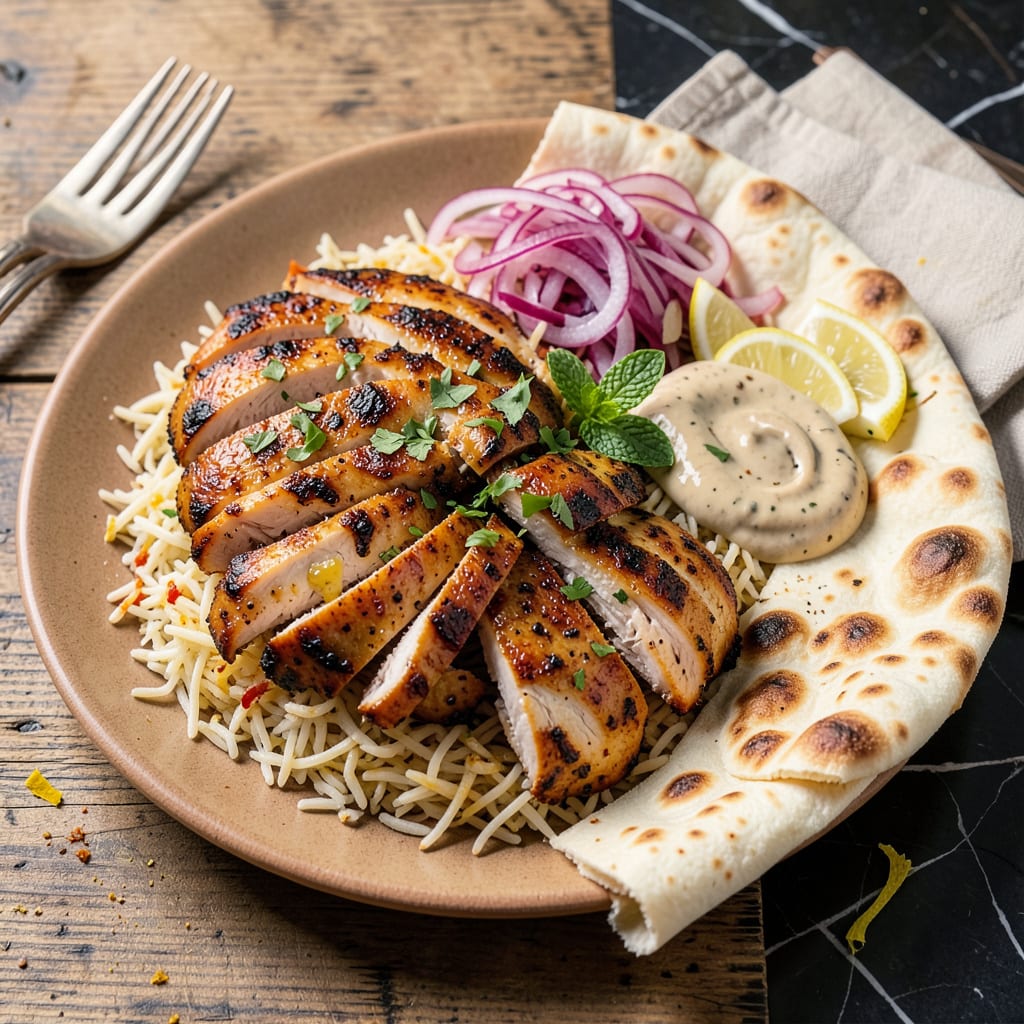
Traditional chicken shawarma typically contains no dairy, as it’s made with marinated chicken, garlic, lemon, and spices. However, some modern variations or restaurant versions may include yogurt-based sauces or garnishes like cheese.
The classic preparation focuses on bold, aromatic flavors from spice blends like cumin, paprika, and turmeric—never relying on dairy for texture or taste. 🔥 What changes the game is how restaurants adapt recipes for local preferences, sometimes adding creamy elements to balance heat or enhance richness. I always recommend asking about sauce ingredients, as even a simple garlic dip might contain yogurt or labneh in some kitchens.
For those avoiding dairy, the good news is that the marinade and cooking process remain inherently dairy-free in authentic versions. The risk comes later—when toppings or sides enter the picture. A traditional shawarma wrap might stay safe, but loaded platters with melted cheese or sauces require extra attention.
💡 In This Article
- Traditional Chicken Shawarma Ingredients and Dairy-Free Status
- Hidden Dairy Risks in Modern Chicken Shawarma Dishes
Traditional Chicken Shawarma Ingredients and Dairy-Free Status
The foundation of authentic chicken shawarma lies in its marinade—a blend of olive oil, lemon juice, garlic, and spices like cumin, paprika, and turmeric. This combination creates a tenderizing effect through acidity (from the lemon) and enzyme activity (from the garlic), breaking down proteins without any need for dairy.
The cooking method—typically rotisserie-style on a vertical spit—further concentrates these flavors through slow, even heat exposure.
What makes traditional shawarma inherently dairy-free is its Middle Eastern roots. In countries like Lebanon and Syria, the dish evolved as a street food meant for quick service and preservation. Dairy wasn’t practical for vendors who needed ingredients that could withstand hours of heat without spoiling.
Instead, the moisture comes from the marinade’s oil and citrus, while the fat content (about 12-15% in chicken thigh cuts) ensures juiciness during the 3-4 hour cooking process.
Regional variations do exist, but they rarely introduce dairy. Turkish versions might include a touch of pomegranate molasses for sweetness, while Egyptian preparations sometimes add vinegar for tang. The one exception? Some Palestinian recipes use a small amount of tahini in the marinade—but this sesame paste remains dairy-free.
The key takeaway: the core components (chicken, spices, oil, citrus) create a naturally dairy-free profile.
The sensory experience reinforces this: properly cooked shawarma has a caramelized exterior with tender, juicy interior layers. The spices create a warm, earthy aroma that doesn’t need dairy to feel rich. When sliced thinly from the spit, the meat should glisten from its own rendered fats—not from added butter or cream.
This is why traditional shawarma maintains its dairy-free status while delivering such satisfying texture and flavor.
For comparison, consider how other meat preparations differ: Greek gyros often include yogurt in their tzatziki sauce, while Mexican al pastor uses pineapple for tenderizing. Shawarma stands apart by relying solely on its spice-oil-citrus foundation—a method perfected over centuries to work without dairy’s help.
The result is a dish where every component serves a functional purpose in both flavor development and food safety.
Even the serving style supports this dairy-free tradition. Classic shawarma is wrapped in flatbread with pickles, tomatoes, and parsley—ingredients that provide contrast through texture and acidity rather than creaminess. The wrap’s moisture comes from the marinated meat’s juices and vegetable water content, not from any dairy additions.
This balance of components creates a complete eating experience without ever needing cheese or yogurt-based elements.
What changes in modern adaptations isn’t the meat itself, but what gets added after cooking. The dairy risks come later—in sauces and toppings—rather than from the shawarma’s core preparation. This distinction is crucial for understanding why the traditional version remains safely dairy-free while restaurant versions might not. ✨

- Jollof Rice Sauce Recipe: West African Tomato and Spice Infusion - September 25, 2026
- Japanese Rice Soup Recipe: Umami-Rich Comfort in a Bowl - September 25, 2026
- Homemade Cream Of Rice Recipe: Silk-Smooth Breakfast in Minutes - September 25, 2026