
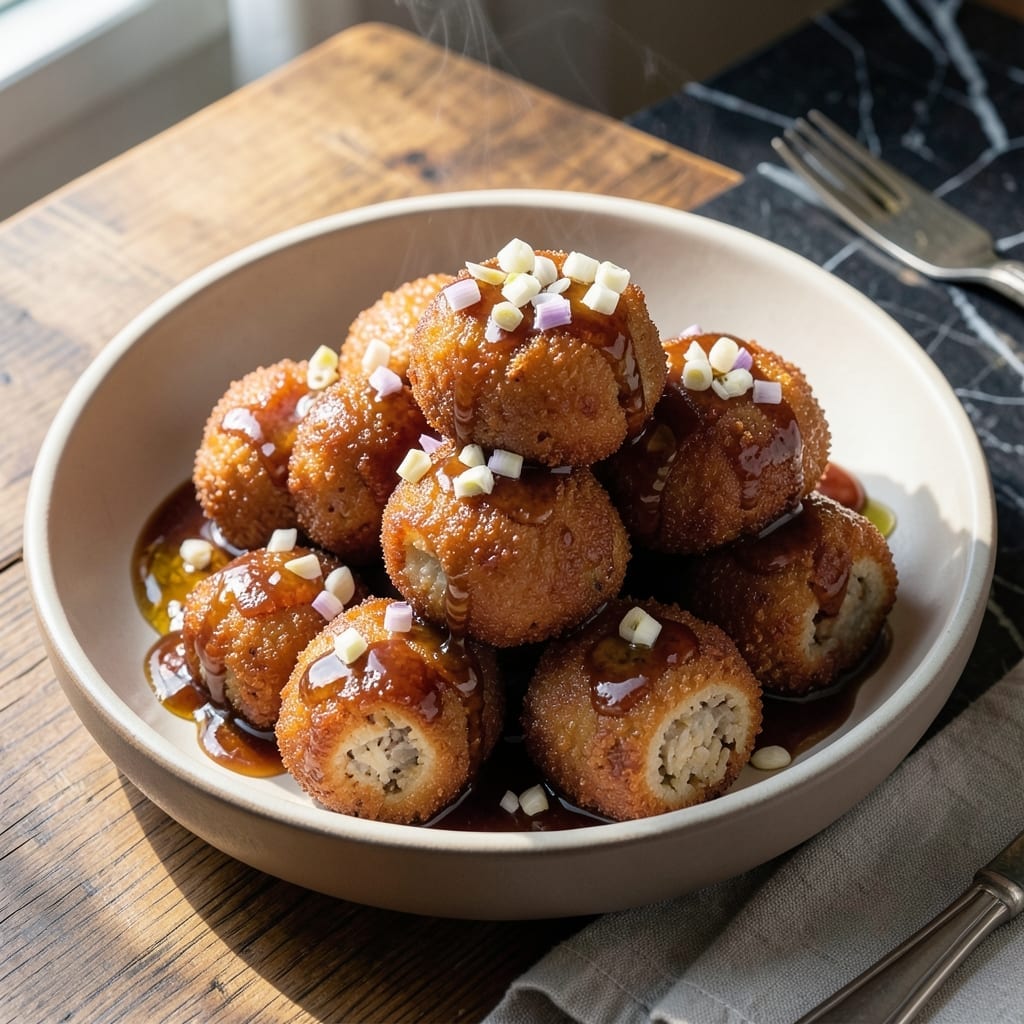
Korean street food has a new star, and this crispy rice cake recipe brings that golden texture to your kitchen. The secret lies in the double-frying method that creates a shatteringly crisp exterior while keeping the inside soft.
This version delivers authentic flavor and that coveted crispy bite without complicated techniques. Just follow the precise steps for restaurant-quality results at home.
Ingredients for Dtf Rice Cake
Crispy Korean rice cakes start with simple, quality ingredients for that signature golden texture and bold flavor.
| Ingredient | Amount | Notes |
|---|---|---|
| Rice Cakes 🍚 | 14 pieces | Korean cylindrical tteok, soaked if hard |
| All-Purpose Flour 🌾 | ½ cup | For light dusting before frying |
| Cornstarch 🌽 | ¼ cup | Creates extra crispiness |
| Garlic Cloves 🧄 | 4 cloves | Minced finely for aroma |
| Soy Sauce 🫒 | 3 tbsp | Use low-sodium if preferred |
| Gochujang 🌶️ | 2 tbsp | Korean red pepper paste |
| Honey 🍯 | 1 tbsp | Balances spicy and savory |
| Rice Vinegar 💧 | 1 tbsp | Adds tangy brightness |
| Sesame Oil 🫒 | 1 tsp | Toasted for nutty flavor |
| Green Onions 🧅 | 3 whole | Thinly sliced for garnish |
| Sesame Seeds 🌿 | 1 tsp | Toasted for crunch |
| Vegetable Oil 🫒 | 2 cups | For deep frying, neutral flavor |
| Sugar 🧂 | 1 tsp | Optional for sweetness |
| Red Pepper Flakes 🌶️ | ½ tsp | Adjust to spice preference |
The rice cakes are everything here. Korean markets carry the cylindrical tteok (look for the vacuum-sealed packs). If they’re rock hard, soak them in warm water for 20 minutes before cooking. H Mart or Nam Dae Mun are great sources if you’re near a major city. The cornstarch is non-negotiable for that shatteringly crisp exterior—don’t skip it. For the gochujang, Sempio or Chongga brands are reliable.
No gochujang? Miso paste plus a dash of sriracha gets you in the ballpark. Short on rice cakes? Thick-cut mochi slices work in a pinch. The soy sauce can be tamari for gluten-free, but the flavor will be slightly different. If you’re avoiding honey, agave or maple syrup swaps in seamlessly. The sesame oil should be toasted—light sesame oil won’t give you the same depth.
Fried rice cakes are best eaten immediately (that crispiness doesn’t last). The sauce can be made ahead and stored for 1 week in the fridge. Leftovers? Re-crisp in the air fryer at 375°F for 3-4 minutes. Don’t refrigerate the fried cakes—they’ll turn gummy.
Why You’ll Love This Recipe
- Minimal Effort: I just mix flour, cornstarch, and soy sauce—no fancy prep. Honestly, the hardest part is mincing the garlic.
- Umami Bomb: The garlic and soy sauce soak into the rice cakes, giving that savory depth with every chewy bite.
- Weeknight Hero: It’s my go-to for quick dinners or a satisfying snack. Between us, I’ve made it three times this week.
- Budget Stretcher: Rice cakes and pantry staples keep costs low, and leftovers reheat beautifully. I’ll be real: it’s cheaper than takeout.
Step-by-Step Instructions for Korean Street Food Rice Cakes
Master the technique for achieving that signature crispy exterior while keeping the inside tender and flavorful.
Step 1: Prepare the Rice Cakes and Coating
If your rice cakes are hard, soak them in warm water for 10-15 minutes until they soften but still hold their shape. Drain thoroughly and pat completely dry with paper towels—any moisture will cause the oil to splatter.
In a shallow bowl, combine the 0.5 cup all-purpose flour and 0.25 cup cornstarch. The cornstarch is essential for achieving that ultra-crispy coating that distinguishes this dish. Dredge each rice cake in the flour mixture, pressing gently to adhere, then shake off any excess.
Step 2: Fry to Golden Perfection
Heat the 2 cups vegetable oil in a deep, heavy-bottomed pot to 350°F. Use a deep-fry thermometer for accuracy. The oil is ready when a pinch of flour sizzles immediately upon contact.
Working in batches to avoid overcrowding, carefully lower the coated rice cakes into the hot oil. Fry for 3-4 minutes, turning occasionally, until they turn a deep, golden brown and develop a crisp, crackling exterior. Remove with a slotted spoon and drain on a wire rack or paper towels.
Step 3: Create the Signature Sauce
In a separate pan, heat the 1 tsp sesame oil over medium heat. Add the minced 4 cloves garlic cloves and sauté for 30 seconds until fragrant but not browned. Immediately add the 3 tbsp soy sauce, 2 tbsp gochujang, 1 tbsp honey, 1 tbsp rice vinegar, 1 tsp sugar, and 0.5 tsp red pepper flakes.
Simmer for 2-3 minutes, stirring constantly, until the sauce thickens slightly and the gochujang fully dissolves. The sauce should coat the back of a spoon with a glossy sheen, balancing sweet, spicy, and umami flavors perfectly.
Step 4: Toss and Garnish
Place the fried rice cakes in a large bowl and pour the warm sauce over them. Toss gently but thoroughly to ensure every piece is evenly coated. The crispy exterior should hold up to the sauce without becoming soggy.
Transfer to a serving platter and garnish with thinly sliced 3 whole green onions and 1 tsp sesame seeds. The green onions add a fresh, sharp contrast to the rich sauce, while the sesame seeds provide a nutty crunch. Serve immediately while the rice cakes are still crispy.
Pro Tips For Making Dtf Rice Cake
- Soak the Rice Cakes: I learned this the hard way—dry rice cakes stay rock-hard. Soak them in warm water for 15-20 minutes until pliable but not mushy, or they’ll never absorb the sauce properly.
- Double Coat the Cakes: Skip just flour or just cornstarch. Dredge the soaked rice cakes in flour first, then cornstarch for that extra-crispy shell that holds up to the soy-garlic glaze.
- Low and Slow for Garlic: After burning three batches, I finally figured out garlic in hot oil turns bitter in seconds. Cook it on medium-low just until fragrant, about 30 seconds, before adding the soy sauce.
- Use Cold Water Slurry: Sounds weird, but it works: mix your cornstarch with cold water before adding to the sauce. It prevents clumping and gives that glossy, restaurant-style finish to your DTF rice cakes.
Essential Equipment for Perfect Results
Deep Fryer Setup
For home cooks, I recommend a 5-6 quart Dutch oven like Lodge Enamel for even heat distribution. Fill it no more than ⅔ full with oil to prevent dangerous overflow when adding the rice cakes. A candy thermometer clipped to the side gives precise temperature control. 🌡️
Oil Choice Matters
Peanut oil is my top pick for its 450°F smoke point and neutral flavor, but vegetable or canola oil work well too. Avoid olive oil—its low smoke point will burn at frying temps. Always use fresh oil for best results and crispiness.
Draining Station
Set up a wire cooling rack over a baking sheet to drain fried rice cakes. This allows air circulation on all sides, preventing the bottoms from getting soggy. Paper towels work in a pinch but aren’t as effective. I keep mine near the stove for quick access during frying.
Sauce Pan
A 10-inch nonstick skillet like Calphalon is perfect for the sauce—wide enough to reduce quickly without burning. The nonstick surface makes cleanup easy when dealing with sticky gochujang. Always have your sauce ingredients prepped before starting to fry. 💡
Tongs and Tools
Invest in 12-inch locking tongs for safe flipping in hot oil. A fine-mesh skimmer helps remove any stray flour bits from the oil between batches. I also keep a fire extinguisher nearby—safety first with hot oil!
Serving Essentials
Have your serving bowl and garnishes ready before frying begins. The rice cakes lose crispiness quickly, so work fast. A large mixing bowl makes tossing with sauce easy, and small ramekins hold your sliced green onions and sesame seeds for quick garnishing.
Nutrition Facts
Frequently Asked Questions
Do I need to soak the rice cakes first?
Only if they’re hard. Soak in warm water for 10-15 minutes until softened but still firm. Pat completely dry before coating to prevent oil splatter.
Can I bake instead of fry?
Baking won’t achieve the same crispiness. For best results, stick to frying at 350°F for 3-4 minutes. An air fryer at 375°F for 8-10 minutes works in a pinch.
How do I make the sauce less spicy?
Reduce gochujang to 1 tbsp and skip red pepper flakes. Balance with extra 1 tsp honey or sugar. The sauce will still be flavorful but milder.
Why did my rice cakes turn soggy?
Likely under-fried or not drained properly. Ensure oil is at 350°F and drain on a wire rack, not paper towels. Toss with sauce just before serving.

- Jollof Rice Sauce Recipe: West African Tomato and Spice Infusion - September 25, 2026
- Japanese Rice Soup Recipe: Umami-Rich Comfort in a Bowl - September 25, 2026
- Homemade Cream Of Rice Recipe: Silk-Smooth Breakfast in Minutes - September 25, 2026