
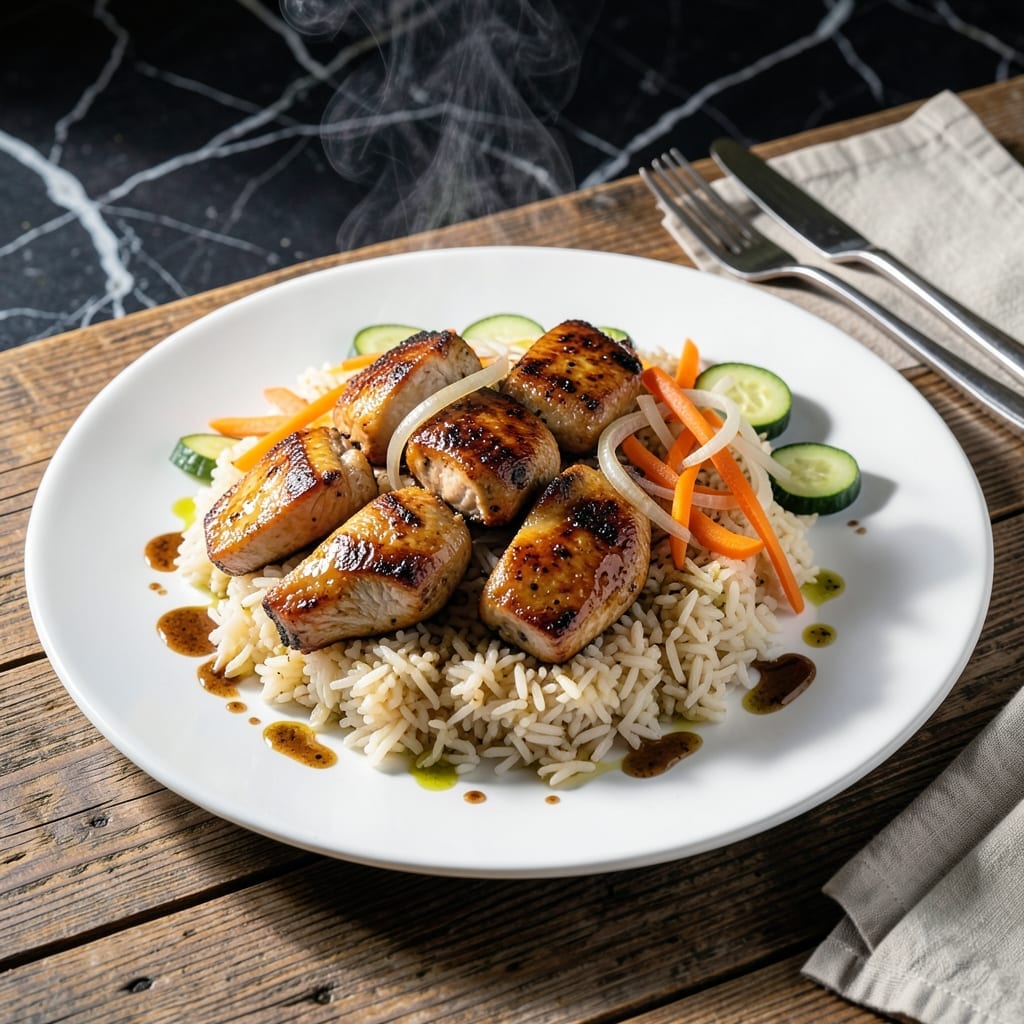
This at-home version brings the restaurant experience to your kitchen with minimal effort. The dish combines tender chicken and perfectly cooked rice with that signature savory flavor.
I’ve simplified the process while keeping all the authentic taste. A hot pan and the right seasoning blend create that classic wok-seared texture without needing special equipment.
What you’ll get is juicy chicken, fluffy rice, and a sauce that ties everything together beautifully. The best part? It all comes together in under 30 minutes.
Serve it straight from the pan for that fresh-off-the-grill feeling. The results are consistently impressive.
Ingredients for Easy at Home Hibachi Chicken and Rice
Every ingredient here delivers that signature hibachi flavor without the restaurant markup.
| Ingredient | Amount | Notes |
|---|---|---|
| Boneless Skinless Chicken Thighs 🍗 | 1 ½ lb | Cut into bite-sized pieces |
| Long-Grain White Rice 🍚 | 1 ½ cups | Uncooked, rinsed before use |
| Soy Sauce 🫙 | ⅓ cup | Low-sodium preferred |
| Sesame Oil 🫒 | 2 tbsp | Toasted for depth of flavor |
| Vegetable Oil 💧 | 2 tbsp | High smoke point for searing |
| Garlic Cloves 🧄 | 4 cloves | Minced finely for even distribution |
| Fresh Ginger Root 🌿 | 1 tbsp | Peeled and grated |
| Onion 🧅 | 1 whole | Yellow or white, diced |
| Carrots 🥕 | 2 whole | Julienned or thinly sliced |
| Zucchini 🥒 | 1 whole | Sliced into half-moons |
| Butter 🧈 | 2 tbsp | Unsalted for controlled seasoning |
| Sugar 🍚 | 1 tbsp | Granulated white sugar |
| Salt 🧂 | 1 tsp | Kosher or sea salt |
| Black Pepper 🌶️ | ½ tsp | Freshly ground preferred |
The chicken is non-negotiable—thighs stay juicy where breasts dry out. Look for skinless, boneless at Costco or your butcher for the best value. The rice needs to be long-grain white (jasmine works too) for that sticky, slightly sweet bite. For the veggies, pick whatever looks freshest at the market—carrots and zucchini are classics, but bell peppers or mushrooms play nice too.
No sesame oil? Toasted peanut oil gets you close, but it’s not the same. Fresh ginger is worth it, but ground ginger at half the amount works in a pinch. The soy sauce can be tamari for gluten-free, but watch the salt—it’s stronger. Butter is key for that restaurant-style finish (don’t skip it, even if it seems odd in an Asian dish).
Everything preps fast—30 minutes start to finish. Leftover chicken and rice keep 3-4 days in the fridge, but the veggies are best eaten fresh. Reheat the chicken in a dry pan to keep it from getting soggy.
Why You’ll Love This Recipe
- One Pan Wonder: I love that the chicken, rice, and veggies all cook together in one pan—less cleanup, more flavor.
- Umami Bomb: The combo of soy sauce and sesame oil gives that rich, savory taste I crave from takeout, but better.
- Weeknight Hero: This dish feeds my family of four with leftovers for lunch the next day. Honestly, it’s a lifesaver.
- Budget Friendly: Boneless thighs and basic pantry staples keep costs low while still feeling like a restaurant meal.
Step-by-Step Instructions for Hibachi Chicken and Rice
Here’s the method. Straightforward, tested, works every time.
Step 1: Cook the Rice and Prep the Vegetables
Start by cooking the 1.5 cups Long-Grain White Rice according to package instructions. While the rice cooks, prep your vegetables: dice the 1 whole Onion, julienne or thinly slice the 2 whole Carrots, and slice the 1 whole Zucchini into half-moons.
This multitasking approach saves time. I’ve found that using a rice cooker for the rice lets me focus on the other components without worrying about boiling over or burning. Make sure to rinse the rice before cooking to remove excess starch and prevent clumping.
Step 2: Marinate and Cook the Chicken
Cut the 1.5 lb Boneless Skinless Chicken Thighs into bite-sized pieces. In a bowl, combine the chicken with 0.33 cup Soy Sauce, 1 tbsp Fresh Ginger Root (peeled and grated), 4 cloves Garlic Cloves (minced), 1 tbsp Sugar, 1 tsp Salt, and 0.5 tsp Black Pepper. Let it marinate for 10 minutes.
Heat 2 tbsp Vegetable Oil in a large skillet or wok over medium-high heat. Add the chicken with its marinade and cook for 6-8 minutes until the pieces are golden brown and cooked through. Remove the chicken and set aside.
Step 3: Sauté the Vegetables
In the same skillet, add the prepped onion, carrots, and zucchini. Sauté over medium-high heat for 4-5 minutes until the vegetables are tender-crisp. This is where the dish builds its signature texture—crunchy veggies with a slight char.
If the pan looks dry, add a splash of water to deglaze and keep the vegetables from sticking. You want them to retain some bite, not turn mushy. The residual flavors from the chicken will infuse into the vegetables, creating layers of taste.
Step 4: Combine and Finish with Signature Flavors
Return the cooked chicken to the skillet with the vegetables. Add 2 tbsp Butter and 2 tbsp Sesame Oil. Stir everything together over medium heat for 2-3 minutes until the butter melts and coats all the ingredients. The sesame oil adds that unmistakable nutty aroma.
Taste and adjust seasoning if needed. The soy sauce in the marinade provides a solid base, but you might want a touch more salt or black pepper depending on your preference. Serve the chicken and vegetables hot over the cooked rice.
Pro Tips For Making Easy At Home Hibachi Chicken And Rice
- Cut Chicken Small: Dice the boneless skinless chicken thighs into 1-inch pieces so they cook through in 3-4 minutes on high heat. I learned this the hard way—bigger chunks dry out before the center is done.
- Pre-Cook the Rice: Have your long-grain white rice already steamed and hot before starting the chicken. Sounds obvious, but I used to scramble to finish both at the same time and ended up with cold rice or overcooked meat.
- High Heat Only: Crank your pan to medium-high and resist the urge to lower it. The chicken needs that sizzle to get that classic hibachi char without steaming in its own juices.
- Sesame Oil Last: Stir in the sesame oil at the very end, just before serving. Adding it early makes the flavor bitter—I ruined a batch before figuring this out.
Troubleshooting This Dish
Chicken Too Dry
Overcooking is the main culprit here. Chicken thighs should only cook for 6-8 minutes total. Use a meat thermometer to ensure they reach 165°F internally. If they’re already dry, rescue them by slicing thin and tossing with a splash of soy sauce and sesame oil. 💡
Rice Too Sticky
This usually means too much water or not rinsing the rice first. For perfect grains, rinse 1.5 cups Long-Grain White Rice until water runs clear, then use a 1:1.5 rice-to-water ratio. Let it rest covered for 10 minutes after cooking.
Veggies Too Soft
They likely cooked too long. Sauté veggies for only 4-5 minutes over medium-high heat. Keep them moving in the pan and remove them just as they become tender-crisp. A splash of water can help if they start to stick.
Sauce Too Salty
If you used regular soy sauce, try low-sodium next time. To fix it now, add a touch of sugar or butter to balance the saltiness. You can also bulk it up with extra cooked rice or veggies.
Not Enough Flavor
Did you skip the fresh ginger or garlic? These are flavor powerhouses. Double the amount of sesame oil at the end for more depth. I also like to finish with an extra sprinkle of black pepper. 🌟
Burnt Garlic
Garlic burns quickly over high heat. Always add minced garlic cloves after the chicken starts cooking, not before. If it happens, remove the burnt bits immediately as they’ll make the dish bitter.
Nutrition Facts
Frequently Asked Questions
Can I use chicken breast instead of thighs?
You can, but thighs stay juicier. If using breasts, reduce cooking time to 5-6 minutes to prevent dryness. Brining for 30 minutes first helps maintain moisture.
What if I don’t have a wok?
A large skillet works perfectly. Use medium-high heat and cook in batches to avoid overcrowding. The key is high heat for that signature sear.
How do I store leftovers?
Keep in an airtight container in the fridge for up to 4 days. Reheat in a skillet with a splash of water to restore moisture.

- Jollof Rice Sauce Recipe: West African Tomato and Spice Infusion - September 25, 2026
- Japanese Rice Soup Recipe: Umami-Rich Comfort in a Bowl - September 25, 2026
- Homemade Cream Of Rice Recipe: Silk-Smooth Breakfast in Minutes - September 25, 2026