
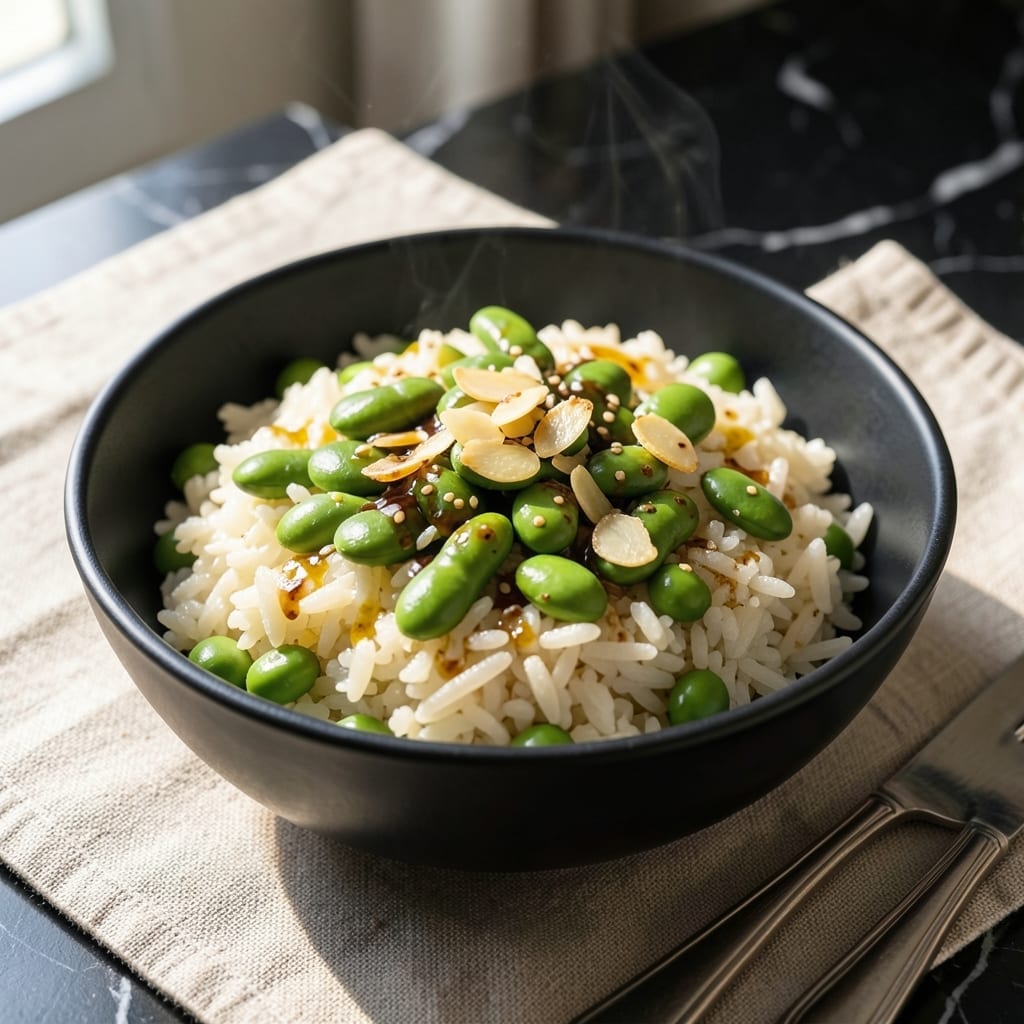
This dish transforms simple rice into a protein-packed meal with minimal effort. I developed this recipe to create a satisfying vegetarian option that doesn’t compromise on flavor or nutrition.
The key is using shelled edamame, which adds nutty depth and a satisfying bite to every forkful. Cooking the rice with vegetable broth instead of water enhances the savory notes, while a touch of sesame oil ties everything together.
What you get is a vibrant, textured bowl that works as a main course or a hearty side. The edamame stays tender-crisp, and the rice absorbs subtle umami undertones that make it anything but boring.
Perfect for meal prep, this creation keeps well and tastes even better the next day. Here’s how to make it right.
Ingredients for Edamame Rice
Simple rice gets a protein boost with edamame and bold Asian-inspired flavors here.
| Ingredient | Amount | Notes |
|---|---|---|
| Jasmine Rice 🍚 | 2 cups | Rinsed until water runs clear |
| Shelled Edamame 🫛 | 2 cups | Fresh or frozen, thawed |
| Vegetable Broth 🥕 | 4 cups | Low-sodium preferred |
| Sesame Oil 🫒 | 1 tbsp | Toasted for best flavor |
| Soy Sauce 💧 | 2 tbsp | Or tamari for gluten-free |
| Garlic Cloves 🧄 | 3 cloves | Minced finely |
| Fresh Ginger 🌿 | 1 tbsp | Grated, peeled |
| Green Onions 🧅 | ½ cup | Thinly sliced for garnish |
| Toasted Sesame Seeds 🌰 | 1 tbsp | For topping |
| Neutral Oil 🫒 | 1 tbsp | Like avocado or vegetable |
| Salt 🧂 | ½ tsp | Adjust to taste |
| Red Pepper Flakes 🌶️ | ¼ tsp | Optional for heat |
The edamame is non-negotiable—shelled and fresh or frozen (I get mine from Trader Joe’s or Whole Foods). Look for bright green beans with no grayish tint. The rice matters too: jasmine gives that perfect sticky texture, but basmati works in a pinch. Vegetable broth adds depth, but use low-sodium so you can control the salt. The ginger and garlic? Fresh only (no jars).
No jasmine rice? Short-grain brown rice adds a nice chew. Swap edamame for shelled peas if that’s what you’ve got. Out of soy sauce? Coconut aminos work great. The sesame oil is key though—don’t skip it. If you’re gluten-free, tamari instead of soy sauce does the trick. Frozen edamame saves time (just thaw first).
Keeps beautifully in the fridge for 4-5 days—the flavors actually deepen. Freezes for 3 months too. I make a double batch on Sunday, then portion for lunches. The edamame stays crisp if you undercook it slightly (it’ll finish in the residual heat).
Why You’ll Love This Recipe
- One Pot Wonder: I just toss jasmine rice, edamame, and broth in a pot—no fuss, no extra pans.
- Umami Bomb: Sesame oil and soy sauce give it that deep, savory richness I crave every time.
- Meal Prep Hero: It reheats beautifully, so I pack it for lunches all week without it getting mushy.
- Budget Stretcher: A bag of edamame and rice feeds my family for days, and honestly, it’s cheaper than takeout.
Step-by-Step Instructions for Edamame Rice
Here’s the method I use to make this dish perfectly every time.
Step 1: Rinse and Toast the Rice
Rinse the 2 cups Jasmine Rice in a fine-mesh strainer under cold water until the water runs completely clear. This removes excess starch and prevents the rice from becoming gummy as it cooks.
In a medium pot with a tight-fitting lid, heat the 1 tbsp Neutral Oil over medium-high heat. Add the drained rice and toast for 1-2 minutes, stirring constantly, until the grains turn translucent at the edges and smell nutty. This step enhances the rice’s natural flavor and gives the finished dish a subtle depth.
Step 2: Sauté Aromatics and Cook the Rice
Add the 3 cloves Garlic Cloves and 1 tbsp Fresh Ginger to the pot and sauté for 30 seconds until fragrant. Be careful not to let the garlic burn—it should turn just slightly golden at the edges.
Pour in the 4 cups Vegetable Broth, 2 tbsp Soy Sauce, and 0.5 tsp Salt. Add the 2 cups Shelled Edamame and stir to combine. Bring the mixture to a boil, then reduce the heat to low, cover, and simmer for 15 minutes. Resist the urge to peek—steam is what cooks the rice perfectly.
Step 3: Rest and Fluff the Rice
After 15 minutes, turn off the heat and let the rice sit, covered, for an additional 10 minutes. This resting period allows the rice to steam and absorb any remaining liquid, ensuring each grain is tender and separate.
Gently fluff the rice with a fork, folding in the edamame. The rice should be light and fluffy, with the edamame bright green and tender. If the texture seems too dry, add a splash of water or broth and let it sit for another 2-3 minutes.
Step 4: Finish and Garnish
Drizzle the 1 tbsp Sesame Oil over the rice and stir to combine. The oil adds a rich, toasty note that ties all the flavors together. Taste and adjust the seasoning with additional Soy Sauce or Salt if needed.
Transfer the rice to a serving bowl and garnish with 0.5 cup Green Onions, 1 tbsp Toasted Sesame Seeds, and 0.25 tsp Red Pepper Flakes for a touch of heat. The green onions add a fresh, crisp contrast, while the sesame seeds provide a nutty crunch.
Pro Tips For Making Edamame Rice
- Rinse the Rice: I learned this the hard way—unrinsed jasmine rice turns your edamame rice gluey. Swirl it in cold water until the water runs clear to remove excess starch.
- Blanch the Edamame: Drop shelled edamame into boiling water for 2 minutes, then shock in ice water. This keeps them bright green and stops the cooking so they don’t turn mushy in the rice.
- Use Less Broth: Vegetable broth adds flavor, but jasmine rice absorbs less liquid than you think. Start with 1.5 cups broth per 1 cup rice and adjust—soggy edamame rice is a sad sight.
- Toast the Edamame: Before mixing into the rice, toss blanched edamame in a dry pan for 1-2 minutes until lightly browned. Sounds weird, but it works—adds a nutty depth that pairs perfectly with the sesame oil.
Troubleshooting This Dish
Rice Turns Mushy
If your rice is gummy, you likely skipped rinsing or peeked while cooking. Rinse 2 cups Jasmine Rice until water runs clear to remove excess starch. Keep the lid closed during the 15-minute simmer—steam is critical. 💡
Edamame Too Soft
Overcooked edamame loses its vibrant color and bite. Add 2 cups Shelled Edamame only after bringing the broth to a boil. This ensures it cooks just enough to stay tender-crisp. Frozen edamame works if thawed first.
Bland Flavor
Boost flavor by toasting the rice in 1 tbsp Neutral Oil before adding liquids. Use low-sodium vegetable broth so you can control salt. Finish with 1 tbsp Sesame Oil for depth. Taste before serving and adjust with soy sauce.
Sticky Rice Clumps
Let the rice rest 10 minutes off heat after cooking. Then fluff gently with a fork, folding in the edamame. Never stir vigorously—this breaks the grains and creates paste. A splash of water helps if it seems too dry.
Burnt Aromatics
Garlic and ginger burn easily. Sauté 3 cloves Garlic Cloves and 1 tbsp Fresh Ginger for just 30 seconds until fragrant. If they brown too quickly, lower the heat to medium and stir constantly.
Uneven Cooking
Ensure even cooking by using a heavy-bottomed pot with a tight lid. Spread the rice in an even layer before adding broth. If your pot lacks a good lid, cover with foil first, then the lid to trap steam effectively.
Nutrition Facts
Frequently Asked Questions
Can I use frozen edamame?
Yes! Thaw 2 cups frozen shelled edamame first. It works just as well as fresh and maintains its texture when cooked properly.
What rice works best?
Jasmine rice is ideal for its fragrant, slightly sticky texture. Short-grain brown rice adds a nice chew if you prefer whole grains.
How do I prevent mushy rice?
Rinse the rice thoroughly and resist opening the lid during the 15-minute simmer. Steam is key to perfect texture.
Can I make this gluten-free?
Swap soy sauce for tamari, which has a similar flavor without gluten. All other ingredients are naturally gluten-free.

- Jollof Rice Sauce Recipe: West African Tomato and Spice Infusion - September 25, 2026
- Japanese Rice Soup Recipe: Umami-Rich Comfort in a Bowl - September 25, 2026
- Homemade Cream Of Rice Recipe: Silk-Smooth Breakfast in Minutes - September 25, 2026