
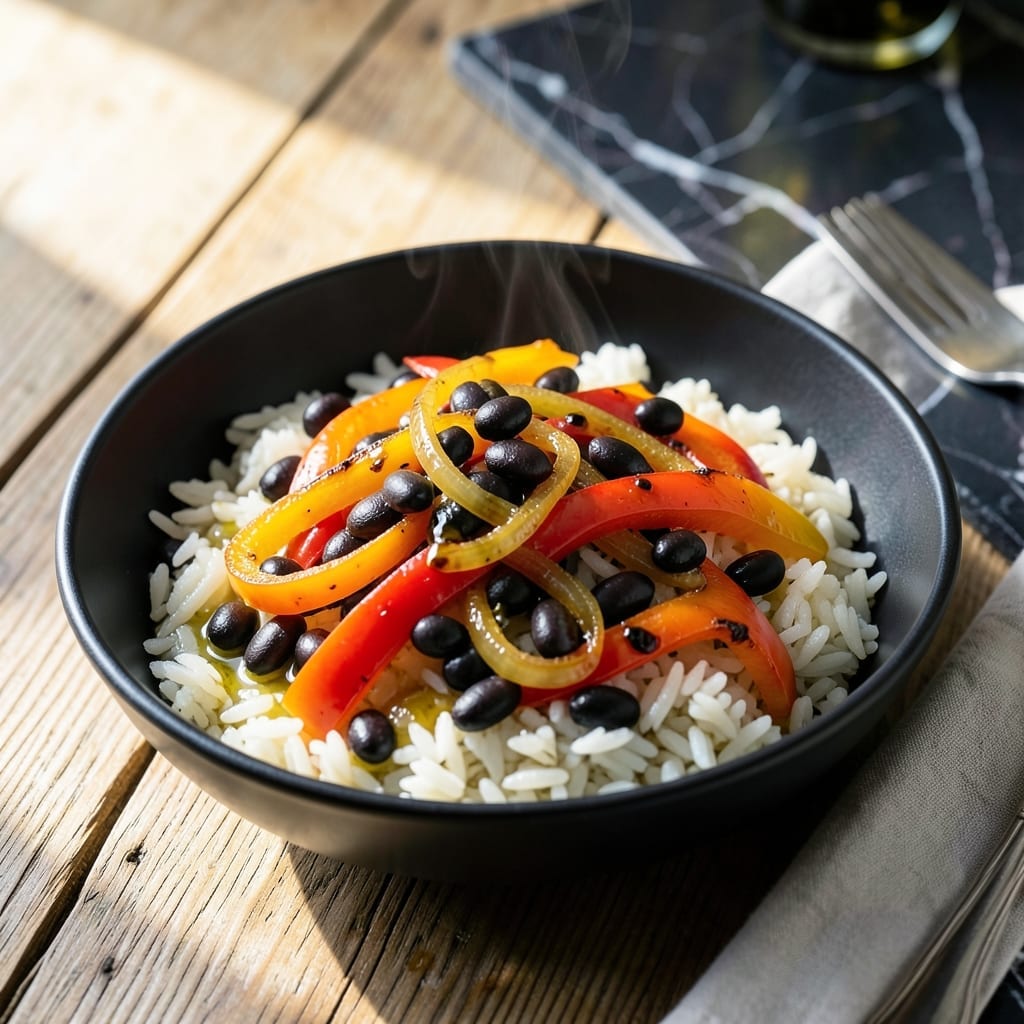
This one-pan dish brings smoky fajita flavors to a hearty combination of rice and beans.
With simple ingredients and 30 minutes, you’ll create a vegetarian-friendly meal packed with bold spices and satisfying texture.
Ingredients for Fajita Rice and Beans
Hearty rice, smoky beans, and vibrant peppers create this satisfying vegetarian one-pan meal.
| Ingredient | Amount | Notes |
|---|---|---|
| Long-Grain White Rice 🍚 | 1 ½ cups | Rinsed until water runs clear |
| Black Beans 🫘 | 15 oz | 1 can, drained and rinsed |
| Bell Peppers 🌶️ | 2 whole | Mixed colors, sliced thin |
| Yellow Onion 🧅 | 1 whole | Medium, sliced into strips |
| Vegetable Broth 🥣 | 2 ½ cups | Low-sodium preferred |
| Olive Oil 🫒 | 2 tbsp | Divided for cooking |
| Chili Powder 🌶️ | 1 ½ tsp | Adjust for heat preference |
| Ground Cumin 🌿 | 1 tsp | Freshly toasted for depth |
| Smoked Paprika 🌶️ | 1 tsp | Key for smoky flavor |
| Garlic Cloves 🧄 | 3 cloves | Minced finely |
| Lime Juice 🍈 | 2 tbsp | Freshly squeezed |
| Cilantro 🌿 | ¼ cup | Fresh, roughly chopped |
| Salt 🧂 | 1 tsp | Kosher or sea salt |
| Black Pepper 🌶️ | ½ tsp | Freshly ground |
The rice is the foundation here. Long-grain white rice absorbs the smoky, spiced broth beautifully without turning mushy. Basmati or jasmine work well too if you prefer a firmer bite. For the beans, Goya or Bush’s black beans are widely available and consistent. The bell peppers should be firm and glossy—avoid any with soft spots. Trader Joe’s often has pre-sliced peppers in the produce section, saving time.
No black beans? Pinto beans at a one-to-one ratio work perfectly. Fresh peppers not in season? Frozen bell pepper strips (thawed first) are a fine substitute. Out of smoked paprika? Regular paprika plus a pinch of cayenne gets you close. The vegetable broth can be swapped for water in a pinch, but you’ll need to boost the seasoning. Better Than Bouillon vegetable base is a great pantry staple for this.
Leftover fajita rice keeps well in the fridge for 4-5 days. Store in airtight containers—it actually tastes better the next day as flavors meld. Freeze for up to 3 months if making ahead. Reheat with a splash of water to refresh the texture.
Why You’ll Love This Recipe
- One Pan Wonder: I love that everything—rice, beans, peppers, and onions—cooks together in one skillet. No extra pots to scrub.
- Smoky & Satisfying: The bell peppers and onions caramelize in the broth, giving that classic fajita taste without the fuss of grilling.
- Meal Prep Magic: I make a big batch on Sunday and it keeps perfectly for lunches all week. Honestly, it tastes even better the next day.
- Budget Stretcher: Black beans and rice are cheap, but the fajita spices make it taste like a restaurant meal. My wallet always thanks me.
Step-by-Step Instructions for Fajita Rice and Beans
This method ensures bold, smoky flavors with minimal effort and maximum impact.
Step 1: Sauté Aromatics and Peppers
Heat 1 tablespoon olive oil in a large skillet over medium-high heat. Add the sliced bell peppers and yellow onion, spreading them in an even layer. Cook for 6-8 minutes, stirring occasionally, until the vegetables soften and develop light char marks.
This high-heat sear caramelizes the natural sugars in the peppers and onions, building the foundation of smoky fajita flavor. The edges should look slightly blistered but not burnt. Push the vegetables to one side of the pan and add the remaining 1 tablespoon olive oil to the empty space.
Step 2: Toast Spices and Bloom Aromatics
Add the minced garlic cloves, chili powder, ground cumin, and smoked paprika to the hot oil. Stir constantly for 30-45 seconds until the spices become fragrant and the garlic turns light golden at the edges.
This toasting step is crucial—it wakes up the spices and deepens their flavors. Be careful not to let the garlic burn, as it will turn bitter. The mixture should smell rich and earthy, with the smokiness of the paprika becoming prominent. Immediately add the long-grain white rice to the pan and stir to coat it in the spiced oil.
Step 3: Simmer with Broth and Beans
Pour in the 2.5 cups vegetable broth and add the 15 oz black beans, 1 tsp salt, and 0.5 tsp black pepper. Stir well to combine, then bring to a boil. Once boiling, reduce heat to low, cover, and let it simmer for 18-20 minutes until the rice is tender and the liquid is absorbed.
Resist the urge to stir during cooking—this prevents the rice from releasing too much starch and becoming gummy. You’ll know it’s done when the rice is fluffy and the liquid has been fully absorbed. If the rice is still firm at the 18-minute mark, add 2-3 tablespoons of water and cook for another 2-3 minutes.
Step 4: Finish with Fresh Flavors
Remove the skillet from heat and let it sit covered for 5 minutes. Then, stir in the 2 tbsp lime juice and half of the 0.25 cup cilantro. This resting period allows the flavors to meld and the rice to steam in its own moisture, ensuring every grain is infused with the fajita spices.
The lime juice brightens the dish and balances the smoky spices, while the fresh cilantro adds a pop of color and herbaceousness. Taste and adjust seasoning if needed—sometimes a pinch more salt or a squeeze of lime can elevate it further. Garnish with the remaining cilantro before serving.
Pro Tips For Making Fajita Rice And Beans
- Toast the Rice First: Heat the long-grain white rice in the pot with a little oil for 2-3 minutes before adding liquid—I learned this the hard way after ending up with mushy rice more times than I care to admit.
- Bloom the Spices: Sauté the fajita seasoning with the onions and peppers for about 30 seconds until fragrant; it actually changes the outcome and makes the flavors pop.
- Skip the Canned Juice: Drain and rinse the black beans thoroughly, then discard the canning liquid—it’s bitter and can muddy the dish.
- Use Hot Broth: Always add vegetable broth that’s already hot to the rice; cold broth slows the cooking and can leave you with unevenly cooked grains.
Regional Styles of These Flavors
Tex-Mex Style
In Texas, we amp up the heat with 1 tsp cayenne and swap black beans for pinto beans. Use beef broth instead of vegetable for deeper flavor. I always add 1 diced jalapeño with the peppers for that signature Texas kick. 🌶️
California Fresh
West Coast versions often include zucchini and corn kernels for extra freshness. I love adding 1 diced avocado at the end for creaminess. The key is using fresh lime zest along with the juice for bright, citrusy notes.
Mexican Street Food
For authentic street-style, use charro beans (pinto beans cooked with bacon and chiles) and arborio rice for creamier texture. I finish with cotija cheese crumbles and a drizzle of crema. The smoky flavor comes from cooking on a comal.
Southwest Style
New Mexican flavors shine with Hatch green chiles added to the peppers. I use blue cornmeal in place of 1/4 cup rice for earthier flavor. The signature touch is a sprinkle of roasted piñon nuts before serving.
Florida Fusion
In Miami, we add tropical flair with 1/2 cup diced mango and cilantro-lime rice. I substitute orange juice for half the broth. The sweet-tangy contrast makes this version perfect for summer cookouts. 💛
Nutrition Facts
Frequently Asked Questions
Can I use brown rice instead of white?
Yes, but adjust the broth to 3 cups and simmer for 40-45 minutes. Brown rice needs more liquid and time to soften. The texture will be chewier, but the flavors will still shine.
How do I make it spicier?
Add 1/2 teaspoon cayenne with the spices or include 1 diced jalapeño with the peppers. For extra heat, top with pickled jalapeños or hot sauce before serving.
Can I use canned beans without rinsing?
Always rinse canned beans to remove excess sodium and starch. This prevents a metallic taste and keeps the dish from becoming too salty. It takes 30 seconds and makes a big difference.

- Gambia Jollof Rice Recipe: West African One-Pot Spice Fusion - October 5, 2026
- Cream of Wild Rice Soup Recipe Minnesota: Northwoods Creaminess With Foraged Grains - October 5, 2026
- Frozen Cauliflower Fried Rice Recipe: Quick Low-Carb Wok Magic - October 5, 2026