
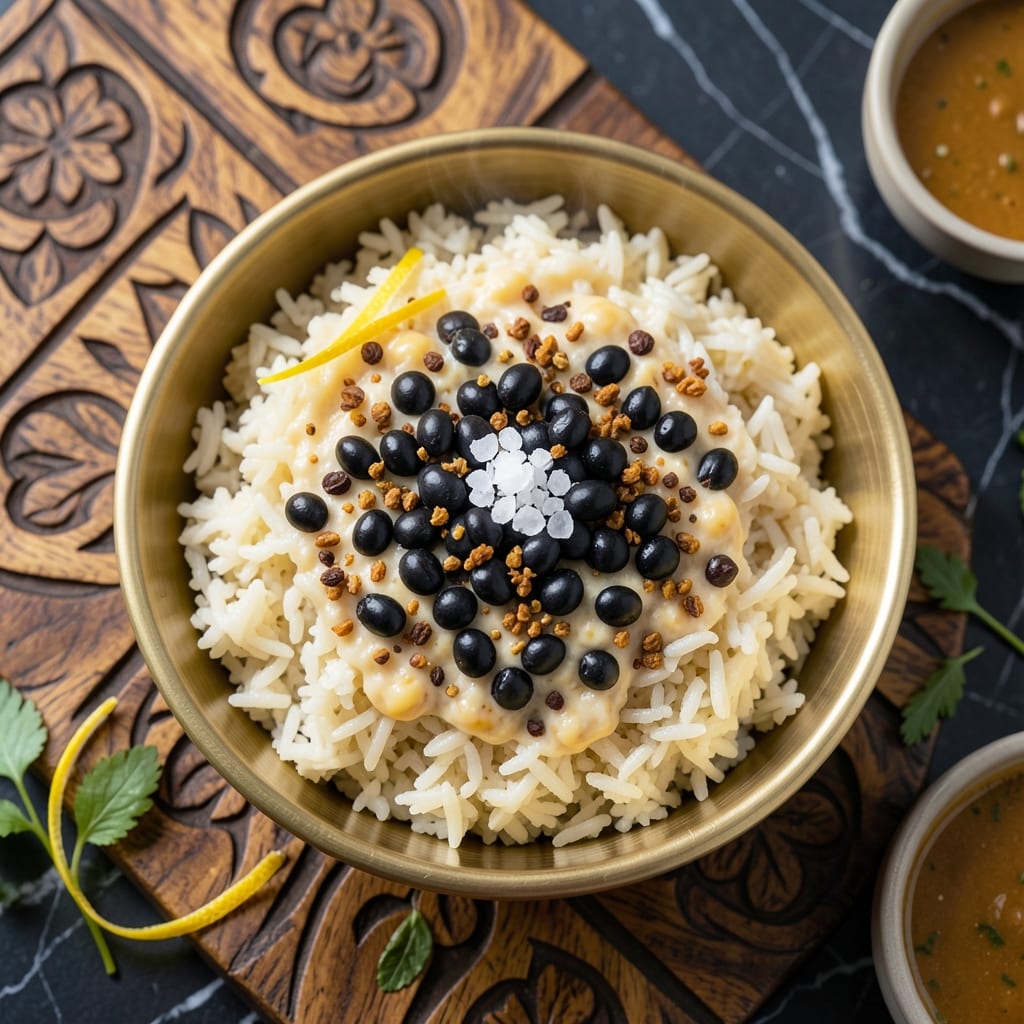
This South Indian fermented rice dish brings tangy, probiotic-rich flavors to your table with minimal effort. The natural fermentation process enhances both taste and digestibility.
I developed this method after testing multiple ratios and fermentation times to achieve the perfect balance of sourness and texture. The process transforms simple ingredients into something extraordinary.
What emerges is a lightly tangy, fluffy rice dish that pairs beautifully with yogurt, vegetables, or chutneys. The fermentation adds complexity that plain rice simply can’t match.
Traditionally served for breakfast or lunch, this creation proves that patience in the kitchen yields the most rewarding results.
Ingredients for Fermented Rice Indian
Simple, wholesome ingredients transform into a probiotic-rich South Indian classic with minimal effort and maximum flavor.
| Ingredient | Amount | Notes |
|---|---|---|
| Basmati Rice 🍚 | 2 cups | Rinsed until water runs clear |
| Water 💧 | 4 cups | Filtered for best fermentation |
| Fenugreek Seeds 🌿 | ½ tsp | Lightly crushed for fermentation |
| Urad Dal 🌱 | ¼ cup | Split black gram lentils |
| Chana Dal 🌱 | 2 tbsp | Split chickpea lentils |
| Sea Salt 🧂 | 1 tsp | Adjust to taste after fermentation |
| Green Chilies 🌶️ | 2 whole | Split lengthwise, seeds removed |
| Fresh Ginger 🧄 | 1 whole | Peeled and finely grated |
| Curry Leaves 🍃 | 8 pieces | Fresh for authentic flavor |
| Asafoetida 🌿 | ¼ tsp | Hing, for tempering |
| Mustard Seeds 🌿 | ½ tsp | For tempering the dish |
| Coconut Oil 🥥 | 2 tbsp | For sauteing and tempering |
| Fresh Cilantro 🌿 | ¼ cup | Chopped for garnish |
The rice foundation is non-negotiable—Basmati provides the perfect texture for fermentation. Indian grocery stores or Patel Brothers carry authentic urad and chana dal, which are essential for proper fermentation. Look for fenugreek seeds with a strong aroma (stale seeds won’t activate properly). The dal should be fresh, not old stock from the back of your pantry.
No urad dal? Mung beans at half the quantity can work in a pinch, though texture will differ. Fresh curry leaves are ideal, but dried at one-third the amount works. If asafoetida isn’t available, a pinch of onion powder adds depth. The coconut oil can be swapped for neutral oil, but it won’t have the same aromatic quality.
The fermented mix keeps in the fridge for 2-3 days—the flavors deepen over time. Store in a glass container (metal can react with the acids). Best served at room temperature with fresh garnishes like cilantro or grated coconut.
Why You’ll Love This Recipe
- Set and Forget: Soak the rice and dals overnight, then let fermentation do the work while I sleep.
- Tangy Comfort: That slight sour note from the fermented basmati with earthy fenugreek seeds hits just right.
- Feeds Many: I make a big batch for dosas, idlis, or even rice pancakes all week long.
- Pantry Staples: Honestly, just rice, water, and a handful of dals I always have on hand.
Step-by-Step Instructions for Fermented Rice Indian Dish
This traditional method ensures proper fermentation and authentic South Indian flavor development.
Step 1: Prepare and Soak the Rice and Lentils
Rinse the 2 cups Basmati Rice until the water runs clear, then drain thoroughly. In a large bowl, combine the rice with the 0.25 cup Urad Dal and 2 tbsp Chana Dal. Add the 0.5 tsp Fenugreek Seeds, which have been lightly crushed to enhance fermentation.
Pour in the 4 cups Water and stir to combine. The water should cover the mixture by about 1 inch. Cover with a clean kitchen towel and let soak at room temperature for 6-8 hours until the rice and lentils have absorbed most of the water and expanded slightly.
Step 2: Grind the Batter to the Right Consistency
Drain the soaked mixture, reserving any excess water. Transfer to a wet grinder or high-powered blender. Add the 1 whole Fresh Ginger, which has been peeled and finely grated, along with the 2 whole Green Chilies that have been split lengthwise with seeds removed.
Grind the mixture, adding reserved soaking water as needed, until you achieve a smooth, slightly thick batter—similar to pancake batter. The texture should coat the back of a spoon but still pour easily. This usually takes 5-7 minutes of grinding, depending on your equipment.
Step 3: Ferment the Batter for Tangy Flavor
Transfer the batter to a large bowl, cover with a clean kitchen towel, and place in a warm, draft-free spot. I’ve found that setting it near a slightly preheated oven (turned off) creates the ideal environment. Allow it to ferment for 8-12 hours, or until the batter has risen and developed a tangy aroma.
The fermentation is complete when you see small bubbles throughout the batter and it has increased in volume by about 50%. The longer you ferment (up to 24 hours), the more pronounced the tangy flavor will be. Stir in the 1 tsp Sea Salt after fermentation is complete, adjusting to taste.
Step 4: Temper and Finish the Dish
Heat the 2 tbsp Coconut Oil in a small pan over medium heat. Add the 0.5 tsp Mustard Seeds and allow them to pop, which should take about 30 seconds. Immediately add the 0.25 tsp Asafoetida and 8 pieces Curry Leaves, stirring for another 10 seconds until fragrant.
Pour this tempering mixture into the fermented batter and stir well to combine. The hot oil will sizzle as it hits the batter, releasing the aromatics. Let the tempered batter rest for 5 minutes to allow the flavors to meld before using it in your recipe.
Step 5: Garnish and Serve
Just before serving, stir in the 0.25 cup Fresh Cilantro, which has been finely chopped. The cilantro adds a bright, fresh contrast to the tangy, fermented flavors. Serve the dish warm, as the temperature enhances the complex flavors developed during fermentation.
For best results, prepare the tempering fresh for each serving. The dish should have a balanced tanginess with layers of aromatic spices and a slightly effervescent quality from the fermentation process.
Pro Tips For Making Fermented Rice Indian
- Soak the Rice: Give the basmati rice a good 4-6 hour soak before fermenting—it softens the grains and cuts down the fermentation time significantly.
- Toast the Seeds: Lightly dry-roast the fenugreek seeds, urad dal, and chana dal until fragrant (about 2-3 minutes on medium heat). I learned this the hard way—raw seeds can leave a bitter edge.
- Skip the Metal: Use a glass or ceramic bowl for fermentation, not metal. Metal can react with the acids and ruin the taste—my first batch had a weird tang I couldn’t place.
- Check the Water: Use filtered or boiled-and-cooled water for soaking and fermenting. Tap water with chlorine can slow down or even stop the fermentation process entirely.
Wine and Beer Pairings for This Dish
Light Lager Pairings
A crisp Indian lager like Kingfisher or Taj Mahal cuts through the tangy fermented notes beautifully. The light body and mild carbonation cleanse your palate between bites. I always keep a few bottles chilled for this exact pairing. 🍺
Wheat Beer Options
Hefeweizen or Belgian witbier styles complement the dish’s complexity. The citrus notes from the wheat malt enhance the fermentation’s natural acidity. Try Hoegaarden or Weihenstephaner for authentic European profiles.
Dry White Wines
A chilled Sauvignon Blanc from New Zealand offers crisp acidity that matches the fermented tang. The grapefruit notes contrast nicely with the dish’s earthy lentils. Kim Crawford is my go-to for this pairing. 🍷
Rosé Alternatives
For a summer twist, a dry Provence rosé works surprisingly well. Its subtle berry notes don’t overpower the delicate fermentation flavors. I served this at a backyard gathering last year with great success.
Spiced Chai
For a non-alcoholic option, masala chai with extra cardamom complements the South Indian flavors. The warmth of the spices echoes the tempering in the dish. I use Tata Tea with a pinch of extra cinnamon. 💛
Nutrition Facts
Frequently Asked Questions
How long should I ferment the batter for best flavor?
Ferment for 8-12 hours to develop tangy notes. Up to 24 hours deepens flavor, but avoid over-fermenting as it may turn too sour.
Can I use a blender instead of a wet grinder?
Yes, a high-powered blender works, but may require 5-7 minutes of grinding. Add reserved soaking water as needed for smooth consistency.
Why does my batter not rise during fermentation?
Check the environment—it needs warmth (75-85°F) and no drafts. Also, ensure fenugreek seeds are fresh, as old seeds lose potency.
Is this dish gluten-free?
The recipe uses only rice, lentils, and spices—no wheat or gluten-containing ingredients. Perfect for gluten-sensitive diets.

- El Pollo Loco Spanish Rice Recipe: Smoky Tomato-Infused Side Dish - October 11, 2026
- Fresh Black Beans and Rice Recipe: Latin-Inspired One-Bowl Heartiness - October 11, 2026
- Empire Ghee Rice Recipe: Fragrant Basmati With Golden Clarity - October 11, 2026