
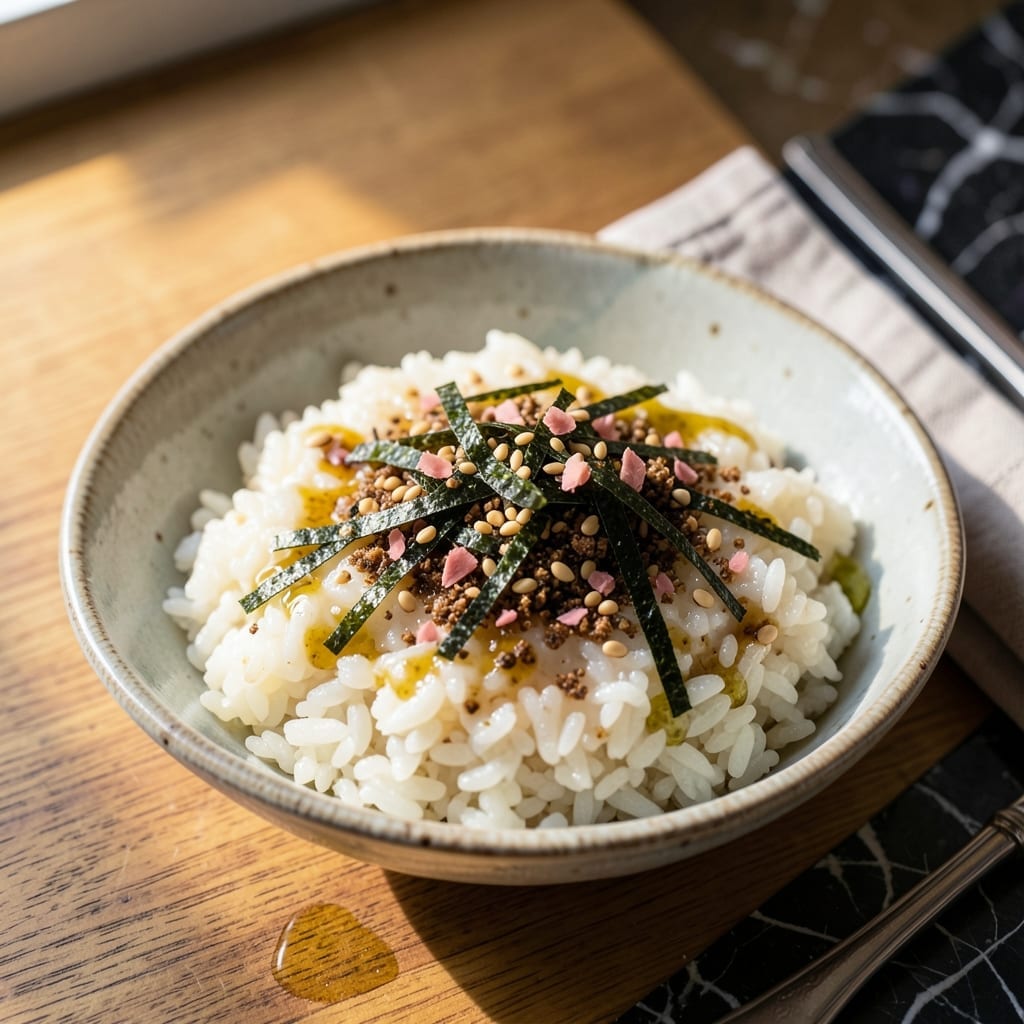
This Japanese-inspired dish transforms simple rice into a flavorful experience with minimal effort. The combination of nutty, salty furikake and perfectly cooked grains creates a meal that satisfies both taste and texture.
I’ve perfected this method to ensure the rice stays light and fluffy while the toppings add layers of crunch and umami. The process is straightforward, requiring only a few ingredients and standard kitchen tools.
What results is a dish that feels special yet remains approachable for any home cook. The furikake enhances the rice with its savory, slightly sweet notes and satisfying bite.
Serve it as a side or a light main course, ready in under 30 minutes. The balance of flavors and textures makes it a standout.
Ingredients for Furikake Rice
Transform simple rice with nutty, salty furikake and perfectly cooked grains for a standout dish.
| Ingredient | Amount | Notes |
|---|---|---|
| Japanese Short-Grain Rice 🍚 | 2 cups | Rinsed until water runs clear |
| Water 💧 | 2 ½ cups | Filtered preferred for best texture |
| Furikake Seasoning 🌿 | ½ cup | Nori komi or sesame variety |
| Rice Vinegar 🍶 | 1 tbsp | Unseasoned for subtle acidity |
| Soy Sauce 🥢 | 1 ½ tbsp | Low-sodium if preferred |
| Toasted Sesame Oil 🫒 | 1 tsp | Pure, not blended |
| Nori Seaweed Sheets 🌊 | 2 sheets | Cut into thin strips |
| Sesame Seeds 🌰 | 2 tbsp | Toasted for extra crunch |
| Scallions 🧅 | 3 whole | Thinly sliced for garnish |
| Cucumber 🥒 | ½ whole | Julienned for freshness |
| Pickled Ginger 🍯 | ¼ cup | Drained and chopped |
| Bonito Flakes 🐟 | 2 tbsp | Optional for extra umami |
The rice quality is paramount here. Japanese short-grain like Koshihikari or Nishiki delivers the ideal sticky yet fluffy texture. Whole Foods and Asian markets often carry premium brands. Rinse thoroughly to remove excess starch—this prevents gummy rice. For furikake, Nori komi (with seaweed) or sesame varieties offer the most authentic flavor. Avoid pre-mixed versions with added MSG if seeking a cleaner taste.
No short-grain rice? Sushi rice works identically. Out of furikake? Mix crushed nori sheets with sesame seeds and a pinch of salt. Pickled ginger can be swapped for quick-pickled radish or carrot. For a gluten-free version, use tamari instead of soy sauce. The bonito flakes add depth but can be omitted for a vegetarian approach (though this remains pescatarian).
Cooked rice keeps 3-4 days refrigerated in an airtight container. Furikake stays fresh for 6 months in a cool, dark place. Toast sesame seeds in a dry pan just before using for maximum crunch. The rice vinegar and soy sauce should be stored in the pantry, tightly sealed.
Why You’ll Love This Recipe
- Five-Minute Assembly: I just cook the rice, then sprinkle furikake and a splash of soy sauce—no chopping, no fuss.
- Umami Bomb: That first bite of nutty, salty furikake with the vinegar-kissed rice is ridiculously good.
- Lunchbox Hero: I pack leftovers for work and my kids actually finish it—no swaps, no complaints.
- Pantry MVP: A bag of rice and furikake last forever, and this costs pennies per serving.
Step-by-Step Instructions for Furikake Rice
Master this technique for perfectly seasoned rice with balanced flavors and satisfying texture.
Step 1: Prepare and Cook the Japanese Short-Grain Rice
Rinse the 2 cups Japanese Short-Grain Rice in a fine-mesh strainer until the water runs completely clear. This removes excess starch and prevents gummy rice. I use my hand to agitate the grains thoroughly under cold running water, changing the water 4-5 times until it’s transparent.
Combine the rinsed rice with the 2.5 cups Water in a rice cooker or heavy pot. Cook according to standard rice cooker instructions or on the stovetop: bring to a boil, then reduce to low heat, cover, and simmer for 15 minutes. Remove from heat and let it steam, covered, for another 10 minutes.
Step 2: Season the Rice with Umami Base
Transfer the cooked rice to a large bowl while it’s still hot. Drizzle the 1 tbsp Rice Vinegar, 1.5 tbsp Soy Sauce, and 1 tsp Toasted Sesame Oil evenly over the surface. These liquid seasonings will penetrate better while the rice is steaming.
Using a rice paddle or silicone spatula, gently fold the seasonings into the rice with a cutting motion. Be careful not to mash the grains—you want to maintain their individual texture while ensuring every bite carries flavor. The rice should glisten slightly but not appear wet.
Step 3: Incorporate the Furikake and Toppings
Sprinkle the 0.5 cup Furikake Seasoning evenly over the seasoned rice. Using the same folding technique, distribute it thoroughly. The furikake will add immediate flavor but also continue to infuse as the dish sits.
Add the 2 tbsp Sesame Seeds and the 2 sheets Nori Seaweed Sheets (cut into thin strips) to the bowl. Fold once more to combine. The nori will soften slightly from the residual heat, while the sesame seeds provide a nutty crunch in every mouthful.
Step 4: Add Fresh and Garnishing Elements
Top the rice with the 3 whole Scallions (thinly sliced), 0.5 whole Cucumber (julienned), and 0.25 cup Pickled Ginger (drained and chopped). These fresh elements add brightness and contrast against the rich, savory base.
For an optional umami boost, sprinkle the 2 tbsp Bonito Flakes over the top. The heat from the rice will make them dance slightly, releasing their delicate, smoky flavor. Serve immediately while the contrast between warm rice and cool toppings is most pronounced.
Pro Tips For Making Furikake Rice
- Rinse the Rice: Wash the Japanese short-grain rice under cold water until it runs clear—this removes excess starch so your furikake rice doesn’t turn gluey. I learned this the hard way after serving a few sticky, sad bowls.
- Bloom the Furikake: Toss the furikake with a splash of rice vinegar and soy sauce before sprinkling—it wakes up the flavors and clings better to each grain. Sounds weird, but it works.
- Steam After Cooking: Once the rice is done, let it sit covered for 10 minutes off the heat—this guarantees even texture and lets the grains absorb any last bits of moisture. Skip this and you’ll have a dry, uneven base.
- Use Hot Water: Start with hot water from the tap instead of cold—it cuts the cooking time by a few minutes and actually changes the outcome for more consistent doneness. My grandmother swore by this, and she was right.
Make-Ahead Tips for This furikake rice
Prep Rice in Advance
Cook the 2 cups Japanese Short-Grain Rice up to 1 day ahead and store it plain in the fridge. Spread it on a tray first to cool quickly, then transfer to an airtight container. This prevents soggy grains while keeping moisture balanced.
Seasoning Storage
Mix the 1 tbsp Rice Vinegar, 1.5 tbsp Soy Sauce, and 1 tsp Toasted Sesame Oil in a small jar. This liquid blend keeps for 1 week refrigerated, so you can season freshly cooked rice in seconds. 💡
Furikake Prep
Combine the 0.5 cup Furikake Seasoning with 2 tbsp Sesame Seeds in a separate container. Toast the nori strips just before serving to maintain their crisp texture. The furikake mix stays fresh for 2 weeks at room temperature.
Toppings Prep
Slice the 3 Scallions and julienne the 0.5 Cucumber up to 1 day ahead. Store them in separate containers with damp paper towels to retain freshness. Chop the 0.25 cup Pickled Ginger right before serving to preserve its tangy crunch.
Reheating Tips
Microwave the rice with a splash of water, covered, on 50% power for 1-2 minutes. Stir gently to redistribute moisture. Add toppings only after reheating to keep them crisp and vibrant. 🔥
Assembly Shortcut
For grab-and-go meals, layer rice and seasonings in a container, then top with furikake. Keep toppings separate until ready to eat. This maintains texture and freshness for up to 3 days in the fridge.
Nutrition Facts
Frequently Asked Questions
What kind of rice works best?
Use Japanese short-grain rice like Koshihikari for the ideal sticky yet fluffy texture. Sushi rice is a perfect substitute. Avoid long-grain varieties as they won’t hold the seasoning as well.
Can I make this without a rice cooker?
Cook on the stovetop by bringing to a boil, then reducing to low heat, covering, and simmering for 15 minutes. Remove from heat and let it steam, covered, for another 10 minutes.
How do I store leftovers?
Keep in an airtight container in the fridge for up to 3-4 days. Reheat with a splash of water on 50% power to maintain moisture. Add fresh toppings after reheating.
Can I customize the toppings?
Yes! Swap cucumber for shredded carrot or avocado. Use pickled radish instead of ginger. For extra crunch, add crushed peanuts or fried shallots.

- El Pollo Loco Spanish Rice Recipe: Smoky Tomato-Infused Side Dish - October 11, 2026
- Fresh Black Beans and Rice Recipe: Latin-Inspired One-Bowl Heartiness - October 11, 2026
- Empire Ghee Rice Recipe: Fragrant Basmati With Golden Clarity - October 11, 2026