
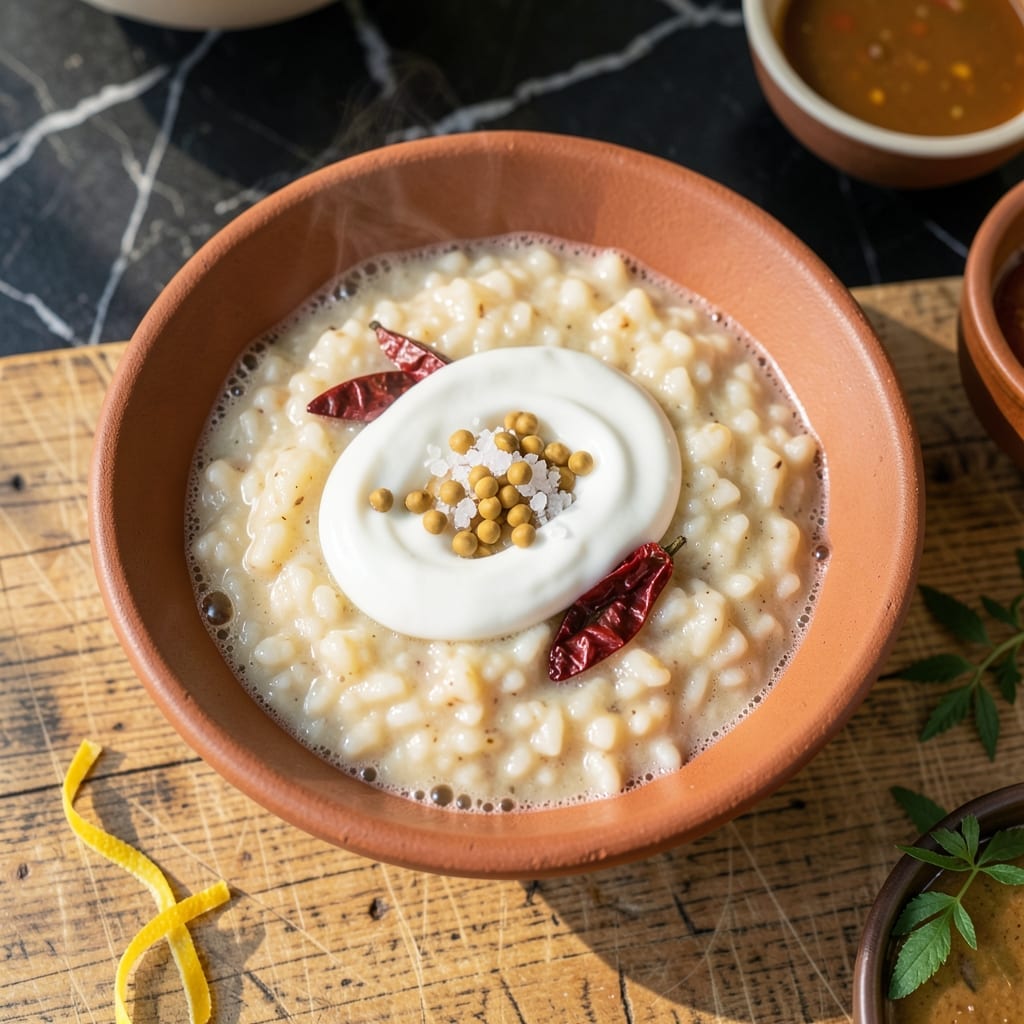
This traditional South Indian dish transforms simple rice into a gut-health powerhouse through natural fermentation. I’ve tested this method in my own kitchen to ensure it delivers probiotic benefits without complicated steps.
The process relies on time rather than skill, letting rice soak and ferment to develop its signature tangy flavor. It’s a dish that balances tradition with modern wellness, perfect for those seeking digestive support.
What emerges is a light, slightly effervescent bowl that’s both nourishing and refreshing. The fermentation softens the rice while creating a subtle sourness that makes it uniquely satisfying.
Serve it as a breakfast porridge or a cooling side dish. The simplicity of the preparation belies its depth of flavor and health benefits.
Ingredients for Fermented Rice Kanji
Simple, wholesome ingredients transform into a probiotic-rich South Indian staple with minimal effort.
| Ingredient | Amount | Notes |
|---|---|---|
| Raw White Rice 🍚 | 1 cup | Short-grain or medium-grain preferred |
| Water 💧 | 3 cups | Filtered or boiled and cooled |
| Plain Yogurt 🥛 | 2 tbsp | Unsweetened vegan yogurt for fermentation |
| Salt 🧂 | ½ tsp | Adjust to taste after fermentation |
| Mustard Seeds 🌿 | 1 tsp | For tempering (optional garnish) |
| Dried Red Chilies 🌶️ | 2 whole | For tempering (optional garnish) |
| Curry Leaves 🍃 | 10 pieces | Fresh preferred, for tempering |
| Coconut Oil 🥥 | 1 tbsp | For tempering (optional garnish) |
| Cumin Seeds 🌿 | ½ tsp | For additional flavor (optional) |
| Green Chilies 🌶️ | 2 whole | Sliced, for garnish (optional) |
| Fresh Cilantro 🌿 | ¼ cup | Chopped, for garnish (optional) |
The rice is the foundation—short-grain or jasmine works best for that soft, porridge-like texture after fermentation. Use filtered water to avoid chlorine, which can inhibit fermentation. For the yogurt, unsweetened coconut or almond yogurt (like Silk or Kite Hill) provides the necessary bacteria. Avoid metal utensils during prep; glass or ceramic containers are ideal for soaking and fermenting.
No vegan yogurt? A splash of lemon juice or apple cider vinegar can kickstart fermentation, though the flavor profile will differ. Mustard seeds are traditional for tempering, but hing (asafoetida) adds depth if you have it. Curry leaves are non-negotiable for authenticity—find them at Indian grocery stores or online. The coconut oil can be swapped for neutral oil, but it adds a subtle sweetness.
Fermented kanji keeps in the fridge for 3-4 days. The tang deepens over time, so taste as you go. Store leftovers in a glass jar to maintain freshness. Serve chilled or at room temperature—both are traditional. The tempering garnish is best added fresh, just before serving.
Why You’ll Love This Recipe
- No-Fuss Ferment: I just mix rice, water, and yogurt, then let time do the work. Honestly, it’s the laziest delicious thing I make.
- Tangy Comfort: The yogurt gives it that perfect sour kick, and the mustard seeds add a little pop with every bite.
- Breakfast to Dinner: Between us, I’ve served this chilled for breakfast and warm with dinner—it’s that adaptable.
- Pennywise Probiotic: A handful of rice and yogurt stretches into meals for days, and my gut thanks me later.
Step-by-Step Instructions for Fermented Rice Kanji
This traditional method ensures proper fermentation for a tangy, probiotic-rich dish every time.
Step 1: Cook and Cool the Rice Base
Rinse the 1 cup Raw White Rice thoroughly under cold water until the water runs clear. This removes excess starch and prevents the grains from becoming gummy during cooking. Drain well in a fine-mesh sieve.
Combine the drained rice with the 3 cups Water in a heavy-bottomed pot. Bring to a boil over high heat, then reduce to low heat, cover, and simmer for 15-18 minutes until the water is absorbed and the rice is tender. Spread the cooked rice on a clean plate and let it cool completely to room temperature—this prevents killing the beneficial bacteria in the next step.
Step 2: Ferment the Rice with Yogurt
Once the rice is cool, transfer it to a clean, dry glass or ceramic bowl. Add the 2 tbsp Plain Yogurt and the 0.5 tsp Salt. Mix gently but thoroughly, ensuring the yogurt is evenly distributed throughout the rice.
Cover the bowl with a clean cloth or lid that isn’t airtight—this allows airflow while keeping out debris. Let the mixture ferment at room temperature for 8-12 hours or overnight. You’ll notice the rice developing a pleasing sour aroma, and the grains will soften further as fermentation progresses.
Step 3: Prepare the Tempering Agents
When ready to serve, heat the 1 tbsp Coconut Oil in a small pan over medium heat. Add the 1 tsp Mustard Seeds and allow them to splutter for 10-15 seconds until they pop and release their aroma.
Immediately add the 2 whole Dried Red Chilies, 10 pieces Curry Leaves, and 0.5 tsp Cumin Seeds. Stir for 20-30 seconds until the curry leaves become crisp and the cumin seeds turn fragrant. Remove from heat before the spices burn—this preserves their fresh, vibrant flavors.
Step 4: Combine and Garnish
Pour the hot tempering mixture over the fermented rice. Stir gently to incorporate the infused oil and spices evenly throughout the rice. The heat from the tempering will slightly warm the rice without cooking it further.
Slice the 2 whole Green Chilies thinly and chop the 0.25 cup Fresh Cilantro. Sprinkle both over the top as garnish. These fresh elements add brightness and contrast to the tangy, fermented base. Serve immediately while the tempering is still aromatic, or refrigerate for up to 3 days—the flavors will continue to develop.
Pro Tips For Making Fermented Rice Kanji
- Soak the Rice: Give the raw white rice a 4-6 hour soak before fermenting—I learned this the hard way when my first batch stayed stubbornly hard.
- Use Room Temp Yogurt: Cold yogurt can shock the fermentation, so pull it out 30 minutes early. My grandmother swore by this, and she was right.
- Skip Metal Utensils: Stir with a wooden spoon to avoid reacting with the yogurt’s acidity—sounds fussy, but it actually changes the outcome.
- Temper the Mustard Seeds: Heat them in a dry pan for just 20 seconds until they pop; any longer and they’ll turn bitter. I was skeptical until I tried it.
Health Benefits of This Recipe
Gut Health Boost
This dish is packed with natural probiotics from fermentation, supporting a healthy gut microbiome. The live cultures in the yogurt multiply during fermentation, creating a tangy, effervescent bowl that aids digestion and boosts immunity. 💪
Rich in Nutrients
The fermentation process enhances the bioavailability of nutrients in rice, making it easier for your body to absorb B vitamins, magnesium, and iron. A single serving provides sustained energy without the heaviness of traditional rice dishes.
Hydration and Electrolytes
The slightly sour liquid in kanji acts as a natural electrolyte drink, perfect for rehydrating. It’s especially refreshing in warm weather or after physical activity. I often enjoy it as a light, cooling snack between meals.
Low-Calorie Nourishment
One cup of fermented rice kanji contains approximately 120-150 calories, making it a light yet nourishing option. The fermentation breaks down complex carbohydrates, making it gentler on your digestive system compared to regular rice.
It’s ideal for those watching their calorie intake while still wanting a satisfying dish.
Supports Immune Function
The probiotics in this dish help strengthen your immune system by promoting a balanced gut flora. Regular consumption can reduce inflammation and improve your body’s natural defenses. I notice I feel more energized when I include it in my diet.
Natural Detoxifier
Fermented foods like kanji aid in detoxification by supporting liver function and improving digestion. The lactic acid produced during fermentation helps flush out toxins from your system, leaving you feeling refreshed. 🌱
Nutrition Facts
Frequently Asked Questions
Can I use brown rice instead of white?
Yes, but it will take 24-36 hours to ferment due to the bran layer. The texture will be chewier, and the flavor more nutty.
How do I know when fermentation is complete?
Look for a tangy smell and slightly bubbly texture. The rice should taste pleasantly sour, like yogurt. This usually happens after 8-12 hours at room temperature.
What if my kanji doesn’t ferment?
Check your environment – it needs 70-85°F. Also, ensure your container is non-metal and your yogurt starter is fresh.
Is it safe to leave rice fermenting overnight?
as long as it’s in a clean, covered container. The fermentation process actually makes it safer by increasing beneficial bacteria.

- Five Spice Rice Recipe: Aromatic Grains With Warm Spice Balance - October 10, 2026
- Flavoured Basmati Rice Recipe: Aromatic Grains with Spiced Depth - October 10, 2026
- Fish Porridge Rice Cooker Recipe: Hands-Free Congee With Silky Depth - October 10, 2026