
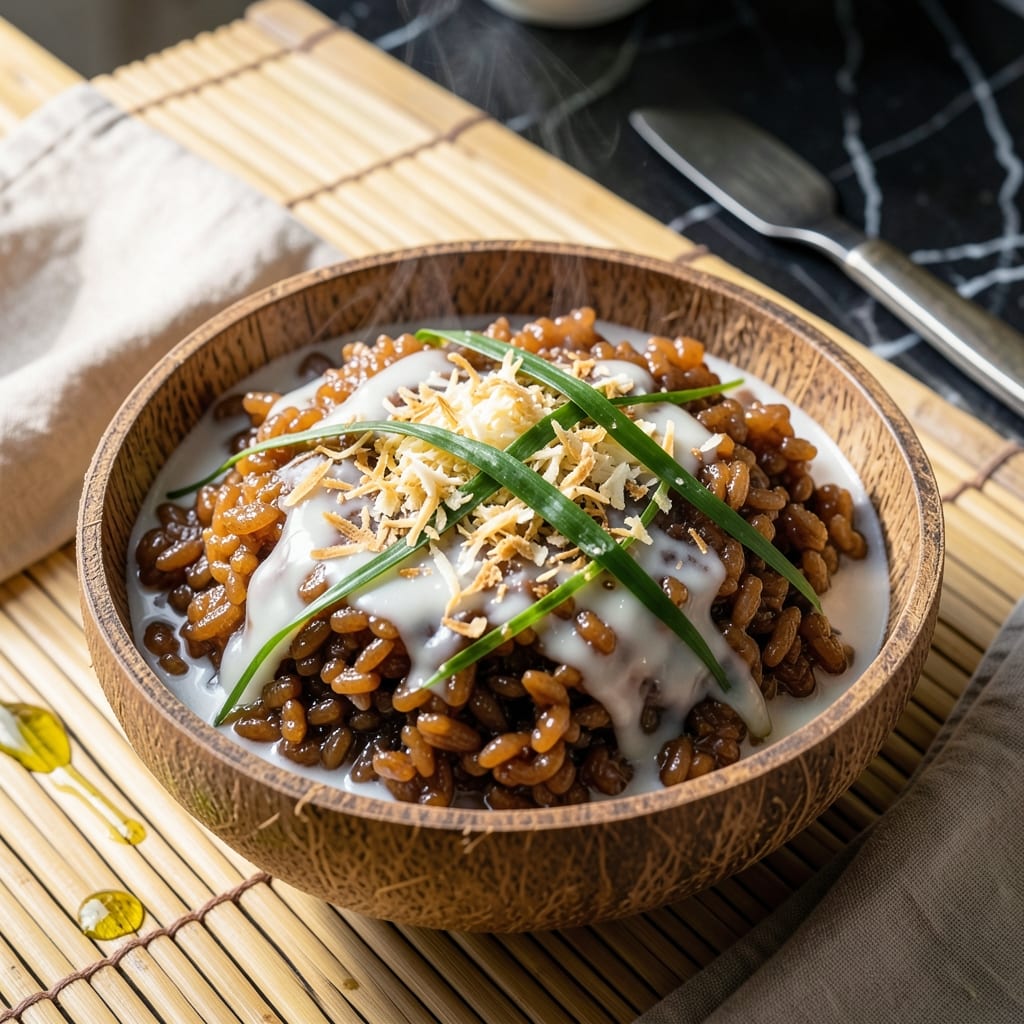
This traditional Filipino dessert transforms simple glutinous rice into sticky, coconut-infused bites that melt in your mouth. The combination of sweet palm sugar and rich coconut milk creates a luxurious texture that’s both chewy and tender.
I’ve perfected this recipe to stay true to its roots while making it accessible for home cooks. The result is a treat that’s as comforting as it is delicious, perfect for special occasions or everyday indulgence.
Ingredients for Filipino Sweet Rice Dessert
Pantry staples plus a few special touches create these luxurious coconut bites.
| Ingredient | Amount | Notes |
|---|---|---|
| Glutinous Rice 🌾 | 2 cups | Sweet rice, soaked overnight |
| Coconut Milk 🥥 | 1 ½ cups | Full-fat, canned preferred |
| Palm Sugar 🍚 | 1 cup | Shredded or granulated |
| Brown Sugar 🍯 | ½ cup | Packed, for sweetness |
| Shredded Coconut 🥥 | 1 cup | Unsweetened, for topping |
| Pandan Leaves 🌿 | 2 pieces | Fresh or frozen |
| Vanilla Extract 🌿 | 1 tsp | Pure, for aroma |
| Salt 🧂 | ¼ tsp | Balances sweetness |
| Water 💧 | 1 ½ cups | For cooking rice |
| Butter 🧈 | 2 tbsp | Optional, for greasing |
The glutinous rice is non-negotiable here—look for sweet rice or sticky rice at Asian markets (the label often says ‘glutinous’ even though it’s gluten-free). Thai Kitchen or K 얼굴이 brands work well. Palm sugar adds that authentic depth, but don’t stress if you can’t find it—brown sugar plus a touch of molasses gets close. Pandan leaves (found frozen at most Asian grocers) are traditional, but skip if unavailable (the coconut still shines).
No palm sugar? Dark brown sugar with a teaspoon of molasses works. Out of pandan? A drop of pandan extract (sold at Filipino stores) saves the day. Need to make it dairy-free? Swap butter for coconut oil—honestly, it might taste even better. The coconut milk must be full-fat (light versions water it down).
These keep beautifully at room temp for 2 days (covered). Refrigerate for up to 1 week, or freeze for 3 months. Warm briefly before serving—cold rice loses that melty texture. Always soak the rice overnight (don’t skip this part).
Why You’ll Love This Recipe
- One Pot Wonder: I love that I can cook everything in a single pot—just glutinous rice, coconut milk, and sugars simmered together.
- Coconut Dream: The combo of creamy coconut milk and chewy rice with that caramelized palm sugar? Ridiculously good.
- Feeds a Crowd: Honestly, it’s my go-to for potlucks—doubles easily and disappears fast.
- Better Next Day: Leftovers taste even richer after the flavors meld overnight in the fridge.
Step-by-Step Instructions for Filipino Sweet Rice Dessert
This traditional method brings out the rich coconut flavor and perfect sticky texture every time.
Step 1: Soak and Prepare the Glutinous Rice
Begin by draining the 2 cups Glutinous Rice after its overnight soak. This step is crucial—it softens the grains and reduces cooking time. Rinse the rice under cold water until the water runs clear to remove excess starch.
Transfer the drained rice to a large bowl and add the 2 pieces Pandan Leaves, which will infuse the grains with their signature aromatic flavor. The rice should have a firm yet pliable texture after soaking, ready to absorb all the coconut goodness during cooking.
Step 2: Cook the Rice with Coconut Milk and Water
In a heavy-bottomed pot, combine the soaked 2 cups Glutinous Rice, 1.5 cups Coconut Milk, 1.5 cups Water, and 0.25 tsp Salt. Stir well to distribute the liquid evenly. Bring the mixture to a gentle boil over medium heat.
Once boiling, reduce the heat to low and cover the pot. Let it simmer for 20-25 minutes, stirring occasionally to prevent sticking. You’ll notice the liquid gradually being absorbed, and the rice becoming tender and slightly translucent.
Step 3: Sweeten and Finish with Palm and Brown Sugars
When the rice is nearly cooked and most of the liquid has been absorbed, add the 1 cup Palm Sugar and 0.5 cup Brown Sugar. Stir gently but thoroughly to dissolve the sugars into the remaining liquid. The Palm Sugar will give a deep, caramel-like sweetness, while the Brown Sugar adds a hint of molasses richness.
Continue cooking on low heat for another 5-7 minutes, stirring frequently. The mixture should thicken into a sticky, glossy consistency, with the grains of rice fully tender and coated in the sweet coconut sauce.
Step 4: Incorporate Aromatics and Prepare for Serving
Remove the pot from the heat and discard the 2 pieces Pandan Leaves. Stir in the 1 tsp Vanilla Extract, which adds a warm, floral depth to the dessert. Taste and adjust sweetness if needed, though the balance of salt and sugar should already be perfect.
Let the mixture sit, covered, for 5-10 minutes to allow the flavors to meld and the rice to reach its ideal sticky texture. This resting period ensures every bite is uniformly rich and fragrant.
Step 5: Serve with Shredded Coconut and Optional Butter
Grease a serving dish lightly with 2 tbsp Butter for an extra layer of richness, if desired. Transfer the sweet rice to the dish and spread it evenly. Top generously with the 1 cup Shredded Coconut, pressing it lightly so it adheres to the sticky surface.
Serve warm or at room temperature. The dessert should have a beautifully glossy sheen, with the Shredded Coconut providing a delightful textural contrast. Each bite will be sweet, aromatic, and perfectly sticky, with the coconut flavor shining through.
Pro Tips For Making Filipino Sweet Rice Dessert
- Soak the Rice: I learned this the hard way—soak the glutinous rice for at least 2 hours before cooking, otherwise it’ll stay stubbornly firm no matter how long you simmer it.
- Toast the Coconut: After burning three batches, I finally figured out that toasting the shredded coconut in a dry pan for 2-3 minutes until golden adds a nutty depth that raw coconut just can’t match.
- Watch the Sugar: Palm sugar and brown sugar can make the dessert cloyingly sweet fast—start with half the amount you think you need, then adjust to taste at the end.
- Use Full-Fat Milk: Skip the light coconut milk; the full-fat version is non-negotiable here for that rich, creamy texture that makes this dessert worth the effort.
Common Mistakes When Making This Recipe
Skipping the Soak
I can’t stress this enough—never skip soaking the glutinous rice overnight. Without soaking, the grains stay hard and unevenly cooked. Even 2 hours of soaking makes a difference if you’re short on time. 💡
Wrong Liquid Ratios
Using too much coconut milk or water results in a soupy mess. Stick to the 1.5 cups each ratio for perfectly tender rice. If it’s too dry, add ¼ cup warm water gradually, not all at once.
Overcooking the Rice
Simmering beyond 25 minutes turns the rice mushy. Watch for the liquid to absorb and the grains to turn translucent. Once they’re tender, remove from heat immediately to preserve texture.
Skipping the Rest
Letting the rice rest 5-10 minutes after cooking is non-negotiable. This lets the palm sugar and coconut milk fully absorb, giving that signature sticky, glossy finish. Skipping this step leaves it grainy.
Ignoring Pandan Leaves
If using pandan leaves, don’t leave them in too long—they can impart a bitter taste. Remove them after cooking. No pandan? A drop of vanilla extract adds depth without overpowering.
Uneven Sweetness
Stir the palm sugar and brown sugar thoroughly to dissolve completely. Clumps of sugar ruin the smooth texture. Taste before serving and adjust with a pinch of salt if needed. 🌟
Nutrition Facts
Frequently Asked Questions
Can I use regular rice instead of glutinous?
No, regular rice won’t give the same sticky texture. Glutinous rice is essential for that signature chewy consistency. Look for sweet or sticky rice at Asian markets.
How long can I store leftovers?
Store in an airtight container at room temp for 2 days or refrigerate for up to 1 week. Warm briefly before serving to restore the melty texture.
What can I substitute for palm sugar?
Use dark brown sugar plus 1 tsp molasses for a similar depth. This combo mimics palm sugar’s caramel-like richness almost perfectly.
Why did my dessert turn out mushy?
Overcooking or too much liquid causes mushiness. Stick to 25 minutes max simmering and the 1.5 cups liquid ratio. Stir frequently to prevent sticking.

- Gobi Fried Rice Recipe: Spiced Cauliflower Wok Delight - October 8, 2026
- Glutinous Rice Roll Recipe: Chewy Pillows With Savory Fillings - October 8, 2026
- Garlic Jasmine Rice Recipe: Fragrant Grains with Aromatic Depth - October 8, 2026