
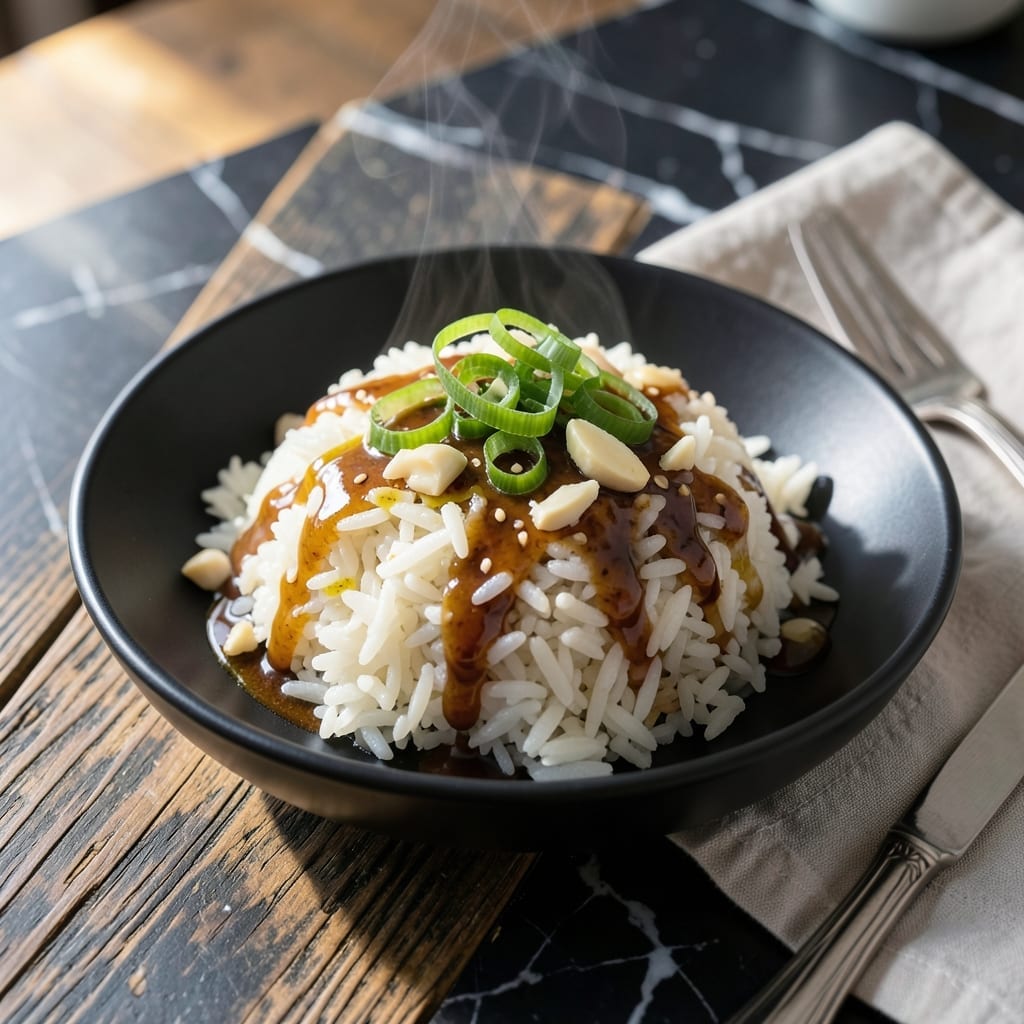
This wok-seared rice dish delivers a fragrant experience with every grain infused with toasted aromatics.
The high-heat cooking method creates a golden sear, while carefully balanced spices provide depth and warmth to this simple yet satisfying dish.
Ingredients for Finger Rice
Aromatic rice dish with balanced spices and high-heat searing for golden results every time.
| Ingredient | Amount | Notes |
|---|---|---|
| Jasmine Rice 🍚 | 2 cups | Long-grain, rinsed thoroughly |
| Garlic Cloves 🧄 | 6 cloves | Minced finely for even distribution |
| Fresh Ginger 🌿 | 1 tbsp | Peeled and grated |
| Scallions 🧅 | 4 whole | Thinly sliced, whites and greens separated |
| Soy Sauce 💧 | 3 tbsp | Low-sodium preferred for balance |
| Sesame Oil 🫒 | 1 tbsp | Toasted for depth of flavor |
| Peanut Oil 🫒 | 3 tbsp | High smoke point for wok searing |
| Dried Shrimp 🦐 | ¼ cup | Finely chopped for umami |
| Shaoxing Wine 🍷 | 2 tbsp | Or substitute dry sherry |
| Light Brown Sugar 🧈 | 1 tsp | Balances savory and salty notes |
| Ground White Pepper 🌶️ | ½ tsp | Subtle heat without color |
| Frozen Peas 🌱 | ½ cup | Thawed for quick cooking |
| Carrot 🥕 | 1 whole | Finely diced for texture |
| Large Eggs 🥚 | 2 whole | Lightly beaten for binding |
The rice quality is paramount for authentic texture. Jasmine rice from Thai brands like Elephant or Kaset delivers the perfect fragrance and stickiness. For the dried shrimp, Asian specialty markets offer superior quality compared to generic grocery store options. The Shaoxing wine should be cooking-grade, available at most Asian grocers or online retailers.
Substituting soy sauce? Tamari works in a pinch but reduce quantity by one-third due to its intensity. No Shaoxing wine? Dry sherry provides similar depth. For a vegetarian version, shiitake mushrooms replace dried shrimp beautifully (soak and chop finely). The peanut oil can be swapped with avocado oil if needed, but maintain high smoke point.
Cooked rice stores well in the fridge for 3-4 days but is best used fresh for this dish. The aromatics (garlic, ginger, scallions) keep 1 week refrigerated in airtight containers. Dried shrimp lasts 6 months in the pantry if properly sealed.
Why You’ll Love This Recipe
- 20-Minute Meal: I can have this on the table faster than it takes to decide on takeout.
- Umami Bomb: The garlic, ginger, and soy sauce combo hits that savory-sweet spot every time.
- Meal Prep MVP: I make a big batch Sunday night and it reheats beautifully for lunches all week.
Step-by-Step Instructions for Finger Rice
Achieve perfectly seared grains with aromatic depth using this professional wok technique.
Step 1: Prepare and Par-Cook the Rice
Rinse the 2 cups jasmine rice thoroughly until the water runs clear to remove excess starch. Cook the rice with a 1:1.25 ratio of water to rice using your preferred method until it’s 70% done—the grains should still have a slight bite in the center.
Spread the par-cooked rice on a tray to cool completely and dry slightly. This prevents the grains from turning mushy during the high-heat wok searing. The rice should be at room temperature before proceeding to the next step.
Step 2: Bloom Aromatics and Protein
Heat a wok over high heat until smoking, then add the 3 tbsp peanut oil. Immediately add the 6 cloves garlic cloves, 1 tbsp fresh ginger, and 0.25 cup dried shrimp. Stir-fry for 45-60 seconds until the aromatics are fragrant and the shrimp turns light golden.
Add the 1 whole carrot (finely diced) and cook for another 2 minutes until slightly softened. The wok should be hot enough that the ingredients sizzle aggressively—this is where the deep, toasted flavors develop.
Step 3: Wok-Sear the Rice with Sauce
Increase heat to maximum and add the par-cooked jasmine rice to the wok. Break up any clumps with your spatula and press the rice against the hot surface for 30-second intervals to create seared, slightly crispy grains. This is the signature “finger rice” texture.
Drizzle the 3 tbsp soy sauce, 1 tbsp sesame oil, 2 tbsp Shaoxing wine, 1 tsp light brown sugar, and 0.5 tsp ground white pepper around the edges of the wok. Toss everything together vigorously for 2-3 minutes until the rice is evenly coated and heated through.
Step 4: Finish with Vegetables and Eggs
Push the rice to one side of the wok and add the 0.5 cup frozen peas (thawed) to the empty space. Stir-fry for 1 minute until bright green and heated through. The residual heat will finish cooking them perfectly without overcooking.
Create a well in the center and add the 2 whole large eggs (lightly beaten). Scramble quickly until just set, then fold into the rice mixture. Add the 4 whole scallions (thinly sliced) and toss for another 30 seconds until everything is uniformly combined and the rice has a glossy, fragrant finish.
Pro Tips For Making Finger Rice
- Rinse the Rice: Wash jasmine rice until water runs clear—this removes excess starch so your finger rice stays fluffy and separates easily, not clumpy.
- Bloom Aromatics First: Sauté minced garlic and ginger in oil for 30 seconds before adding anything else—this pulls out their full flavor so it actually infuses the rice.
- Skip the Overcrowding: Cook rice in a wide pan, not a deep pot, so it toasts evenly and each grain gets crispy edges without steaming into mush.
- Finish with Hot Oil: Drizzle 1 tablespoon of sizzling oil with scallions over the rice just before serving—it adds a nutty depth that plain soy sauce can’t.
Regional Styles of These Flavors
Chinese Wok Style
In its most traditional form, this dish hails from Guangdong province, where street vendors perfect the high-heat wok technique. The key is using day-old rice for that signature separated grain texture. I always use Thai jasmine rice for authenticity.
Thai Street Food
Thailand puts its spin on this with added fish sauce and lime wedges served on the side. The vendors in Bangkok use charcoal-fired woks that impart a smoky depth you can’t replicate at home. I love the extra tang it brings to the dish.
Malaysian Nasi Goreng
Across the border, they call it nasi goreng and add kecap manis (sweet soy sauce) for a caramelized richness. The version in Penang often includes belacan (shrimp paste) for an extra umami punch. 🔥
Indonesian Variation
Here, they serve it with a fried egg on top and krupuk (shrimp crackers) on the side. The rice gets a deeper color from the addition of sweet soy sauce during cooking. It’s a breakfast staple in Jakarta.
Vietnamese Comfort
Vietnam’s take often includes Chinese sausage (lạp xưởng) for a sweet-savory contrast. The rice is typically less seared, focusing more on the aromatic balance. I find it slightly lighter but equally satisfying.
Singaporean Hawker
At Singapore’s hawker stalls, this becomes a full meal with added barbecued pork or char siu. The rice takes on a beautiful golden hue from the wok hei (breath of the wok). The smoky aroma is absolutely addictive. ✨
Nutrition Facts
Frequently Asked Questions
Why use day-old rice for this dish?
Day-old rice has less moisture, which helps achieve that signature separated grain texture when wok-seared. Freshly cooked rice tends to clump together and turn mushy under high heat.
Can I substitute the dried shrimp?
For a vegetarian version, use finely chopped shiitake mushrooms. For seafood lovers, small shrimp pieces work well. Both add that essential umami depth.
How do I get the smoky wok hei flavor at home?
Crank your wok to maximum heat until smoking, then add oil. The extreme heat creates that distinctive smoky aroma. A well-seasoned carbon steel wok helps best.
What if my rice turns out soggy?
This usually means the rice was too wet or the heat wasn’t high enough. Pat the rice dry before cooking and ensure your wok is screaming hot before adding ingredients.

- Furikake Rice Seasoning Recipe: Umami-Packed Japanese Blend for Any Meal - October 7, 2026
- Knorr Vegetable Soup Mix Rice Recipe: Savory One-Pot Side Dish - October 7, 2026
- Lebanese Lentil and Rice Soup Recipe: Mujadara-Inspired Warmth in a Bowl - October 7, 2026