
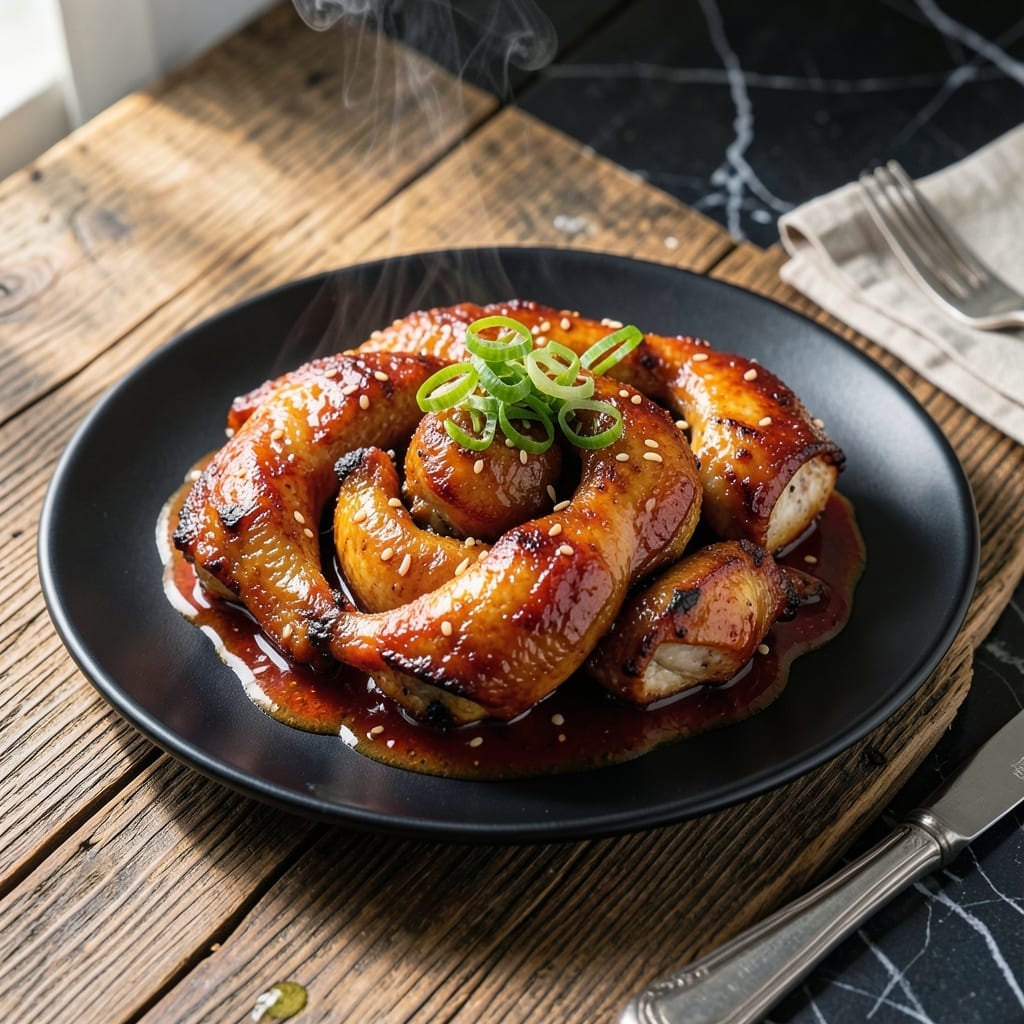
This Korean-inspired dish delivers intense heat balanced with sweet, sticky glaze that clings to every bite. I developed this recipe after trying authentic fire chicken in Seoul, determined to recreate that perfect blend of spice and caramelized depth at home.
The secret lies in the double-coating method: first a spicy marinade, then a final toss in the reduced glaze. Cooking at high heat ensures the chicken develops charred edges while staying juicy inside. The sauce reduces to a glossy, finger-licking consistency.
What emerges is tender chicken pieces coated in a fiery, glossy sauce with just the right amount of sweetness to balance the heat. The aroma alone will have everyone gathering around the table before it’s even plated.
Serve immediately with pickled radishes to cut through the spice. This is one dish that lives up to its name.
Ingredients for Fire Chicken
Bold Korean flavors come from pantry staples and a few specialty items. Nothing too exotic, just intentional.
| Ingredient | Amount | Notes |
|---|---|---|
| Chicken Thighs 🍗 | 2 lb | Boneless, skin-on preferred |
| Gochujang 🌶️ | ½ cup | Korean chili paste, essential |
| Soy Sauce 🥢 | ¼ cup | Low-sodium recommended |
| Honey 🍯 | ¼ cup | Balances the heat |
| Brown Sugar 🍚 | ¼ cup | Light or dark works |
| Rice Vinegar 🍶 | 2 tbsp | Adds tangy brightness |
| Minced Garlic 🧄 | 4 cloves | Freshly minced preferred |
| Fresh Ginger 🌿 | 1 tbsp | Grated, for depth |
| Sesame Oil 🫒 | 1 tbsp | Toasty finish, not for cooking |
| Gochugaru 🌶️ | 2 tbsp | Korean chili flakes, adjust to taste |
| Cornstarch 🌾 | 1 tbsp | For thickening the glaze |
| Sesame Seeds 🌰 | 1 tbsp | Toasted, for garnish |
| Green Onions 🧅 | 4 whole | Thinly sliced, for garnish |
| Neutral Oil 🫒 | 2 tbsp | For cooking chicken |
The gochujang and gochugaru are non-negotiable for authentic heat. H Mart or Korean markets carry the best selection—avoid the tiny jars at regular supermarkets, as they’re often stale. For the chicken, skin-on thighs render fat that crisps up beautifully under high heat. If you’re watching fat, skinless works but lacks that sticky, caramelized texture. Always buy more than you need—both chili products keep for months in the fridge.
No gochujang? Sriracha plus miso paste (2:1 ratio) gets you close, but the depth won’t be the same. Swap honey for maple syrup or agave if vegan. The soy sauce can be tamari for gluten-free. If you’re missing rice vinegar, apple cider vinegar works in a pinch. The garlic and ginger are fresh-or-nothing ingredients—jarred minced just doesn’t compare. For extra heat, add a pinch of cayenne with the gochugaru.
The sauce thickens as it cools, so serve immediately. Leftovers keep for 3-4 days in the fridge—reheat gently to avoid breaking the glaze. Freezes well for up to 3 months, though the texture softens slightly. Always garnish with sesame seeds and green onions just before serving (don’t skip this part).
Why You’ll Love This Recipe
- One Pan Magic: I just toss everything on a single sheet pan—chicken thighs, gochujang glaze, and into the oven. one spatula, minimal mess.
- Sweet Heat: That first bite of sticky honey and fiery gochujang on crispy chicken? Ridiculously good. The brown sugar caramelizes into this glossy coating that’s impossible to resist.
- Meal Prep Star: I make a double batch on Sunday and it reheats beautifully for lunches. Honestly, it tastes even better the next day when the flavors meld.
- Budget Winner: Chicken thighs are always affordable, and a little gochujang goes a long way. Feeds my family of four for less than my old takeout habit.
Step-by-Step Instructions for Fire Chicken
Here’s the method. Straightforward, tested, works every time.
Step 1: Sear the Chicken Thighs to Crisp Perfection
Heat the 2 tbsp Neutral Oil in a large skillet over medium-high heat until it shimmers. Pat the 2 lb Chicken Thighs dry with paper towels—this is crucial for achieving a good sear and preventing splatter.
Add the chicken thighs skin-side down and cook undisturbed for 6-8 minutes until the skin turns deep golden brown and crispy. The fat should render out, creating a glossy pool in the pan. Flip and cook for another 4-5 minutes until the internal temperature reaches 165°F. Transfer to a plate and set aside.
Step 2: Build the Spicy Korean Glaze
In the same skillet, reduce heat to medium and add the 4 cloves Minced Garlic and 1 tbsp Fresh Ginger. Sauté for 30-45 seconds until fragrant but not browned. This builds the aromatic base for your glaze.
Add the 0.5 cup Gochujang, 0.25 cup Soy Sauce, 0.25 cup Honey, 0.25 cup Brown Sugar, 2 tbsp Rice Vinegar, and 2 tbsp Gochugaru. Stir to combine, scraping up any browned bits from the bottom of the pan. Let it simmer for 3-4 minutes until slightly thickened.
Step 3: Thicken and Coat the Chicken
In a small bowl, mix the 1 tbsp Cornstarch with 2 tbsp of cold water to create a slurry. Slowly pour this into the simmering glaze while stirring constantly. Cook for another 1-2 minutes until the glaze thickens enough to coat the back of a spoon.
Return the chicken thighs to the skillet, skin-side down. Spoon the thickened glaze over each piece, ensuring they’re fully coated. Cook for 1-2 minutes to let the flavors meld and the glaze set slightly.
Step 4: Finish and Garnish for Serving
Flip the chicken thighs once more to coat them in the glaze. Drizzle with the 1 tbsp Sesame Oil and toss the skillet gently to distribute it evenly. This adds a fragrant, nutty finish to the dish.
Transfer the fire chicken to a serving platter. Garnish with the 1 tbsp Sesame Seeds and thinly sliced 4 whole Green Onions. Serve immediately with steamed rice to balance the heat. The glaze should be sticky and glossy, clinging to each piece of chicken.
Pro Tips For Making Fire Chicken
- Sear First, Sauce Later: I learned this the hard way—sear the chicken thighs until golden brown before adding the gochujang sauce to lock in flavor and prevent soggy skin.
- Thin the Honey: After burning three batches, I finally figured out warming the honey for 10 seconds in the microwave makes it blend smoothly with the gochujang and soy sauce.
- Skip the Skin Trimming: Resist the urge to trim the fat—it renders down during cooking, adding richness that balances the spicy-sweet glaze.
- Rest Before Serving: Give it a solid 5 minutes under foil after cooking so the juices redistribute—your future self will thank you when the meat stays tender.
Health Benefits of This Recipe
Metabolism Boost
This dish packs capsaicin from gochujang and gochugaru, which can temporarily boost metabolism by 5-10% for a few hours after eating. The heat triggers thermogenesis, helping burn extra calories. I notice I feel more energized after enjoying this meal. 💪
Rich in Antioxidants
Garlic, ginger, and chili peppers are loaded with antioxidants that combat oxidative stress. A single serving provides significant amounts of vitamin C and flavonoids, supporting immune function and cellular health.
Protein Powerhouse
With 2 lb of chicken thighs, this recipe delivers about 40g of protein per serving. Protein is essential for muscle repair and satiety, keeping you full for hours. The skin adds healthy fats that enhance nutrient absorption.
Gut Health Support
Fermented ingredients like gochujang introduce beneficial probiotics to your gut microbiome. These live cultures aid digestion and improve gut health over time. I always feel lighter after eating fermented foods.
Low Glycemic Impact
Despite the honey and sugar, the protein and fiber in this dish help moderate blood sugar spikes. The rice vinegar adds acidity that further slows glucose absorption, making it a smarter choice for those monitoring blood sugar. 💛
Vitamin and Mineral Density
Chicken thighs provide iron, zinc, and B vitamins, while the sauce ingredients contribute small amounts of calcium and potassium. Together, they create a nutritionally balanced meal that supports overall well-being.
Nutrition Facts
Frequently Asked Questions
Can I use chicken breast instead of thighs?
Yes, but the texture will be different. Thighs stay juicy, while breast can dry out. If using breast, reduce cooking time to 5-6 minutes per side.
How do I adjust the spice level?
Reduce gochugaru to 1 tbsp for mild heat or add 1 tsp more for extra kick. Balance with extra honey if needed.
What if my glaze isn’t thickening?
Simmer longer or add another 1/2 tbsp cornstarch slurry. Stir constantly to prevent burning.
Can I make this ahead of time?
Best served fresh, but leftovers keep for 3-4 days. Reheat gently to preserve the glaze texture.

- Jollof Rice Sauce Recipe: West African Tomato and Spice Infusion - September 25, 2026
- Japanese Rice Soup Recipe: Umami-Rich Comfort in a Bowl - September 25, 2026
- Homemade Cream Of Rice Recipe: Silk-Smooth Breakfast in Minutes - September 25, 2026