
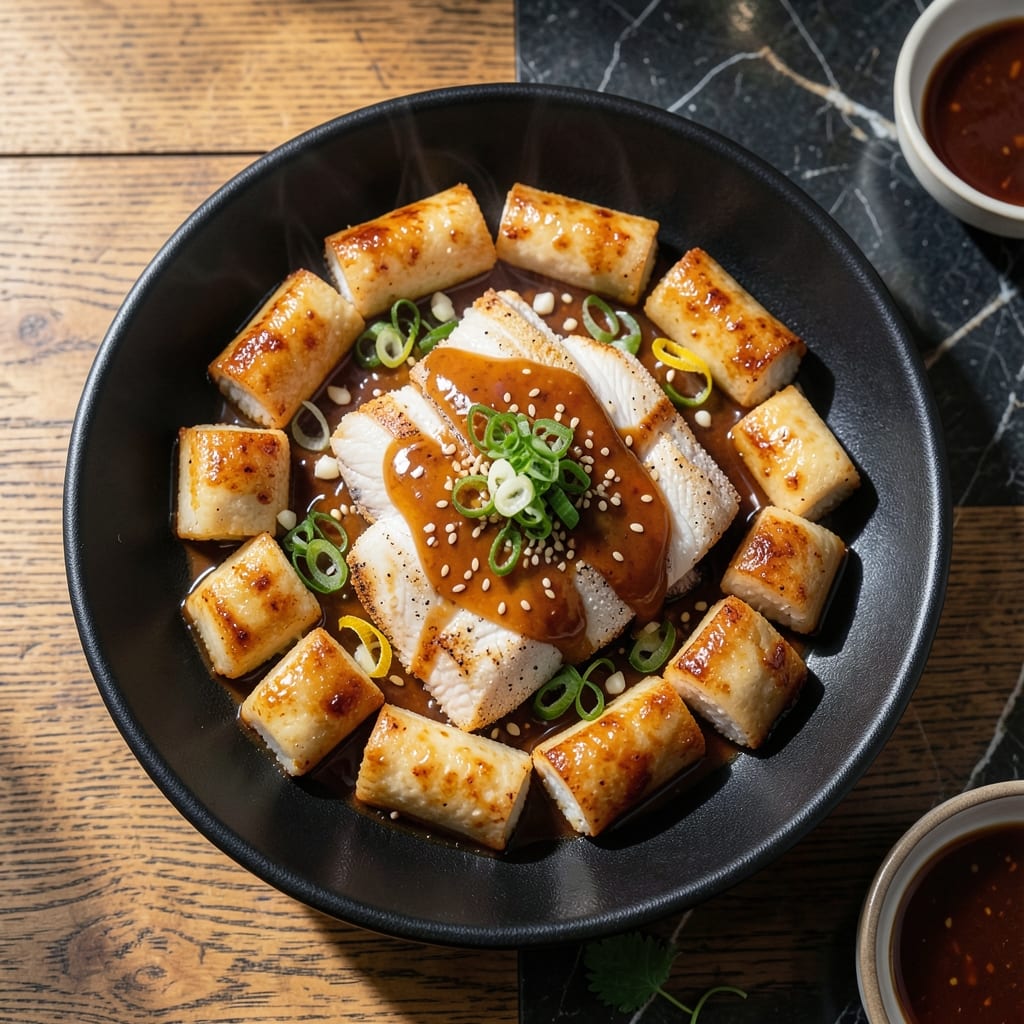
This Korean-inspired dish delivers crispy fish and rice cakes with minimal effort. The combination creates a perfect balance of textures and flavors that will impress any dinner guest.
I developed this method to ensure the fish stays tender while the rice cakes achieve that ideal golden crust. The result is a meal that’s both satisfying and visually appealing on any table.
Ingredients for Fish and Rice Cake
Crispy fish, chewy rice cakes, and a sauce that ties it all together beautifully.
| Ingredient | Amount | Notes |
|---|---|---|
| White Fish Fillets 🐟 | 1 ½ lb | Cod or pollock, skinless |
| Korean Rice Cakes 🍚 | 12 oz | Cylindrical or flat variety |
| Soy Sauce 🫒 | ¼ cup | Low-sodium preferred |
| Gochujang 🌶️ | 2 tbsp | Korean chili paste |
| Honey 🍯 | 1 tbsp | Or maple syrup alternative |
| Minced Garlic 🧄 | 3 cloves | Freshly minced preferred |
| Ginger 🌿 | 1 tbsp | Fresh, finely grated |
| Sesame Oil 🫒 | 1 tbsp | Toasted for best flavor |
| Green Onions 🧅 | 3 whole | Thinly sliced for garnish |
| Vegetable Oil 🫒 | ½ cup | For frying, neutral flavor |
| Cornstarch 🌾 | ¼ cup | For coating fish |
| Sesame Seeds 🌰 | 1 tbsp | Toasted, for garnish |
| Rice Vinegar 🍚 | 1 tbsp | For sauce tanginess |
| Sugar 🧂 | 1 tsp | Balances gochujang heat |
The fish is the star here. Cod or pollock hold up best to frying without falling apart. Look for firm, white fillets at your seafood counter—Whole Foods or Trader Joe’s usually have great options. Freshness matters: the fish should smell clean, like the ocean, not fishy. For the rice cakes, Korean markets carry the best selection, but many Asian grocery stores stock them in the frozen section too.
No gochujang? Sriracha plus a little miso paste gets you close on flavor (though the depth won’t be quite the same). Out of rice vinegar? Apple cider vinegar at half the amount works in a pinch. For a gluten-free version, swap soy sauce for tamari. The cornstarch coating is non-negotiable though—it’s what gives the fish that perfect crispy texture.
This comes together fast—best served immediately while the fish is still crisp and the rice cakes are hot. Leftovers keep 2-3 days in the fridge, but the rice cakes lose their texture. Reheat in a dry pan to revive the crispiness. The sauce can be made ahead and stored for 1 week.
Why You’ll Love This Recipe
- I’ll be real: the rice cakes soak up even more flavor the next day, making lunch something to look forward to.
- One Pan Magic: I just toss the fish, rice cakes, and sauce together—no fuss, no extra dishes.
- Sweet & Spicy Fix: The gochujang and honey combo gives that sticky, crave-worthy glaze on every bite.
- Weeknight Hero: Honestly, it’s my go-to for busy Tuesdays when I need dinner fast but still flavorful.
Step-by-Step Instructions for Fish and Rice Cakes
Here’s the method. Straightforward, tested, works every time.
Step 1: Prepare the Fish for Frying
Pat the 1.5 lb white fish fillets completely dry with paper towels. Any moisture will prevent the cornstarch from adhering properly, which is essential for that promised crispy texture. Cut the fillets into 1-inch wide strips for even cooking.
Place the 0.25 cup cornstarch in a shallow dish. Lightly coat each piece of fish, pressing gently to ensure full coverage. Shake off any excess—too much cornstarch will create a thick, pasty coating rather than the light, crispy crust you want. Set the coated fish aside on a clean plate.
Step 2: Make the Gochujang Sauce
In a bowl, whisk together the 0.25 cup soy sauce, 2 tbsp gochujang, 1 tbsp honey, 3 cloves minced garlic, 1 tbsp ginger, 1 tbsp sesame oil, 1 tbsp rice vinegar, and 1 tsp sugar. The sauce should be smooth and slightly glossy, with the gochujang fully incorporated.
Taste and adjust the balance if needed—add a touch more honey if it’s too spicy, or a splash of rice vinegar if it needs brightness. This sauce will coat the rice cakes and fish, so its flavor should be bold but harmonious.
Step 3: Fry the Fish Until Golden and Crispy
Heat the 0.5 cup vegetable oil in a large, deep skillet over medium-high heat until it reaches 350°F. To test the oil, drop in a small piece of coated fish—if it sizzles and floats immediately, it’s ready.
Carefully add the fish in a single layer, working in batches if necessary to avoid crowding the pan. Fry for 3-4 minutes per side until the coating is golden brown and crisp. Use a slotted spoon to transfer the fish to a paper towel-lined plate to drain excess oil.
Step 4: Cook the Rice Cakes and Combine
In the same skillet (after removing most of the oil, leaving about 1 tbsp), add the 12 oz Korean rice cakes. Cook over medium heat for 3-4 minutes, stirring occasionally, until they begin to soften and develop a slight char. This step enhances their chewy texture.
Pour the gochujang sauce over the rice cakes and stir to coat evenly. Add the crispy fish back to the skillet and gently toss everything together for 1-2 minutes until the fish is warmed through and fully coated in the sauce. Be careful not to break the fish pieces.
Step 5: Garnish and Serve Immediately
Transfer the fish and rice cakes to a serving platter. Sprinkle with the 3 whole green onions, thinly sliced, and the 1 tbsp sesame seeds. The green onions add a fresh, sharp contrast to the rich, spicy-sweet sauce, while the sesame seeds provide a nutty crunch.
Serve immediately while the fish is still crispy and the rice cakes are hot. The contrast of textures—crispy fish, chewy rice cakes, and the silky sauce—is what makes this dish so satisfying.
Pro Tips For Making Fish And Rice Cake
- Pre-Soak Rice Cakes: Soak the rice cakes in warm water for 10-15 minutes before cooking—they’ll absorb the sauce better and won’t turn rock-hard if the fish finishes early.
- Pat Fish Dry: Blot the white fish fillets with paper towels before cooking; it helps the sauce cling instead of sliding off, and you’ll get a nicer sear.
- Balance the Sauce: Mix the gochujang, soy sauce, and honey in a small bowl first—this way, you can taste and adjust the sweet-spicy balance before it hits the pan.
- Cook Fish Last: Start the rice cakes first since they take longer to soften, then add the fish fillets in the last 5-6 minutes so they don’t overcook and fall apart.
Creative Variations of This Dish
Spicy Kimchi Twist
Add ½ cup chopped kimchi to the sauce for extra tang and heat. Stir in 1 tbsp kimchi juice for depth. The fermented flavor pairs perfectly with the crispy fish and chewy rice cakes. 🌶️
Sweet and Savory
Replace gochujang with 3 tbsp hoisin sauce and add 2 tbsp orange marmalade for a sweeter profile. This version reminds me of Korean-Chinese fusion dishes I loved growing up.
Vegetable Medley
Toss in 1 cup bell peppers and ½ cup zucchini when cooking the rice cakes. The veggies add color and texture while soaking up the sauce beautifully.
Gluten-Free Option
Swap soy sauce for tamari and use gluten-free rice cakes. The flavor remains just as bold. I test this often for friends with gluten sensitivities.
Extra Crispy Fish
Double-coat the fish by dipping in 1 beaten egg before cornstarch. This creates an even crispier texture that holds up better to the sauce. 💛
Coconut Milk Sauce
Blend ¼ cup coconut milk into your sauce for creaminess. This works surprisingly well with the gochujang spice, creating a rich, balanced flavor profile.
Nutrition Facts
Frequently Asked Questions
Can I use frozen rice cakes?
Yes, but thaw them first in warm water for 5-10 minutes. Pat dry before cooking to achieve the best texture. Frozen cakes can be slightly softer after cooking.
What fish works best for this?
Firm white fish like cod or pollock hold up best to frying. Avoid flaky fish like tilapia, as they may break apart during cooking.
How do I make it less spicy?
Reduce the gochujang to 1 tbsp and add 1 extra tbsp honey. This balances the heat while keeping the dish flavorful.
Can I bake the fish instead of frying?
Bake at 400°F for 12-15 minutes on a wire rack for crispiness. The texture won’t be as crispy as frying but still delicious.

- Jollof Rice Sauce Recipe: West African Tomato and Spice Infusion - September 25, 2026
- Japanese Rice Soup Recipe: Umami-Rich Comfort in a Bowl - September 25, 2026
- Homemade Cream Of Rice Recipe: Silk-Smooth Breakfast in Minutes - September 25, 2026