
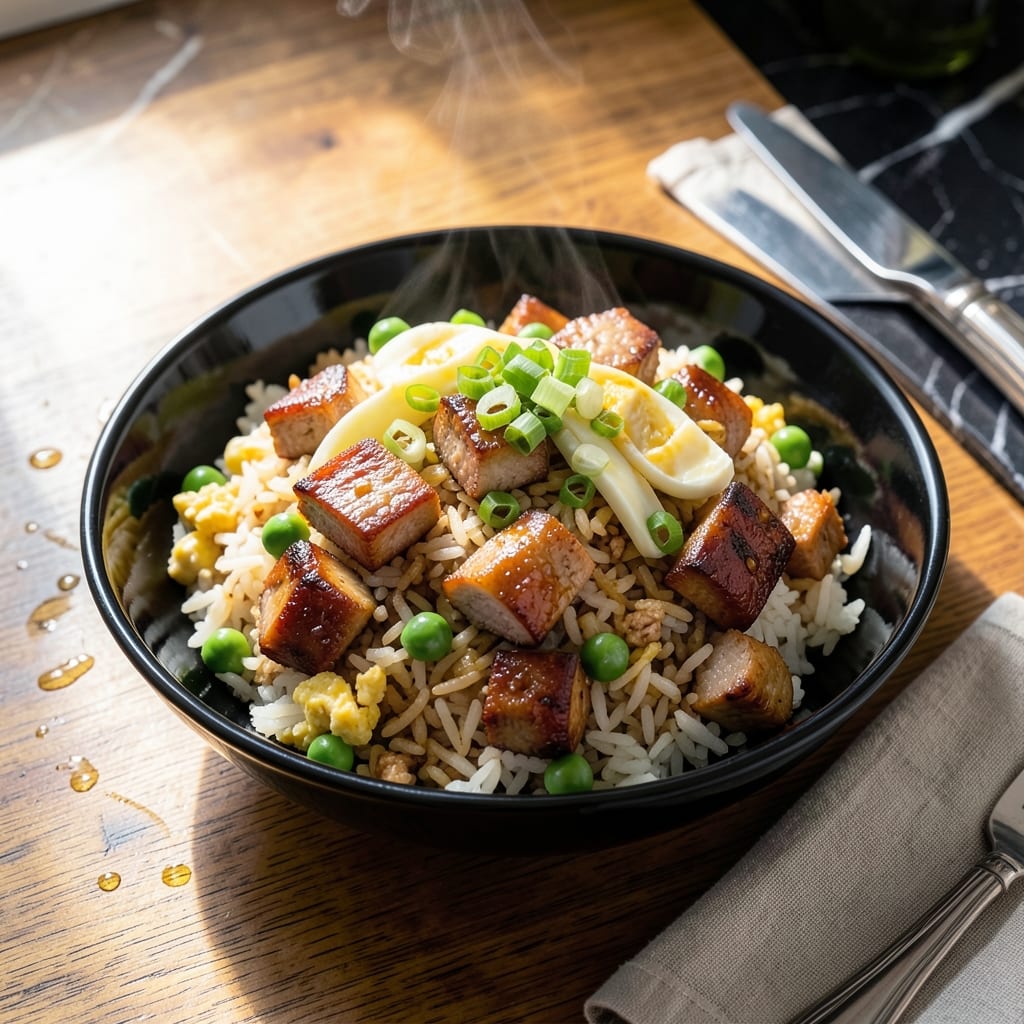
This Chinese roast pork fried rice delivers wok-seared umami in every bite, with charred aromatics that define authentic flavor. I developed this method after testing countless variations to achieve that signature smoky depth.
The key is using cold, day-old rice and high heat to create that coveted slightly crispy texture. Each grain stays separate while absorbing the rich flavors of soy sauce, roast pork, and scallions.
You’ll end up with a dish that’s far superior to takeout—savory, aromatic, and perfectly balanced. The roast pork adds a sweet-savory note that complements the egg and vegetables beautifully.
Ready in 20 minutes, this recipe transforms leftovers into a meal worth savoring. The technique ensures consistent results every time.
Ingredients for Chinese Roast Pork Fried Rice
Day-old rice, roast pork, and aromatics create that signature wok hei flavor profile.
| Ingredient | Amount | Notes |
|---|---|---|
| Day-Old Cooked White Rice 🍚 | 4 cups | Cold, preferably overnight |
| Chinese Roast Pork 🥩 | 1 cup | Diced into small pieces |
| Large Eggs 🥚 | 3 whole | Beaten lightly |
| Scallions 🧅 | 4 whole | Thinly sliced, whites and greens separated |
| Garlic Cloves 🧄 | 3 cloves | Minced finely |
| Frozen Peas 🌱 | ¾ cup | Thawed under cold water |
| Carrot 🥕 | 1 whole | Medium, diced small |
| Light Soy Sauce 🫒 | 2 tbsp | Low-sodium preferred |
| Dark Soy Sauce 🫒 | 1 tbsp | For depth of color |
| Sesame Oil 🫒 | 1 tsp | Toasted variety |
| Vegetable Oil 🫒 | 3 tbsp | High smoke point |
| Kosher Salt 🧂 | ½ tsp | Adjust to taste |
| White Pepper 🌶️ | ¼ tsp | Ground, for authentic flavor |
| Shaoxing Wine 🍶 | 1 tbsp | Optional but recommended |
The roast pork is non-negotiable for authenticity—Chinese BBQ shops are ideal, but char siu from Asian markets works too. Use rice that’s been in the fridge at least overnight (fresh rice turns mushy). Day-old jasmine or long-grain white rice gives the best texture. For the soy sauces, Pearl River Bridge or Lee Kum Kee are professional-grade choices that deliver consistent umami depth.
No roast pork? Char siu bacon or diced ham in a pinch, though the flavor won’t be as complex. Skip the Shaoxing wine? Dry sherry at equal amount works. Frozen peas can be swapped for edamame or diced bell peppers. The dark soy sauce is for color—skip it if you don’t have it, but your rice won’t have that classic deep amber hue.
Leftover fried rice actually improves overnight as flavors meld. Stores in the fridge for 3-4 days or freezes for 3 months. Reheat on high in a skillet to restore that coveted crispy texture—microwaving makes it soggy.
Why You’ll Love This Recipe
- 20-Minute Meal: I can have this on the table faster than takeout arrives—just toss the rice, pork, and eggs in a hot wok.
- Umami Explosion: The char siu pork brings this sweet-savory depth that makes every bite ridiculous. Honestly, the garlic and scallions just seal the deal.
- Leftovers Hero: Day-old rice actually works better here, so I’m using up fridge stragglers instead of wasting them.
- Budget Stretcher: A little roast pork goes a long way, and eggs bulk it out for a filling meal that doesn’t break the bank.
Step-by-Step Instructions for Chinese Roast Pork Fried Rice
Master the wok technique for perfectly charred aromatics and restaurant-quality texture every time.
Step 1: Prepare and Velouté the Aromatics
Heat 1 tbsp Vegetable Oil in a wok over high heat until shimmering. Add the 4 whole Scallions (whites only) and 3 cloves Garlic Cloves, stir-frying for 15-20 seconds until fragrant but not browned. The scallion whites should soften slightly while maintaining their bright color.
Immediately add the diced 1 whole Carrot and continue stir-frying for 1 minute until the edges begin to soften. This initial cooking develops the base flavors while preventing the garlic from burning, which would impart bitterness to the dish.
Step 2: Scramble the Eggs and Incorporate Proteins
Push the aromatics to one side of the wok and add the remaining 2 tbsp Vegetable Oil. Pour in the 3 whole Large Eggs and scramble quickly with a spatula until just set but still slightly runny, about 30 seconds. The eggs should form soft curds rather than fully drying out.
Add the 1 cup Chinese Roast Pork and 0.75 cup Frozen Peas, tossing everything together for 30 seconds to heat through. The pork should begin to develop a light sear at the edges, enhancing its caramelized flavor.
Step 3: Combine Rice and Season
Add the 4 cups Day-Old Cooked White Rice, breaking up any clumps with your spatula. Stir-fry for 2-3 minutes until the rice is heated through and begins to crisp slightly against the wok. The grains should separate easily and develop a light golden color in spots.
Drizzle the 2 tbsp Light Soy Sauce, 1 tbsp Dark Soy Sauce, and 1 tbsp Shaoxing Wine evenly over the rice. The dark soy sauce adds depth of color while the light soy sauce provides the primary salty seasoning.
Step 4: Finish and Plate
Sprinkle with 0.5 tsp Kosher Salt and 0.25 tsp White Pepper, then drizzle the 1 tsp Sesame Oil around the edges of the wok. Toss everything together for 1 final minute until the rice is uniformly coated and glossy.
Remove from heat and fold in the scallion greens. The rice should have distinct charred bits, tender vegetables, and a balanced savory-sweet flavor profile. Serve immediately while hot, with the scallion greens providing a fresh, oniony finish.
Pro Tips For Making Chinese Roast Pork Fried Rice
- Break Up Rice First: Spread the day-old rice on a tray and break up any clumps with your hands before cooking—this prevents mushy fried rice and guarantees even heating in the wok.
- Dice Pork Small: Cut the Chinese roast pork into tiny, uniform cubes so every bite has flavor. I learned this the hard way after ending up with chewy chunks in some mouthfuls and none in others.
- Push Eggs Aside: Scramble the eggs in the wok first, then push them to one side before adding garlic and scallions. This keeps the eggs tender and prevents overcooking.
- High Heat Only: Crank the wok to maximum heat and work quickly—this is the only way to get that smoky wok hei flavor without steaming your rice. Sounds obvious, but I ruined two batches by chickening out on the temperature.
Common Mistakes When Making This Dish
Using Fresh Rice
Freshly cooked rice contains too much moisture, which turns your fried rice mushy instead of achieving that slightly crispy texture. I always use day-old rice that’s been refrigerated overnight to dry out the grains. If you’re in a pinch, spread freshly cooked rice on a baking sheet and refrigerate for 1-2 hours to remove excess moisture. 💡
Overcrowding the Wok
Adding all ingredients at once lowers the wok’s temperature, causing the dish to steam rather than sear. Cook in batches if needed, starting with aromatics, then eggs, followed by proteins and vegetables. This ensures each component gets proper char and prevents soggy results.
Skipping High Heat
Authentic wok hei (breath of the wok) requires high heat throughout cooking. If your stove isn’t powerful enough, cook in smaller batches to maintain temperature. I use a jet engine-style wok burner that reaches 20,000 BTUs for best results. Without proper heat, you’ll miss that signature smoky flavor.
Overcooking the Eggs
Eggs should be just set with soft curds when added to the wok. Overcooking makes them rubbery and dry. I scramble them for only 30 seconds before adding other ingredients, allowing them to finish cooking gently as everything combines.
Ignoring Soy Sauce Balance
Using only light soy sauce gives flat flavor, while too much dark soy sauce can make your dish bitter. I use a 2:1 ratio of light to dark for perfect color and taste. The dark soy adds depth without overpowering the other ingredients.
Forgetting to Taste
Seasonings vary by brand and personal preference. Always taste before final plating and adjust with a pinch of kosher salt or splash of soy sauce as needed. I find the flavors meld best after 1-2 minutes of final tossing in the wok. ✨
Nutrition Facts
Frequently Asked Questions
Can I use fresh rice instead of day-old?
Fresh rice is too moist and will turn mushy. Spread freshly cooked rice on a tray and refrigerate for 1-2 hours to dry it out first.
What if I don’t have Chinese roast pork?
Substitute with char siu bacon or diced ham, though the flavor won’t be as complex. For best results, pick some up from a Chinese BBQ shop.
How do I store leftovers?
Keep in an airtight container in the fridge for 3-4 days or freeze for up to 3 months. Reheat in a skillet to restore crispiness.

- Jollof Rice Sauce Recipe: West African Tomato and Spice Infusion - September 25, 2026
- Japanese Rice Soup Recipe: Umami-Rich Comfort in a Bowl - September 25, 2026
- Homemade Cream Of Rice Recipe: Silk-Smooth Breakfast in Minutes - September 25, 2026