
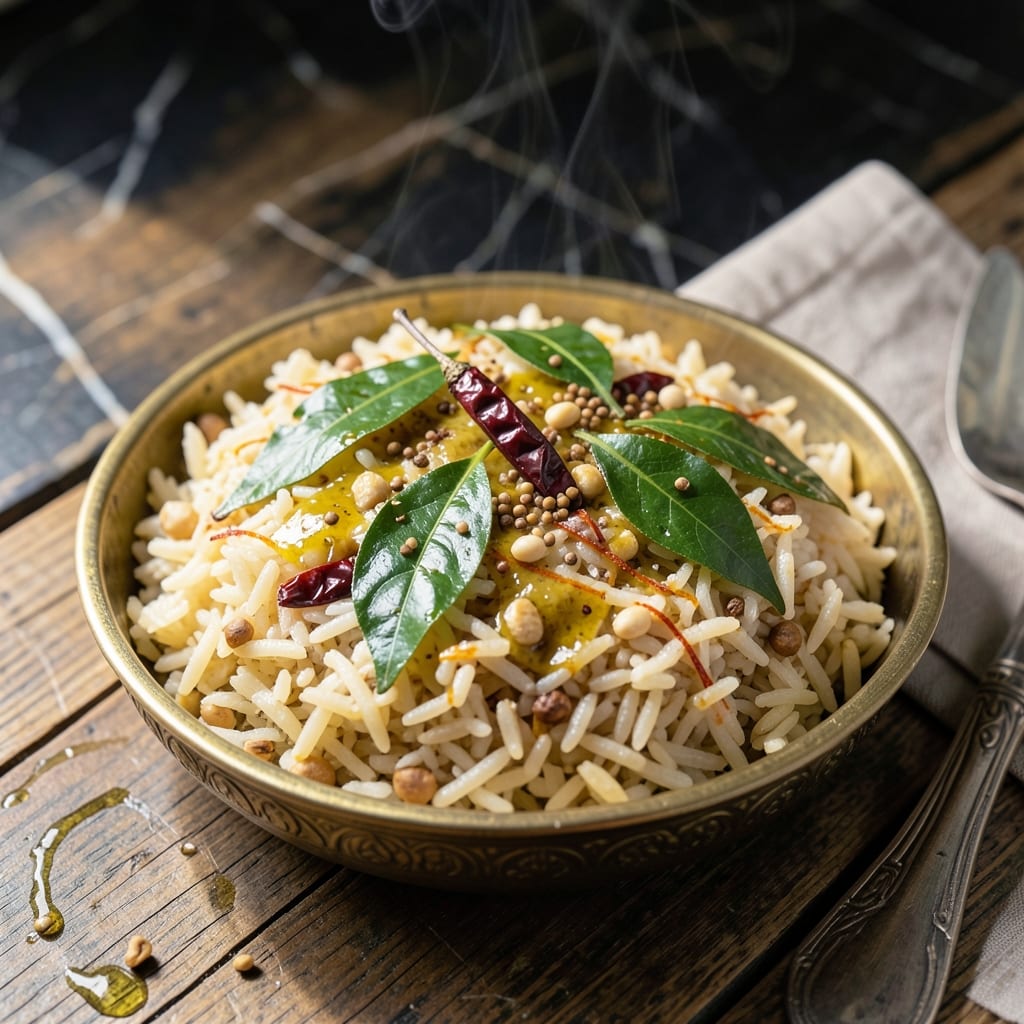
This South Indian specialty transforms humble rice into a fragrant masterpiece with just a handful of ingredients. The star is fresh curry leaves, which release their citrusy aroma when tempered in hot oil.
I’ve perfected the balance of mustard seeds, urad dal, and asafoetida to create the traditional tadka that infuses every grain. The rice cooks in this spiced oil, absorbing layers of flavor without overpowering the natural taste.
What emerges is a dish that’s both comforting and complex—soft grains with bursts of curry leaf essence and a hint of crunch from the tempering. It pairs beautifully with yogurt or a simple vegetable side.
This method stays true to the roots while making it accessible for any home kitchen. Here’s how to bring this classic to your table.
Ingredients for Karuveppilai Rice
Fragrant curry leaves and traditional tempering spices transform simple rice into a South Indian classic.
| Ingredient | Amount | Notes |
|---|---|---|
| Basmati Rice 🍚 | 2 cups | Rinsed and drained thoroughly |
| Fresh Curry Leaves 🍃 | ½ cup | Loosely packed, stems removed |
| Mustard Seeds 🌿 | 1 tsp | Black or yellow variety |
| Urad Dal 🌾 | 1 tbsp | Split black gram, uncooked |
| Asafoetida 🧂 | ¼ tsp | Hing, for authentic flavor |
| Dried Red Chilies 🌶️ | 2 whole | Broken into pieces |
| Chana Dal 🌾 | 1 tbsp | Split chickpea lentils |
| Cashew Halves 🥜 | 2 tbsp | Raw or lightly roasted |
| Peanuts 🥜 | 2 tbsp | Raw, skin-on preferred |
| Turmeric Powder 🌿 | ½ tsp | For golden color |
| Green Chilies 🌶️ | 2 whole | Slit lengthwise, seeds removed |
| Ghee 🧈 | 3 tbsp | Clarified butter, or use coconut oil |
| Salt 🧂 | 1 ½ tsp | Adjust to taste |
| Water 💧 | 4 cups | For cooking rice |
The fresh curry leaves are non-negotiable here. Indian grocery stores like Patel Brothers or H-Mart carry them fresh or frozen. Avoid dried curry leaves—they lack the bright, citrusy punch. For the dals, Bob’s Red Mill offers good quality urad and chana dal. Asafoetida (hing) should be pure, not mixed with starch. Look for brands like MDH or Badshah at South Asian markets.
No fresh curry leaves? Dried curry leaf powder at one-third the amount works in a pinch, though it won’t have the same aroma. Swap cashews for almonds or walnuts. Missing chana dal? Yellow split peas add similar texture. For a nut-free version, omit cashews and double the peanuts. The ghee can be replaced with coconut oil for a vegan twist.
Store fresh curry leaves in a sealed bag in the fridge for up to 2 weeks, or freeze them for 3 months. The dals and spices keep indefinitely in airtight containers. Cooked rice is best served fresh but reheats well—splash with water and microwave covered for 1-2 minutes.
Why You’ll Love This Recipe
- One Pot Wonder: I toss everything in a single pot—basmathi rice, mustard seeds crackling, fresh curry leaves sizzling—and it’s ready before I can set the table.
- Aroma Overload: The urad dal and asafoetida bloom in hot oil, then the curry leaves hit—honestly, my kitchen smells like a South Indian street food stall.
- Lunchbox Hero: Pack it for work or school, and it tastes even better the next day. My daughter’s friends always ask for her “green leaf rice.”
- Budget Stretcher: A handful of curry leaves and pantry staples turn plain rice into a feast. I spend pennies and get a meal that feels special.
Step-by-Step Instructions for Curry Leaf-Infused Rice
This traditional method ensures fragrant rice with perfectly tempered spices every time.
Step 1: Prepare and Temper the Spices
Heat 3 tbsp Ghee in a heavy-bottomed pot over medium heat. When the ghee melts and becomes hot but not smoking, add 1 tsp Mustard Seeds. Cover immediately, as the seeds will pop vigorously. Wait until the popping subsides, about 30-45 seconds.
Add 1 tbsp Urad Dal, 1 tbsp Chana Dal, 2 tbsp Peanuts, and 2 tbsp Cashew Halves. Stir constantly until the dals turn light golden brown and the nuts are lightly toasted, which takes about 3-4 minutes. The aroma should become rich and nutty.
Now add 2 whole Dried Red Chilies (broken into pieces), 2 whole Green Chilies (slit lengthwise), and 0.25 tsp Asafoetida. Stir for 10-15 seconds until the asafoetida releases its pungent aroma. Be careful not to burn it.
Step 2: Infuse with Curry Leaves
Reduce heat to medium-low and add 0.5 cup Fresh Curry Leaves. Stir well and cook for 1-2 minutes until the leaves become crisp and their essential oils are released into the ghee. The mixture should turn a vibrant green and smell intensely aromatic.
Sprinkle in 0.5 tsp Turmeric Powder and stir quickly to distribute the color evenly. The turmeric should coat all the spices and nuts, giving the mixture a golden hue. Cook for another 30 seconds to bloom the turmeric.
Step 3: Cook the Rice
Add the rinsed and drained 2 cups Basmati Rice to the pot. Stir gently to coat each grain with the spiced ghee mixture. Cook for 1-2 minutes, stirring often, until the rice becomes slightly translucent at the edges and emits a nutty aroma.
Pour in 4 cups Water and add 1.5 tsp Salt. Stir well and bring to a rolling boil over high heat. Once boiling, reduce the heat to the lowest setting, cover the pot with a tight-fitting lid, and let it cook undisturbed for 15 minutes.
Step 4: Rest and Fluff for Perfect Texture
After 15 minutes, turn off the heat but keep the pot covered. Let it rest for an additional 10 minutes to allow the steam to finish cooking the rice and for the grains to absorb all the flavors from the tempering.
Gently fluff the rice with a fork, taking care not to break the grains. The rice should be light, separate, and infused with the rich aroma of curry leaves and spices. Each grain should glisten slightly from the ghee and be uniformly golden from the turmeric.
Serve warm, ensuring every serving has a good distribution of the tempered spices and nuts for the best flavor in every bite.
Pro Tips For Making Karuveppilai Rice
- Toast the dal first: Lightly dry-roast the urad dal in the same pan before adding mustard seeds—it deepens the nutty flavor and prevents a raw taste.
- Use fresh leaves: I learned this the hard way—dried curry leaves just don’t deliver the same aromatic punch as fresh ones.
- Temper on medium: Cranking the heat too high burns the mustard seeds before they pop; medium heat gives you that perfect sizzle without bitterness.
- Rinse rice twice: Two quick rinses remove just enough starch to keep the basmati grains separate, not sticky—I skip this when I’m lazy, but the texture suffers.
Wine and Beer Pairings for This Recipe
Indian Beer Choices
For beer lovers, I recommend pairing this with Kingfisher, India’s most popular lager. Its light, crisp profile with subtle malt sweetness complements the earthy curry leaves beautifully. The carbonation cleanses your palate between each fragrant bite. 🍺
Craft Beer Alternatives
A Belgian witbier like Hoegaarden works wonderfully—the citrus notes and coriander spice echo the curry leaf aroma. For something bolder, try a German hefeweizen with its banana and clove esters that enhance the dish’s spiced complexity.
White Wine Pairings
A crisp Sauvignon Blanc from New Zealand cuts through the ghee richness with its bright acidity. The herbal, grassy notes of the wine harmonize with the tempering spices. I find Kim Crawford offers excellent value and consistency. 🍷
Red Wine Options
While whites are traditional, a light Pinot Noir with its red fruit notes can work surprisingly well. Look for one from Oregon—the subtle earthiness matches the urad dal and curry leaves. Avoid heavy tannic reds that would overpower the dish.
Non-Alcoholic Pairings
For a refreshing alcohol-free option, serve with sweet lassi—the creamy yogurt drink balances the spices. Or try ginger beer with its spicy kick that complements the green chilies in the recipe. Both are authentic South Indian accompaniments.
Nutrition Facts
Frequently Asked Questions
Can I use dried curry leaves instead of fresh?
Fresh is ideal, but dried works in a pinch. Use 1/3 the amount and soak in warm water for 10 minutes first. The flavor won’t be as vibrant, but it’ll still add a nice aroma.
Why does my rice turn mushy?
Overcooking or lifting the lid during cooking causes this. Stick to 15 minutes on low heat, then rest covered for 10 minutes. Always use the exact water-to-rice ratio.
How do I store leftovers?
Keep in an airtight container in the fridge for up to 3 days. Reheat with a splash of water and cover to retain moisture. Avoid freezing, as it affects texture.
Can I make this vegan?
Yes! Simply replace ghee with coconut oil. The flavor profile stays authentic while keeping it plant-based. All other ingredients are already vegan.

- Jollof Rice Sauce Recipe: West African Tomato and Spice Infusion - September 25, 2026
- Japanese Rice Soup Recipe: Umami-Rich Comfort in a Bowl - September 25, 2026
- Homemade Cream Of Rice Recipe: Silk-Smooth Breakfast in Minutes - September 25, 2026