
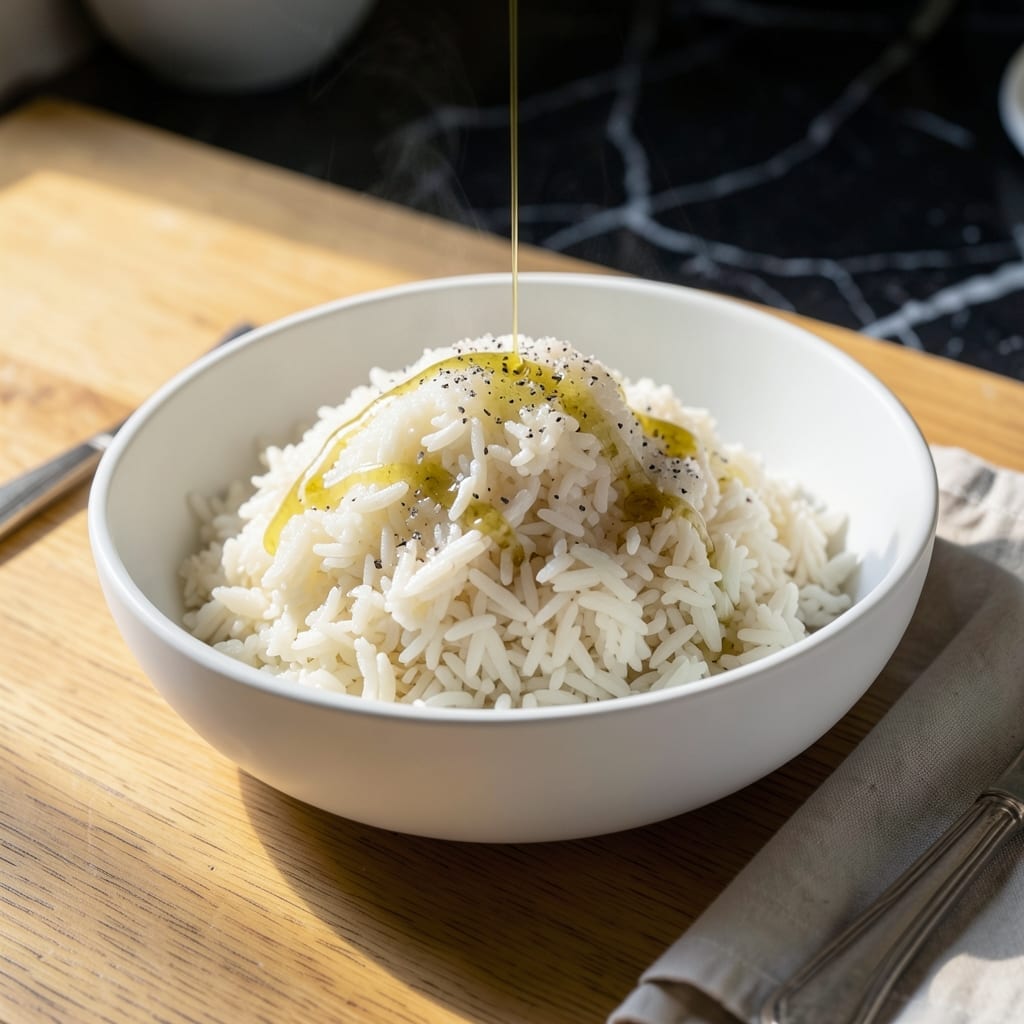
Achieving perfectly fluffy jasmine rice requires attention to detail and precise technique. This method delivers light, separate grains every time with minimal effort.
The secret lies in the proper rice-to-water ratio, thorough rinsing, and a short resting period. In just 15 minutes, you’ll have restaurant-quality rice that’s airy and fragrant without being sticky or mushy.
Ingredients for Fluffy Jasmine Rice
Five simple ingredients. Restaurant-quality results. No special equipment required.
| Ingredient | Amount | Notes |
|---|---|---|
| Jasmine Rice 🍚 | 1 ½ cups | Dry, uncooked long-grain |
| Water 💧 | 2 ¼ cups | Filtered or distilled preferred |
| Kosher Salt 🧂 | ½ tsp | Diamond Crystal brand recommended |
| Neutral Oil 🫒 | 1 tsp | Optional, for rinsing bowl |
| White Vinegar 🍶 | 1 tsp | Optional, for rinsing rice |
The rice quality matters most. Jasmine rice from Thailand (look for brands like Golden Phoenix or Three Ladies) has the perfect fragrance and texture. Avoid pre-rinsed or instant rice—fresh, long-grain jasmine gives you those separate, airy grains. If buying in bulk, check the packaging date; rice loses freshness after 6-12 months. The water should be filtered to avoid any off-flavors interfering with the rice’s natural aroma.
No jasmine rice? Basmati works in a pinch but reduces water to 1.75 cups for every 1.5 cups rice. Skip the vinegar if you prefer—it just helps remove excess starch. For extra fragrance, replace 0.5 cups water with coconut milk. The salt can be adjusted to taste, but Diamond Crystal kosher salt dissolves cleanly without bitterness. Avoid iodized table salt—it can make the rice taste metallic.
Uncooked rice stores indefinitely in a cool, dark pantry. Cooked rice keeps 4-5 days refrigerated in an airtight container. For longer storage, freeze in portions for up to 3 months. Always rinse rice thoroughly before cooking to remove surface starch and prevent clumping.
Why You’ll Love This Recipe
- 20-Minute Magic: I can start this rice and have it ready before the rest of dinner hits the table—just rinse, cook, fluff.
- Secret Flavor Boost: That splash of white vinegar at the end gives it a brightness that makes every bite taste intentional.
- Meal Prep MVP: It pairs with everything from stir-fry to grilled chicken, and honestly, I make a double batch for the week.
- Pocketbook Pleaser: Jasmine rice is cheap, stretches far, and this method turns it into restaurant-quality fluff without extra cost.
Step-by-Step Instructions for Fluffy Jasmine Rice
Master this technique and you’ll achieve perfectly light, separate grains with minimal effort.
Step 1: Rinse the Rice Thoroughly
Place the 1.5 cups jasmine rice in a fine-mesh strainer and rinse under cold running water until the water runs completely clear. This removes excess starch that could make your grains gummy rather than fluffy.
For extra insurance against sticking, I add the 1 tsp neutral oil and 1 tsp white vinegar to the rinsing water. The vinegar helps break down surface starch, while the oil prevents clumping. Shake the strainer gently to ensure all grains are exposed to the water.
Step 2: Soak the Rice for Even Cooking
Transfer the rinsed rice to your cooking pot and add the 2.25 cups water. The water should be about 1 inch above the rice level. Let it soak for 15 minutes—this step is crucial for achieving uniform texture.
During soaking, the grains absorb moisture evenly, which prevents the outer layers from overcooking before the centers are done. I’ve found this particularly important with jasmine rice, which can be delicate.
Step 3: Cook with Precise Heat Control
After soaking, add the 0.5 tsp kosher salt and stir gently. Place the pot over high heat and bring to a rolling boil. Watch for the moment when the surface becomes covered with bubbles—that’s your signal the water is fully heated.
Immediately reduce the heat to low, cover with a tight-fitting lid, and simmer for 12 minutes. Don’t peek during this time—releasing steam can cause uneven cooking and affect the final texture.
Step 4: Rest and Fluff for Perfect Texture
Remove the pot from heat and let it sit, covered, for an additional 10 minutes. This resting period allows the grains to absorb any remaining moisture and steam to finish the cooking process evenly.
After resting, use a fork to gently fluff the rice from the bottom up. You’ll see each grain separate beautifully, with no clumps. The rice should be tender but still have a slight bite, with a glossy sheen that indicates perfect moisture content.
Serve immediately while hot. The grains should hold their shape when scooped, yet melt in your mouth with that characteristic jasmine fragrance and delicate texture.
Pro Tips For Making Fluffy Jasmine Rice
- Rinse Thoroughly: I learned this the hard way—wash the jasmine rice in 3-4 changes of cold water until it runs nearly clear to remove excess starch that turns rice gummy.
- Use Less Water: After burning a few batches, I finally figured out jasmine needs a 1:1.25 rice-to-water ratio (not 1:2 like standard rice) for that perfect fluff.
- Skip the Peeking: Resist the urge to lift the lid during cooking—steam is what makes the grains separate and light, and you’ll mess with the process.
- Add Vinegar Last: Sounds weird, but it works: stir in the white vinegar after cooking for a subtle brightness that won’t overpower the rice’s natural aroma.
Troubleshooting This Dish
Rice Too Sticky
If your rice is gummy, you likely skipped the rinsing step. Rinse thoroughly until water runs clear to remove excess starch. Also, resist stirring during cooking—this releases more starch and creates clumps. 💡
Undercooked Centers
This usually means insufficient soaking or cooking time. Soak for the full 15 minutes and ensure you cook for 12 minutes at a gentle simmer. If needed, add 2-3 minutes more cooking time with lid on.
Burnt Bottom Layer
Burnt rice happens when heat is too high after boiling. Always reduce to low heat immediately after reaching a boil. Also, use a heavy-bottomed pot like Le Creuset for even heat distribution.
Rice Too Dry
Dry rice often means too little water or steam loss. Use exactly 2.25 cups water per 1.5 cups rice and keep lid tightly closed during cooking and resting. Add 1-2 tbsp water before resting if needed.
Uneven Cooking
Hot spots cause uneven texture. Use a pot with a thick base and ensure your burner size matches the pot. Also, let the rice rest 10 minutes off heat to finish steaming evenly.
Lacking Fragrance
Old rice loses its aroma. Check packaging dates and buy from stores with high turnover. For extra fragrance, toast rice in dry pot for 1-2 minutes before adding water. 🌟
Nutrition Facts
Frequently Asked Questions
Why do I need to rinse the rice before cooking?
Rinsing removes excess starch from the surface, which prevents gummy, sticky grains. It also helps achieve that light, separate texture. Just rinse until the water runs clear for best results.
Can I skip the soaking step to save time?
Soaking ensures even cooking and fluffier results. Skipping it may lead to undercooked centers or uneven texture. The 15 minutes is worth the wait for perfect grains every time.
What’s the ideal water-to-rice ratio?
Use 1.5 cups rice to 2.25 cups water for the best texture. This ratio ensures the grains absorb just enough moisture without becoming mushy or dry.
How can I tell when the rice is done cooking?
After 12 minutes of simmering, turn off the heat and let it rest for 10 minutes. The grains should be tender with no hard center, and all water should be absorbed.

- Five Spice Rice Recipe: Aromatic Grains With Warm Spice Balance - October 10, 2026
- Flavoured Basmati Rice Recipe: Aromatic Grains with Spiced Depth - October 10, 2026
- Fish Porridge Rice Cooker Recipe: Hands-Free Congee With Silky Depth - October 10, 2026