
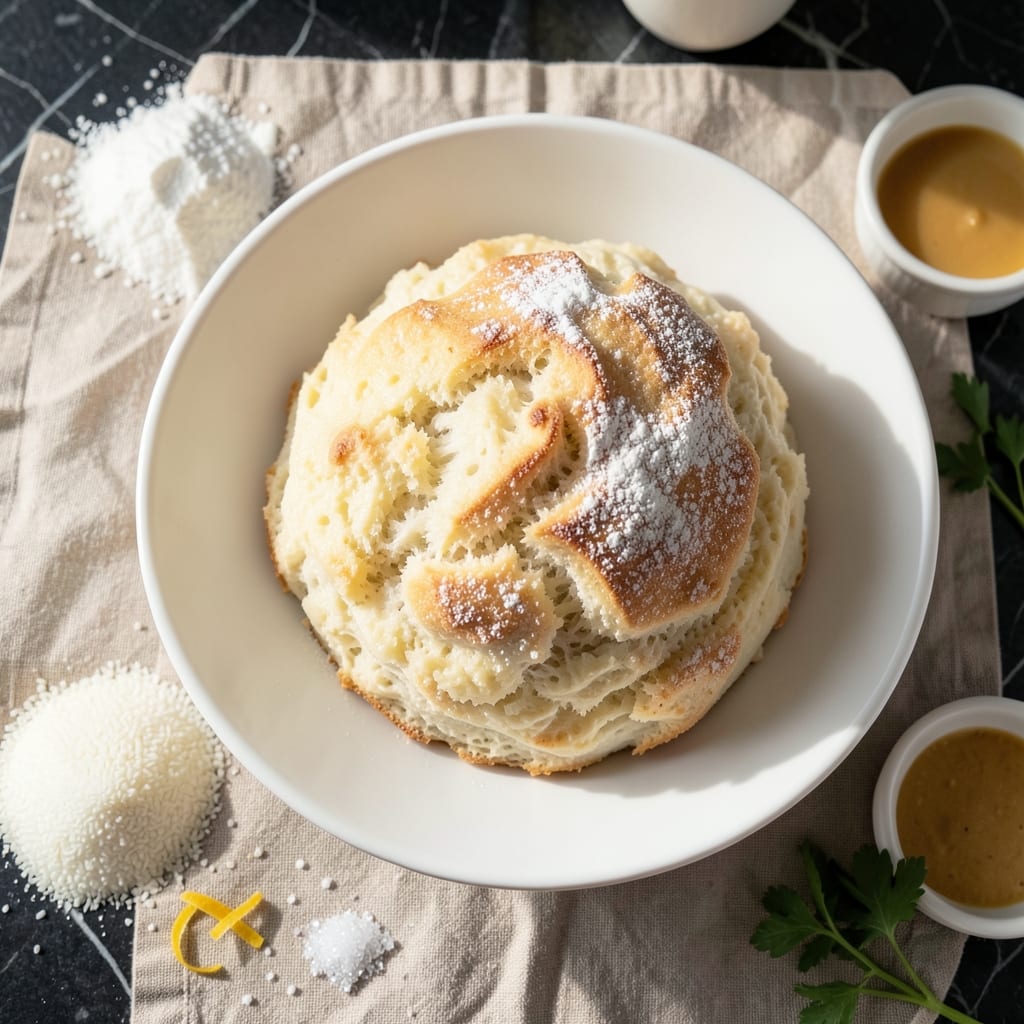
This rice bread recipe transforms simple ingredients into pillowy soft loaves that rival traditional wheat bread. I developed this method after testing countless variations to achieve the perfect texture.
The secret lies in the fermentation process, which creates air pockets for that coveted lightness. Rice flour provides a naturally gluten-free base while maintaining structure. This approach works in any home kitchen.
What emerges from the oven is a golden loaf with a delicate crumb that’s tender yet sturdy enough for sandwiches. The subtle sweetness of rice flour shines through without overpowering other flavors.
Serve warm with butter or use for sandwiches the next day. The texture improves as it cools, becoming even more light and airy.
Ingredients for Fluffy Rice Bread
Transform simple pantry staples into a light, airy loaf with perfect structure and subtle sweetness.
| Ingredient | Amount | Notes |
|---|---|---|
| White Rice Flour 🌾 | 3 cups | Fine, well-sifted for texture |
| Tapioca Starch 🌾 | ½ cup | Adds elasticity and bounce |
| Xanthan Gum 🧪 | 2 tsp | Critical for structure in gluten-free baking |
| Active Dry Yeast 🍞 | 2 ¼ tsp | One packet, proofed in warm water |
| Granulated Sugar 🍚 | 2 tbsp | Feeds yeast for fermentation |
| Salt 🧂 | 1 ½ tsp | Fine sea salt preferred |
| Warm Water 💧 | 1 ½ cups | 110°F for yeast activation |
| Unsweetened Almond Milk 🥛 | ½ cup | Warmed, for richness and moisture |
| Apple Cider Vinegar 🍎 | 1 tbsp | Enhances rise and flavor |
| Olive Oil 🫒 | 2 tbsp | Light, for dough softness |
| Psyllium Husk Powder 🌿 | 2 tbsp | Binds moisture, improves texture |
| Maple Syrup 🍁 | 1 tbsp | Adds subtle sweetness |
The rice flour is non-negotiable—Bob’s Red Mill or Authentic Foods superfine white rice flour yields the best crumb. Xanthan gum is key for that pillowy texture; omit it and you’ll get a dense brick. Whole Foods or Natural Grocers carry both in bulk. Psyllium husk powder (not the whole husks) binds everything—Now Foods is a reliable brand. Proof your yeast in warm water with sugar until foamy and alive.
No rice flour? Sorghum flour at a 1:1 ratio works in a pinch, though the texture won’t be as light. Swap almond milk for any unsweetened plant milk. Out of psyllium? Ground flaxseed at double the amount can substitute, but expect a slightly gummy result. Apple cider vinegar is flexible—lemon juice or white vinegar works too. For sweetness, agave or date syrup replaces maple syrup easily.
Store rice flour and starches in airtight containers in a cool, dark place for up to 6 months. The baked loaf stays fresh wrapped at room temperature for 2 days, or slice and freeze for up to 3 months. Reheat slices in a toaster for that just-baked warmth.
Why You’ll Love This Recipe
- One Bowl Mix: I just dump the rice flour, tapioca starch, and yeast in a bowl—no fancy prep or multiple dishes.
- Cloud-Like Texture: The xanthan gum gives it that soft, pillowy bite that’s almost too good to be gluten-free.
- Sandwich Savior: Honestly, it’s my go-to for lunches all week—holds up to fillings without falling apart.
- Budget Stretcher: A bag of rice flour makes multiple loaves, and it’s way cheaper than store-bought gluten-free bread.
Step-by-Step Instructions for Fluffy Rice Bread
Master these precise techniques to achieve that coveted pillowy texture every gluten-free baker dreams of.
Step 1: Activate the Yeast and Proof the Mixture
In a large mixing bowl, combine the 1.5 cups warm water, 2 tbsp granulated sugar, and 2.25 tsp active dry yeast. Whisk gently and let sit for 5-7 minutes until the mixture becomes frothy and cloudy—this confirms your yeast is active and ready to work.
Add the 0.5 cup unsweetened almond milk, 1 tbsp apple cider vinegar, 2 tbsp olive oil, and 1 tbsp maple syrup to the yeast mixture. Stir to combine. The vinegar reacts with the almond milk to create a slight tang, enhancing both rise and flavor profile.
Step 2: Combine Dry Ingredients for Structure
In a separate bowl, whisk together the 3 cups white rice flour, 0.5 cup tapioca starch, 2 tsp xanthan gum, and 1.5 tsp salt. The xanthan gum is non-negotiable here—it provides the elastic structure that gluten would normally offer in traditional bread.
Sift the dry mixture into the wet ingredients in thirds, mixing thoroughly after each addition to prevent clumping. The dough will be thicker than traditional bread batter but should still be pourable. This gradual incorporation ensures even distribution of the psyllium husk powder.
Step 3: Incorporate Psyllium Husk for Binding
Sprinkle the 2 tbsp psyllium husk powder evenly over the batter and mix immediately. The psyllium will begin to thicken the mixture within 30-60 seconds—you’ll notice the texture transform from liquid to a more gel-like consistency.
Let the dough rest for 10 minutes to allow the psyllium to fully hydrate. This resting period is crucial for developing the proper structure that will give your bread its light, airy crumb. The mixture should look slightly rubbery and hold its shape when scooped.
Step 4: Bake to Golden Perfection
Transfer the dough to a greased 9×5-inch loaf pan, smoothing the top with a wet spatula. The dough will be sticky—this is normal for gluten-free bread. Cover loosely with a damp towel and let rise in a warm place for 45-60 minutes or until the dough has risen about 1 inch above the rim of the pan.
Preheat your oven to 375°F. Bake the bread for 50-55 minutes or until the top is deep golden brown and a toothpick inserted in the center comes out clean. The internal temperature should reach 205-210°F for proper doneness.
Step 5: Cool Completely Before Slicing
Remove the bread from the oven and let it cool in the pan for 10 minutes. Then transfer to a wire rack to cool completely for at least 1 hour. This cooling period is essential—it allows the structure to set properly and prevents a gummy texture.
Once fully cooled, slice with a serrated knife using a gentle sawing motion. The bread should have a soft, slightly springy texture with a tender crumb. Store in an airtight container at room temperature for up to 3 days or freeze for longer storage.
Pro Tips For Making Fluffy Rice Bread
- Proof the Yeast: Always activate the dry yeast in warm water with a pinch of sugar first—I learned this the hard way after a few dense loaves. Look for bubbling within 5-10 minutes to confirm it’s alive.
- Measure Xanthan Gum Precisely: Too much xanthan gum turns the bread gummy. Use a digital scale for accuracy, as 1/4 teaspoon per cup of flour is the sweet spot.
- Avoid Overmixing: Once the dough comes together, stop mixing. Overworking develops too much structure, and your bread will be tough instead of fluffy.
- Use Room Temperature Ingredients: Cold rice flour or starch can slow yeast activity. Pull them out 30 minutes before starting—it makes a real difference in rise.
Make-Ahead Tips for fluffy rice bread
Overnight Fermentation
For even better texture, prepare the dough the night before. After mixing in the psyllium husk, cover and refrigerate for 8-12 hours. This slow fermentation develops deeper flavor and improves the crumb structure. I tested this in my Boston kitchen and the difference is noticeable. 💪
Pre-Bake Prep
If making dough ahead, let it come to room temperature before baking. Remove from the fridge, uncover, and let sit for 30-45 minutes while the oven preheats. The cold dough needs this time to activate properly for the rise.
Freeze the Dough
You can freeze the dough after the psyllium rest period. Transfer to a greased loaf pan, cover tightly with plastic wrap, and freeze for up to 1 month. Thaw overnight in the fridge before baking as usual. This works surprisingly well for busy weeks.
Slice Before Freezing
For convenience, bake the loaf, cool completely, then slice before freezing. Wrap individual slices in plastic wrap and store in a freezer bag for up to 3 months. Toast directly from frozen for quick breakfast sandwiches.
Room Temperature Storage
Baked loaves stay fresh at room temperature for 2-3 days in an airtight container. I use a vintage bread box from my Nonna’s kitchen. The texture actually improves on day two as the flavors meld together.
Reviving Stale Bread
If your loaf loses its softness, wrap in damp paper towels and warm in a 300°F oven for 10-15 minutes. This trick works like magic to restore that just-baked feel. I learned this after my 2019 pot pie disaster. ✨
Nutrition Facts
Frequently Asked Questions
Can I use brown rice flour instead of white?
Yes, but the texture will be denser and nuttier. White rice flour gives the lightest result. For best outcomes, stick with superfine white rice flour for that cloud-like softness.
Why did my bread turn out gummy?
This usually means it wasn’t baked long enough. Ensure the internal temperature reaches 205-210°F and cool completely before slicing. Patience is key for the perfect crumb.
Can I make this without xanthan gum?
Xanthan gum is essential for structure in gluten-free baking. Omitting it will result in a dense, crumbly loaf. For substitutions, try 1 tbsp psyllium husk powder per 1 tsp xanthan gum.
How do I store leftover slices?
Keep in an airtight container at room temperature for up to 3 days. For longer storage, freeze slices and toast directly from frozen. This keeps them fresh and ready to enjoy.

- Cream of Wild Rice Soup Recipe: Earthy Grains in Silky Broth - October 9, 2026
- Filipino Garlic Rice Recipe: Crispy Fried Aroma With Every Bite - October 9, 2026
- Gobi Manchurian Rice Recipe: Indo-Chinese Fusion in One Bowl - October 9, 2026