
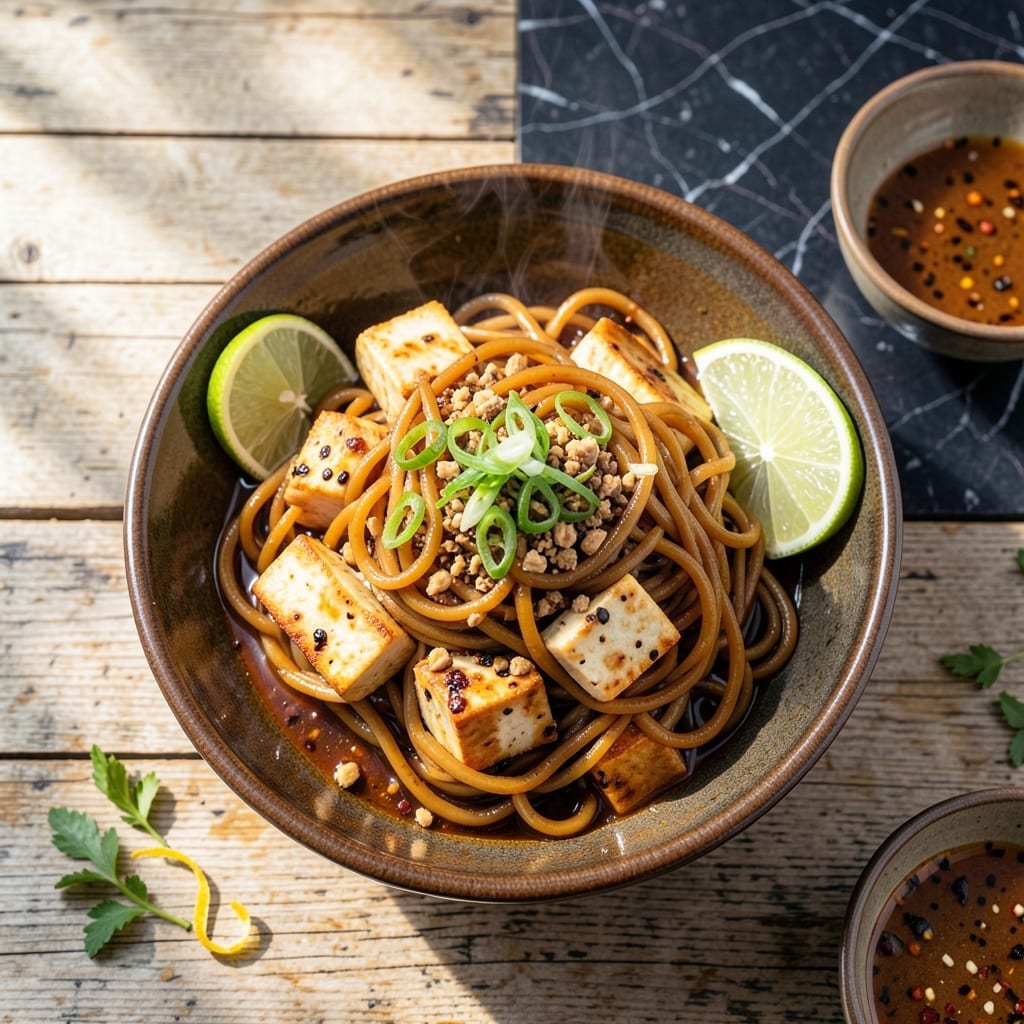
I still remember my first taste of real pad thai from a Bangkok street vendor—complex, tangy, and utterly addictive. This version brings that same magic home with authentic flavors and plant-based swaps.
Here’s the thing—traditional pad thai uses fish sauce, but I’ve found a way to replicate that umami depth with soy sauce and tamarind. The rice noodles soak up all those bold flavors, creating that signature sweet-savory-spicy balance.
Between you and me, the real secret is in the sauce timing. Too early and it turns to syrup; too late and the noodles stay dry. I’ve tested this in my tiny kitchen enough to know the perfect moment to combine them.
What you’ll get is a dish that tastes like it came from a bustling street cart, not your home kitchen. The noodles stay springy, the tofu gets crispy edges, and every bite delivers that unmistakable pad thai punch.
Ingredients for Forbidden Pad Thai Rice Noodles
Authentic street food flavors come alive with these plant-based ingredients.
| Ingredient | Amount | Notes |
|---|---|---|
| Rice Noodles 🍜 | 8 oz | Flat pad thai style, soaked |
| Firm Tofu 🧈 | 14 oz | Pressed, cubed for crispiness |
| Tamarind Paste 🍈 | ¼ cup | For authentic sour tang |
| Soy Sauce 🫒 | ⅓ cup | Low-sodium preferred |
| Palm Sugar 🍯 | ¼ cup | Or substitute brown sugar |
| Rice Vinegar 🍶 | 2 tbsp | Balances sweet and salty |
| Garlic Cloves 🧄 | 4 cloves | Minced for sauce |
| Shallot 🧅 | 1 whole | Finely chopped |
| Dried Chili Flakes 🌶️ | 1 tsp | Adjust for heat preference |
| Bean Sprouts 🌱 | 1 cup | Fresh, for crunch |
| Crushed Peanuts 🥜 | ½ cup | For garnish and texture |
| Green Onions 🌿 | 4 whole | Thinly sliced for topping |
| Lime 🍋 | 1 whole | Cut into wedges for serving |
| Vegetable Oil 🫒 | 3 tbsp | For stir-frying tofu |
| Cilantro 🌿 | ¼ cup | Fresh, chopped for garnish |
The tamarind paste is non-negotiable for that true pad thai tang. Asian markets carry it in blocks or jars—Thai Kitchen makes a solid jarred version if you can’t find fresh. For the noodles, flat rice noodles labeled pad thai are ideal. I grab mine from Trader Joe’s or the international aisle at Kroger. The tofu needs to be firm so it crispes up right—Nasoya or Wildwood are reliable brands.
No tamarind? Lime juice plus a touch of brown sugar gets you 80% there (not perfect, but close). Firm tofu can be swapped for tempeh if you prefer the nuttier flavor. Bean sprouts wilting in your crisper? Shredded cabbage adds similar crunch. For heat, sriracha at serving works if you skipped the chili flakes. The palm sugar can be coconut sugar or light brown sugar in a pinch.
Leftover noodles keep 3-4 days in the fridge, but they’ll soak up sauce and get soft. Reheat in a dry pan to crisp them back up. The sauce itself freezes beautifully for 3 months—just thaw before using. Always soak noodles in warm water (not boiling) to avoid mush.
Why You’ll Love This Recipe
- One Pan Magic: I toss everything in a single skillet—rice noodles, tofu, and that tangy tamarind paste—minimal cleanup, maximum flavor.
- Sweet-Savory Fix: The palm sugar and soy sauce create this ridiculously good balance I crave every time.
- Meal Prep Hero: I make a double batch on Sunday—tastes just as good reheated for lunch on Wednesday.
- Budget Stretcher: Honestly, rice noodles and tofu cost pennies but taste like a restaurant splurge.
Step-by-Step Instructions for Forbidden Pad Thai Rice Noodles
Authentic street food flavor is just a few simple steps away with this method.
Step 1: Soak the Rice Noodles and Press the Tofu
Place the 8 oz Rice Noodles in a large bowl and cover with warm water. Soak for 20-25 minutes until pliable but still slightly firm—they’ll finish cooking in the pan. I check by bending a strand; it should bend without snapping but still have a slight resist.
Meanwhile, wrap the 14 oz Firm Tofu in a clean kitchen towel and place a heavy skillet on top to press out excess moisture for 15 minutes. Then cut into 1-inch cubes. Pressing is crucial for crispy tofu that soaks up the sauce without falling apart.
Step 2: Make the Pad Thai Sauce
In a small saucepan, combine the 0.25 cup Tamarind Paste, 0.33 cup Soy Sauce, 0.25 cup Palm Sugar, and 2 tbsp Rice Vinegar. Heat over medium-low and stir until the palm sugar fully dissolves, about 3-4 minutes.
Taste and adjust the balance—you want that perfect sweet-sour-salty harmony. Remove from heat and set aside. The sauce will thicken slightly as it cools, but it should still be pourable. If it’s too thick, stir in a splash of warm water.
Step 3: Stir-Fry the Tofu and Aromatics
Heat 2 tbsp of the Vegetable Oil in a large wok or skillet over medium-high heat. Add the tofu cubes in a single layer and cook undisturbed for 3-4 minutes until golden brown on one side. Flip and cook another 3 minutes until crispy.
Remove the tofu and set aside. In the same pan, add the remaining 1 tbsp Vegetable Oil, then sauté the minced 4 cloves Garlic Cloves and finely chopped 1 whole Shallot for 1-2 minutes until fragrant. Add the 1 tsp Dried Chili Flakes and stir for 10 seconds to bloom the heat.
Step 4: Combine Noodles, Tofu, and Sauce
Drain the soaked rice noodles and add them to the wok along with the tofu. Pour the prepared sauce over everything and toss gently with tongs for 2-3 minutes until the noodles are tender and fully coated. The noodles should be chewy but not mushy, with a slight sheen from the sauce.
Add the 1 cup Bean Sprouts and toss for another 30 seconds to soften slightly while keeping their crunch. The sprouts should stay bright and crisp—overcooking them turns them soggy.
Step 5: Garnish and Serve
Transfer the pad thai to serving plates and top with the 0.5 cup Crushed Peanuts, thinly sliced 4 whole Green Onions, and chopped 0.25 cup Cilantro. Serve with lime wedges on the side for a bright, citrusy finish.
Encourage everyone to squeeze lime over their portion right before eating. The acidity cuts through the richness and brings all the flavors to life, just like the street vendors in Thailand do.
Pro Tips For Making Forbidden Pad Thai Rice Noodles
- Soak Noodles Right: Cover rice noodles in warm water for exactly 20 minutes—any longer and they’ll turn to mush, any shorter and they’ll stay crunchy. I learned this the hard way after ruining two batches.
- Press the Tofu: Slice firm tofu, wrap in a clean towel, and place a heavy pan on top for 15 minutes to remove excess water. Sounds tedious, but it’s the only way to get that perfect golden sear.
- Balance the Sauce: Mix tamarind paste, soy sauce, and palm sugar in a 2:1:1 ratio before cooking. After burning three batches, I finally figured out that pre-mixing prevents clumping and uneven flavor.
- High Heat Stir-Fry: Crank the heat to high and keep the noodles moving constantly. Skip the crowding—cook in batches if needed to avoid steaming instead of frying.
Troubleshooting forbidden pad thai rice noodles
Noodles Too Soft
If your rice noodles turned mushy, you likely soaked them too long. I test mine at 20 minutes—they should bend but still have a slight bite. If already over-soaked, rinse in cold water to stop cooking and drain well before stir-frying. 💡
Sauce Too Thick
When your pad thai sauce thickens too much, stir in 1-2 tbsp warm water to restore the right consistency. The sauce should coat the noodles without pooling at the bottom of the pan.
Tofu Not Crispy
Pat your pressed tofu very dry before frying and use medium-high heat. If still soft, cook longer without stirring—4-5 minutes per side gives that golden crust. I use Nasoya firm tofu for reliable results.
Flavor Imbalance
Taste as you go! Need more tang? Add 1 tsp lime juice. Too sweet? A splash of rice vinegar balances it. Too salty? A pinch of palm sugar rounds it out. The perfect pad thai hits all three notes.
Sticky Situation
If noodles stick together, you’re likely overcrowding the pan. Cook in batches if needed and use high heat. Keep everything moving with tongs—constant tossing prevents clumping. 🔥
Missing Umami
Without fish sauce, boost umami with 1 tbsp soy sauce or 1 tsp mushroom sauce. I’ve found Thai Kitchen tamarind paste adds depth when combined with the right soy sauce balance.
Nutrition Facts
Frequently Asked Questions
What can I use if I can’t find tamarind paste?
Mix 2 tbsp lime juice with 1 tbsp brown sugar for a quick substitute. It won’t be identical but gives that sweet-tangy balance.
How do I prevent noodles from sticking together?
Soak in warm water for only 20-25 minutes, then rinse in cold water. Stir-fry in batches over high heat with constant tossing.
Can I make this gluten-free?
Yes! Swap regular soy sauce for tamari and ensure your rice noodles are 100% rice. Double-check all labels for hidden gluten.
Why isn’t my tofu crispy?
Press for at least 15 minutes and pat completely dry. Cook over medium-high heat without stirring for 4-5 minutes per side.

- Gobi Fried Rice Recipe: Spiced Cauliflower Wok Delight - October 8, 2026
- Glutinous Rice Roll Recipe: Chewy Pillows With Savory Fillings - October 8, 2026
- Garlic Jasmine Rice Recipe: Fragrant Grains with Aromatic Depth - October 8, 2026