
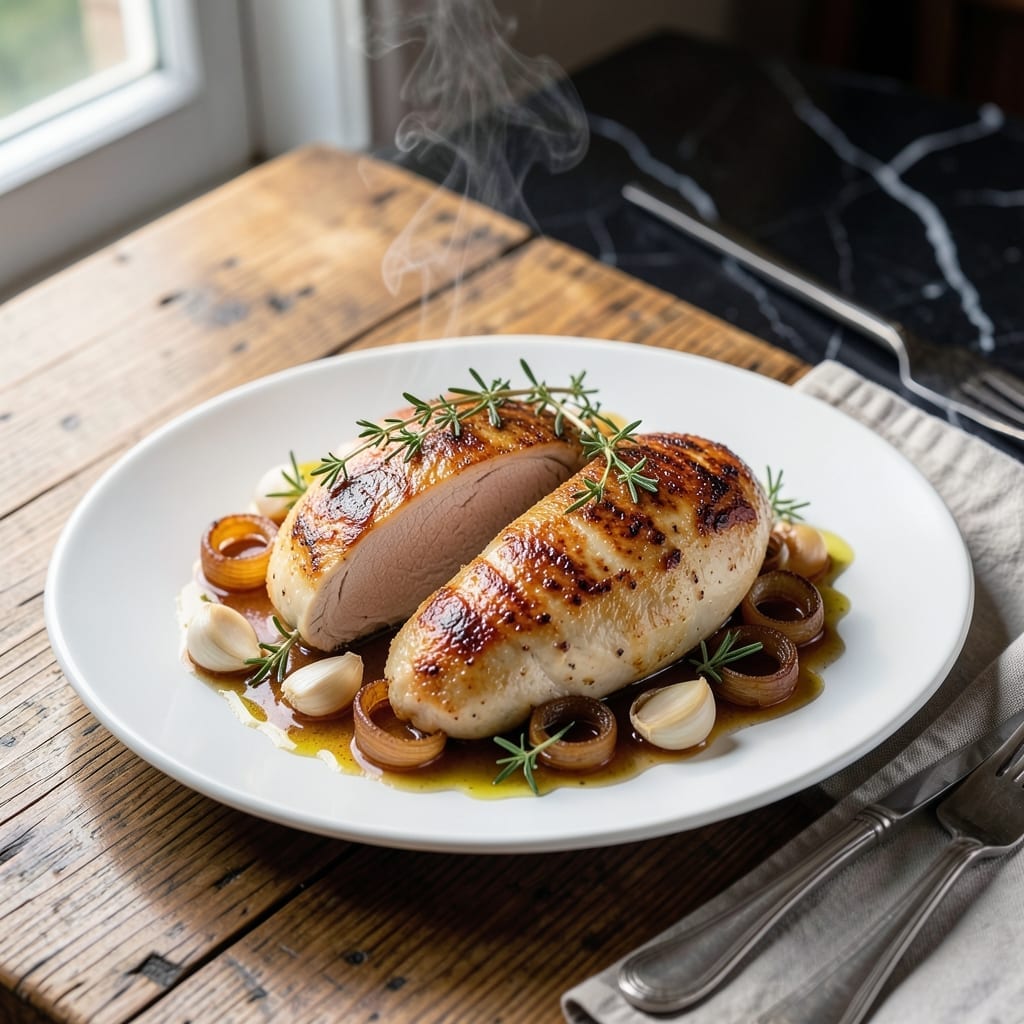
This French-inspired chicken breast recipe elevates a simple protein into a restaurant-worthy dish with minimal effort. The technique involves a herb-infused butter baste that locks in moisture and creates a golden, flavorful crust.
What sets this method apart is its precision: a hot pan, proper searing, and continuous basting ensure juicy meat with a perfectly crisp exterior. The aromatic blend of herbs and butter infuses every bite with rich, layered flavors.
The result is tender chicken with a glossy, golden-brown finish, ready in under 30 minutes. The basting process not only enhances flavor but also keeps the meat incredibly succulent throughout cooking.
Serve with a side of roasted vegetables or a fresh salad for a complete, elegant meal.
Ingredients for French Chicken Breast
Elevate simple chicken with herb butter, wine, and aromatic vegetables for restaurant-worthy results.
| Ingredient | Amount | Notes |
|---|---|---|
| Boneless, Skinless Chicken Breasts 🍗 | 1 ½ lb | Pounded to even thickness |
| Unsalted Butter 🧈 | 6 tbsp | Divided for basting and finishing |
| Fresh Thyme Sprigs 🌿 | 4 whole | Leaves stripped from stems |
| Fresh Rosemary Sprigs 🍃 | 2 whole | Leaves stripped from stems |
| Garlic Cloves 🧄 | 4 cloves | Lightly crushed, peeled |
| Shallot 🧅 | 1 whole | Finely minced for pan sauce |
| Dry White Wine 🍷 | ½ cup | Sauvignon Blanc or Pinot Grigio |
| Chicken Stock 💧 | ¼ cup | Low-sodium preferred |
| Dijon Mustard 🟡 | 1 tbsp | Smooth, not whole grain |
| Lemon Juice 🍋 | 1 tbsp | Freshly squeezed |
| Kosher Salt 🧂 | 1 ½ tsp | Diamond Crystal preferred |
| Freshly Ground Black Pepper 🌶️ | ½ tsp | Coarse grind recommended |
| Olive Oil 🫒 | 2 tbsp | Neutral flavor, high smoke point |
| Fresh Parsley 🌿 | ¼ cup | Chopped, for garnish |
The chicken quality is paramount. Opt for air-chilled, antibiotic-free breasts from Whole Foods or Costco—they retain moisture better and sear more evenly. Pounding to uniform thickness (about 3/4-inch) ensures consistent cooking and prevents dry spots. For the herbs, organic thyme and rosemary from the refrigerated section have superior aroma compared to dried. The garlic should be fresh—avoid pre-minced jars.
No white wine? Substitute dry vermouth or extra chicken stock with a splash of lemon juice. Dried herbs at one-third the amount work in a pinch, but fresh is ideal. For a deeper flavor, add a bay leaf to the basting butter. The Dijon can be swapped for whole-grain mustard if preferred. Vegetable stock can replace chicken stock for a lighter finish.
Store raw chicken in its original packaging on a plate in the fridge for up to 2 days. The herb butter can be made 24 hours ahead and refrigerated. Leftovers keep 4-5 days sealed, or freeze for 3 months. Reheat gently to preserve moisture.
Why You’ll Love This Recipe
- One Pan Wonder: Honestly, it’s just chicken, butter, and herbs tossed in a pan—minimal prep, maximum flavor with almost no cleanup.
- Buttery Herb Heaven: The thyme and rosemary infuse the butter as it bastes the chicken, making every bite ridiculously rich and aromatic.
- Weeknight MVP: I throw this together after work, and it’s ready before the kids finish their homework. (Yes, even on a Tuesday night)
- Leftovers? No Problem: Tastes even better the next day in a sandwich or over salad—saves me from cooking twice.
Step-by-Step Instructions for Herb-Butter Basted Chicken Breast
Master this technique and you’ll deliver restaurant-quality chicken with golden crust and juicy interior every time.
Step 1: Prepare and Season the Chicken Breasts
Begin by pounding the boneless, skinless chicken breasts to an even ½-inch thickness using a meat mallet. This ensures uniform cooking and prevents dry, overdone edges while the center finishes. Place each breast between plastic wrap to avoid tearing.
Pat the chicken completely dry with paper towels—this is crucial for achieving a proper sear. Season both sides evenly with 1.5 tsp kosher salt and 0.5 tsp freshly ground black pepper. The salt should adhere visibly to the surface, creating a light crust when cooked.
Step 2: Sear the Chicken in Olive Oil
Heat 2 tbsp olive oil in a large, heavy skillet over medium-high heat until it shimmers but doesn’t smoke. Add the chicken breasts and sear undisturbed for 4-5 minutes until the edges appear golden brown and the meat releases easily from the pan.
Flip the chicken and immediately reduce heat to medium. Add 2 tbsp unsalted butter, the lightly crushed garlic cloves, and the fresh thyme and rosemary sprigs to the pan. Tilt the skillet slightly and baste the chicken continuously with the melted butter and herbs for 3-4 minutes.
Step 3: Deglaze and Create the Pan Sauce
Transfer the chicken to a plate and tent with foil to keep warm. Return the skillet to medium heat and add the finely minced shallot. Sauté for 1-2 minutes until translucent and fragrant, stirring constantly to prevent burning.
Pour in 0.5 cup dry white wine and scrape the browned bits from the bottom of the pan with a wooden spoon. Simmer for 2-3 minutes until the liquid reduces by half. Add 0.25 cup chicken stock, 1 tbsp Dijon mustard, and 1 tbsp lemon juice, then whisk to combine into a smooth, slightly thickened sauce.
Step 4: Finish and Serve
Return the chicken to the skillet along with any accumulated juices. Add the remaining 4 tbsp unsalted butter and swirl the pan to incorporate it into the sauce. Cook for an additional 1-2 minutes on low heat, spooning the sauce over the chicken to coat evenly.
Remove the herb sprigs and garlic cloves. Garnish with 0.25 cup chopped fresh parsley and serve immediately. The chicken should register 165°F internally and have a glossy, herb-infused sauce clinging to its surface. The sauce should be rich and velvety, with bright acidity from the wine and lemon balancing the butter’s richness.
Pro Tips For Making French Chicken Breast
- Pound the Breasts: Use a rolling pin or heavy pan to even out the thickness to ½ inch—this guarantees even cooking and prevents dry, overdone edges while the center catches up.
- Brown the Butter: Let the unsalted butter cook until it turns golden and nutty before adding herbs; it adds a deep, rich flavor that plain melted butter can’t match.
- Skip the Crowding: Cook the chicken in batches if needed—overcrowding the pan steams the meat instead of searing it, and you’ll lose that perfect golden crust.
- Crush the Garlic: Lightly smash the garlic cloves with the side of your knife before adding them; it releases more aroma without burning, and you can remove the cloves before serving if you prefer.
Common Mistakes When Making This Recipe
Uneven Thickness
Failing to pound the chicken to an even thickness is the most common mistake. Thicker parts cook slower, leading to dry, overdone edges while the center finishes. I always use a meat mallet to flatten breasts to ½-inch thickness between plastic wrap.
Skipping the Dry
Wet chicken won’t sear properly—it steams instead. After rinsing, I pat each breast completely dry with paper towels. This ensures a proper Maillard reaction and that golden-brown crust we’re after.
Overcrowded Pan
Crowding the pan lowers its temperature, causing chicken to steam rather than sear. I cook in batches if needed, using a 12-inch skillet to give each piece 2-3 inches of space. The sizzle should never stop. 🔥
Neglecting Rest
Slicing immediately after cooking causes juices to escape. I always tent the chicken with foil and let it rest for 5-10 minutes. This allows the muscle fibers to relax and reabsorb moisture.
High Heat Bastes
Basting with butter over medium-high heat can cause it to burn. After flipping, I reduce to medium heat and tilt the pan to control the melted butter pool for basting.
Underseasoning
Chicken needs more salt than you think. I use 1.5 tsp kosher salt for 1.5 lbs, ensuring every surface is coated. The seasoning should be visible before cooking begins.
Nutrition Facts
Frequently Asked Questions
Do I need to brine the chicken first?
Not necessary with this method. The herb butter baste and proper searing keep the meat juicy. Just ensure even thickness by pounding to ½-inch for consistent cooking.
Can I use dried herbs instead of fresh?
Yes, use 1/3 the amount of dried thyme and rosemary. Add them directly to the melted butter since they won’t burn like fresh sprigs might.
What if my sauce is too thin?
Simmer it longer to reduce. For quick thickening, mix ½ tsp cornstarch with 1 tsp cold water and stir into the sauce. Cook for 1-2 minutes until glossy.
How do I prevent the butter from burning?
Reduce heat to medium when basting and tilt the pan to pool the butter. This keeps it from scorching while still infusing flavor.

- Jollof Rice Sauce Recipe: West African Tomato and Spice Infusion - September 25, 2026
- Japanese Rice Soup Recipe: Umami-Rich Comfort in a Bowl - September 25, 2026
- Homemade Cream Of Rice Recipe: Silk-Smooth Breakfast in Minutes - September 25, 2026