
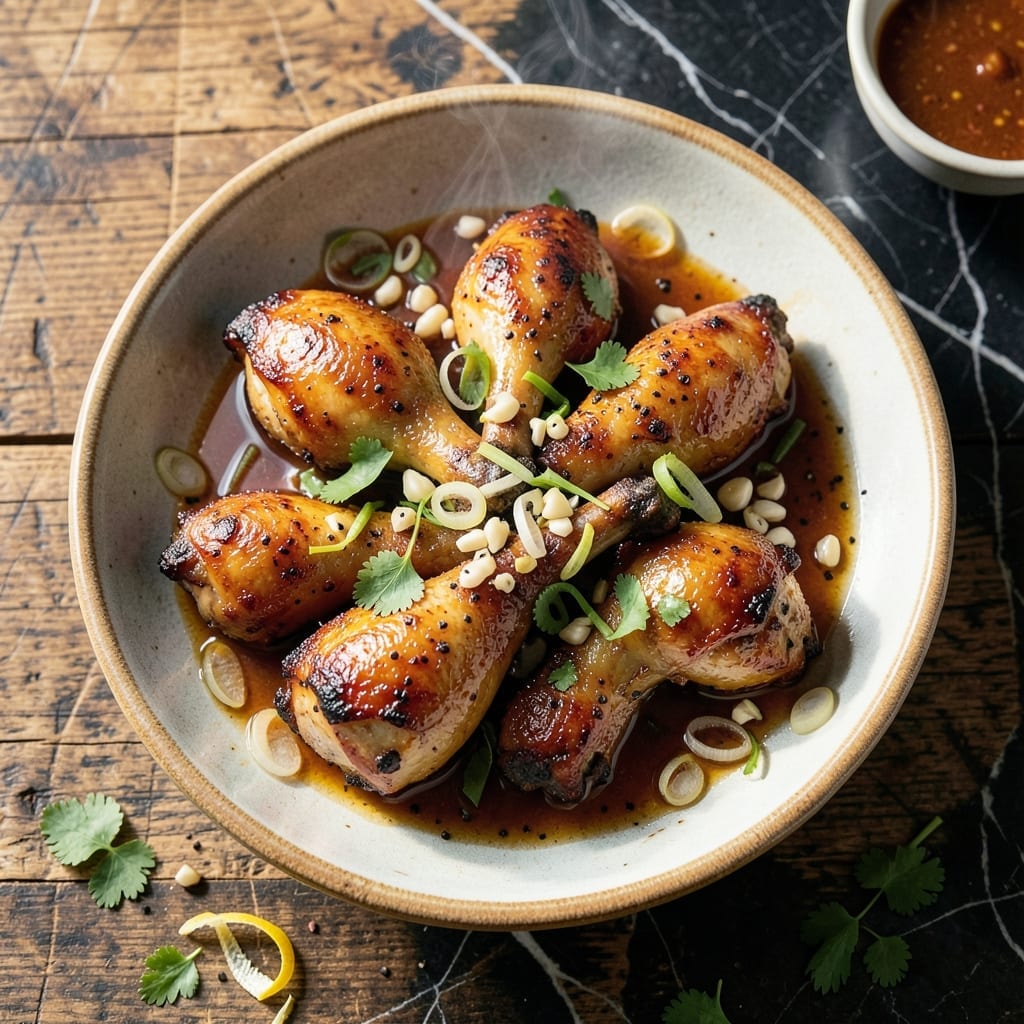
I’ve spent years refining this method to capture the bold, balanced flavors of traditional Vietnamese cooking at home.
The secret lies in marinating the chicken thighs with fresh lemongrass, fish sauce, and garlic, then searing them to achieve a caramelized exterior while keeping the meat juicy.
This dish delivers authentic taste with minimal effort, using simple ingredients and a one-pan technique for easy cleanup.
Serve with steamed rice and fresh herbs for a meal that’s both comforting and packed with vibrant flavor.
Ingredients for Vietnamese Chicken Thigh
Bold Vietnamese flavors start with fresh lemongrass, fish sauce, and juicy chicken thighs ready for the pan.
| Ingredient | Amount | Notes |
|---|---|---|
| Bone-in Chicken Thighs 🍗 | 2 lb | Skin-on for crispiness |
| Fresh Lemongrass 🌿 | 3 pieces | Bruised and cut into 3-inch lengths |
| Fish Sauce 🐟 | 3 tbsp | Vietnamese variety preferred |
| Garlic Cloves 🧄 | 6 cloves | Minced finely |
| Shallots 🧅 | 2 whole | Thinly sliced |
| Brown Sugar 🍚 | 2 tbsp | Light or dark works |
| Soy Sauce 🫒 | 2 tbsp | Low-sodium if available |
| Lime 🍈 | 1 whole | Juiced, about 2 tbsp |
| Vegetable Oil 🛢️ | 2 tbsp | High smoke point for searing |
| Fresh Thai Chili Peppers 🌶️ | 2 whole | Sliced thin, optional for heat |
| Fresh Cilantro 🌿 | ½ cup | Chopped, for garnish |
| Jasmine Rice 🍚 | 1 ½ cups | Uncooked, for serving |
| Green Onions 🧅 | 3 whole | Thinly sliced for garnish |
| Black Pepper 🌶️ | 1 tsp | Freshly ground preferred |
The chicken thighs are non-negotiable—bone-in, skin-on delivers the juiciest results and that coveted caramelized exterior. Asian markets often carry the best lemongrass (look for firm, pale yellow stalks), but well-stocked supermarkets like Whole Foods or H-Mart are reliable. Fish sauce quality matters: Red Boat or Three Crabs are top-tier for authentic depth without additives.
No lemongrass? Lemongrass paste (1 tbsp per stalk) works in a pinch. Out of fish sauce? Soy sauce plus a pinch of salt mimics the umami, though the flavor won’t be identical. Shallots can be swapped for red onion at a 1:1 ratio. For heat control, remove chili seeds or reduce quantity—serrano peppers are a milder alternative.
Marinate the chicken for at least 2 hours (overnight for maximum flavor). Cooked dish keeps in the fridge for 3-4 days—reheat gently to avoid drying. Freeze marinated chicken (raw) for up to 3 months, thaw overnight before cooking.
Why You’ll Love This Recipe
- One Pan Meal: I love that I can sear the chicken thighs, then toss in the lemongrass, garlic, and shallots—all in the same pan.
- Flavor Bomb: The fish sauce and lemongrass create this deep, tangy aroma that fills my kitchen. Honestly, it’s the smell that gets me every time.
- Weeknight Hero: Between us, this is my go-to for busy evenings. It pairs just as well with rice as it does in a banh mi the next day.
- Budget Friendly: Bone-in thighs are cheap, and a little fish sauce goes a long way. I’ll be real: it’s one of the most cost-effective meals I make that still feels special.
Step-by-Step Instructions for Vietnamese Chicken Thighs
Master this technique to achieve perfectly caramelized, aromatic chicken with minimal effort.
Step 1: Prepare the Marinade Base
In a large bowl, combine the 3 tbsp fish sauce, 2 tbsp soy sauce, 2 tbsp brown sugar, juice from the 1 whole lime, and 1 tsp black pepper. Whisk until the brown sugar dissolves completely—the mixture should be smooth with no visible grains.
Add the 6 cloves minced garlic, 2 thinly sliced shallots, 3 pieces bruised lemongrass, and 2 sliced fresh Thai chili peppers to the bowl. Stir to distribute the aromatics evenly throughout the liquid. This marinade develops its full potential after 10 minutes of resting at room temperature.
Step 2: Marinate and Sear the Chicken
Add the 2 lb bone-in chicken thighs to the marinade, ensuring each piece is fully coated. Let it marinate for at least 30 minutes at room temperature, or up to 4 hours in the refrigerator for deeper flavor penetration.
Heat the 2 tbsp vegetable oil in a large, heavy skillet over medium-high heat until it shimmers. Remove the chicken from the marinade (reserving the liquid) and sear skin-side down for 6-7 minutes until the skin is deep golden brown and crisp. Flip and cook for another 5 minutes.
Step 3: Caramelize the Marinade
Pour the reserved marinade into the skillet with the chicken. Reduce the heat to medium and simmer for 8-10 minutes, basting the chicken occasionally with the sauce. The marinade should thicken to a glossy, syrupy consistency that clings to the chicken.
Watch for the sauce to turn a rich amber color and develop a slightly sticky texture—this indicates the sugars have properly caramelized. The chicken is done when an instant-read thermometer inserted into the thickest part reads 165°F.
Step 4: Rest and Garnish
Transfer the chicken to a serving platter and let it rest for 5 minutes. This allows the juices to redistribute, ensuring each bite remains moist and flavorful. Spoon the thickened sauce from the skillet over the chicken.
Garnish with the 0.5 cup chopped fresh cilantro and 3 thinly sliced green onions. Serve immediately with steamed 1.5 cups jasmine rice, allowing the rice to soak up any remaining sauce from the platter.
Pro Tips For Making Vietnamese Chicken Thigh
- Sear Skin First: Start with the skin-side down in a hot pan for 5-6 minutes until golden and crisp—I learned this the hard way after pulling chicken too early and ending up with flabby skin.
- Bruise Lemongrass: Smash the lemongrass stalks with the flat side of your knife before adding them; this releases way more aroma than just chopping.
- Skip the Overcrowding: Resist the urge to cram all the thighs in one pan—give them space so they brown instead of steam, or you’ll regret the soggy results.
- Use Extra Fish Sauce: Sounds weird, but doubling the fish sauce in the marinade (about 3 tablespoons) actually changes the outcome—deep, savory flavor without being overpowering.
Storing and Reheating vietnamese chicken thigh
Refrigerator Storage
Let the chicken cool to room temperature within 2 hours of cooking, then transfer to an airtight container. It will keep in the fridge at 40°F or below for 3-4 days. The flavors actually deepen as the sauce continues to meld. ❄️
Freezer Storage
For longer storage, freeze the cooked chicken in its sauce in a heavy-duty freezer bag for up to 3 months. Squeeze out excess air to prevent freezer burn and lay flat to save space. Thaw overnight in the fridge before reheating.
Stovetop Reheating
My preferred method: warm the chicken and sauce in a skillet over medium-low heat for 5-7 minutes, stirring occasionally. Add a splash of water or chicken broth if the sauce thickens too much. This keeps the skin crisp and the meat juicy.
Microwave Reheating
For quick meals, place a single portion on a microwave-safe plate and cover with a damp paper towel. Heat on 70% power for 1-2 minutes, then check the temperature. Repeat in 30-second intervals until reaching 165°F. 🔥
Sauce Revival Tip
If the sauce separates or thickens too much during storage, thin it with 1-2 tbsp water or lime juice while reheating. This brings back the glossy consistency that makes the dish so special.
Nutrition Facts
Frequently Asked Questions
Can I use boneless chicken thighs instead?
Yes, but bone-in thighs stay juicier and develop more flavor. If using boneless, reduce cooking time to 4-5 minutes per side to prevent drying. The skin still gets crispy!
What if I can’t find fresh lemongrass?
Use 1 tbsp lemongrass paste per stalk. In a pinch, substitute 1 tsp lime zest plus 1 tbsp lime juice for brightness, though the flavor won’t be identical.
How do I know when the sauce is caramelized?
Look for a rich amber color and slightly sticky texture after 8-10 minutes of simmering. The sauce should cling to the chicken and leave a glossy sheen.
Can I make this ahead of time?
Marinate the chicken up to 12 hours ahead. Cooked dish keeps in the fridge for 3-4 days—reheat gently to maintain moisture.

- Jollof Rice Sauce Recipe: West African Tomato and Spice Infusion - September 25, 2026
- Japanese Rice Soup Recipe: Umami-Rich Comfort in a Bowl - September 25, 2026
- Homemade Cream Of Rice Recipe: Silk-Smooth Breakfast in Minutes - September 25, 2026