
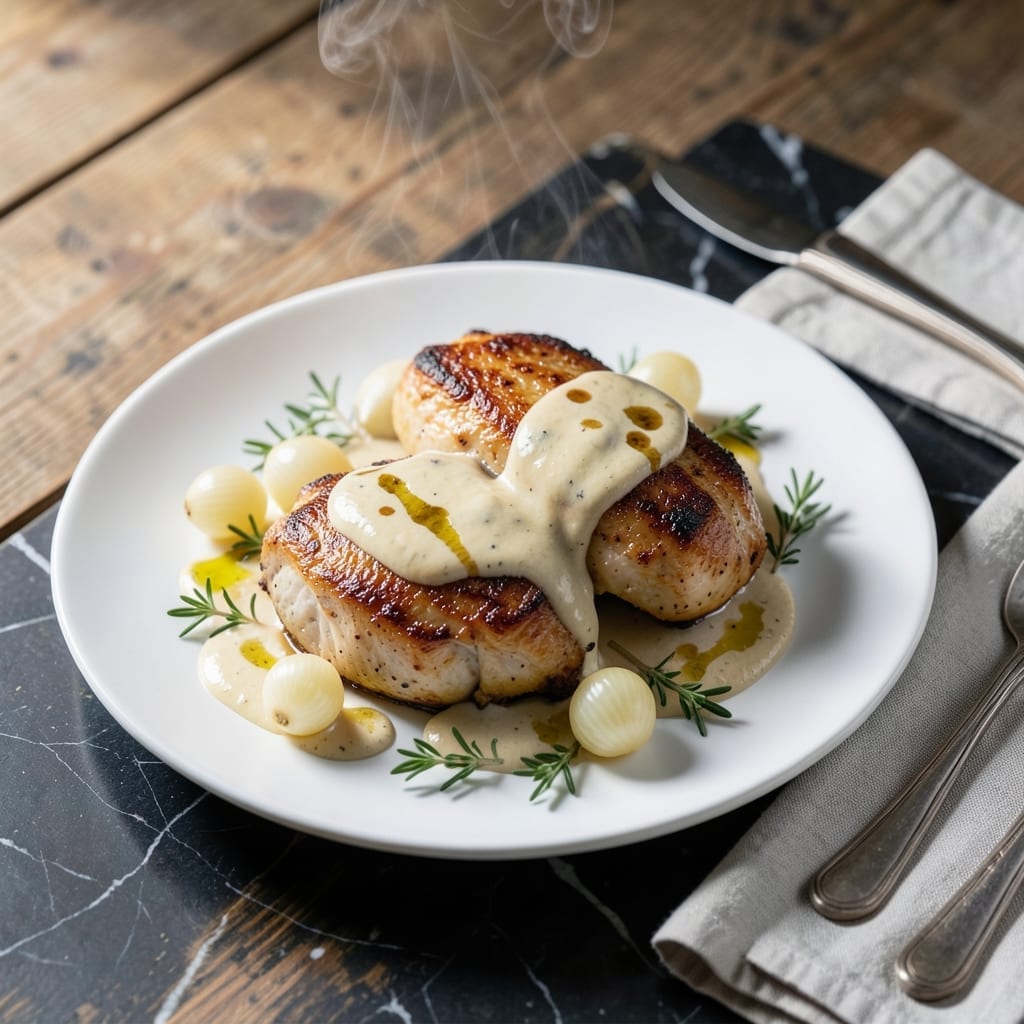
This French-inspired dish brings restaurant-quality elegance to your home kitchen with minimal effort. The combination of tangy Dijon mustard and fresh herbs creates a flavor profile that feels sophisticated yet approachable.
The secret lies in a simple glaze that transforms ordinary chicken into something extraordinary. A quick sear locks in juices while the mustard-cream sauce builds layers of rich, savory depth.
You’ll achieve perfectly cooked chicken with a golden, herbed crust and a velvety sauce that clings to every bite. The technique is straightforward, but the results taste like they came from a Parisian bistro.
Pair with roasted potatoes or a crisp green salad for a complete meal that impresses without demanding hours in the kitchen.
Ingredients for French Mustard Chicken
Restaurant-quality flavors start with these fresh, elegant ingredients for a dish that impresses.
| Ingredient | Amount | Notes |
|---|---|---|
| Chicken Breast 🍗 | 1 ½ lb | Boneless, skinless, pounded even |
| Dijon Mustard 🟡 | ¼ cup | Smooth, not whole grain |
| Heavy Cream 🥛 | ½ cup | Full-fat for richness |
| White Wine 🍷 | ½ cup | Dry variety like Sauvignon Blanc |
| Chicken Broth 🍲 | ½ cup | Low-sodium preferred |
| Fresh Thyme 🌿 | 2 tbsp | Leaves stripped from stems |
| Fresh Rosemary 🌿 | 1 tbsp | Finely chopped |
| Shallots 🧅 | 2 whole | Finely minced |
| Garlic Cloves 🧄 | 3 cloves | Minced to paste |
| Unsalted Butter 🧈 | 2 tbsp | For searing chicken |
| All-Purpose Flour 🌾 | ¼ cup | For dusting chicken |
| Olive Oil 🫒 | 2 tbsp | For sautéing aromatics |
| Kosher Salt 🧂 | 1 tsp | Diamond Crystal preferred |
| Black Pepper 🌶️ | ½ tsp | Freshly cracked |
The chicken needs to be uniform thickness—pound it to an even 1/2-inch so it cooks evenly. Whole Foods has great boneless, skinless breasts, but any grocery store works. For the Dijon, Maille or Grey Poupon are my go-tos (the squeeze bottles last forever). Fresh herbs are non-negotiable here—dried just won’t cut it for that bright, aromatic finish.
No white wine? Chicken broth with a splash of white vinegar gets you close. Shallots can be yellow onion at 1:1 ratio (slightly sharper, but fine). Heavy cream swap? Half-and-half at half the amount—just know the sauce won’t be as luscious. The flour is just for a light coating, so gluten-free blends work perfectly if needed.
The sauce thickens as it cools, so don’t panic if it looks thin at first. Leftovers keep 3-4 days in the fridge—reheat gently on the stove. The chicken itself is best eaten fresh, but the sauce? Freezes like a dream for up to 3 months.
Why You’ll Love This Recipe
- One Pan Wonder: I just sear the chicken, then let the wine and mustard do their magic in the same skillet.
- Dijon Delight: The sharp mustard mellows into this creamy sauce that clings to every bite of tender chicken.
- Weeknight Hero: Honestly, it’s fancy enough for company but simple enough for a Tuesday.
- Leftovers Win: The flavors deepen overnight, so tomorrow’s lunch is even better than dinner.
Step-by-Step Instructions for Dijon-Glazed Chicken With Herbed Crust
Here’s the method that turns simple ingredients into restaurant-worthy elegance every time.
Step 1: Prep and Season the Chicken
Start by pounding the 1.5 lb Chicken Breast to an even ½-inch thickness between plastic wrap. This ensures even cooking and prevents dry spots. Season both sides generously with the 1 tsp Kosher Salt and 0.5 tsp Black Pepper.
Lightly dust the chicken with the 0.25 cup All-Purpose Flour, shaking off any excess. The flour creates a delicate crust that helps the sauce cling beautifully. I’ve found that pressing the flour gently into the meat gives better adherence than just sprinkling it on.
Step 2: Sear the Chicken to Golden Perfection
Heat the 2 tbsp Unsalted Butter in a large skillet over medium-high heat until it stops foaming. Add the floured chicken and cook for 4-5 minutes per side until golden brown and cooked through. The chicken should release easily from the pan when it’s ready to flip.
Transfer the seared chicken to a plate and tent loosely with foil. Don’t wipe the skillet clean—those browned bits are packed with flavor for your sauce. This step builds the foundation for the rich, complex sauce that makes this dish special.
Step 3: Build the Aromatic Base
In the same skillet, heat the 2 tbsp Olive Oil over medium heat. Add the 2 whole Shallots (finely minced) and cook for 2-3 minutes until translucent and fragrant. Stir in the 3 cloves Garlic Cloves (minced to paste) and cook for 30 seconds until aromatic but not browned.
Add the 2 tbsp Fresh Thyme (leaves stripped) and 1 tbsp Fresh Rosemary (finely chopped), stirring for 30 seconds to bloom the herbs. Pour in the 0.5 cup White Wine and scrape up all the browned bits from the bottom of the pan.
Step 4: Create the Creamy Mustard Sauce
Stir in the 0.25 cup Dijon Mustard and 0.5 cup Chicken Broth, whisking until smooth. Bring to a gentle simmer and cook for 2-3 minutes until slightly thickened. The sauce should coat the back of a spoon but still be pourable.
Reduce heat to low and stir in the 0.5 cup Heavy Cream. Simmer for 1-2 minutes until the sauce reaches your desired consistency. Taste and adjust seasoning if needed, though the Dijon provides plenty of saltiness.
Step 5: Finish and Serve
Return the chicken to the skillet along with any accumulated juices. Spoon the sauce over the chicken, turning to coat evenly. Simmer for 2-3 minutes to heat through and allow the flavors to meld.
Serve immediately, spooning extra sauce over the top. The chicken should be tender and juicy with a glossy, creamy sauce that clings to every bite. Garnish with a sprinkle of fresh thyme for a pop of color and herbaceous aroma.
Pro Tips For Making French Mustard Chicken
- Sear Chicken First: Get a golden crust on the chicken breasts in a hot pan before adding liquids—I learned this the hard way after making pale, soggy versions that lacked depth.
- Use Full-Fat Cream: Skip the light cream; the full-fat heavy cream is non-negotiable for that rich, velvety sauce that clings to the chicken.
- Deglaze With Wine: After searing, pour in the white wine while the pan’s still hot to lift all those browned bits—this is where the flavor lives.
- Simmer, Don’t Boil: Once the cream goes in, keep the heat low to avoid curdling; a gentle simmer thickens the sauce without breaking it.
Pro Cooking Tips for Perfect Results
Perfect Chicken Prep
Pounding the chicken to an even ½-inch thickness is non-negotiable. I use a rolling pin between plastic wrap to avoid tearing the meat. This ensures even cooking and prevents the dreaded dry, rubbery texture that ruins so many chicken dishes.
Flour Coating Secret
Don’t just sprinkle the flour—press it gently into the meat for better adherence. The ¼ cup flour creates a delicate crust that helps the sauce cling. I’ve found shaking off excess prevents a gummy texture, giving you that perfect golden sear. 💡
Searing Technique
Heat your pan until the butter stops foaming before adding the chicken. Cook over medium-high heat for 4-5 minutes per side—the chicken should release easily when ready to flip. A stainless steel skillet gives the best sear and fond for your sauce.
Sauce Consistency
After adding the ½ cup heavy cream, simmer until the sauce coats the back of a spoon. If it thickens too much, add a splash of chicken broth. The Dijon provides saltiness, so taste before adding more seasoning.
Resting Matters
Let the chicken rest in the warm sauce for 2-3 minutes before serving. This allows the juices to redistribute, ensuring every bite is moist and flavorful. I always garnish with fresh thyme for that final bistro touch. 🌿
Pan Selection
A heavy-bottomed 12-inch skillet (like All-Clad) is ideal for even heat distribution. Avoid nonstick for this dish—you want those browned bits to deglaze for maximum flavor in your sauce.
Nutrition Facts
Frequently Asked Questions
Can I use whole grain mustard instead?
Whole grain works but creates a rustic texture. For the smooth, elegant sauce in this recipe, stick with Dijon.
Why pound the chicken to ½-inch thickness?
Even thickness ensures even cooking. Without pounding, thicker parts dry out while thinner parts overcook.
What if my sauce is too thin?
Simmer longer to reduce. If it’s still thin, mix 1 tsp cornstarch with 1 tbsp cold water and stir in.
Can I make this ahead?
The sauce keeps 3-4 days refrigerated. Reheat gently, adding a splash of cream if needed. Chicken is best fresh.

- Jollof Rice Sauce Recipe: West African Tomato and Spice Infusion - September 25, 2026
- Japanese Rice Soup Recipe: Umami-Rich Comfort in a Bowl - September 25, 2026
- Homemade Cream Of Rice Recipe: Silk-Smooth Breakfast in Minutes - September 25, 2026