
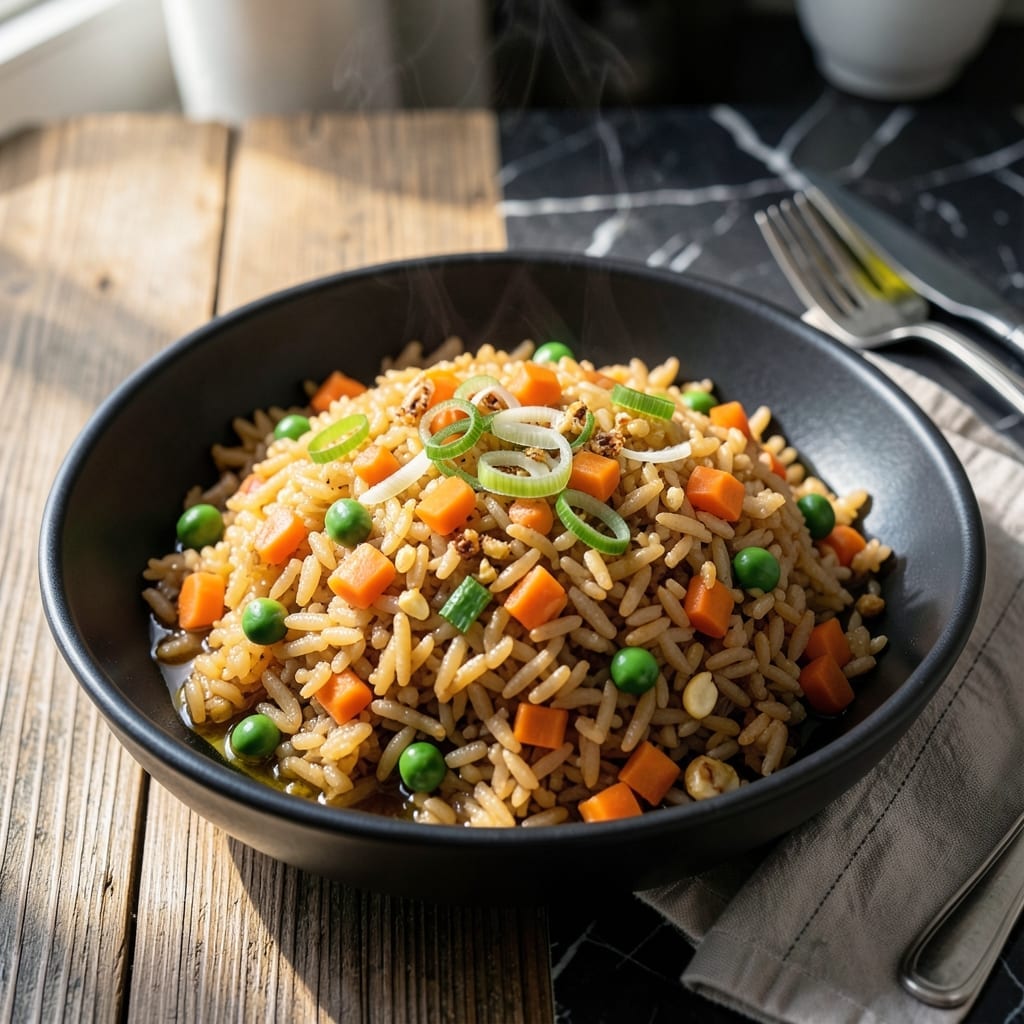
This wok-tossed glutinous rice delivers a perfect balance of sticky texture and caramelized edges. The key is using day-old rice and high heat to achieve that signature crispness.
Traditional techniques ensure each grain stays separate while developing a golden crust. The result is a dish that’s both tender and satisfyingly crisp, with a subtle sweetness that makes it irresistible.
Ingredients for Fried Glutinous Rice
Day-old glutinous rice and a hot wok create this irresistibly sticky, crisp-edged dish with subtle sweetness.
| Ingredient | Amount | Notes |
|---|---|---|
| Glutinous Rice 🍚 | 2 cups | Day-old, cooked and chilled |
| Peanut Oil 🫒 | 3 tbsp | High smoke point essential |
| Garlic Cloves 🧄 | 3 cloves | Minced finely for even flavor |
| Fresh Ginger 🌿 | 1 tbsp | Peeled and grated fresh |
| Green Onions 🧅 | 3 whole | Thinly sliced, whites and greens separated |
| Carrot 🥕 | 1 whole | Small dice for even cooking |
| Frozen Peas 🌱 | ½ cup | No need to thaw |
| Soy Sauce 🥫 | 2 tbsp | Light or all-purpose preferred |
| Dark Soy Sauce 🥫 | 1 tsp | For color depth |
| Shaoxing Wine 🍶 | 1 tbsp | Dry sherry as substitute |
| Sesame Oil 🫒 | 1 tsp | Toasted variety for aroma |
| Granulated Sugar 🍚 | 1 tsp | Balances salt and acidity |
| White Pepper 🌶️ | ½ tsp | Freshly ground preferred |
| Eggs 🥚 | 2 whole | Lightly beaten for binding |
Glutinous rice is non-negotiable here—jasmine or short-grain won’t deliver the same chew. Asian markets carry it in bulk bins or pre-packaged. Use day-old rice, as fresh-cooked grains turn mushy. Peanut oil handles the high heat better than vegetable oil. For authenticity, seek out Shaoxing wine from specialty stores, but dry sherry works in a pinch.
No glutinous rice? Sushi rice at half the quantity gets closest. Out of Shaoxing? Dry sherry or pale dry vermouth substitutes well. Frozen peas can be swapped for edamame or corn. The dark soy sauce adds color depth—skip it if unavailable, but add an extra teaspoon of light soy for balance. White pepper is traditional, but black works too.
Cooked rice keeps in the fridge for 3-4 days before using. Leftovers store well for 3 days refrigerated, but reheat in a skillet, not microwave, to preserve texture. Freezing isn’t recommended—rice loses its sticky quality upon thawing (worth the extra minute).
Why You’ll Love This Recipe
- One-Pan Wonder: I love that this comes together in a single wok or skillet with minimal cleanup.
- Garlic-Ginger Magic: The sizzle of garlic and ginger in peanut oil fills the kitchen with the most intoxicating aroma—it’s irresistible.
- Feeds a Crowd: Honestly, I double the batch and it disappears just as fast at family dinners or potlucks.
- Budget Stretcher: Glutinous rice is cheap, and a little peanut oil goes a long way for a dish that feels special.
Step-by-Step Instructions for Wok-Tossed Sticky Rice
Master the wok technique with precise timing and heat control for ideal texture and flavor.
Step 1: Prepare and Heat the Wok
Begin by heating a wok or large skillet over high heat until it begins to smoke lightly. Add 2 tbsp Peanut Oil and swirl to coat the surface evenly. The oil should shimmer but not burn—this indicates the proper temperature for searing.
Immediately add the 3 cloves Garlic Cloves and 1 tbsp Fresh Ginger, stirring constantly for 15-20 seconds until fragrant. Be vigilant; garlic burns quickly at high heat. Next, add the white portions of the 3 whole Green Onions and cook for another 30 seconds until slightly softened.
Step 2: Cook the Vegetables and Protein
Add the 1 whole Carrot (small dice) and 0.5 cup Frozen Peas to the wok. Stir-fry for 2-3 minutes until the carrots begin to soften and the peas are heated through. The peas will thaw almost instantly in the hot oil, so focus on the carrot texture.
Push the vegetables to one side of the wok and pour the 2 whole Eggs (lightly beaten) into the empty space. Scramble the eggs briefly until just set but still slightly runny. Then, combine everything in the wok and continue cooking for 1 minute to integrate the flavors.
Step 3: Incorporate the Rice and Season
Add the 2 cups Glutinous Rice (day-old, cooked, and chilled) to the wok, breaking up any clumps with your spatula. Stir-fry for 3-4 minutes until the rice is heated through and begins to develop a slight crispness. The chilled rice is crucial—fresh rice would turn mushy.
Drizzle the 2 tbsp Soy Sauce, 1 tsp Dark Soy Sauce, 1 tbsp Shaoxing Wine, 1 tsp Granulated Sugar, and 0.5 tsp White Pepper evenly over the rice. Toss everything together for 1-2 minutes until the rice is uniformly coated and the liquid has been absorbed.
Step 4: Finish and Serve
Remove the wok from heat and stir in the 1 tsp Sesame Oil. The residual heat will warm it without cooking out its aroma. Toss in the green portions of the 3 whole Green Onions and mix once more to distribute the fresh, oniony bite.
Transfer to a serving dish immediately. The rice should be glossy from the sauces, with distinct grains that hold their shape yet offer a subtle stickiness. Serve hot, garnished with extra green onions if desired.
Pro Tips For Making Fried Glutinous Rice
- Soak the Rice: Glutinous rice needs at least 4 hours in water—overnight is better. I learned this the hard way after ending up with dry, crumbly grains that refused to fry up properly.
- Hot Oil, Fast Cook: Peanut oil should be smoking hot before you add the garlic and ginger, otherwise they’ll turn bitter. About 30 seconds at high heat does the trick.
- Skip the Stirring: Resist the urge to constantly stir once the rice hits the pan. Let it sit for 1-2 minutes at a time to develop that coveted crispy bottom layer.
- Prep Aromatics Fine: Mince the garlic and ginger as small as possible—almost paste-like. Sounds tedious, but it actually changes the outcome, giving every bite consistent flavor.
Common Mistakes When Making This Dish
Using Fresh Rice
Never use freshly cooked rice for this dish—it’s the fastest way to end up with a mushy mess. Day-old, chilled rice has dried out slightly, allowing it to fry up with that perfect sticky-yet-separate texture. I’ve ruined batches by skipping this step. 💡
Low Heat Cooking
High heat is non-negotiable for achieving crisp edges and preventing sogginess. If your wok isn’t smoking slightly when you add the Peanut Oil, it’s not hot enough. Cooking on medium heat will steam the rice instead of frying it.
Overcrowding the Wok
Trying to cook all the rice at once in a small pan leads to uneven cooking. Use a large wok or skillet and work in batches if needed. This ensures each grain gets proper contact with the hot surface for that golden crust.
Skipping the Egg Scramble
Adding raw eggs directly to the rice results in uneven cooking and a rubbery texture. Always scramble the eggs separately first, then mix them in. This step adds richness and binds everything together properly.
Over-Stirring the Rice
Constantly stirring the rice prevents it from developing crispiness. Let it sit undisturbed for 20-30 seconds between tosses to allow a crust to form. Patience here makes all the difference in texture.
Forgetting to Season in Layers
Adding all the Soy Sauce at once can make the dish taste flat. Instead, season in stages—some when cooking the aromatics, some with the rice—to build depth of flavor. Taste as you go and adjust. 🔥
Nutrition Facts
Frequently Asked Questions
Why must the rice be day-old?
Day-old rice is drier, preventing mushiness when fried. Fresh rice contains too much moisture, resulting in a gummy texture instead of distinct, sticky grains. Always chill cooked rice overnight before using.
Can I use a regular skillet instead of a wok?
Yes, a large skillet works if you don’t have a wok. Use high heat and cook in batches to avoid overcrowding. A wok’s shape is ideal, but a wide, heavy skillet can achieve similar results.
How do I get crispier edges?
Press the rice firmly into the wok and let it sit undisturbed for 20-30 seconds between tosses. Use peanut oil for its high smoke point, and ensure the wok is very hot before adding ingredients.
What can I substitute for Shaoxing wine?
Dry sherry or pale dry vermouth work well as substitutes. Skip cooking wine—it lacks depth. Use the same 1 tbsp measurement for balanced flavor.

- Fast Rice Krispie Treats Recipe: No-Bake Chewy Goodness in Minutes - October 7, 2026
- Fitger’s Brewhouse Wild Rice Burger Recipe: Midwest-Inspired Patio Favorite - October 7, 2026
- Fresh Turmeric Rice Recipe: Golden Grains with Earthy Warmth - October 7, 2026