
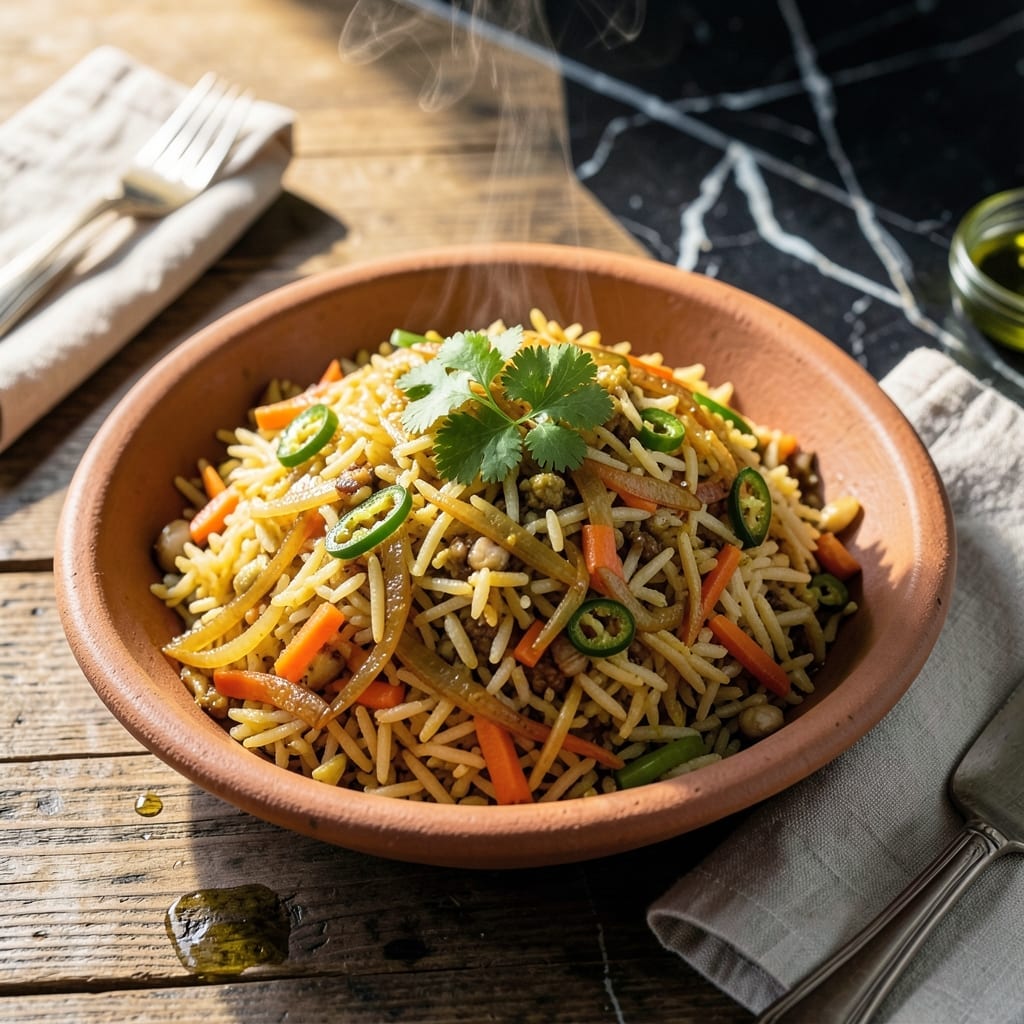
This Bengali-style fried rice transforms simple basmati into a fragrant, spiced masterpiece with the signature touch of mustard oil.
The dish combines everyday ingredients with traditional techniques, creating a balanced meal that’s both comforting and packed with authentic flavor.
Ingredients for Fried Rice Bengali
Basmati rice, mustard oil, and warming spices create this fragrant, authentic Bengali-style dish with ease.
| Ingredient | Amount | Notes |
|---|---|---|
| Basmati Rice 🍚 | 2 cups | Uncooked, rinsed until clear |
| Mustard Oil 💧 | 3 tbsp | Divided for cooking and finishing |
| Yellow Onion 🧅 | 1 whole | Medium, finely diced |
| Garlic Cloves 🧄 | 4 cloves | Minced for aromatic base |
| Fresh Ginger 🌿 | 1 tbsp | Peeled and grated |
| Green Chilies 🌶️ | 2 whole | Slit lengthwise, seeds removed |
| Ground Cumin 🌿 | 1 tsp | Toasted for depth |
| Ground Coriander 🍃 | 1 tsp | Balances the cumin |
| Turmeric Powder 🟡 | ½ tsp | For color and earthiness |
| Garam Masala 🌶️ | ½ tsp | Signature Bengali spice blend |
| Frozen Green Peas 🌱 | ¾ cup | Thawed before cooking |
| Carrot 🥕 | 1 whole | Medium, finely diced |
| Fresh Cilantro 🌿 | ¼ cup | Chopped for garnish |
| Salt 🧂 | 1 tsp | Adjust to taste |
| White Sugar 🍚 | ½ tsp | Balances the spices |
The mustard oil is non-negotiable for authentic flavor. Look for cold-pressed varieties at Indian grocery stores or Patel Brothers. Basmati rice should be aged for optimal texture—Tilda or Daawat are reliable brands. The green chilies add heat without overpowering; adjust quantity based on preference. Fresh ginger and garlic are essential for the aromatic base that defines this dish.
No mustard oil? Vegetable oil with a pinch of mustard powder approximates the flavor. Fresh cilantro can be swapped for parsley (though less traditional). Frozen peas and carrots work in a pinch for convenience. For extra richness, add a handful of cashews or raisins. The garam masala can be homemade—toast and grind whole spices for the freshest flavor.
Cooked rice keeps in the fridge for 2-3 days before frying. Mustard oil has a long shelf life—store in a cool, dark place for up to 1 year. This dish reheats well, though the rice may firm up slightly. Always taste for salt before serving, as flavors develop over time.
Why You’ll Love This Recipe
- One Pan Meal: I love that everything cooks together—just basmati rice, mustard oil, and those fragrant onions, garlic, and ginger.
- Flavor Bomb: Honestly, the mustard oil gives it that bold, earthy kick that makes this fried rice irresistibly Bengali.
- Lunchbox Hero: I pack leftovers for work and it tastes even better the next day—cold or reheated.
- Budget Keeper: Basmati rice and a few pantry staples stretch into a filling meal that doesn’t break the bank.
Step-by-Step Instructions for Spiced Basmati Fried Rice
Master the technique for perfectly textured grains with authentic Bengali flavors every time.
Step 1: Prepare the Rice and Aromatics
Begin by cooking the 2 cups Basmati Rice until just tender, then spread it on a baking sheet to cool completely. I use day-old rice for this dish—it’s drier and fries up fluffier without turning mushy. While the rice cools, finely dice the 1 whole Yellow Onion and 1 whole Carrot, mince the 4 cloves Garlic Cloves, and grate the 1 tbsp Fresh Ginger.
Thaw the 0.75 cup Frozen Green Peas under running water and drain well. Slit the 2 whole Green Chilies lengthwise and remove the seeds. Having all these components ready before cooking (mise en place) ensures a smooth process and prevents burning.
Step 2: Bloom the Spices in Mustard Oil
Heat 2 tbsp Mustard Oil in a large wok or skillet over medium-high heat until it reaches its smoking point, then reduce the heat to medium. The oil should have a pungent aroma—this is characteristic of Bengali cooking. Add the 1 tsp Ground Cumin and let it sizzle for 10-15 seconds until fragrant.
Immediately add the diced Yellow Onion and sauté for 3-4 minutes until translucent and lightly golden. Stir in the minced Garlic Cloves, grated Fresh Ginger, and slit Green Chilies, cooking for another 1-2 minutes until the raw aroma dissipates. This builds the flavor foundation for your dish.
Step 3: Incorporate Vegetables and Spice Blend
Add the diced Carrot and thawed Frozen Green Peas to the wok. Stir-fry for 2-3 minutes until the carrots begin to soften but retain a slight bite. Sprinkle in the 1 tsp Ground Coriander, 0.5 tsp Turmeric Powder, 1 tsp Salt, and 0.5 tsp White Sugar, stirring to coat the vegetables evenly with the spices.
The sugar balances the heat from the chilies and mustard oil, while the turmeric lends its signature golden hue. Cook for an additional 1 minute to toast the spices lightly, which deepens their flavors.
Step 4: Combine Rice and Finish with Garam Masala
Increase the heat to high and add the cooled Basmati Rice, breaking up any clumps with your fingers. Stir-fry for 3-4 minutes, tossing constantly, until the rice is heated through and begins to take on a slightly toasted aroma.
Drizzle the remaining 1 tbsp Mustard Oil around the edges of the wok and sprinkle the 0.5 tsp Garam Masala over the rice. Toss everything together for another 1-2 minutes until the rice is uniformly coated and lightly crisp in spots. The garam masala should be added last to preserve its delicate aromatic qualities.
Step 5: Garnish and Serve Immediately
Remove the wok from heat and fold in the chopped 0.25 cup Fresh Cilantro, reserving a small handful for garnish. Taste and adjust the Salt if needed, though the mustard oil and spices should provide sufficient seasoning.
Transfer to a serving dish and top with the remaining cilantro. Serve hot, with each grain of rice distinct yet infused with the complex layers of spices. The ideal texture is slightly crisp on the outside with a tender, flavorful interior.
Pro Tips For Making Fried Rice Bengali
- Use Day-Old Rice: Fresh rice turns mushy—I learned this the hard way. Cook your basmati the night before and refrigerate it, uncovered, so it dries out just enough to fry properly.
- Heat the Mustard Oil: Mustard oil needs to reach its smoking point to lose its pungency. Let it heat until it shimmers, then cool for 30 seconds before adding onions.
- Prep Ginger-Garlic Fine: Grate or pound the ginger and garlic into a paste—chunky pieces burn before they flavor. It’s the thing that matters most for even distribution.
- Skip the Overcrowding: Cook in batches if needed. Too many onions or rice in the pan steams instead of fries, and you’ll end up with soggy, sad fried rice.
Health Benefits of These Flavors
Digestive Health Boost
This dish is rich in dietary fiber from basmati rice and vegetables, with 1 cup of cooked rice providing about 0.6g of fiber. The carrots and peas add even more, supporting healthy digestion and keeping you full longer. I notice I feel lighter after eating this compared to heavy fried rice dishes. 💪
Antioxidant Powerhouse
Turmeric and cumin in this creation are packed with curcumin and other antioxidants that combat inflammation. ½ tsp turmeric powder provides a significant boost. Mustard oil also contains allyl isothiocyanate, which has been shown to have cancer-fighting properties.
Heart-Friendly Fats
Mustard oil is a heart-healthy choice, rich in monounsaturated fats and omega-3 fatty acids. Using 3 tbsp in this recipe gives you beneficial fats without the drawbacks of saturated fats. It’s a staple in Bengali cooking for good reason.
Vitamin-Rich Ingredients
Carrots provide vitamin A (about 200% of your daily needs per cup), while peas offer vitamin C and vitamin K. The fresh cilantro garnish adds vitamin K and iron. This meal is a nutritional powerhouse disguised as comfort food.
Low Glycemic Impact
Basmati rice has a lower glycemic index than other rice varieties, helping maintain steady blood sugar levels. The fiber and protein from vegetables further slow digestion. I find this version keeps me energized without the crash that comes from typical fried rice. 💛
Metabolism Support
The combination of garlic, ginger, and green chilies in this dish can boost metabolism. Capsaicin in chilies may increase calorie burning by up to 5% temporarily. These traditional spices do more than just add flavor—they support overall health.
Nutrition Facts
Frequently Asked Questions
Can I use regular rice instead of basmati?
Basmati is ideal for its long grains and aroma, but jasmine or long-grain white rice work too. Avoid short-grain rice as it can turn mushy. Use day-old rice for best texture.
Why is mustard oil essential here?
It gives authentic Bengali flavor and aroma. If unavailable, substitute with vegetable oil and add ½ tsp mustard powder to mimic the taste. Never skip it for true authenticity.
How do I prevent the rice from turning mushy?
Use cold, day-old rice and cook on high heat quickly. Spread rice on a tray to cool before frying. Stir-fry in batches if needed to avoid overcrowding.
Can I add protein to this dish?
Shrimp, chicken, or paneer work well. Cook protein separately first, then mix in at the end. Adjust spices to complement your protein choice.

- Furikake Rice Seasoning Recipe: Umami-Packed Japanese Blend for Any Meal - October 7, 2026
- Knorr Vegetable Soup Mix Rice Recipe: Savory One-Pot Side Dish - October 7, 2026
- Lebanese Lentil and Rice Soup Recipe: Mujadara-Inspired Warmth in a Bowl - October 7, 2026