
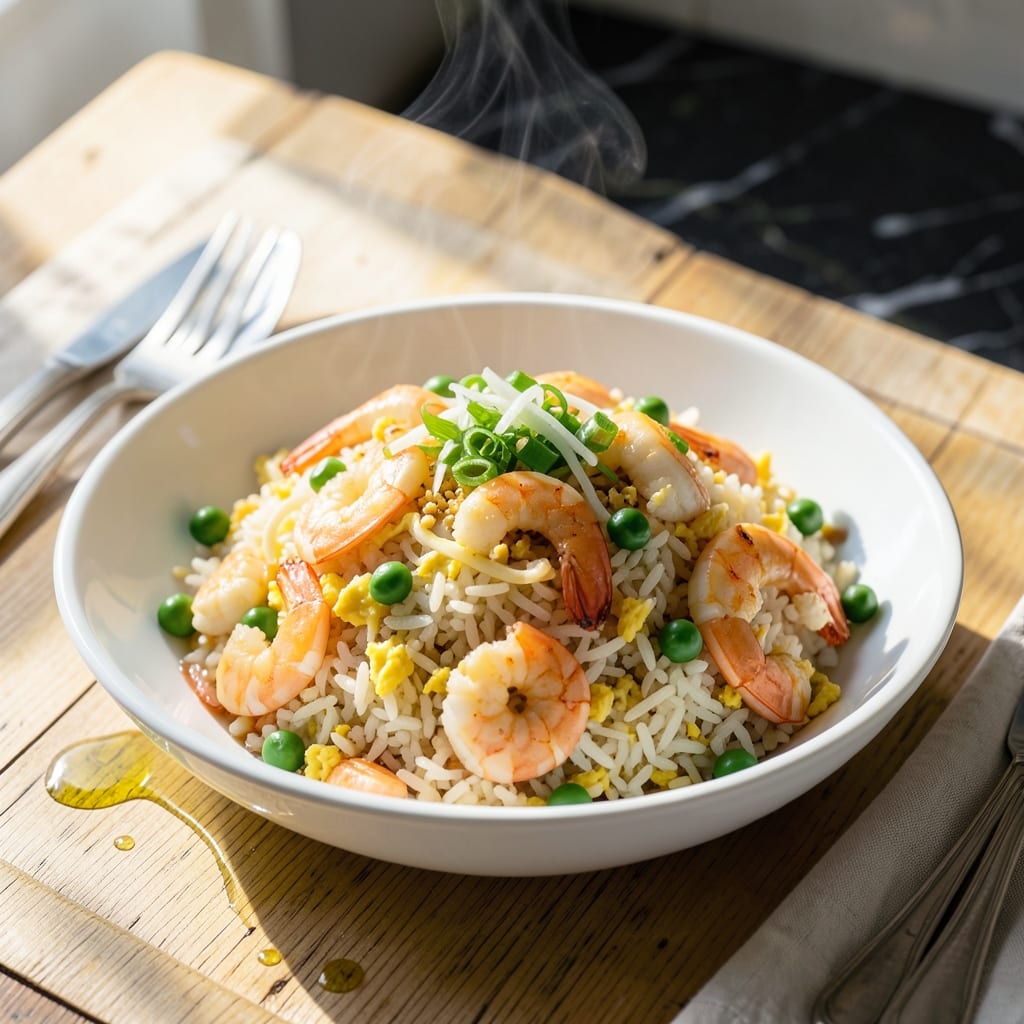
This Fujian-style dish captures the essence of coastal Chinese cooking with its delicate balance of seafood and umami. The technique ensures each grain stays separate while absorbing the rich flavors of shrimp, peas, and soy.
What makes this version special is its simplicity—just a few ingredients transformed through precise timing and high heat. The result is a savory, aromatic fried rice that’s both comforting and authentic.
Ingredients for Fujian Fried Rice
Day-old rice, plump shrimp, and bright peas come together for this aromatic coastal classic.
| Ingredient | Amount | Notes |
|---|---|---|
| Jasmine Rice 🍚 | 3 cups | Day-old, cooked and cooled |
| Medium Shrimp 🍤 | ¾ lb | Peeled, deveined, tail-off |
| Frozen Peas 🌱 | 1 cup | Thawed under cold water |
| Large Eggs 🥚 | 3 whole | Lightly beaten for scrambled texture |
| Green Onions 🧅 | 4 whole | Thinly sliced, whites and greens separated |
| Garlic Cloves 🧄 | 3 cloves | Minced finely for even flavor |
| Light Soy Sauce 🫒 | 2 tbsp | Low-sodium preferred for balance |
| Shaoxing Wine 🍶 | 2 tbsp | Dry sherry works as substitute |
| Sesame Oil 🫒 | 1 tsp | Toasted for nutty aroma |
| Vegetable Oil 🫒 | 3 tbsp | Neutral flavor, high smoke point |
| White Pepper 🌶️ | ¼ tsp | Ground, for subtle heat |
| Salt 🧂 | ½ tsp | Kosher or sea salt preferred |
| MSG 🧂 | ¼ tsp | Optional for umami boost |
The rice is critical here. Jasmine rice is traditional for its fragrant, slightly sticky texture—use day-old or spread freshly cooked rice on a tray to cool quickly. Shrimp should be wild-caught if possible, but farmed works fine. I source mine from Whole Foods or a trusted fishmonger. Look for shrimp labeled 16/20 count (16-20 per pound) for consistent cooking. Shaoxing wine is available at most Asian markets or online.
No Shaoxing wine? Dry sherry is the closest substitute, though mirin in a pinch (use half the amount) works too. Frozen peas are fine—petite peas stay sweeter. For a vegetarian version, swap shrimp for extra-firm tofu (press and cube first). The white pepper is traditional, but black pepper works if that’s what you’ve got. Don’t skip the MSG—it’s what gives this dish that authentic restaurant depth (trust me on this).
Cooked rice keeps in the fridge for 3-4 days—perfect for making this. The fried rice itself is best eaten fresh but reheats well with a splash of water. Leftovers keep for 2-3 days refrigerated. Freezing isn’t ideal as the rice grains can turn mushy upon thawing.
Why You’ll Love This Recipe
- One Pan Wonder: I love that everything—shrimp, eggs, peas—cooks together in one wok, and I’m done cleaning before the rice even hits the plate.
- Umami Bomb: The shrimp and jasmine rice soak up that garlicky, slightly sweet Fujian flavor that makes me sneak bites before serving.
- Weeknight Hero: Between us, this is my Tuesday lifesaver—ready faster than takeout and way more satisfying.
- Budget Stretcher: A bag of frozen peas and a handful of shrimp feed my family for two meals, and honestly, leftovers taste even better the next day.
Step-by-Step Instructions for Fujian Fried Rice
Master the wok toss technique and layer flavors like a coastal Chinese kitchen professional.
Step 1: Prepare the Protein and Aromatics
Heat 1 tbsp vegetable oil in a wok or large skillet over high heat until shimmering. Add the 0.75 lb medium shrimp and stir-fry for 1-2 minutes per side until just pink and opaque. Remove and set aside.
In the same pan, add another 1 tbsp vegetable oil. Sauté the whites of 4 whole green onions and 3 cloves minced garlic cloves for 30 seconds until fragrant but not browned. The aroma should be vibrant and fresh, not burnt.
Step 2: Scramble the Eggs
Push the aromatics to one side of the pan and add the remaining 1 tbsp vegetable oil. Pour in the 3 whole lightly beaten large eggs and scramble quickly with a spatula until just set but still slightly runny. This should take no more than 30-45 seconds.
Break the eggs into small, soft curds. They’ll finish cooking when combined with the rice later. The key is keeping them tender—overcooking now means rubbery eggs in the final dish.
Step 3: Combine Rice and Vegetables
Add the 3 cups day-old jasmine rice to the wok, breaking up any clumps with your spatula. Stir-fry for 2 minutes to heat through. The rice should be separate grains, not mushy. Add the 1 cup thawed frozen peas and continue stir-frying for another 1 minute.
Drizzle the 2 tbsp Shaoxing wine around the edges of the pan and toss to distribute. The alcohol should sizzle and evaporate quickly, leaving behind its rich, fermented depth.
Step 4: Season and Finish
Return the shrimp to the wok along with the 2 tbsp light soy sauce, 0.5 tsp salt, 0.25 tsp white pepper, and 0.25 tsp MSG. Toss everything together for 2-3 minutes until all ingredients are evenly distributed and heated through.
The rice should have a light golden color from the soy sauce, with shrimp and peas visible throughout. The texture should be slightly crisp in spots from the high heat, not soggy.
Step 5: Final Touches and Plating
Remove from heat and stir in the 1 tsp sesame oil. The nutty aroma should be immediately noticeable. Toss in the green parts of the 4 whole green onions and give it one final stir—just until the greens wilt slightly but retain their bright color.
Serve immediately while hot. The ideal plate shows distinct grains of rice, plump shrimp, bright green peas, and flecks of scrambled egg, with a glossy sheen from the soy and sesame oils. Each bite should deliver the coastal umami that defines this dish.
Pro Tips For Making Fujian Fried Rice
- Use Day-Old Rice: Fresh jasmine rice turns mushy—spread leftover rice on a tray and refrigerate overnight to dry it out, so it fries up light and separate.
- Shrimp Last: Add shrimp only in the final 2-3 minutes of stir-frying to keep them tender; they’ll finish cooking from residual heat.
- Thaw Peas First: Toss frozen peas straight into the hot wok and they’ll steam instead of sear—I learned this the hard way after ending up with sad, watery rice.
- Scramble Eggs Separately: Beat eggs with a pinch of salt and cook in a thin layer first, then chop and fold back in for those distinct ribbons Fujian fried rice is known for.
Essential Equipment for Great fujian fried rice
Wok Selection
A traditional carbon steel wok is ideal for this dish—it heats quickly and distributes heat evenly. I use a 14-inch Joyce Chen wok for home cooking. The rounded bottom helps with tossing, which is key for even cooking and that authentic wok hei flavor. 🔥
High-BTU Burner
For the best results, you need serious heat. A gas burner with at least 10,000 BTUs is essential to get that smoky, charred flavor. If your stove can’t handle that, a portable propane burner (like Bayou Classic) works great outdoors.
Wok Spatula
A wok spatula (or wok chuan) is designed for the curves of your pan. The flat edge helps scoop and toss ingredients efficiently. I prefer one with a long wooden handle to keep my hand away from the heat. Avoid metal spatulas—they can scratch your wok’s seasoning.
Rice Cooker
For perfectly cooked jasmine rice every time, a rice cooker is a game-changer. I use a Zojirushi 3-cup model—it consistently delivers fluffy, separate grains. Cook the rice the day before and refrigerate overnight for the best fried rice texture.
Prep Tools
Have all ingredients prepped and within reach before you start cooking. A large cutting board, sharp chef’s knife (I love Wüsthof), and mixing bowls for mise en place are must-haves. This dish comes together fast, so organization is key. 💡
Thermometer
While not traditional, an instant-read thermometer helps ensure your shrimp are perfectly cooked. I aim for 145°F internal temperature for shrimp. This prevents overcooking and guarantees tender, juicy seafood in every bite.
Nutrition Facts
Frequently Asked Questions
Why use day-old rice for this dish?
Day-old rice has less moisture, which helps prevent mushiness when stir-frying. Fresh rice tends to clump and steam instead of frying, resulting in a sticky texture rather than separate grains.
Can I substitute another type of rice?
Jasmine is traditional, but long-grain white rice works too. Avoid short-grain varieties like sushi rice—they’re too sticky. Always use cooled, cooked rice for best results.
What if I don’t have Shaoxing wine?
Dry sherry is the closest substitute. In a pinch, use mirin but cut the amount in half. These alternatives won’t replicate the exact depth but will still add necessary acidity.
How do I prevent soggy fried rice?
Cook over high heat and keep ingredients moving constantly. Overcrowding the pan or low heat will steam the rice. Work in batches if needed to maintain temperature.

- Furikake Rice Seasoning Recipe: Umami-Packed Japanese Blend for Any Meal - October 7, 2026
- Knorr Vegetable Soup Mix Rice Recipe: Savory One-Pot Side Dish - October 7, 2026
- Lebanese Lentil and Rice Soup Recipe: Mujadara-Inspired Warmth in a Bowl - October 7, 2026