
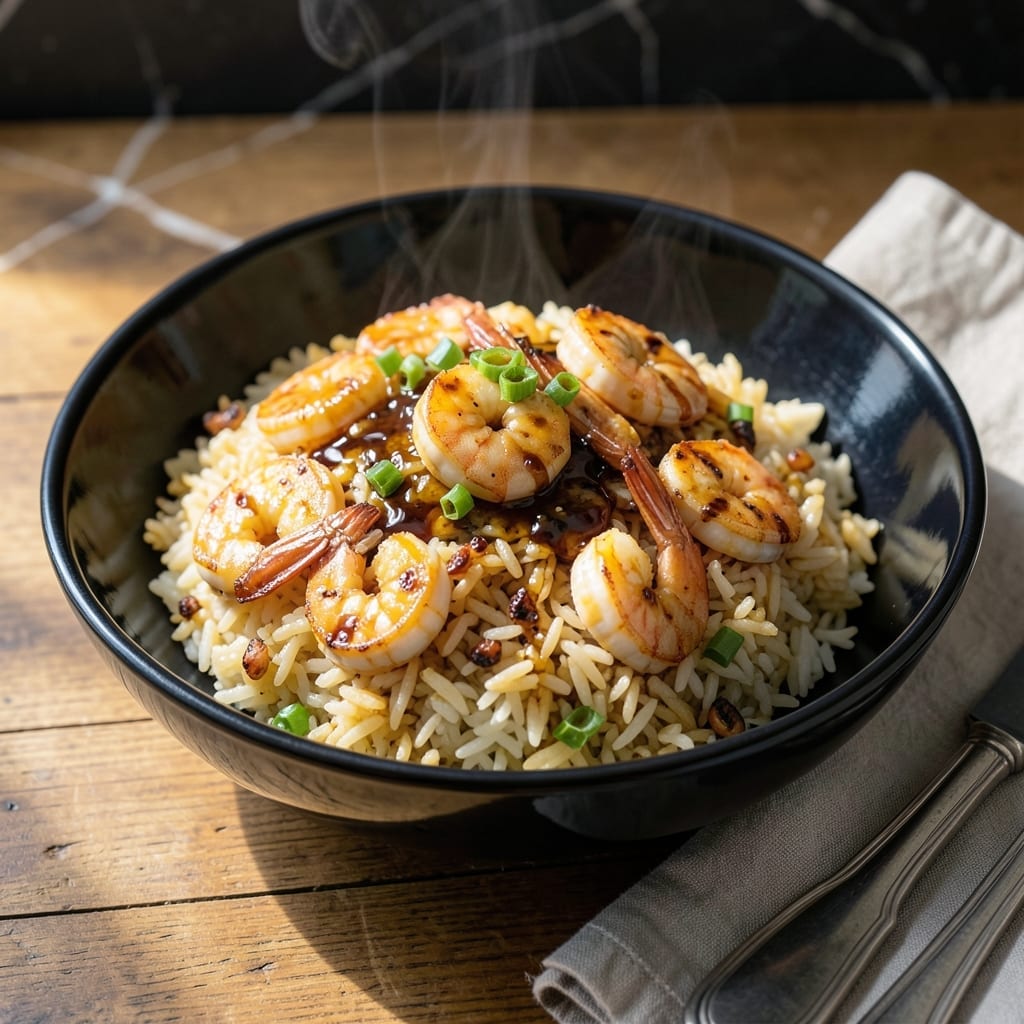
This wok-seared fried rice delivers restaurant-quality flavor with plump shrimp and rich oyster sauce. The key is high heat and the right timing to achieve that signature smoky aroma.
Each bite combines tender shrimp, fluffy rice, and the deep umami of oyster sauce. The dish comes together quickly with simple ingredients and traditional techniques.
Ingredients for Chinese Shrimp Fried Rice Recipe with Oyster Sauce
High-heat wok work transforms these everyday ingredients into restaurant-quality comfort food with bold umami depth.
| Ingredient | Amount | Notes |
|---|---|---|
| Jasmine Rice 🍚 | 3 cups | Day-old, cooked and chilled |
| Large Shrimp 🍤 | 1 lb | Peeled, deveined, tails removed |
| Oyster Sauce 🫒 | 3 tbsp | High-quality brand preferred |
| Soy Sauce 🫒 | 2 tbsp | Low-sodium for balance |
| Sesame Oil 🫒 | 1 tbsp | Toasted for aroma |
| Peanut Oil 🫒 | 2 tbsp | High smoke point essential |
| Garlic Cloves 🧄 | 4 cloves | Minced finely for even distribution |
| Fresh Ginger 🌿 | 1 tbsp | Grated or minced |
| Green Onions 🧅 | 4 whole | Thinly sliced, white and green parts separated |
| Frozen Peas 🌱 | ¾ cup | Thawed and drained |
| Carrot 🥕 | 1 whole | Small dice for even cooking |
| Large Eggs 🥚 | 2 whole | Lightly beaten for scrambling |
| Shaoxing Wine 🍶 | 1 tbsp | Optional but traditional |
| White Pepper 🌶️ | ½ tsp | Ground for subtle heat |
| Kosher Salt 🧂 | ½ tsp | Adjust to taste |
The shrimp quality is non-negotiable for authentic flavor. Wild-caught Gulf or Pacific shrimp provide the best texture and taste (16-20 count per pound). Oyster sauce from brands like Lee Kum Kee or Kikkoman delivers the essential depth—avoid generic versions. Jasmine rice must be day-old and thoroughly chilled to prevent mushiness. For the oils, toasted sesame oil adds aroma while peanut oil handles the high heat.
No oyster sauce? Vegetarian oyster sauce works in a pinch, though the flavor differs. Substitute shrimp with firm tofu or scallops for variation. Shaoxing wine can be replaced with dry sherry (avoid cooking wine with added salt). Fresh ginger is ideal, but ground ginger at half the amount works. For the rice, leftovers are perfect—just ensure they’re completely cold before frying.
Cooked rice keeps in the fridge for 3-4 days before use. Shrimp should be used within 2 days of purchase or frozen for 3 months. The finished dish stores well for 3 days refrigerated, though it’s best served fresh. Reheat in a skillet to restore texture.
Why You’ll Love This Recipe
- 20-Minute Meal: I can get this from fridge to table faster than ordering takeout—just chop, stir-fry, and serve.
- Umami Bomb: The oyster sauce and sesame oil create a rich, savory depth that makes every bite irresistible.
- Weeknight Hero: It’s my go-to for busy evenings, and the shrimp cooks in the same pan as the rice.
- Leftover Magic: Honestly, it tastes even better the next day—if there’s any left.
Step-by-Step Instructions for Chinese Shrimp Fried Rice With Oyster Sauce
Master the wok technique for perfectly charred grains and succulent shrimp with authentic flavor.
Step 1: Prepare the Shrimp and Aromatics
Pat the 1 lb Large Shrimp completely dry with paper towels to ensure a good sear. Season lightly with 0.5 tsp Kosher Salt and 0.5 tsp White Pepper. This prevents the shrimp from tasting bland in the final dish.
Finely mince the 4 cloves Garlic Cloves and grate the 1 tbsp Fresh Ginger. Thinly slice the 4 whole Green Onions, keeping white and green parts separate. Small-dice the 1 whole Carrot into uniform pieces for even cooking. Having all aromatics prepped ensures the cooking process flows smoothly.
Step 2: Scramble the Eggs and Cook the Shrimp
Heat 1 tablespoon of the 2 tbsp Peanut Oil in a wok or large skillet over high heat until shimmering. Add the 2 whole Large Eggs and scramble quickly until just set but still slightly runny. Remove and set aside—they’ll finish cooking later.
Add the remaining 1 tbsp Peanut Oil to the wok. When nearly smoking, add the shrimp in a single layer. Cook for 1-2 minutes per side until pink and opaque. Transfer to the plate with eggs, leaving any fond in the pan for flavor.
Step 3: Stir-Fry the Vegetables and Rice
In the same wok, add the white parts of the green onions, garlic, and ginger. Stir-fry for 30 seconds until fragrant but not browned. Immediately add the diced carrot and 0.75 cup Frozen Peas, cooking for 2 minutes until the carrots begin to soften.
Add the 3 cups Jasmine Rice, breaking up any clumps with your spatula. Press the rice into the pan to create contact with the heat, allowing some grains to develop a slight char. This step is critical for authentic wok hei flavor.
Step 4: Combine and Season with Sauces
Return the shrimp and eggs to the wok. Drizzle the 3 tbsp Oyster Sauce, 2 tbsp Soy Sauce, and 1 tbsp Shaoxing Wine evenly over the mixture. Stir-fry for 2-3 minutes until everything is heated through and the rice is uniformly coated.
Remove from heat and stir in the 1 tbsp Sesame Oil and the green parts of the green onions. The sesame oil adds a final aromatic note, while the green onions provide freshness. Taste and adjust seasoning if needed, though the oyster sauce typically provides sufficient saltiness.
Pro Tips For Making Chinese Shrimp Fried Rice Recipe With Oyster Sauce
- Chill the Rice: Use day-old, cold jasmine rice—fresh rice turns mushy. I learned this the hard way after my first few batches came out like porridge.
- Blister the Shrimp: Cook shrimp separately first on high heat until just pink, about 1-2 minutes per side, then set aside. This keeps them from overcooking when you add them back to the rice.
- High Heat Only: Crank the wok or skillet to smoking hot before adding oil. Sounds aggressive, but it’s the only way to get that classic wok hei flavor.
- Sauce Last: Stir in the oyster sauce and soy sauce at the very end—adding them too early makes the rice soggy instead of nicely coated.
Health Benefits of This chinese shrimp fried rice recipe with oyster sauce
Protein Powerhouse
Shrimp delivers 24 grams of protein per 3-ounce serving, making this dish a muscle-building champion. The lean protein helps repair tissues and keeps you feeling full longer. I notice it satisfies my hunger for hours after eating. 💪
Heart-Healthy Benefits
Shrimp contains omega-3 fatty acids that support cardiovascular health and reduce inflammation. A 1-lb serving provides about 1,500mg of EPA and DHA, which helps lower triglycerides and blood pressure.
Low-Calorie Option
This creation is naturally low in calories—about 300-400 per serving—thanks to the shrimp and vegetable base. It’s an excellent choice for weight management without sacrificing flavor or satisfaction.
Rich in Vitamins
Shrimp provides vitamin B12, selenium, and iodine, essential for metabolism, thyroid function, and immunity. The carrots and peas add vitamin A and vitamin C for a nutrient-dense meal.
Antioxidant Boost
Garlic and ginger in this recipe contain antioxidants that combat oxidative stress. The sesame oil adds sesamol, a compound with anti-inflammatory properties. Together, they support overall cellular health. ✨
Energy-Sustaining Carbs
The jasmine rice provides complex carbohydrates for steady energy release. Combined with the protein from shrimp and eggs, this dish offers balanced fuel to keep you energized throughout the day.
Nutrition Facts
Frequently Asked Questions
Can I use fresh rice instead of day-old?
Fresh rice contains too much moisture and will turn mushy. Always use day-old, chilled rice for the best texture. Spread hot rice on a tray to cool quickly if you’re in a hurry.
What if I don’t have a wok?
A large, heavy skillet works as a substitute. Use high heat and cook in batches to avoid steaming the rice. The key is maintaining that hot surface temperature throughout.
How do I prevent soggy fried rice?
Cook over high heat and avoid overcrowding the pan. Press the rice into the surface for 30-60 seconds to develop a slight char. This creates the signature wok hei flavor.
Can I add other vegetables?
Try bell peppers, broccoli, or mushrooms. Cut them small and stir-fry before adding the rice to ensure even cooking. Just keep the total volume similar.

- Rice Pudding Recipe With Eggs and Milk: Old-Fashioned Custard-Style Comfort - September 30, 2026
- Rice Noodle Sauce Recipe: Bold Umami Depth for Authentic Stir-Fry - September 30, 2026
- Rice Pilaf Recipe: Fragrant Basmati With Toasted Vermicelli - September 30, 2026