
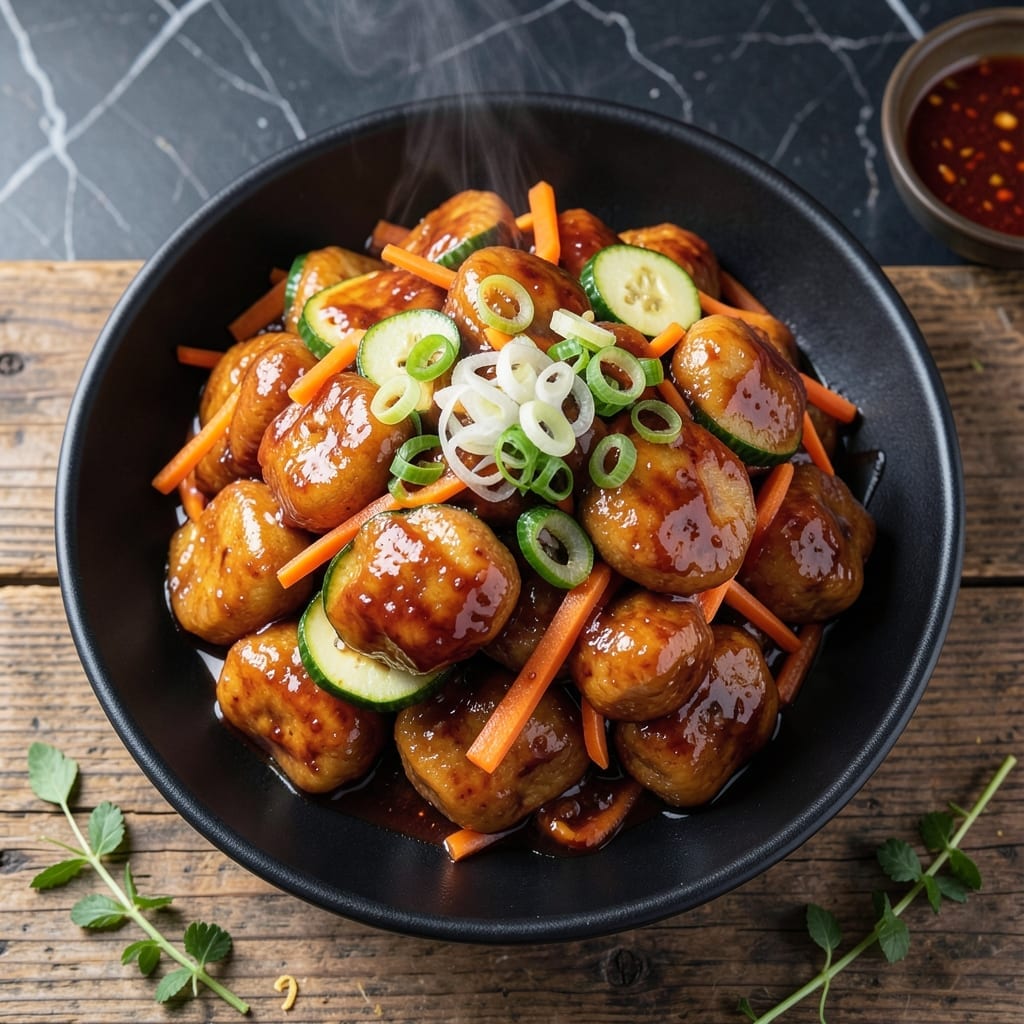
This rice cake stir fry delivers the perfect balance of crunchy and chewy textures that make Korean tteokbokki-style dishes so irresistible. The secret lies in proper preparation and high-heat cooking.
With just a few simple ingredients and 15 minutes of active cooking, you’ll achieve restaurant-quality results. The rice cakes absorb the savory-sweet sauce while maintaining their signature bite, creating a dish that’s both comforting and exciting.
Ingredients for Rice Cake Stir Fry
Fresh rice cakes and bold Korean flavors create this irresistible stir fry with perfect texture balance.
| Ingredient | Amount | Notes |
|---|---|---|
| Korean Rice Cakes 🍚 | 1 lb | Fresh or thawed if frozen |
| Gochujang 🌶️ | 3 tbsp | Korean red pepper paste |
| Soy Sauce 🫒 | 2 tbsp | Low-sodium preferred |
| Brown Sugar 🍚 | 1 tbsp | For sweetness balance |
| Garlic Cloves 🧄 | 4 cloves | Minced for maximum flavor |
| Fresh Ginger 🌿 | 1 tbsp | Grated or finely minced |
| Vegetable Oil 🫒 | 2 tbsp | High smoke point for stir-frying |
| Green Onions 🧅 | 4 whole | Thinly sliced for garnish |
| Carrot 🥕 | 1 whole | Julienned for texture contrast |
| Zucchini 🥒 | 1 whole | Sliced into thin strips |
| Sesame Oil 🫒 | 1 tsp | For finishing aroma |
| Sesame Seeds 🌰 | 1 tsp | Toasted for garnish |
| Red Pepper Flakes 🌶️ | ½ tsp | Adjust for heat preference |
Korean rice cakes are essential here. Find them fresh at Asian markets—they’re often sold in the refrigerated section. Frozen works too (thaw first). The gochujang is non-negotiable; look for Sempio or Kochukaru brands at H Mart or Korean grocers. Fresh ginger and garlic make a difference, so avoid the pre-minced jars. For the vegetables, choose firm produce—organic carrots and zucchini have better texture for high-heat cooking.
No gochujang? Mix 2 tbsp sriracha with 1 tbsp miso paste for a similar depth. Substitute honey for brown sugar if needed (use one-third less). Vegetable oil can be swapped for peanut or avocado oil—both have high smoke points. Skip the sesame oil if avoiding nut flavors, but the dish will lose some authenticity. For extra protein, thinly sliced beef or tofu works beautifully in this stir fry.
Store rice cakes in the fridge, submerged in water, for up to 3 days. The sauce keeps for 1 week refrigerated, and the complete dish reheats well—add a splash of water to revive. For best results, cook to order; rice cakes lose their signature chew when held too long.
Why You’ll Love This Recipe
- One Pot Meal: I toss everything in a single pan—rice cakes, gochujang, garlic—and it’s ready before I can even set the table.
- Sweet & Spicy Kick: The mix of brown sugar and gochujang hits that perfect balance—sweet with just enough heat to keep me reaching for more.
- Meal Prep Hero: I make a big batch on Sunday, and honestly, it tastes even better the next day after the flavors meld.
- Budget Stretcher: Korean rice cakes are cheap, filling, and a little goes a long way—my wallet thanks me every time.
Step-by-Step Instructions for Rice Cake Stir Fry
Master this technique for perfectly chewy rice cakes with crisp vegetables in a rich, spicy-sweet sauce.
Step 1: Prepare Vegetables and Aromatics
Slice the 4 whole Green Onions thinly on the bias, separating white and green parts. Julienne the 1 whole Carrot into matchsticks and slice the 1 whole Zucchini into thin half-moons. This uniform size ensures even cooking.
Mince the 4 cloves Garlic Cloves finely and grate the 1 tbsp Fresh Ginger. I keep these separate from the vegetables to control cooking times—aromatics need less time than the crisp vegetables.
Step 2: Create the Stir Fry Sauce Base
In a small bowl, whisk together the 3 tbsp Gochujang, 2 tbsp Soy Sauce, and 1 tbsp Brown Sugar until smooth. The gochujang provides the signature Korean heat and depth, while the brown sugar balances its spiciness.
Add the 0.5 tsp Red Pepper Flakes to the sauce for an extra kick. Taste and adjust sweetness or heat if needed, but remember the flavors will concentrate slightly during cooking.
Step 3: Stir Fry Vegetables and Aromatics
Heat 2 tbsp Vegetable Oil in a large wok or skillet over high heat until shimmering. Add the carrot first, stir-frying for 2 minutes until slightly softened. Then add the zucchini and white parts of the green onions, cooking for another 2-3 minutes until crisp-tender.
Push the vegetables to the sides of the pan and add the minced garlic and grated ginger to the center. Stir constantly for 30 seconds until fragrant—don’t let them burn. The aroma should be intense and inviting at this stage.
Step 4: Cook Rice Cakes and Combine
Add the 1 lb Korean Rice Cakes to the pan, stirring to coat them in the oil and vegetables. If using frozen rice cakes, ensure they’re fully thawed first. Cook for 4-5 minutes, stirring occasionally, until the rice cakes develop a slightly chewy exterior.
Pour the sauce mixture over everything and stir gently but thoroughly to coat all ingredients. Cook for an additional 2-3 minutes until the sauce thickens slightly and clings to the rice cakes.
Step 5: Finish and Serve
Remove from heat and drizzle with 1 tsp Sesame Oil. Sprinkle the green onion tops and 1 tsp Sesame Seeds over the top. The sesame oil adds a final layer of aroma that ties all the flavors together.
Serve immediately while hot. The rice cakes should be tender with a slight chew, the vegetables crisp, and the sauce glossy and well-distributed throughout the dish.
Pro Tips For Making Rice Cake Stir Fry
- Soak the Cakes: I learned this the hard way—soak rice cakes in warm water for 10-15 minutes before cooking, otherwise they stay rock-hard in the center.
- Bloom the Gochujang: Cook the gochujang with minced garlic and brown sugar for 1-2 minutes in hot oil before adding anything else—this wakes up the flavors.
- Skip the Overcrowding: Stir-fry rice cakes in batches if needed. Too many in the pan at once steams them instead of giving those chewy, slightly crisp edges.
- Finish with Soy: Add soy sauce at the very end, just a minute before serving. Adding it too early makes the rice cakes absorb too much salt and turn mushy.
Storing and Reheating Leftovers
Refrigerator Storage
Let your stir fry cool completely before transferring to airtight containers. I use glass containers to keep the rice cakes from absorbing plastic odors. Store at 40°F or below for up to 3 days. The flavors deepen overnight, making leftovers even more delicious. ❄️
Freezer Storage
This dish freezes surprisingly well for up to 2 months. Spread leftovers in a single layer on a baking sheet to freeze first, then transfer to freezer bags. This prevents the rice cakes from sticking together. Squeeze out excess air to prevent freezer burn.
Stovetop Reheating
My preferred method: Add the stir fry to a nonstick skillet with 2 tbsp water over medium heat. Cover and cook for 4-5 minutes, stirring occasionally. The steam revitalizes the rice cakes’ chewy texture beautifully.
Microwave Reheating
For quick meals, microwave covered with a damp paper towel on 70% power. Heat for 1-2 minutes, stir, then continue in 30-second intervals until reaching 165°F. Add a splash of water if the sauce looks dry.
Reviving Texture
If your rice cakes lose their chew, soak them in warm water for 5 minutes before reheating. This restores their signature texture. I also recommend adding 1 tsp sesame oil when reheating to refresh the flavors. 💡
Nutrition Facts
Frequently Asked Questions
Do I need to soak the rice cakes first?
If using fresh rice cakes, no soaking is needed. For frozen ones, thaw completely in cold water for 20-30 minutes before cooking to prevent a gummy texture.
Can I make this less spicy?
Reduce gochujang to 1 tbsp and omit red pepper flakes. For mild heat, add 1 tsp honey to balance the remaining spice.
Why are my rice cakes hard?
They likely needed more time to soften. Cook them in the sauce for an extra 2-3 minutes covered, adding 1/4 cup water to create steam.
What protein pairs well with this?
Thinly sliced beef, chicken, or firm tofu work perfectly. Add protein first to cook through before adding rice cakes and vegetables.

- Rice Pudding Recipe With Eggs and Milk: Old-Fashioned Custard-Style Comfort - September 30, 2026
- Rice Noodle Sauce Recipe: Bold Umami Depth for Authentic Stir-Fry - September 30, 2026
- Rice Pilaf Recipe: Fragrant Basmati With Toasted Vermicelli - September 30, 2026