
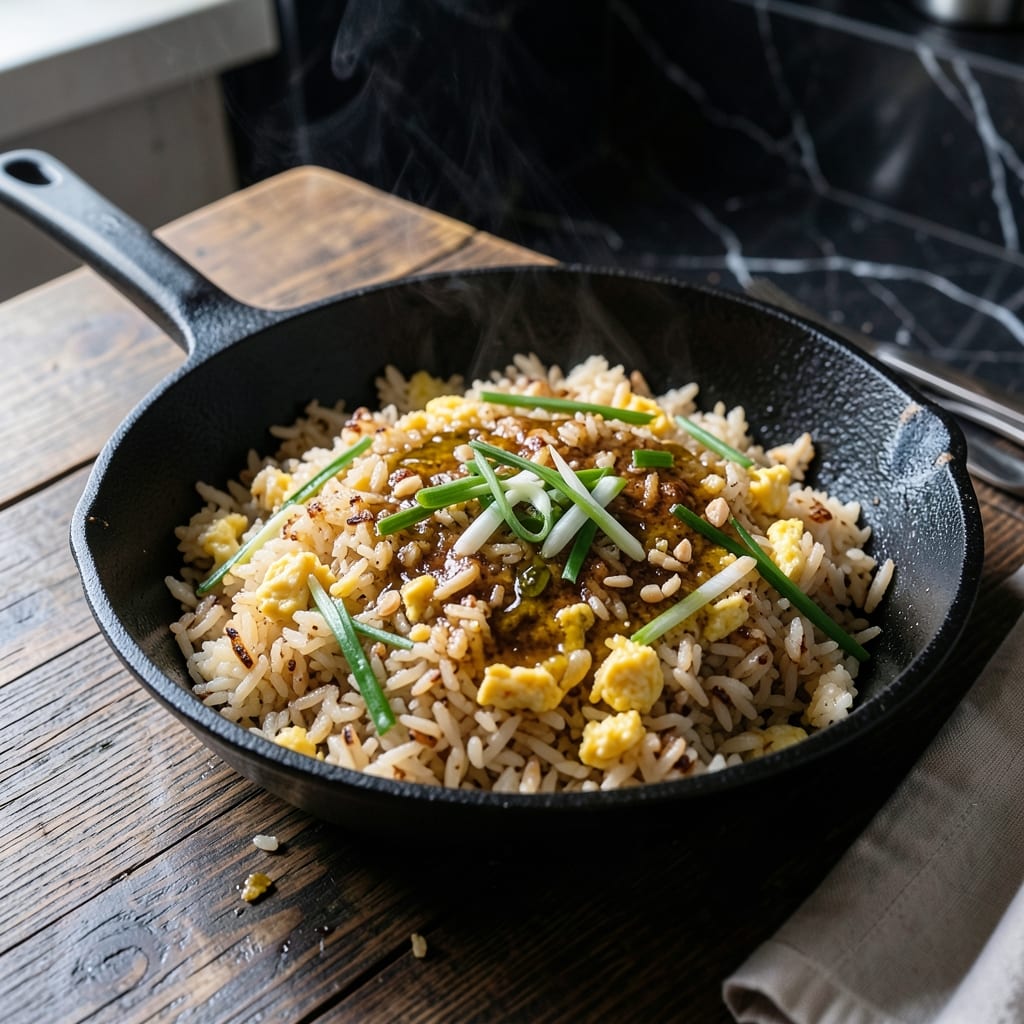
I’ve tested countless fried rice methods, but this technique delivers the perfect balance of texture and flavor every time. The secret lies in day-old rice and high heat.
Kenji’s approach transforms simple ingredients into a dish with distinct wok hei—smoky, aromatic, and deeply satisfying. Each bite offers tender grains with just the right amount of chew.
What sets this version apart is the focus on layering flavors: soy sauce for depth, sesame oil for aroma, and scrambled eggs for richness. It’s a foolproof method that works with any protein.
Ready in under 20 minutes, this fried rice rivals takeout without the guesswork. The results speak for themselves.
Ingredients for Fried Rice Recipe Kenji
Day-old rice, high heat, and bold flavors create this foolproof wok hei masterpiece in minutes.
| Ingredient | Amount | Notes |
|---|---|---|
| Day-Old Cooked White Rice 🍚 | 4 cups | Cold, preferably overnight |
| Large Eggs 🥚 | 3 whole | Beaten for scrambling |
| Vegetable Oil 🛢️ | 3 tbsp | High smoke point preferred |
| Garlic Cloves 🧄 | 3 cloves | Minced finely |
| Fresh Ginger Root 🌿 | 1 tbsp | Grated or minced |
| Green Onions 🧅 | 4 whole | Thinly sliced, whites and greens separated |
| Frozen Peas 🌱 | 1 cup | Thawed or frozen |
| Carrots 🥕 | 2 whole | Small dice, about 1/4-inch |
| Soy Sauce 🫙 | 3 tbsp | Low-sodium or regular |
| Oyster Sauce 🫙 | 1 tbsp | Optional for depth |
| Sesame Oil 🛢️ | 1 tsp | Toasted, for finishing |
| White Pepper 🌶️ | ½ tsp | Freshly ground preferred |
| Kosher Salt 🧂 | ½ tsp | Diamond Crystal preferred |
| Protein of Choice 🍗 | 1 cup | Cooked, diced chicken or shrimp |
The rice is non-negotiable. Day-old, cold, long-grain white rice—freshly cooked will turn mushy. Jasmine or long-grain works best for that distinct grain separation. For the highest heat, use a wok on a gas burner if possible, but a heavy skillet on max heat gets you close. The oil needs a high smoke point—vegetable, peanut, or avocado oil are ideal. Don’t skimp on quantity; you need enough to coat the wok generously.
No oyster sauce? Hoisin or fish sauce (if not vegetarian) work in a pinch, or just add an extra splash of soy. The ginger and garlic should be fresh—jarred versions lack punch. For the protein, leftover rotisserie chicken or cooked shrimp are great, but tofu works too if you press it well first. The peas and carrots are classic, but swap in bell peppers or corn if that’s what’s on hand.
Cooked rice keeps in the fridge for 4-5 days—perfect for planning ahead. The finished dish actually tastes better the next day once flavors meld. Store leftovers in an airtight container for up to 4 days. Reheat in a skillet with a splash of water to bring back that just-cooked texture.
Why You’ll Love This Recipe
- One Pan Wonder: I love that this comes together in a single wok or skillet—minimal cleanup, maximum flavor.
- Garlic-Ginger Magic: The combo of fresh garlic and ginger with the eggs gives it that takeout-level taste at home.
- Weeknight Lifesaver: Honestly, I throw this together with leftover rice and whatever veggies I have—dinner in 20 minutes flat.
- Budget Stretcher: Between us, it’s the best way to use up day-old rice and scrap veggies without sacrificing an ounce of taste.
Step-by-Step Instructions for Perfect Fried Rice
Here’s the method I’ve refined through years of testing to achieve restaurant-quality results at home.
Step 1: Prep Ingredients and Heat the Wok
Begin by breaking up the 4 cups Day-Old Cooked White Rice with your hands to prevent clumping. This ensures even cooking and proper absorption of flavors. Have all your ingredients prepped and within reach—this dish moves quickly once cooking begins.
Place a wok or large skillet over high heat and add 2 tbsp Vegetable Oil. Swirl to coat the surface evenly. The oil should shimmer but not smoke—this indicates it’s at the optimal temperature for searing.
Step 2: Scramble the Eggs and Aromatics
Add the 3 whole Large Eggs to the hot wok and immediately scramble them with a spatula. Cook until just set but still slightly runny—about 30 seconds. Remove the eggs and set aside; they’ll finish cooking when added back later.
In the same wok, add the remaining 1 tbsp Vegetable Oil, then sauté the 3 cloves Garlic Cloves and 1 tbsp Fresh Ginger Root for 15-20 seconds until fragrant. Add the white parts of the 4 whole Green Onions, the 1 cup Frozen Peas, and the diced 2 whole Carrots. Stir-fry for 2 minutes until the vegetables soften slightly.
Step 3: Combine Rice and Protein
Increase the heat to maximum and add the 4 cups Day-Old Cooked White Rice. Break up any remaining clumps with your spatula and press the rice into the wok surface to create a slight crust. After 1 minute, add the 1 cup Protein of Choice and stir-fry for another 2 minutes until everything is heated through.
This high-heat cooking develops the wok hei (breath of the wok) that gives authentic fried rice its characteristic smoky flavor. The rice should be hot and slightly crisp in spots, with the protein and vegetables evenly distributed.
Step 4: Season and Finish
Drizzle the 3 tbsp Soy Sauce and 1 tbsp Oyster Sauce around the edges of the wok. Add the 0.5 tsp Kosher Salt and 0.5 tsp White Pepper. Toss everything together for 1 minute to ensure even coating.
Return the scrambled eggs to the wok and add the green parts of the 4 whole Green Onions. Stir-fry for 30 seconds until the eggs are fully cooked and the onions are just wilted. Finish with the 1 tsp Sesame Oil and toss once more. The rice should be fragrant, with each grain distinct yet coated in sauce, and the vegetables tender-crisp.
Pro Tips For Making Fried Rice Recipe Kenji
- Crank the Heat: I learned this the hard way—fried rice needs a screaming hot wok or skillet, so preheat it until the oil just starts to shimmer before adding anything.
- Dry the Rice: After burning three batches, I finally figured out that day-old rice must be dry and separated—spread it on a tray in the fridge overnight if it’s clumpy.
- Beat Eggs First: Sounds weird, but it works: beat the eggs with a pinch of salt before cooking, then scramble them in the pan first and set aside to keep them tender.
- Grate the Ginger: My grandmother swore by this, and she was right: finely grate the ginger and garlic instead of mincing for even flavor without biting into chunks.
Regional Styles of This Recipe
Chinese Takeout Style
This is the classic version that inspired Kenji’s technique. Use jasmine rice for authenticity and add 1 tsp MSG for that unmistakable takeout flavor. I like to include char siu pork as the protein, diced small for even distribution. 🔥
Thai Basil Variation
Swap the green onions for 1 cup fresh Thai basil leaves. Add 1 tbsp fish sauce and 1 tsp palm sugar along with the soy sauce. For protein, shrimp works beautifully here. The basil should wilt but retain its vibrant color.
Japanese Yakimeshi
Use short-grain rice for this version and add 1 tbsp mirin and 1 tbsp sake with the soy sauce. I love including diced spam or thinly sliced beef for protein. Top with nori strips and a drizzle of sriracha.
Korean Kimchi Style
Add 1 cup chopped kimchi along with the vegetables and replace 1 tbsp soy sauce with 1 tbsp gochujang. For extra depth, I sometimes mix in 1 tbsp gochugaru (Korean chili flakes). The kimchi should sizzle in the hot wok. 💫
Indonesian Nasi Goreng
This version uses kecap manis (sweet soy sauce) instead of regular soy sauce. Add 1 tsp shrimp paste with the garlic and ginger, and top with a fried egg for each serving. I like to serve it with krupuk (shrimp chips) on the side.
Nutrition Facts
Frequently Asked Questions
Can I use fresh rice instead of day-old?
No, fresh rice contains too much moisture and will turn mushy. Day-old, cold rice is essential for achieving the right texture. Spread freshly cooked rice on a tray to cool quickly if you’re in a pinch.
Why does Kenji recommend high heat?
High heat creates wok hei, the smoky aroma that defines great fried rice. It also ensures ingredients cook quickly without steaming, preserving their texture and color.
What’s the best oil for this dish?
Use oils with a high smoke point like vegetable, peanut, or avocado. These can withstand the intense heat needed without burning. Avoid olive oil—it’ll smoke and impart a bitter taste.
Can I make this vegetarian?
Skip the protein or use pressed tofu or edamame. Boost umami with extra soy sauce or a splash of mushroom sauce.

- Glutinous Rice Flour Bread Recipe: Soft Pillows with Nutty Depth - October 12, 2026
- Green Rice Casserole Recipe: Cheesy Baked Comfort with Vibrant Herbs - October 12, 2026
- Glutinous Rice Coconut Milk Recipe: Chewy Sweetness With Tropical Depth - October 12, 2026