
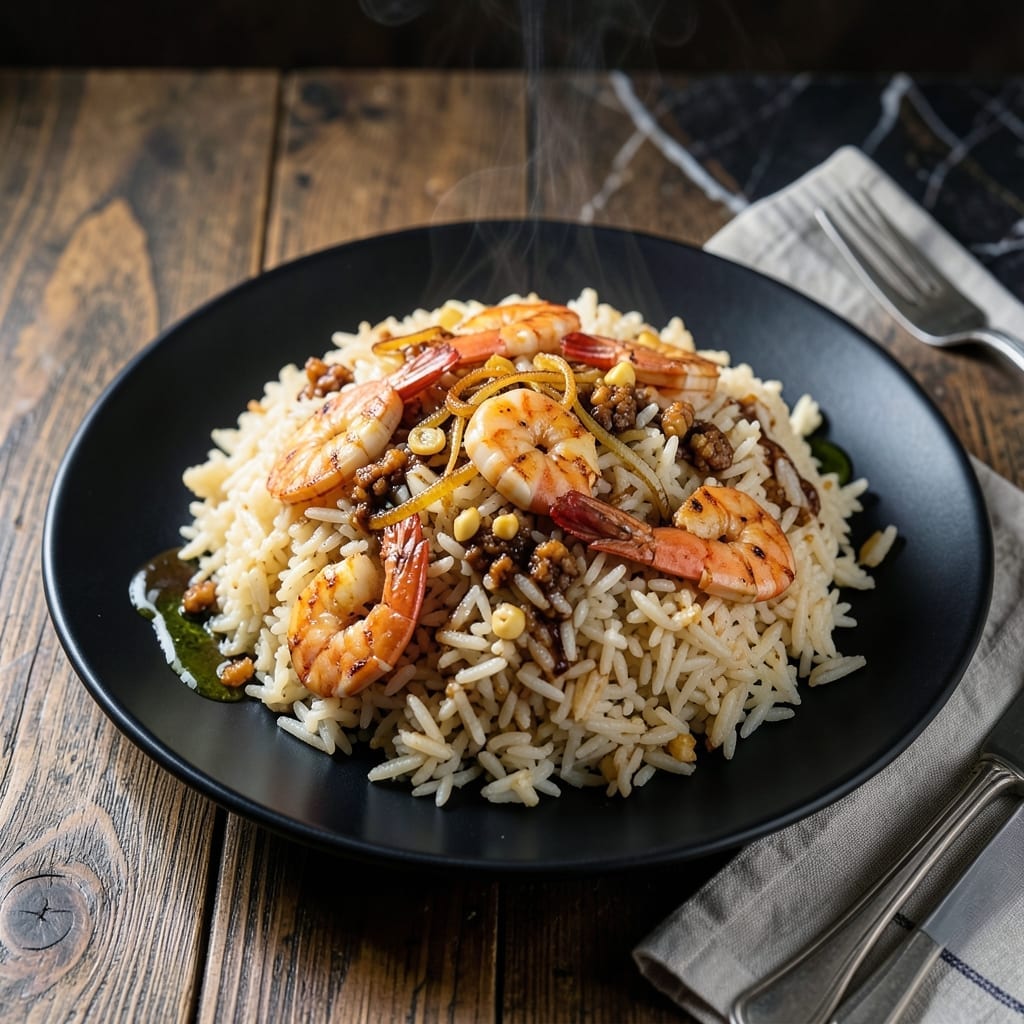
This Malaysian fried rice captures the essence of street food with its bold flavors and charred aromatics. I developed this recipe after testing multiple variations in my small kitchen, focusing on achieving that signature wok hei taste at home.
The key lies in using day-old rice and high heat to create the perfect texture. Traditional ingredients like shrimp paste and light soy sauce build layers of umami, while vegetables add freshness and color.
What results is a dish with smoky depth, tender rice grains, and a balance of savory and slightly sweet notes. The aroma alone will transport you to a bustling night market in Kuala Lumpur.
Serve hot with a fried egg on top for the complete experience. Here’s how to recreate this classic.
Ingredients for Fried Rice Recipe Malaysia
Day-old rice and bold flavors bring this Malaysian street classic to life.
| Ingredient | Amount | Notes |
|---|---|---|
| Day-Old Cooked Rice 🍚 | 4 cups | Jasmine or long-grain preferred |
| Shrimp Paste 🦐 | 1 tbsp | Belacan for authentic flavor |
| Light Soy Sauce 🫒 | 3 tbsp | Low-sodium if preferred |
| Dark Soy Sauce 🫒 | 1 tbsp | For color and depth |
| Garlic Cloves 🧄 | 4 cloves | Minced finely |
| Shallots 🧅 | 2 whole | Thinly sliced |
| Chicken Breast 🍗 | ¾ lb | Boneless, skinless, diced |
| Shrimp 🦐 | ½ lb | Peeled, deveined, chopped |
| Carrots 🥕 | 1 whole | Diced small |
| Green Peas 🌱 | ¾ cup | Fresh or frozen |
| Green Onions 🧅 | 3 whole | Sliced, white and green parts |
| Eggs 🥚 | 4 whole | For topping and mixing in |
| Vegetable Oil 🫒 | 3 tbsp | High smoke point for wok |
| White Pepper 🌶️ | ½ tsp | Freshly ground preferred |
| Sesame Oil 🫒 | 1 tsp | Toasted, for finishing |
The shrimp paste is non-negotiable here. Look for belacan at Asian markets—it’s the soul of the dish. Light and dark soy sauces aren’t interchangeable; the light adds saltiness, the dark gives that caramel color. I grab mine from H Mart or any well-stocked international aisle. For the rice, jasmine is traditional, but any long-grain works as long as it’s a day old (fresh rice turns mushy).
No shrimp paste? A dash of fish sauce plus a pinch of dried shrimp (if you have it) gets you 80% there. Swap chicken for tofu or extra shrimp if that’s what’s on hand. The veggies are flexible—frozen peas and carrots work great (no thawing needed). Don’t skip the white pepper though; it’s the secret to that authentic night market taste.
This keeps 3-4 days in the fridge, but honestly, it’s best eaten fresh. Leftovers? Reheat in a screaming-hot wok with a splash of oil to revive the wok hei. The fried egg on top? Non-negotiable for the full experience.
Why You’ll Love This Recipe
- One Pan Wonder: I toss in day-old rice, shrimp paste, and soy sauces—no fancy prep, just quick stir-frying in one wok.
- Umami Explosion: That combo of garlic, shrimp paste, and dark soy sauce? Ridiculously good, with a depth that lingers.
- Weeknight Hero: Honestly, it’s my go-to for busy evenings—ready before the kids finish arguing over who sits where.
- Budget Stretcher: Between us, leftover rice gets a second life here, and shrimp paste packs flavor for pennies.
Step-by-Step Instructions for Street-Style Wok Charred Aromatics
Here’s the method that delivers that authentic Malaysian wok hei flavor you’re craving.
Step 1: Prep and Heat the Wok
Start by finely mincing the 4 cloves garlic cloves and thinly slicing the 2 whole shallots. Have all your ingredients prepped and within reach—this moves fast. Heat 2 tbsp vegetable oil in a wok over high heat until it shimmers. The oil should be hot enough that a drop of water sizzles violently.
Add the 1 tbsp shrimp paste and stir for 15-20 seconds until it fragrant. This is your flavor base, so don’t let it burn. The aroma should be pungent and nutty, not acrid. Immediately add the minced garlic and sliced shallots, stirring constantly for 30 seconds until they turn light golden brown.
Step 2: Cook the Proteins and Vegetables
Push the aromatics to one side of the wok and add the remaining 1 tbsp vegetable oil. Add the 0.75 lb chicken breast and 0.5 lb shrimp, spreading them out in a single layer. Let them sear undisturbed for 2 minutes until the edges turn opaque and slightly charred.
Stir-fry for another 2-3 minutes until the chicken is cooked through. Add the diced 1 whole carrots and 0.75 cup green peas, tossing everything together for 2 minutes until the carrots soften slightly but still retain a bite. The shrimp should be pink and curled by now.
Step 3: Incorporate the Rice and Sauces
Break up any clumps in the 4 cups day-old cooked rice with your hands and add it to the wok. Stir-fry for 2-3 minutes, pressing the rice against the hot wok surface to create charred bits. This is where the wok hei flavor develops, so keep the heat high.
Drizzle the 3 tbsp light soy sauce and 1 tbsp dark soy sauce evenly over the rice. The dark soy sauce adds color, while the light soy sauce provides saltiness. Add the 0.5 tsp white pepper and mix well. The rice should turn a deep, appetizing brown with visible charred specks.
Step 4: Finish with Eggs and Garnishes
Make a well in the center of the wok and add the 4 whole eggs. Scramble them lightly with a spatula until they’re just set but still slightly runny. Fold the eggs into the rice mixture, ensuring they’re evenly distributed. The eggs should coat the rice grains in a creamy layer.
Turn off the heat and stir in the sliced 3 whole green onions. Drizzle the 1 tsp sesame oil over the top and toss one final time. The green onions should stay vibrant and fresh, adding a pop of color and a mild onion flavor. Serve immediately while hot, with extra green onions on top if desired.
Pro Tips For Making Fried Rice Recipe Malaysia
- Use Cold Rice: Always start with day-old, cold rice—freshly cooked rice turns mushy. I learned this the hard way after my first few batches ended up like porridge.
- Bloom the Shrimp Paste: Cook the shrimp paste in hot oil for 30 seconds before adding garlic to mellow its funk and deepen the flavor. Sounds weird, but it works.
- High Heat Only: Crank the heat to maximum and work in small batches—this gives you that smoky wok hei taste you’d get from a Malaysian street vendor. After burning three batches, I finally figured out low heat just steams the rice.
- Balance the Soy Sauces: Use 1 part dark soy sauce to 2 parts light soy sauce for color without overpowering saltiness. My grandmother swore by this, and she was right.
Common Mistakes When Making This Dish
Using Fresh Rice
Freshly cooked rice contains too much moisture, turning your dish into a mushy mess. I learned this the hard way in my tiny Boston kitchen—it ruined three test batches. Always use day-old jasmine rice that’s been refrigerated overnight. 💡
Skipping Shrimp Paste
This ingredient is non-negotiable for authentic Malaysian flavor. Omitting 1 tbsp belacan leaves your dish tasting flat and inauthentic. If you can’t find it at an Asian market, a mix of fish sauce plus dried shrimp works in a pinch.
Low Heat Cooking
High heat is crucial for achieving wok hei—that smoky, charred aroma. Cooking on medium heat won’t create the necessary caramelization. Crank your burner to high and let the wok get screaming hot before adding oil.
Overcrowding the Wok
Adding all ingredients at once lowers the temperature dramatically. Cook proteins first, remove them, then stir-fry veggies separately. I work in 2-3 batches when needed to maintain proper heat.
Incorrect Soy Sauce
Swapping light and dark soy sauces alters both flavor and appearance. The 3 tbsp light soy sauce provides saltiness while the 1 tbsp dark soy sauce delivers that signature caramel color. Measure carefully.
Neglecting White Pepper
This subtle spice is the secret to authentic taste. Using black pepper instead of 0.5 tsp white pepper changes the flavor profile completely. It’s a small detail that makes a big difference in your final dish. 🌟
Nutrition Facts
Frequently Asked Questions
Why use day-old rice?
Fresh rice has too much moisture, making the dish mushy. Day-old rice is drier and fries up perfectly. It absorbs flavors better and maintains that distinct grain separation.
Can I substitute belacan?
If you can’t find shrimp paste, mix fish sauce with a pinch of dried shrimp. It won’t be identical, but it gets close to the authentic umami depth.
How do I get wok hei at home?
Crank your burner to high heat and let the wok get screaming hot. Press rice against the surface to create charred bits. This smoky aroma is the soul of street-style fried rice.
Can I make this vegetarian?
Swap chicken and shrimp for tofu or extra veggies like bell peppers. Use soy sauce and mushrooms for umami. The technique remains the same.

- Gambia Jollof Rice Recipe: West African One-Pot Spice Fusion - October 5, 2026
- Cream of Wild Rice Soup Recipe Minnesota: Northwoods Creaminess With Foraged Grains - October 5, 2026
- Frozen Cauliflower Fried Rice Recipe: Quick Low-Carb Wok Magic - October 5, 2026