
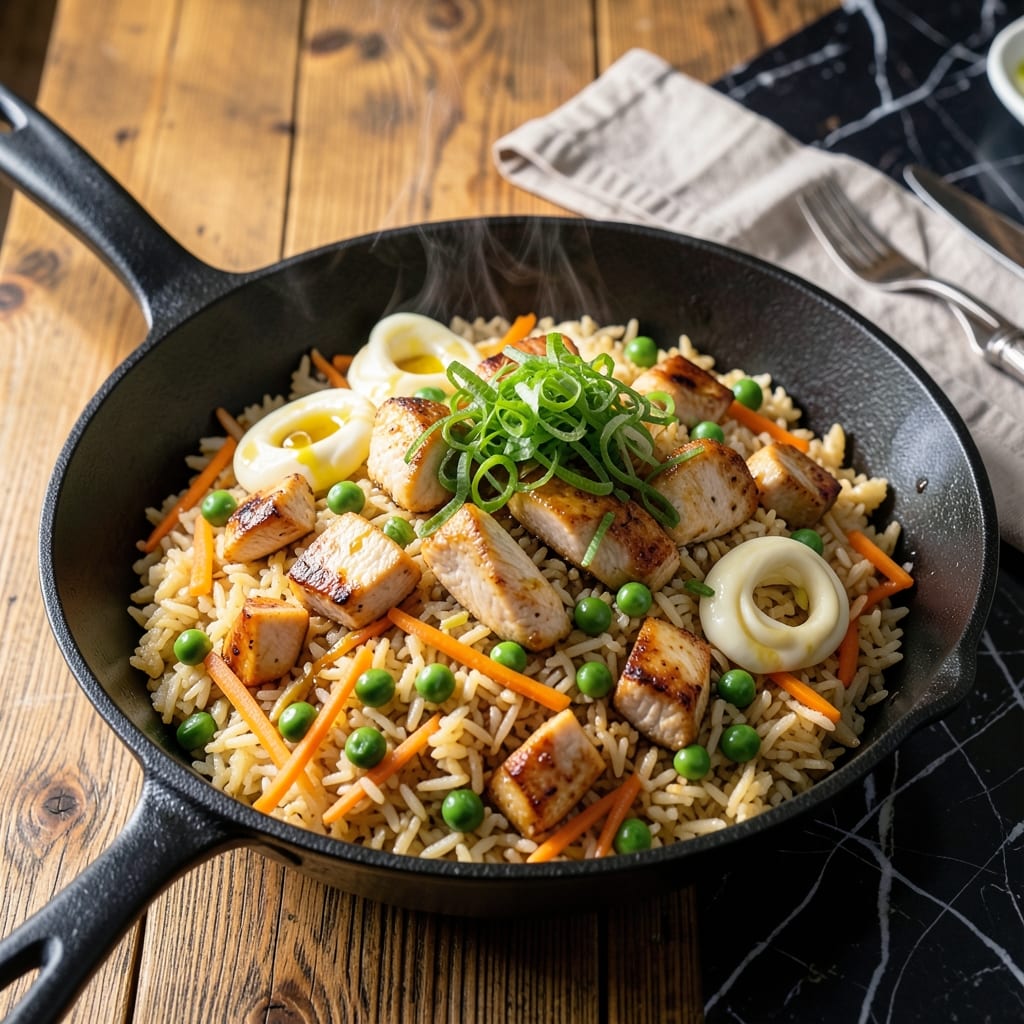
Day-old rice gets a spectacular second life in this takeout-style dish that’s easier to make at home than you’d expect.
This method relies on simple ingredients and high heat to create that signature smoky flavor and tender texture. The key is using cold rice, which fries up fluffy instead of mushy.
You’ll achieve perfectly charred bits with each stir, while the vegetables and protein absorb the rich, savory seasonings. It’s a one-pan solution for a satisfying meal.
Customize with your favorite add-ins or keep it classic. Either way, this delivers on flavor and convenience.
Ingredients for Fryed Rice
Transform day-old rice with a handful of fresh ingredients for takeout-style flavor at home.
| Ingredient | Amount | Notes |
|---|---|---|
| Cooked White Rice 🍚 | 4 cups | Day-old, cold, and dry |
| Large Eggs 🥚 | 3 whole | Beaten for scrambling |
| Vegetable Oil 🫒 | 3 tbsp | High smoke point preferred |
| Carrots 🥕 | ¾ cup | Finely diced, about 2 medium |
| Green Onions 🧅 | ½ cup | Thinly sliced, white and green parts |
| Frozen Peas 🌱 | ¾ cup | Thawed or frozen |
| Garlic Cloves 🧄 | 3 cloves | Minced for maximum flavor |
| Soy Sauce 💧 | 3 tbsp | Low-sodium if preferred |
| Sesame Oil 🫒 | 1 tsp | Toasted variety for depth |
| Ground Black Pepper 🌶️ | ½ tsp | Freshly cracked for best results |
| Salt 🧂 | ½ tsp | Adjust to taste at the end |
| Boneless Chicken Breast 🍗 | ¾ lb | Diced into small pieces |
The rice is non-negotiable—it needs to be cold and dry (freshly cooked rice turns to mush). I always make extra rice the night before just for this. Jasmine or long-grain white works best. For the protein, Costco has great boneless chicken breast deals, but any grocery store works. Look for good color and no added solutions. The vegetables? Fresh is best, but frozen carrots and peas in a pinch save time.
No chicken? Shrimp or tofu swaps in perfectly. Vegetarian? Double the veggies or add edamame for protein. Short on soy sauce? Tamari or coconut aminos are solid substitutes. The sesame oil adds that signature depth—don’t skip it, but half the amount of toasted sesame seeds works if that’s all you’ve got. Green onions can be swapped with regular onions (just dice them small).
Leftovers keep 3-4 days in the fridge, but honestly it’s best fresh. Freeze portions for up to 3 months—just thaw and reheat in a pan with a splash of water. The rice will soften slightly, but the flavor holds up well.
Why You’ll Love This Recipe
- One Pan Wonder: I just toss the cooked rice, eggs, and veggies in one pan—minimal cleanup, maximum flavor.
- Crave-Worthy Bites: The carrots add a sweet crunch while the green onions bring that fresh, zesty pop.
- Weeknight Hero: Honestly, it’s my go-to for busy evenings when I need something fast and filling.
- Leftover Magic: I always make extra—it reheats beautifully for lunch the next day.
Step-by-Step Instructions for Fried Rice
Transform day-old rice into a flavor-packed dish with this straightforward, tested method.
Step 1: Prep Ingredients and Cook the Chicken
Begin by dicing the 0.75 lb boneless chicken breast into small, even pieces. Heat 1 tbsp vegetable oil in a large skillet or wok over medium-high heat until shimmering. Add the chicken and cook for 4-5 minutes, stirring occasionally, until no longer pink and lightly browned.
Season the chicken with 0.25 tsp salt and 0.25 tsp ground black pepper as it cooks. Remove the chicken from the skillet and set it aside. This step ensures the chicken is fully cooked and infused with flavor before combining it with the other ingredients.
Step 2: Scramble the Eggs and Sauté Aromatics
In the same skillet, add another 1 tbsp vegetable oil and heat over medium-high heat. Pour in the beaten 3 whole large eggs and scramble them until just set but still slightly runny. Remove the eggs from the skillet and set aside with the chicken.
Add the remaining 1 tbsp vegetable oil to the skillet. Toss in the 3 cloves minced garlic cloves, 0.75 cup finely diced carrots, and 0.75 cup frozen peas. Sauté for 3-4 minutes until the carrots begin to soften and the garlic is fragrant.
Step 3: Combine Rice and Vegetables
Add the 4 cups cooked white rice to the skillet, breaking up any clumps with your spatula. Stir-fry for 2-3 minutes until the rice is heated through and begins to take on a light golden color. Ensure the rice is evenly distributed and well-coated with the oil and aromatics.
Return the cooked chicken and scrambled eggs to the skillet. Stir everything together gently to avoid breaking up the eggs too much. This step integrates all the components, ensuring every bite is packed with flavor and texture.
Step 4: Season and Finish
Drizzle the 3 tbsp soy sauce and 1 tsp sesame oil over the mixture. Sprinkle with the remaining 0.25 tsp salt and 0.25 tsp ground black pepper. Stir-fry for another 2 minutes until everything is evenly coated and heated through.
Taste and adjust seasoning if needed. The rice should be fragrant and lightly browned, with each grain distinct yet cohesive. Stir in the 0.5 cup thinly sliced green onions, reserving a small handful for garnish if desired.
Pro Tips For Making Fryed Rice
- Use Day-Old Rice: Fresh rice turns mushy in the wok—spread leftover cooked white rice on a tray and refrigerate overnight to dry it out. Sounds weird, but it works: the grains stay separate and fry up perfectly.
- Blast the Heat: High heat is non-negotiable. Crank your burner to max and let the pan get smoking hot before adding oil—this is how you get that classic wok-seared flavor.
- Scramble Eggs First: I learned this the hard way—push the rice to one side, pour beaten eggs into the empty space, and scramble until just set before mixing. Otherwise, they disappear into the rice.
- Prep Veggies Small: Dice carrots and slice green onions thin—about 1/4-inch pieces. Smaller cuts cook through fast in the short fry time and distribute evenly in every bite.
Essential Equipment for Perfect Results
Wok Selection
Invest in a 14-inch carbon steel wok for best heat distribution. I use Made In brand—it heats fast and develops a natural non-stick surface. Avoid non-stick coatings, which can’t handle the high heat needed for that signature wok hei flavor. 🔥
High Heat Source
A gas stove with at least 15,000 BTU output is ideal for achieving proper stir-fry temperatures. Electric burners often lack the power. If using electric, preheat your wok for 5 minutes to get it screaming hot before adding oil.
Essential Utensils
A wok spatula with a long handle is non-negotiable for tossing ingredients. I prefer the stainless steel version from RSVP Endurance. Also keep a ladle nearby for sauces and a wire skimmer for removing food quickly.
Rice Prep Tool
Use a rice paddle to break up cold rice clumps before frying. A bench scraper also works well for this. The goal is to separate grains without mashing them, which is easier with day-old rice that’s been refrigerated overnight.
Oil Dispenser
A squeeze bottle for your vegetable oil gives you better control when adding oil to the wok. I like the OXO Good Grips model. Measure out your 3 tbsp before starting so you can add it quickly during cooking.
Safety Gear
High heat means splattering oil, so keep a silicone apron and long oven mitts handy. I learned this the hard way after a few stray oil drops. Also, ensure your kitchen is well-ventilated—this dish gets smoky with all that stir-frying action.
Nutrition Facts
Frequently Asked Questions
Why does the rice need to be day-old?
Fresh rice contains too much moisture, causing it to turn mushy when fried. Day-old rice is drier, allowing it to fry up fluffy and separate easily for that perfect texture.
Can I use brown rice instead of white?
Yes, but cook it ahead and chill completely first. Brown rice has a chewier texture and nuttier flavor that works well, though it may need 1-2 extra minutes in the wok.
How do I prevent my fried rice from getting soggy?
Use high heat and cook in small batches. Overcrowding the pan steams the rice instead of frying it. Also, ensure all ingredients are dry before adding them to the wok.
What’s the best substitute for soy sauce?
Try tamari for a gluten-free option or coconut aminos for a milder taste. Both provide similar savory depth, though you may need slightly less as they can be saltier.

- Jollof Rice Sauce Recipe: West African Tomato and Spice Infusion - September 25, 2026
- Japanese Rice Soup Recipe: Umami-Rich Comfort in a Bowl - September 25, 2026
- Homemade Cream Of Rice Recipe: Silk-Smooth Breakfast in Minutes - September 25, 2026