
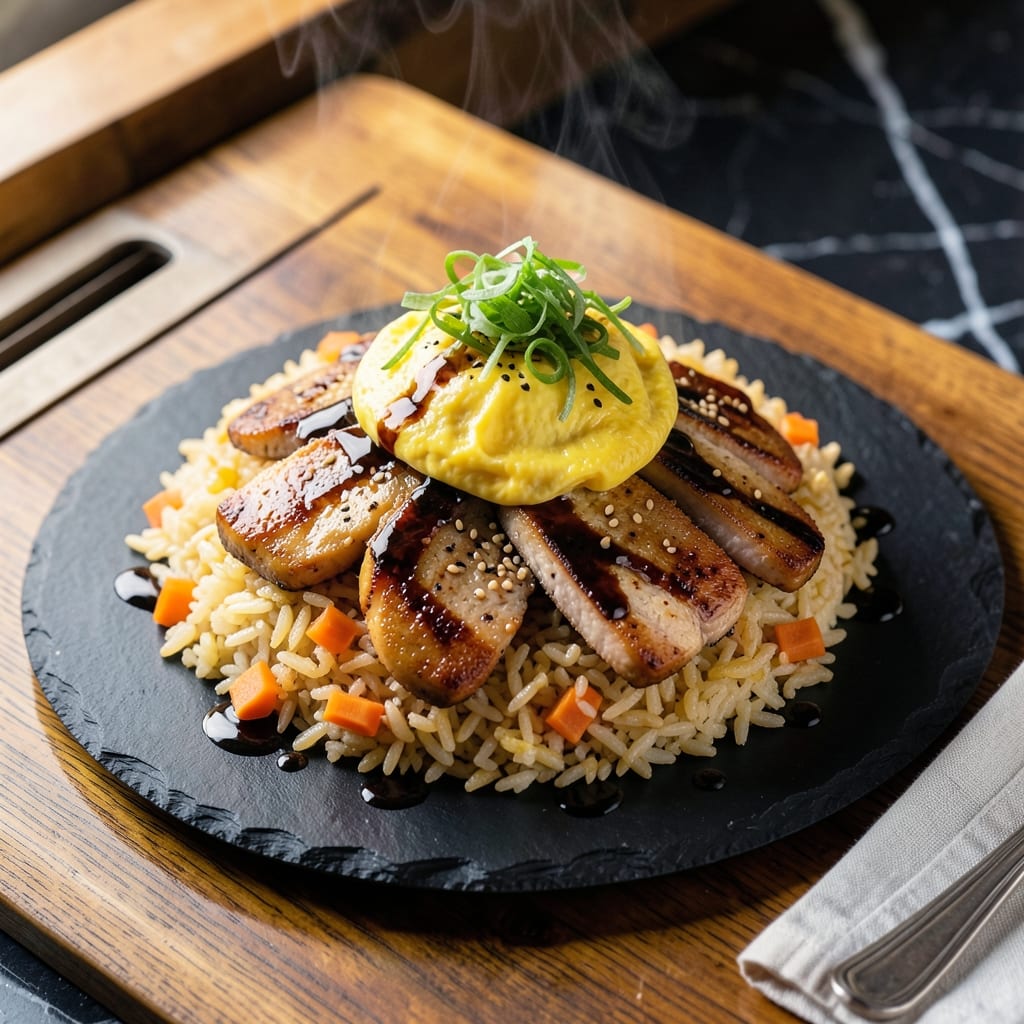
Recreating that signature Fuji steakhouse flavor at home is simpler than you might think. This recipe captures the essence of hibachi-style cooking with tender rice, crisp vegetables, and perfectly seasoned protein.
I developed this method after testing multiple variations to achieve that restaurant-quality texture. The key is using day-old rice and cooking everything at high heat for that distinctive char and smoky aroma.
The result is a dish with perfectly seasoned components that come together in a satisfying, flavor-packed meal. Each bite delivers the familiar taste of your favorite Japanese steakhouse.
Serve it as a main course or alongside your favorite proteins for a complete hibachi experience. The technique works with any combination of ingredients you prefer.
Ingredients for Fuji Japanese Steakhouse Fried Rice
Pantry staples meet fresh produce for that signature hibachi flavor at home.
| Ingredient | Amount | Notes |
|---|---|---|
| Day-Old Cooked White Rice 🍚 | 4 cups | Chilled overnight for best texture |
| Soy Sauce 🫙 | ¼ cup | Low-sodium preferred for control |
| Sesame Oil 🫒 | 2 tbsp | Toasted variety for depth |
| Vegetable Oil 🫒 | 3 tbsp | High smoke point essential |
| Large Eggs 🥚 | 3 whole | Beaten until frothy |
| Carrots 🥕 | 2 whole | Small dice, uniform pieces |
| Zucchini 🥒 | 1 whole | Small dice, seeds removed |
| White Onion 🧅 | 1 whole | Finely diced for even cooking |
| Garlic Cloves 🧄 | 4 cloves | Minced for maximum flavor |
| Green Onions 🌱 | 4 whole | Thinly sliced, green parts only |
| Frozen Peas 🌱 | ¾ cup | Thawed and drained |
| Boneless Chicken Thighs 🍗 | 1 lb | Cut into small uniform pieces |
| Salt 🧂 | 1 tsp | Diamond Crystal kosher preferred |
| Ground Black Pepper 🌶️ | ½ tsp | Freshly ground for best flavor |
| Butter 🧈 | 2 tbsp | Unsalted, for finishing |
The rice is non-negotiable here—day-old, chilled overnight (fresh rice turns to mush). I grab mine from Trader Joe’s or make a big batch the night before. For the soy sauce, Kikkoman low-sodium gives you the right balance without overpowering. The sesame oil? Kadoya brand has that perfect toasty aroma. If you’re adding protein, chicken thighs stay juicier than breasts at high heat.
No chicken? Shrimp or beef work great—just cook them separately first. Out of zucchini? Mushrooms or bell peppers add nice texture. Fresh out of green onions? Chives at half the amount get you close. The key is cutting everything the same size so it cooks evenly. And don’t skip the high smoke point oil—peanut oil works if you’re not using vegetable.
Leftovers reheat beautifully in a skillet—add a splash of water to steam. Keeps 3-4 days in the fridge, freezes for 2 months. I always make extra for lunches (the flavors deepen overnight).
Why You’ll Love This Recipe
- One Pan Wonder: I toss the day-old rice, eggs, and a splash of soy sauce in my wok and 15 minutes later it’s ready—no extra dishes, no fuss.
- Umami Bomb: That first bite with the sesame oil aroma and the salty-sweet soy sauce hitting the rice? Ridiculously good.
- Weeknight Lifesaver: Between us, this is my Tuesday-night hero when I need something fast that still feels special.
- Budget Stretch: Honestly, it turns leftover rice and a few eggs into a meal that feels like a restaurant splurge without the bill.
Step-by-Step Instructions for Hibachi-Style Fried Rice
This method delivers that signature smoky flavor and perfect texture you expect from a Japanese steakhouse.
Step 1: Prep and Cook the Chicken and Vegetables
Heat 1 tablespoon vegetable oil in a wok or large skillet over medium-high heat until it shimmers. Add the 1 lb boneless chicken thighs and cook for 5-6 minutes, stirring occasionally, until lightly browned and cooked through. Remove from the pan and set aside.
In the same pan, add another 1 tablespoon vegetable oil. Toss in the finely diced white onion, small-diced carrots, and small-diced zucchini. Stir-fry for 4-5 minutes until the vegetables are tender-crisp. Add the minced garlic cloves and cook for 30 seconds until fragrant.
Step 2: Scramble the Eggs and Combine Ingredients
Push the vegetables to one side of the pan and add the remaining 1 tablespoon vegetable oil. Pour in the 3 beaten large eggs and scramble until just set but still slightly runny. This ensures they’ll finish cooking while blending seamlessly into the rice.
Add the cooked chicken back to the pan along with the thawed and drained frozen peas. Stir everything together and cook for 1-2 minutes to heat through. The peas should be bright green and warm, not mushy.
Step 3: Incorporate the Rice and Seasonings
Break up any clumps in the 4 cups day-old cooked white rice with your hands and add it to the pan. Drizzle the 0.25 cup soy sauce and 2 tbsp sesame oil evenly over the rice. Stir-fry for 3-4 minutes until the rice is fully heated through and starting to crisp slightly in spots.
Season with 1 tsp salt and 0.5 tsp ground black pepper, adjusting to taste. The rice should be uniformly coated with a light golden color from the soy sauce, and each grain should be separate, not clumped together.
Step 4: Finish with Butter and Green Onions
Remove the pan from heat and stir in the 2 tbsp butter until melted. This adds a rich, velvety finish that ties all the flavors together. The butter should glisten slightly on the surface of the rice.
Finally, fold in the thinly sliced green onions, reserving a small handful for garnish. The green onions should wilt slightly but retain their vibrant color. Transfer to a serving platter, top with the remaining green onions, and serve immediately while hot.
Pro Tips For Making Fuji Japanese Steakhouse Fried Rice
- Use Cold Rice: Day-old rice from the fridge works best—it’s drier and fries up fluffier instead of turning mushy. I learned this the hard way after making gluey rice with fresh-cooked batches.
- Crank the Heat: Get your wok or skillet screaming hot before adding oil and rice. Sounds aggressive, but it’s the only way to get that classic steakhouse sear on each grain.
- Scramble Eggs First: Push the rice to one side, add a little more oil, then scramble the eggs in the empty space before mixing. This keeps them light and distinct instead of rubbery.
- Finish with Sesame Oil: Drizzle the sesame oil at the very end, off the heat. After burning three batches, I finally figured out it loses its nutty aroma if cooked too long.
Common Mistakes When Making This Recipe
Using Fresh Rice
Freshly cooked rice contains too much moisture, which turns your fried rice into a mushy mess. I learned this the hard way during my early testing. Always use day-old, chilled rice—it dries out in the fridge, giving you that perfect, separate grain texture. 💡
Overcrowding the Pan
Adding all ingredients at once lowers the pan temperature, causing steaming instead of searing. Cook in batches if needed—I often do the chicken first, then veggies. This ensures everything gets that hibachi-style char we love.
Skipping High Heat
Medium heat won’t give you that signature smoky flavor. Crank it to medium-high or high and let your wok or skillet get screaming hot before adding oil. The Maillard reaction needs high heat to create those complex flavors.
Underseasoning the Rice
Taste as you go! I found that 1 tsp salt is just the starting point—some brands of soy sauce are saltier than others. Add seasoning gradually, tasting after each addition. The flavors should pop with every bite.
Neglecting the Eggs
Overcooked eggs turn rubbery. Scramble them just until set but still slightly runny—they’ll finish cooking when mixed with the hot rice. I push the veggies aside to create a clear space for the eggs to cook properly.
Forgetting the Butter
That final 2 tbsp butter might seem small, but it adds a luxurious finish that ties all the flavors together. Skip it, and your rice will taste flat. Stir it in off heat so it melts evenly without burning.
Nutrition Facts
Frequently Asked Questions
Can I use fresh rice instead of day-old?
No, fresh rice contains too much moisture. Day-old rice dries out, preventing a mushy texture. Spread freshly cooked rice on a tray and refrigerate overnight for best results.
What’s the best way to cut the vegetables?
Dice all vegetables into small, uniform pieces (about ¼-inch). This ensures even cooking and the signature hibachi-style texture. Use a sharp knife for clean cuts.
Can I substitute shrimp for the chicken?
Cook 1 lb peeled shrimp separately first, as they cook faster than chicken. Add them back at the end to avoid overcooking.
Why does my rice taste bland?
Underseasoning is a common issue. Taste as you go and adjust with more soy sauce or salt. The final 2 tbsp butter adds richness that enhances all flavors.

- Ground Beef Rice and Beans Recipe: Slow-Simmered Savory Harmony - October 17, 2026
- Guyanese Fried Rice Recipe: Caribbean Spice With Wok-Charred Aromatics - October 17, 2026
- Hakka Thunder Tea Rice Recipe: Wok-Charred Herbal Infusion - October 17, 2026