
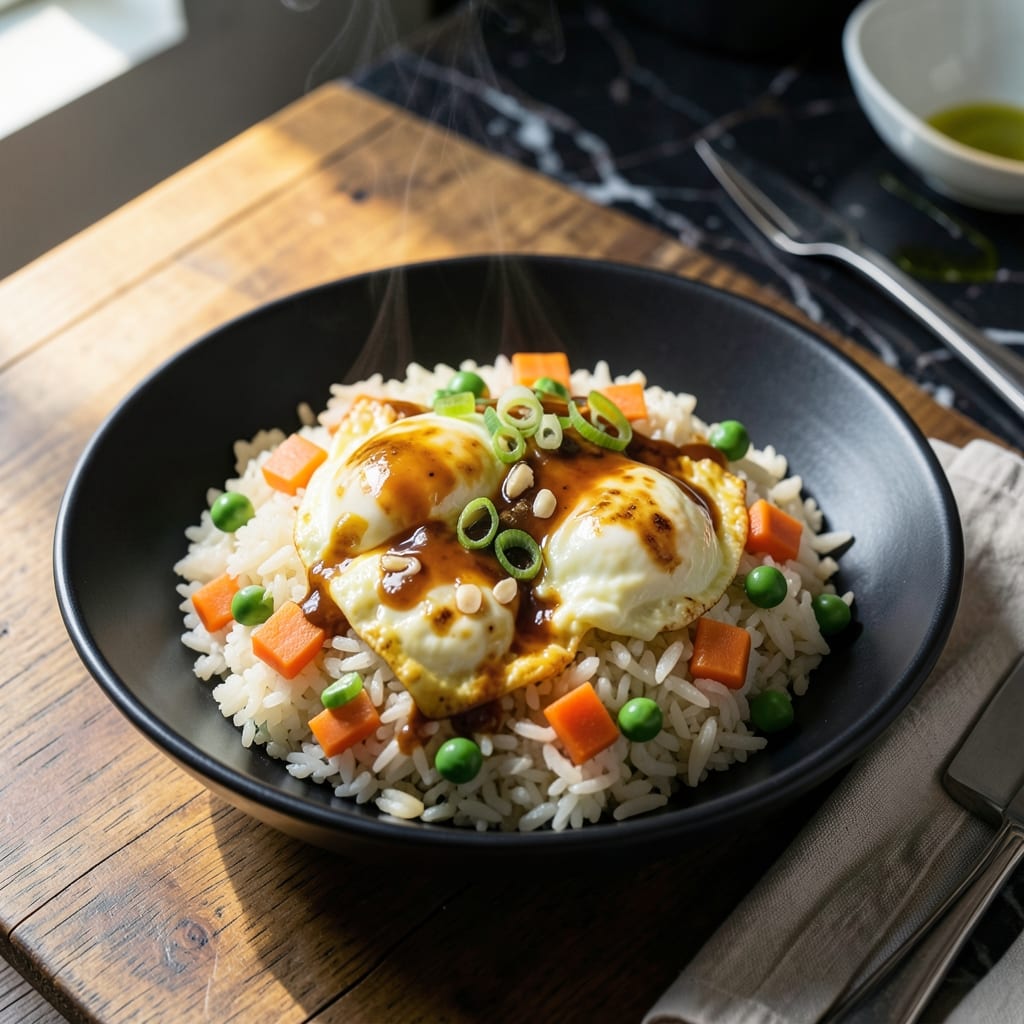
This Tokyo-style fried rice brings the sophisticated flavors of Geisha House to your kitchen. The dish combines tender rice with delicate vegetables and a subtle umami depth that defines Japanese comfort food.
With simple ingredients and precise technique, you’ll achieve perfectly balanced textures and flavors. The result is elegant, satisfying, and ready in under 30 minutes with minimal effort.
Ingredients for Geisha House Fried Rice
Elegant Tokyo-style fried rice starts with these carefully selected ingredients for authentic flavor.
| Ingredient | Amount | Notes |
|---|---|---|
| Jasmine Rice 🍚 | 3 cups | Day-old, cooked and chilled |
| Large Eggs 🥚 | 2 whole | Lightly beaten for scrambling |
| Carrots 🥕 | 1 whole | Finely diced, about 1 cup |
| Green Onions 🧅 | 4 whole | Thinly sliced, white and green parts separated |
| Frozen Green Peas 🌱 | ¾ cup | Thawed under cold water |
| Garlic Cloves 🧄 | 3 cloves | Minced finely for aroma |
| Fresh Ginger 🌿 | 1 tbsp | Peeled and grated |
| Soy Sauce 🥢 | 3 tbsp | Low-sodium preferred for balance |
| Sesame Oil 🫒 | 1 tbsp | Toasted for depth |
| Neutral Cooking Oil 💧 | 2 tbsp | Vegetable or canola for high heat |
| White Pepper 🌶️ | ½ tsp | Ground for subtle heat |
| Salt 🧂 | ½ tsp | Kosher or sea salt |
| Shiitake Mushrooms 🍄 | 4 whole | Diced, fresh or rehydrated dried |
| Nori Seaweed Sheet 🌊 | 1 sheet | Thinly sliced for garnish |
The rice is critical here. Jasmine rice cooked a day ahead and chilled prevents mushiness—sushi rice works too but has a stickier texture. For the mushrooms, fresh shiitake from an Asian market have superior umami, but dried (rehydrated) are a solid backup. Kikkoman soy sauce is a reliable brand, though I prefer the slightly funkier Yamasa for depth.
No shiitake? Cremini or white button mushrooms work in a pinch (just halve the quantity). Tamari instead of soy sauce adds richness and is gluten-free. The nori is optional but adds that signature Geisha House touch—find it at Whole Foods or any Asian grocery. If you’re missing sesame oil, toasted peanut oil offers a different but complementary nutty note.
Cooked rice holds in the fridge for 3-4 days before use. The finished dish keeps well for 2-3 days refrigerated but is best fresh. Freezing isn’t recommended—the texture suffers. Always slice nori just before serving to maintain crispness.
Why You’ll Love This Recipe
- One Pan Meal: I toss everything—jasmine rice, eggs, and those bright pops of carrot and pea—into a single skillet. Honestly, cleanup’s a breeze.
- Umami Bomb: The soy-garlic combo hits the rice just right, and the green onions add that fresh finish I crave.
- Lunchbox Hero: I pack leftovers for work, and it reheats like a dream—still fluffy, still flavorful.
- Pantry MVP: Frozen peas and carrots mean I can make this anytime without a last-minute grocery run.
Step-by-Step Instructions for Tokyo-Style Wok-Fried Elegance
Master the wok technique and timing for authentic texture and layered umami flavors.
Step 1: Prepare and Heat the Wok
Place your wok over high heat and add 2 tablespoons neutral cooking oil. Swirl to coat the surface evenly. The oil should shimmer but not smoke—this is the ideal temperature for stir-frying.
While the wok heats, have all your ingredients prepped and within reach. This dish moves quickly, and you won’t have time to chop or measure mid-cooking. The jasmine rice must be cold and dry to prevent mushiness in the final dish.
Step 2: Scramble the Eggs and Aromatics
Pour in the 2 whole large eggs and let them set for 10 seconds before scrambling with a spatula. The eggs should form soft, slightly runny curds—this adds richness to the rice without making it greasy.
Push the eggs to one side of the wok, then add the minced garlic cloves, grated fresh ginger, and the white parts of the 4 whole green onions. Stir-fry for 30 seconds until fragrant but not browned. The aroma will be intense—this is the foundation of your flavor base.
Step 3: Stir-Fry Vegetables and Rice
Add the finely diced carrots, diced shiitake mushrooms, and 0.75 cup frozen green peas. Stir-fry for 2-3 minutes until the vegetables soften slightly and the mushrooms release their moisture.
Increase the heat to maximum and add all 3 cups jasmine rice. Break up any clumps with your spatula and press the rice into the wok surface. Let it sit undisturbed for 20 seconds to develop a slight crust—this adds texture contrast. Stir-fry for another 2 minutes until the rice is heated through.
Step 4: Season and Finish
Drizzle the 3 tablespoons soy sauce and 1 tablespoon sesame oil evenly over the rice. Sprinkle with 0.5 teaspoon salt and 0.5 teaspoon white pepper. Toss everything together vigorously for 1-2 minutes until the rice is uniformly coated and the liquid has been absorbed.
Taste and adjust seasoning if needed. The rice should have a glossy sheen from the oils and a balanced savory depth. The grains should be separate and tender, with occasional crispy bits from the wok.
Step 5: Garnish and Serve
Remove the wok from heat and fold in the green parts of the green onions and the thinly sliced nori seaweed sheet. These final additions add freshness and a subtle oceanic note that elevates the dish.
Transfer to a serving platter immediately. The contrast of colors—vibrant green peas, orange carrots, dark nori, and golden rice—should be striking. Serve hot, with extra soy sauce on the side if desired.
Pro Tips For Making Geisha House Fried Rice
- Chill the Rice: Use day-old jasmine rice straight from the fridge—fresh rice turns to mush in the wok. I learned this the hard way after making a sad, sticky pan of fried rice.
- Beat Eggs Thin: Whisk the eggs until they’re almost watery, then scramble them in the wok first before adding other ingredients. Sounds weird, but it works for that classic silky texture.
- High Heat Only: Crank the burner to max and keep the wok screaming hot the whole time. After burning three batches, I finally figured out that lukewarm heat steams the rice instead of frying it.
- Thaw Peas First: Rinse the frozen green peas under cold water for 30 seconds to thaw slightly—this keeps them from turning the whole dish watery when they hit the hot pan.
Common Mistakes When Making geisha house fried rice
Using Fresh Rice
Never use freshly cooked rice for this dish—it’s the fastest way to end up with a mushy, clumpy mess. The jasmine rice must be 1-2 days old and thoroughly chilled, which dries out the grains and prevents them from sticking together during stir-frying. 💡
Overcrowding the Wok
Resist the urge to dump all ingredients in at once. Stir-frying works best in batches, especially with 3 cups of rice. If your wok isn’t large enough, cook in 2 batches to maintain high heat and proper texture. Crowding steams the rice instead of frying it.
Skipping High Heat
This recipe demands high heat to achieve that signature wok hei (breath of the wok) flavor. If your home stove isn’t powerful, preheat the wok for 5 minutes and use the largest burner. Without proper heat, you’ll miss the smoky depth that defines Geisha House’s version.
Overcooking the Eggs
Scramble the 2 eggs just until they’re softly set—about 10-15 seconds. Overcooked eggs turn rubbery and lose their ability to coat the rice grains. Push them to the side of the wok and remove them temporarily if they’re cooking too quickly.
Neglecting the Aromatics
Burnt garlic or ginger will make your dish bitter. Stir-fry them for only 30 seconds until fragrant, not browned. The white parts of the green onions should soften but retain some bite. This step builds the flavor foundation.
I learned this the hard way—once the aroma hits, move fast to the next step. 🔥
Underseasoning
Taste as you go! The 3 tablespoons soy sauce might need a boost with extra salt or a splash of sesame oil. Japanese fried rice leans subtler than Chinese versions, but it still needs bold, balanced seasoning. Adjust in small increments at the end.
Nutrition Facts
Frequently Asked Questions
Can I use a different type of rice?
Yes, but texture will vary. Sushi rice works but is stickier, while basmati stays more separate. Jasmine gives the most authentic result for this dish.
What if I don’t have a wok?
Use a large skillet with high sides. Heat it over medium-high heat and cook in batches to avoid steaming the rice. The key is maintaining high heat throughout.
Can I make this dish vegetarian?
Skip the eggs and add 1 cup diced tofu or extra vegetables like bell peppers. Use vegetable oil and ensure your soy sauce is vegan.
How do I get that smoky flavor at home?
Preheat your wok or skillet for 5 minutes on high heat before adding oil. This mimics wok hei (breath of the wok) and adds depth.

- Gobi Fried Rice Recipe: Spiced Cauliflower Wok Delight - October 8, 2026
- Glutinous Rice Roll Recipe: Chewy Pillows With Savory Fillings - October 8, 2026
- Garlic Jasmine Rice Recipe: Fragrant Grains with Aromatic Depth - October 8, 2026