
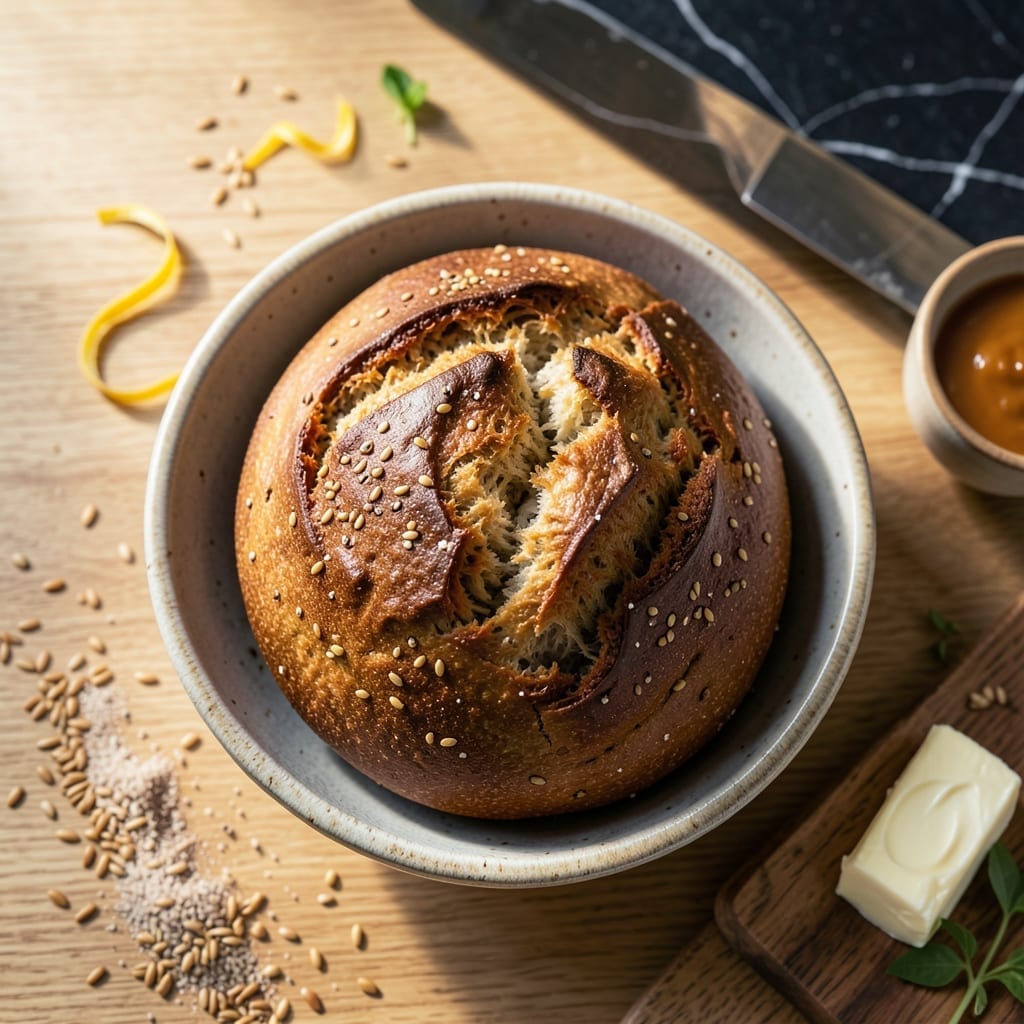
This homemade loaf delivers the hearty texture and nutty flavor that gluten-free bread often misses. Brown rice flour provides a robust base, while carefully selected binders ensure proper structure without gumminess.
With a straightforward mixing method and precise baking time, you’ll achieve a dense yet satisfying loaf that toasts beautifully. Perfect for sandwiches or served warm with butter.
Ingredients for Gluten Free Brown Rice Bread
These carefully selected gluten-free ingredients create a dense, nutty loaf with perfect texture and structure.
| Ingredient | Amount | Notes |
|---|---|---|
| Brown Rice Flour 🌾 | 2 ½ cups | Fine grind for best texture |
| Tapioca Starch 🌾 | ¾ cup | Adds chewiness to crumb |
| Almond Flour 🌰 | ½ cup | Blanched for neutral flavor |
| Ground Flaxseed 🌿 | ¼ cup | Mixed with water as binder |
| Psyllium Husk Powder 🌿 | 2 tbsp | Essential for structure |
| Apple Cider Vinegar 🍏 | 1 tbsp | Activates leavening reaction |
| Maple Syrup 🍁 | 2 tbsp | Natural sweetener for balance |
| Olive Oil 🫒 | ¼ cup | Mild flavor preferred |
| Warm Water 💧 | 1 ¼ cups | 105-110°F for proper activation |
| Baking Powder 🧂 | 1 tbsp | Aluminum-free for clean taste |
| Sea Salt 🧂 | 1 tsp | Fine grain for even distribution |
| Xanthan Gum 🌿 | ½ tsp | Optional for improved elasticity |
Brown rice flour is the foundation here. Bob’s Red Mill offers a consistent fine grind that works reliably in gluten-free baking. The psyllium husk powder is non-negotiable—look for it in the bulk section at Whole Foods or natural food stores. Almond flour adds richness and moisture; Costco’s Kirkland brand provides excellent quality at a reasonable price. Ensure your baking powder is fresh and aluminum-free for optimal rise.
No almond flour? Sunflower seed flour works as a substitute, though it may darken the loaf slightly. For the flaxseed binder, chia seeds at a 1:1 ratio can stand in. If you can’t find psyllium husk powder, whole psyllium husks ground in a coffee grinder will work in a pinch. The maple syrup can be replaced with agave nectar or date syrup without affecting texture.
Store all dry ingredients in airtight containers in a cool, dark place for up to 3 months. The baked loaf keeps well wrapped at room temperature for 3-4 days or frozen for 1 month. Slice before freezing for easy toasting straight from the freezer.
Why You’ll Love This Recipe
- One Bowl Wonder: I just dump the dry ingredients—brown rice flour, tapioca starch, the works—mix, and go. No fancy steps.
- Nutty Richness: The almond flour gives it this warm, toasty depth that makes it taste way more indulgent than it is.
- Sandwich Savior: Finally, a gluten-free loaf that holds up to PB&J or avocado without crumbling into sad bits.
- Fridge Friendly: Bakes a sturdy loaf that stays fresh for days, so I actually use the whole thing before it goes stale.
Step-by-Step Instructions for Gluten Free Brown Rice Bread
Precision in mixing and timing is essential to achieve the ideal dense, nutty texture.
Step 1: Activate the Gel-Like Binders
In a large mixing bowl, whisk together the 2.5 cups Brown Rice Flour, 0.75 cup Tapioca Starch, 0.5 cup Almond Flour, 1 tbsp Baking Powder, 1 tsp Sea Salt, and 0.5 tsp Xanthan Gum. This dry blend creates your foundation with balanced structure and flavor.
In a separate bowl, combine the 0.25 cup Ground Flaxseed with the 1.25 cups Warm Water and let it sit for 5 minutes until it thickens into a gel-like consistency. This flaxseed mixture acts as a crucial binder in gluten-free baking.
Step 2: Create the Wet Mixture
To the flaxseed gel, add the 2 tbsp Psyllium Husk Powder, 1 tbsp Apple Cider Vinegar, 2 tbsp Maple Syrup, and 0.25 cup Olive Oil. Stir vigorously for 30 seconds until the psyllium husk begins to thicken the mixture noticeably.
The apple cider vinegar activates the baking powder, while the psyllium husk provides essential structure. You’ll see the mixture transform from liquid to a more viscous, elastic consistency as the psyllium absorbs moisture.
Step 3: Combine Wet and Dry Ingredients
Pour the wet mixture into the dry ingredients. Using a sturdy silicone spatula, fold everything together until just combined. The dough will be thick and sticky—this is normal for gluten-free bread batter.
Be careful not to overmix, as this can lead to a dense, gummy texture. The batter should hold its shape when scooped but still be slightly tacky to the touch. If it seems too thick, resist the urge to add more liquid.
Step 4: Proof and Bake
Transfer the batter to a greased 9×5-inch loaf pan, smoothing the top with wet fingers. Cover with a damp towel and let it proof in a warm place for 45-60 minutes. The dough should rise slightly and develop small bubbles on the surface.
Preheat your oven to 350°F during the last 15 minutes of proofing. Bake for 55-65 minutes until the top is golden brown and the internal temperature reaches 205°F. The loaf should sound hollow when tapped on the bottom.
Step 5: Cool Completely Before Slicing
Remove the bread from the pan and let it cool on a wire rack for at least 2 hours. This cooling period is crucial—slicing too soon will result in a gummy texture as the structure sets during cooling.
The finished loaf should have a firm crust with a dense, moist crumb. The nutty flavor from the brown rice flour and almond flour becomes more pronounced as it cools, delivering that characteristic rich taste promised in the title.
Pro Tips For Making Gluten Free Brown Rice Bread
- Hydrate Psyllium First: Mix psyllium husk powder with warm water and let it sit for 5 minutes before adding to dry ingredients—it thickens into a gel that mimics gluten’s elasticity, and I learned this the hard way when my first loaf crumbled apart.
- Weigh Your Flours: Brown rice flour compacts easily, so 1 cup scooped can weigh 20% more than 1 cup spooned. Use a kitchen scale for accuracy, or your bread might turn out dense and gummy.
- Skip Cold Eggs: If your recipe calls for eggs, use room-temperature ones. Cold eggs can seize the flaxseed and almond flour, making the batter clumpy instead of smooth.
- Bake Low and Slow: Set your oven to 350°F and bake for 50–55 minutes. Higher heat browns the crust too fast while the center stays raw, and gluten-free loaves need that gentle, even heat to set properly.
Dietary Considerations for This gluten free brown rice bread
Gluten-Free Safety
Always verify your ingredients are certified gluten-free, as cross-contamination can occur during processing. I trust Bob’s Red Mill for their dedicated facility. Even oats labeled gluten-free may contain traces if processed in shared equipment.
Nut Allergy Note
This recipe contains almond flour, so it’s unsuitable for those with tree nut allergies. For a nut-free version, replace it with sunflower seed flour or sorghum flour. The texture will be slightly denser but equally delicious.
Vegan Adaptations
This loaf is naturally egg-free and dairy-free, making it perfect for vegan diets. The flaxseed and psyllium husk combination provides excellent binding without animal products. I’ve found it works beautifully in both sweet and savory applications.
Low-FODMAP Option
To make this low-FODMAP, omit the maple syrup and replace with 1 tbsp rice malt syrup. Also, reduce the almond flour to ¼ cup or substitute with pepita flour. These changes maintain structure while being gentler on digestion.
Sugar-Free Variation
For a sugar-free version, replace the maple syrup with 1 tbsp erythritol or monk fruit sweetener. The loaf will be slightly less golden but still flavorful. I prefer Lakanto brand for its clean taste.
Storage Tips
This bread stays fresh at room temperature for 3-4 days in an airtight container. For longer storage, slice and freeze for up to 1 month. Toast slices directly from frozen for best results. 💪
Nutrition Facts
Frequently Asked Questions
Can I replace brown rice flour with white rice flour?
Yes, but expect a milder flavor and slightly lighter texture. Brown rice flour adds the nutty taste and denser crumb. If substituting, use the same 2.5 cups measurement.
Why did my loaf collapse after baking?
This usually happens if the psyllium husk didn’t gel properly or the bread wasn’t baked long enough. Ensure your 2 tbsp psyllium thickens the wet mix and bake until internal temp hits 205°F.
How can I make this bread less dense?
For a lighter texture, add 1/2 tsp more baking powder or whip the wet ingredients for 1 minute before combining. The extra air helps create a softer crumb.
Can I bake this in a different pan size?
A 8×4-inch pan will make a taller loaf—reduce baking time by 5-10 minutes. Avoid glass pans as they may cause uneven browning. Always check internal temperature.

- Fresh Turmeric Rice Recipe: Golden Grains with Earthy Warmth - October 7, 2026
- French Onion Brown Rice Recipe: Umami-Rich Grains With Caramelized Depth - October 7, 2026
- Rice Noodle Soup Recipe: Aromatic Broth with Silky Strands - October 7, 2026