
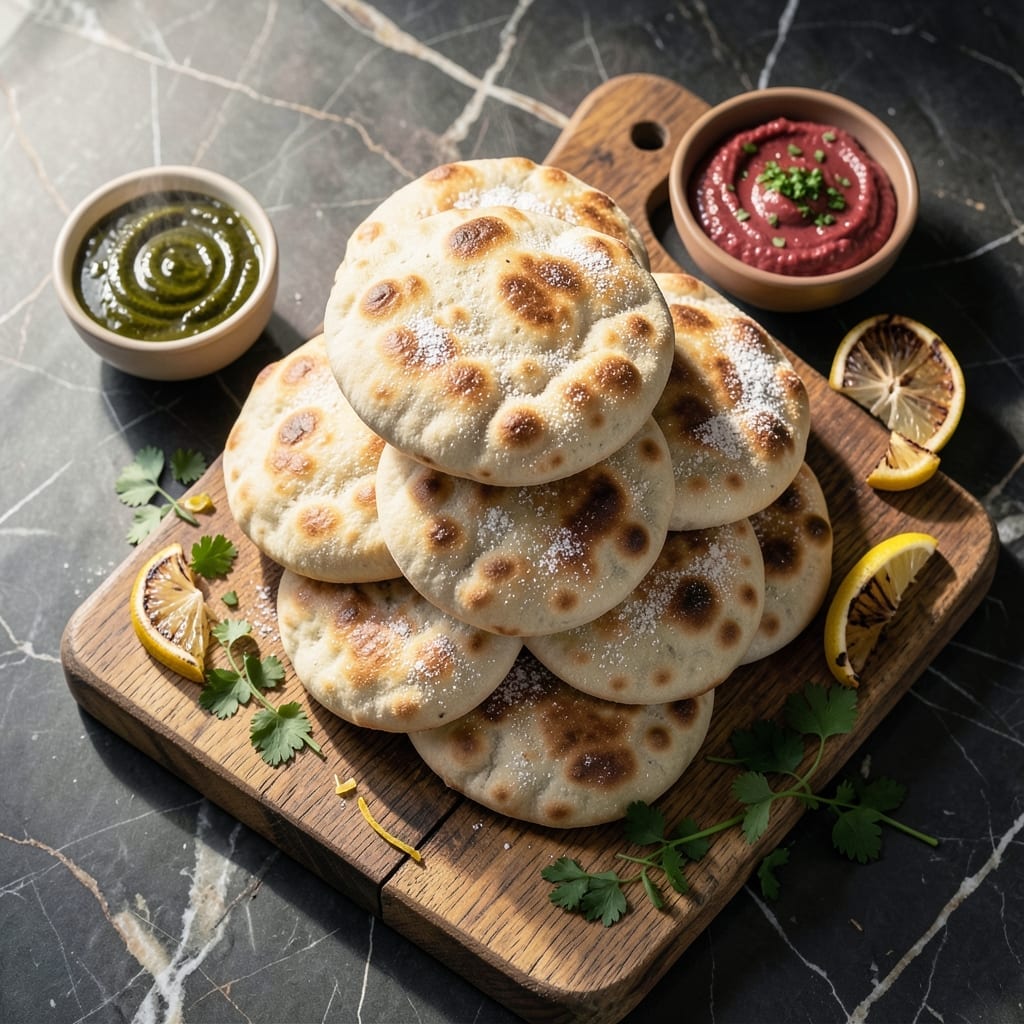
I developed this gluten-free pita bread after years of testing to achieve the same soft and pillowy texture as traditional versions. The key is using rice flour for a light, flexible dough that holds its shape.
This recipe requires no special equipment—just a mixing bowl, rolling pin, and skillet. The dough comes together quickly and bakes in under 5 minutes per pita, making it perfect for weeknight cooking.
What you’ll get are warm, pliable flatbreads with a slight chew, ideal for stuffing or dipping. They stay fresh for days and reheat beautifully in seconds.
Vegan, allergy-friendly, and ready to elevate your meals without compromise.
Ingredients for Gluten Free Pita Bread Recipe Rice Flour
Nine simple ingredients transform into soft, pillowy gluten-free pita bread with perfect chew and flexibility.
| Ingredient | Amount | Notes |
|---|---|---|
| White Rice Flour 🌾 | 2 cups | Fine, well-sifted for best texture |
| Tapioca Starch 🌾 | ½ cup | Also called tapioca flour |
| Xanthan Gum 🧪 | 1 tsp | Essential for elasticity |
| Active Dry Yeast 🍞 | 2 ¼ tsp | One packet, check expiration |
| Granulated Sugar 🧂 | 1 tbsp | Feeds the yeast |
| Warm Water 💧 | 1 ¼ cups | 110°F, not hotter |
| Olive Oil 🫒 | 2 tbsp | Extra-virgin for flavor |
| Apple Cider Vinegar 🍏 | 1 tbsp | Balances the yeast |
| Salt 🧂 | 1 tsp | Fine sea salt preferred |
| Psyllium Husk Powder 🌿 | 2 tbsp | Binds the dough (the good stuff, not the whole husks) |
The rice flour is non-negotiable here. Bob’s Red Mill white rice flour works great, but I’ve had good luck with Authentic Foods too (finer grind, less gritty). Psyllium husk powder is the secret weapon—it mimics gluten’s stretchiness. Find it at Whole Foods or Amazon. Don’t confuse it with whole psyllium husks; the powder is what you need for this recipe.
No psyllium husk powder? Ground flaxseed at double the amount works in a pinch, but the texture won’t be quite as pillowy. Xanthan gum can be swapped for guar gum at one-to-one. If you’re out of tapioca starch, cornstarch works, but the pitas might be slightly denser. The apple cider vinegar is subtle, but lemon juice can sub in if that’s what you’ve got.
The dough needs to rest for 30 minutes before shaping, so don’t rush it. Baked pitas keep at room temperature for 2 days in a sealed bag, or freeze for 1 month (reheat straight from frozen in a dry skillet).
Why You’ll Love This Recipe
- One Bowl Wonder: I just mix the rice flour, tapioca starch, and yeast in one bowl—no fancy equipment, no mess.
- Warm and Fluffy: The sugar feeds the yeast so well these pitas come out soft with that perfect chewy bite.
- Meal Prep Magic: I make a batch Sunday, then use them all week for sandwiches, dips, or even mini pizzas.
- Budget Friendly: Rice flour and tapioca starch are cheap staples, and this recipe stretches to feed my whole family twice.
Step-by-Step Instructions for Gluten Free Pita Bread Rice Flour
This foolproof method delivers soft, pillowy flatbreads that puff beautifully in the pan.
Step 1: Activate the Yeast and Hydrate the Psyllium
In a large mixing bowl, whisk together the 1.25 cups Warm Water, 1 tbsp Granulated Sugar, and 2.25 tsp Active Dry Yeast. Let this sit for 5-7 minutes until the mixture becomes foamy and bubbly—this confirms your yeast is alive and active.
While the yeast works, add the 2 tbsp Psyllium Husk Powder to the bowl and whisk vigorously. The mixture will thicken noticeably within 30-60 seconds as the psyllium absorbs the liquid, creating a gel-like consistency that’s essential for binding your gluten-free dough.
Step 2: Combine Dry Ingredients and Form the Dough
In a separate bowl, whisk together the 2 cups White Rice Flour, 0.5 cup Tapioca Starch, 1 tsp Xanthan Gum, and 1 tsp Salt. These dry ingredients create the structure for your pitas, with the xanthan gum providing the elasticity that gluten would normally offer.
Pour the dry mixture into the yeast-psyllium bowl. Add the 2 tbsp Olive Oil and 1 tbsp Apple Cider Vinegar. Using a wooden spoon or dough whisk, mix until a shaggy dough forms. The apple cider vinegar helps balance the yeast flavor and improves the rise.
Step 3: Knead and First Rise
Lightly oil your hands and knead the dough in the bowl for 2-3 minutes. It will be sticky at first but will become smoother as you work it. The dough should feel tacky but not wet—if it’s too sticky, add a teaspoon of White Rice Flour.
Cover the bowl with a damp towel and let it rise in a warm place for 1 hour. The dough should approximately double in size. I like to place mine near a warm oven (turned off but still retaining heat). The psyllium and xanthan gum will continue to work their magic during this rest.
Step 4: Shape and Second Rise
Divide the dough into 4 equal portions (about 160g each). Roll each piece into a ball, then flatten into a ¼-inch thick disc on a piece of parchment paper. Use your hands or a rolling pin—just be gentle to avoid tearing the dough.
Cover the shaped pitas with a towel and let them rest for 20-30 minutes. They’ll puff slightly during this time. Preheat a cast-iron skillet over medium-high heat during the last 10 minutes of this rest period.
Step 5: Cook to Puffy Perfection
Carefully transfer one pita (with its parchment) to the hot skillet. After 10-15 seconds, peel off the parchment. Cook for 1-2 minutes until the bottom is golden brown and bubbles form on the surface.
Flip and cook for another 1-2 minutes until the second side is golden brown and the pita has puffed fully. The steam created inside is what makes these so wonderfully pillowy. Transfer to a clean towel and cover to keep warm while you cook the remaining pitas.
Pro Tips For Making Gluten Free Pita Bread Recipe Rice Flour
- Warm the Flour: Rice flour blends better when slightly warm—measure it out, then microwave for 15-20 seconds to take the chill off before mixing.
- Activate the Yeast: Proof your yeast in the sugar-water mixture for 5-10 minutes until foamy; if it doesn’t bubble, your dough won’t rise, and you’ll waste the rest of the ingredients.
- Don’t Overmix: Xanthan gum thickens fast, so mix just until combined—overworking the dough makes it gummy, and I learned this the hard way with a few dense pitas.
- Roll Thin: Aim for ¼-inch thickness when shaping; any thicker and they won’t puff properly, even if your yeast is perfect.
Creative Variations of This Dish
Herb-Infused Variation
Add 1 tbsp dried oregano and 1 tsp garlic powder to the dry ingredients for a Mediterranean twist. I love how these herbs complement the rice flour’s mild sweetness. Brush the finished pitas with melted vegan butter and a sprinkle of flaky salt. 💛
Spiced Za’atar Style
Mix 2 tsp za’atar seasoning into the dry ingredients before combining with wet. After cooking, brush with olive oil and sprinkle with more za’atar. This Middle Eastern variation pairs perfectly with hummus or baba ganoush.
Sweet Cinnamon Version
Create dessert pitas by adding 1 tbsp sugar and 2 tsp cinnamon to the dry mix. These are amazing warm with honey drizzle and chopped nuts. I tested this with my Sunday family dinner crowd – they disappeared fast!
Whole Grain Boost
Replace ½ cup white rice flour with brown rice flour for extra fiber and nuttiness. The texture becomes slightly heartier, but still soft. I recommend adding 1 extra tbsp psyllium husk to maintain elasticity.
Garlic Naan Style
Press minced garlic cloves into the dough before the second rise. Cook as usual, then brush with garlic-infused olive oil and chopped parsley. This version works beautifully as a side for curries. ⚡
Seed-Topped Pitas
Sprinkle sesame seeds, poppy seeds, or everything bagel seasoning on the dough before cooking. Press gently so they adhere. These add great texture and visual appeal to your flatbreads.
Nutrition Facts
Frequently Asked Questions
Can I use brown rice flour instead of white?
Yes, but the texture will be denser and nuttier. Add 1 extra tbsp psyllium husk to help with elasticity. The flavor works well with savory dishes.
Why didn’t my pitas puff up?
Check your yeast freshness first. Also ensure your skillet is medium-high heat and the dough rested fully. Old yeast or insufficient heat prevents puffing.
How do I store leftovers?
Keep in an airtight container at room temp for 2 days. For longer storage, freeze for up to 1 month and reheat in a dry skillet.

- Gobi Fried Rice Recipe: Spiced Cauliflower Wok Delight - October 8, 2026
- Glutinous Rice Roll Recipe: Chewy Pillows With Savory Fillings - October 8, 2026
- Garlic Jasmine Rice Recipe: Fragrant Grains with Aromatic Depth - October 8, 2026