
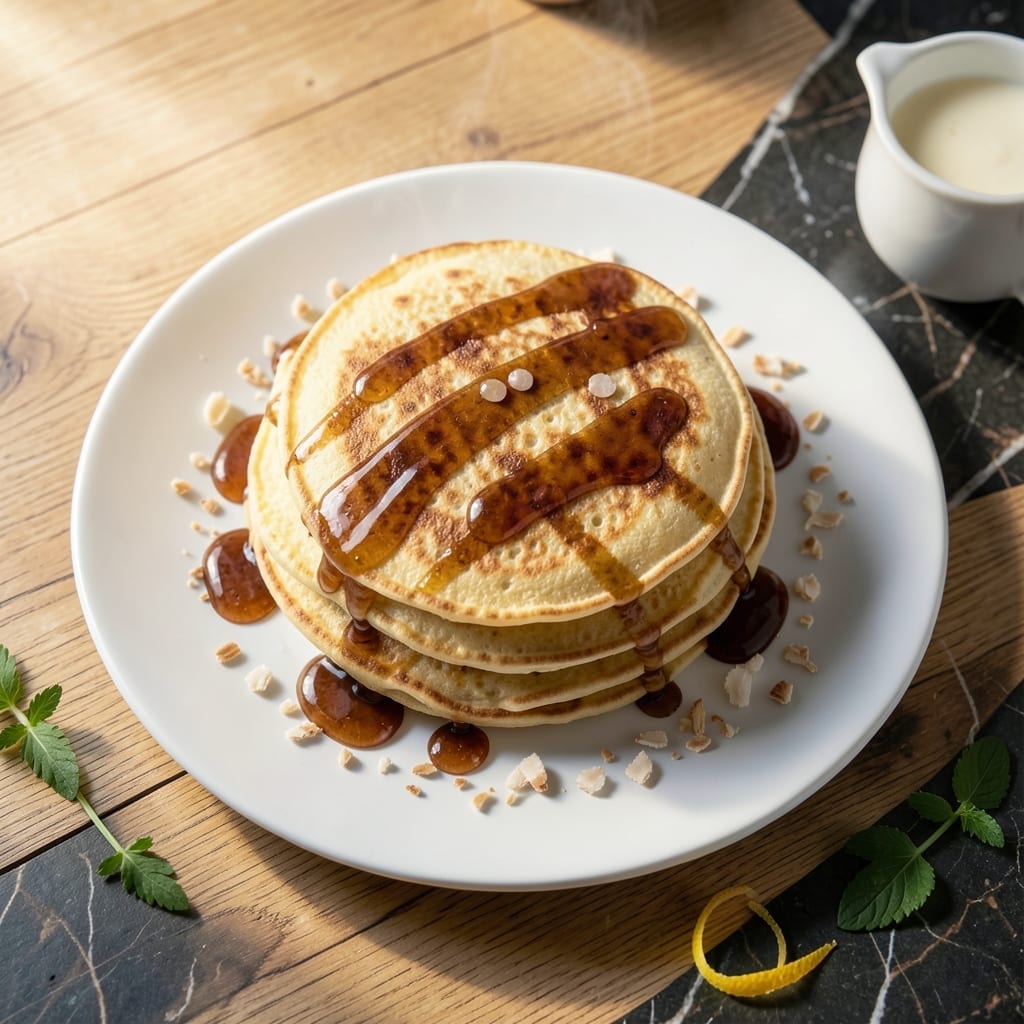
These delicate pancakes deliver a perfect contrast of textures—soft, chewy centers with crisp lace edges that shatter with each bite. I developed this recipe to highlight the unique properties of glutinous rice flour.
With a simple batter and proper heat control, you’ll achieve golden pancakes that are tender yet structured. The key is patience, allowing each side to cook thoroughly before flipping.
Ingredients for Glutinous Rice Flour Pancake
Pantry staples plus a few extras create these textured, chewy pancakes with crisp edges.
| Ingredient | Amount | Notes |
|---|---|---|
| Glutinous Rice Flour 🌾 | 1 ½ cups | Also called sweet rice flour |
| All-Purpose Flour 🌾 | ¼ cup | For structure and balance |
| Water 💧 | 1 ¼ cups | Room temperature preferred |
| Coconut Milk 🥥 | ½ cup | Full-fat for richness |
| Maple Syrup 🍁 | 2 tbsp | Or agave nectar |
| Vanilla Extract 🌿 | 1 tsp | Pure vanilla for best flavor |
| Baking Powder 🧂 | 1 tsp | For slight lift |
| Salt 🧂 | ¼ tsp | Fine sea salt |
| Vegan Butter 🧈 | 2 tbsp | Melted, for cooking |
| Coconut Oil 🥥 | 1 tbsp | For greasing pan |
| Fresh Blueberries 🫐 | ½ cup | Optional, for topping |
| Chopped Pecans 🥜 | ¼ cup | Toasted, optional garnish |
The glutinous rice flour is non-negotiable here—Bob’s Red Mill or Shiratamako brands work best. Look for it in the Asian aisle or Whole Foods bulk section. Don’t confuse it with regular rice flour; the texture won’t be the same. Coconut milk adds richness (I prefer Thai Kitchen for consistency), but any full-fat plant milk works in a pinch.
No coconut milk? Oat or cashew milk at the same volume. Maple syrup can swap for agave or date syrup—one-to-one ratio. For a nut-free version, skip the pecans or use toasted sunflower seeds. If you’re out of vegan butter, refined coconut oil (melted) works for cooking, though the flavor will be slightly different.
Batter keeps in the fridge for 24 hours—stir before using. Leftovers? They reheat beautifully in a toaster oven for 2-3 days. Freeze cooked pancakes between parchment, then toast straight from frozen (worth the extra minute).
Why You’ll Love This Recipe
- Five-Minute Mix: Honestly, I just dump the glutinous rice flour, all-purpose flour, water, and coconut milk in a bowl—no resting, no fuss.
- Crave-Worthy Bite: That combo of crisp edges and a soft, slightly chewy center with maple syrup drizzled on top? I’ll make them just for that.
- Breakfast or Dessert: I serve these for a quick morning boost or as a sweet finish after dinner—same batter, zero extra effort.
- Stays Soft Overnight: Leftovers reheat beautifully in the toaster. My kid even grabs them cold from the fridge.
Step-by-Step Instructions for Glutinous Rice Flour Pancakes
Here’s the method. Straightforward, tested, works every time.
Step 1: Combine Dry Ingredients for Structure
In a large bowl, whisk together the 1.5 cups glutinous rice flour, 0.25 cup all-purpose flour, 1 tsp baking powder, and 0.25 tsp salt until fully combined. I always sift these first to eliminate any lumps—this ensures a smooth, uniform batter.
The all-purpose flour adds structure to balance the chewiness of the glutinous rice flour, while the baking powder provides a subtle lift. Don’t skip the salt; it enhances all the other flavors in the pancakes.
Step 2: Mix Wet Ingredients for Creamy Batter
In a separate bowl, combine the 1.25 cups water, 0.5 cup coconut milk, 2 tbsp maple syrup, and 1 tsp vanilla extract. Whisk until the mixture is smooth and the coconut milk is fully incorporated.
The coconut milk adds richness, while the maple syrup provides a gentle sweetness that complements the nutty flavor of the glutinous rice flour. I use room temperature water to prevent the coconut milk from clumping.
Step 3: Create the Perfect Batter
Pour the wet ingredients into the dry ingredients and stir gently until just combined. The batter will be thick but pourable. Avoid overmixing—you want to see a few small lumps, as overworking the batter can make the pancakes tough.
Let the batter rest for 5 minutes at room temperature. This gives the glutinous rice flour time to hydrate fully, resulting in a smoother texture and better structure in the final pancakes.
Step 4: Cook to Golden Perfection
Heat a non-stick skillet over medium heat and add 1 tbsp coconut oil to coat the pan. Pour ¼ cup of batter into the skillet for each pancake. Cook for 2-3 minutes until the edges look set and the surface is covered with small bubbles.
Flip the pancakes and add a small amount of vegan butter to the pan. Cook for another 2-3 minutes until the pancakes are golden brown on both sides and cooked through. The lace edges should be crisp, while the centers remain soft and chewy.
Step 5: Serve with Fresh Toppings
Transfer the pancakes to a serving plate. Top with 0.5 cup fresh blueberries and 0.25 cup chopped pecans for added texture and flavor. The blueberries add a burst of freshness, while the toasted pecans provide a delightful crunch.
Serve immediately while warm. The contrast between the crisp lace edges and the chewy centers is what makes these pancakes special. Drizzle with additional maple syrup if desired.
Pro Tips For Making Glutinous Rice Flour Pancake
- Rest the Batter: After mixing, let the batter sit for 15-20 minutes—this gives the glutinous rice flour time to hydrate fully and makes the pancakes lighter.
- Heat the Pan First: Get your pan screaming hot before adding oil, then lower to medium heat. I burned my first three pancakes by starting on low.
- Use Full-Fat Coconut Milk: Skip the light version; the fat in full-fat coconut milk adds richness and helps the pancakes brown evenly.
- Thin with Water: If the batter seems too thick after resting, stir in a tablespoon or two of water—glutinous rice flour absorbs liquid like crazy.
Make-Ahead Tips for glutinous rice flour pancake
Batter Prep Ahead
Mix your dry and wet ingredients separately the night before, but keep them apart. Combine them in the morning, then let the batter rest for 5 minutes before cooking. This saves time while ensuring maximum chewiness. 💡
Fridge Storage
Store the mixed batter in an airtight container in the fridge for up to 24 hours. The glutinous rice flour needs time to hydrate fully, so stir it well before using. I’ve found this improves the texture.
Cooked Pancake Storage
Let cooked pancakes cool completely, then store them in a single layer on a plate covered with plastic wrap. They’ll keep in the fridge for 2-3 days without losing their signature chewiness.
Freezing for Later
Freeze cooked pancakes between layers of parchment paper in a ziplock bag. They’ll stay fresh for up to 1 month. Reheat straight from frozen in a toaster oven for best results.
Reheating Tips
For fridge-stored pancakes, warm them in a toaster oven at 350°F for 5-7 minutes to revive the crisp edges. Microwaving works in a pinch, but the texture won’t be as perfect. 🔥
Make-Ahead Toppings
Toast your pecans and prep your blueberries the day before. Store them separately and add just before serving to keep everything fresh and crunchy.
Nutrition Facts
Frequently Asked Questions
Can I substitute regular rice flour?
No, the textures won’t match. Glutinous rice flour creates the signature chewy texture. Regular rice flour will make them crumbly and dry.
Why does my batter seem too thick?
That’s normal! The batter should be thick but pourable. If it’s too stiff, add a splash of water or coconut milk until it reaches the right consistency.
How do I get those crisp lace edges?
Cook on medium heat with plenty of oil or vegan butter. Pour ¼ cup batter per pancake and don’t flip until edges are golden and bubbles form on top.
Can I make these without coconut milk?
Yes! Use any full-fat plant milk like oat or cashew milk. The richness will be slightly different, but the texture will remain chewy.

- Rice Pudding Recipe With Eggs and Milk: Old-Fashioned Custard-Style Comfort - September 30, 2026
- Rice Noodle Sauce Recipe: Bold Umami Depth for Authentic Stir-Fry - September 30, 2026
- Rice Pilaf Recipe: Fragrant Basmati With Toasted Vermicelli - September 30, 2026