
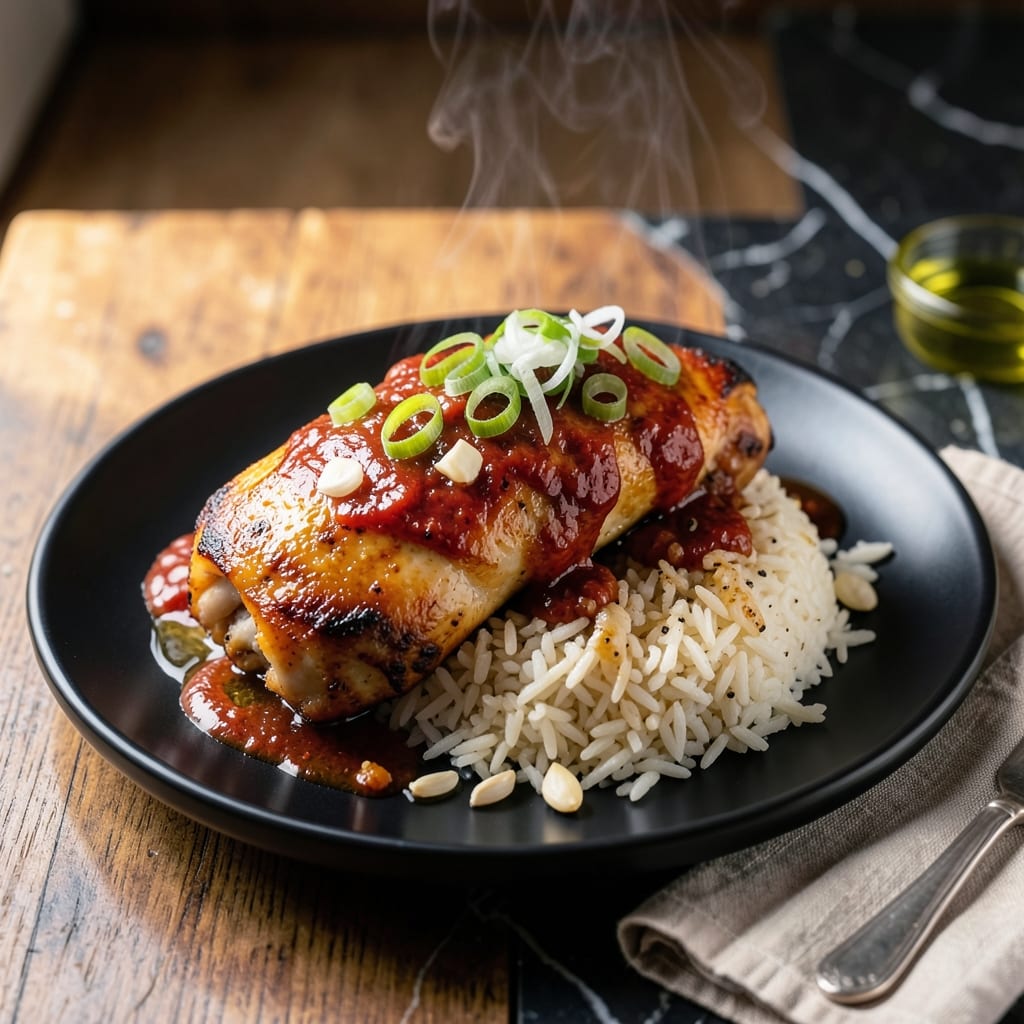
This Korean-inspired dish brings bold flavors to your table with minimal effort. The gochujang paste creates a spicy-sweet glaze that transforms simple chicken into something extraordinary.
Serve it over steamed rice for a satisfying meal that balances heat with depth. The sauce clings perfectly to each bite, ensuring every mouthful is packed with authentic taste.
Ingredients for Gochujang Chicken and Rice
Bold Korean flavors start with these pantry staples and fresh ingredients. Nothing complicated here.
| Ingredient | Amount | Notes |
|---|---|---|
| Boneless Skinless Chicken Thighs 🍗 | 1 ½ lb | Trimmed of excess fat |
| Gochujang Paste 🌶️ | ½ cup | Korean red pepper paste |
| Soy Sauce 🫒 | 3 tbsp | Low-sodium preferred |
| Honey 🍯 | 2 tbsp | Or substitute brown sugar |
| Rice Vinegar 💧 | 1 tbsp | Or apple cider vinegar |
| Garlic Cloves 🧄 | 4 cloves | Minced finely |
| Fresh Ginger 🌿 | 1 tbsp | Peeled and grated |
| Sesame Oil 🫒 | 1 tbsp | Toasted for best flavor |
| Jasmine Rice 🍚 | 1 ½ cups | Uncooked, rinsed well |
| Green Onions 🧅 | 4 whole | Thinly sliced for garnish |
| Sesame Seeds 🌾 | 1 tbsp | Toasted for garnish |
| Vegetable Oil 🫒 | 1 tbsp | For cooking chicken |
| Cornstarch 🌾 | 1 tbsp | For thickening sauce |
The gochujang is non-negotiable here. Look for it in the Asian aisle at Whole Foods or H Mart—it’s the soul of this dish. Chicken thighs stay juicier than breasts (and they’re cheaper). I grab mine from Trader Joe’s—consistent quality, no weird additives. Don’t skip the sesame oil; it adds that nutty depth you can’t fake. The toasted variety is worth the extra dollar.
No gochujang? Sriracha plus miso paste gets you 70% there (not perfect, but workable). Out of honey? Brown sugar dissolved in warm water works. Rice vinegar can be swapped for any light vinegar, but avoid balsamic—it’s too strong. The cornstarch is for thickening, so arrowroot powder or even a roux (butter + flour) can stand in. Fresh ginger is best, but ground ginger at half the amount works in a pinch.
Leftovers keep 4-5 days in the fridge. The sauce soaks into the rice, making it even better the next day. Freezes for 3 months if you’re meal-prepping. Reheat gently—gochujang can scorch if you blast it with heat. (And yes, I always make extra.)
Why You’ll Love This Recipe
- I’ll be real: this tastes even better the next day, so I make a big batch for lunches.
- One Pan Meal: I toss everything in a single skillet—chicken, sauce, and all—and it’s done in 25 minutes flat.
- Sweet-Spicy Kick: The gochujang and honey combo gives that sticky, bold flavor I crave every single time.
- Meal Prep MVP: I’ll be real: this tastes even better the next day, so I make a big batch for lunches.
Step-by-Step Instructions for Gochujang Chicken and Rice
Here’s the method. Straightforward, tested, works every time.
Step 1: Cook the Jasmine Rice
Rinse the 1.5 cups jasmine rice under cold water until the water runs clear. This removes excess starch and prevents the rice from becoming gummy. I like to swirl it around with my hand to make sure every grain gets a good rinse.
Combine the rinsed rice with 2 cups water in a saucepan and bring to a boil. Once boiling, reduce heat to low, cover, and simmer for 15 minutes. Remove from heat and let it steam, covered, for an additional 10 minutes until the water is absorbed and the rice is tender.
Step 2: Sear the Boneless Skinless Chicken Thighs
While the rice cooks, pat the 1.5 lb boneless skinless chicken thighs dry with paper towels. Season lightly with salt and pepper. Heat the 1 tbsp vegetable oil in a large skillet over medium-high heat until it shimmers.
Add the chicken thighs in a single layer and sear for 4-5 minutes per side until golden brown and cooked through. Don’t crowd the pan—if they don’t all fit, cook in batches. The chicken is done when it reaches an internal temperature of 165°F and the juices run clear. Transfer to a plate and set aside.
Step 3: Prepare the Gochujang Sauce
In the same skillet, reduce the heat to medium and add the 4 cloves minced garlic cloves and 1 tbsp grated fresh ginger. Sauté for 30 seconds until fragrant—just long enough to soften them without burning.
Add the 0.5 cup gochujang paste, 3 tbsp soy sauce, 2 tbsp honey, and 1 tbsp rice vinegar. Stir well to combine and let the sauce simmer for 2-3 minutes. Mix the 1 tbsp cornstarch with 2 tbsp water and stir it into the sauce. Cook for another 1-2 minutes until the sauce thickens and coats the back of a spoon.
Step 4: Combine and Finish
Return the cooked chicken to the skillet and coat it evenly with the sauce. Let everything simmer together for 2-3 minutes to allow the flavors to meld. Drizzle in the 1 tbsp sesame oil and stir to incorporate—this adds a nutty depth to the dish.
Slice the 4 whole green onions thinly and sprinkle them over the top along with the 1 tbsp sesame seeds. Serve the chicken and sauce over the cooked jasmine rice, ensuring every bowl gets a generous amount of that glossy, spicy-sweet sauce.
Pro Tips For Making Gochujang Chicken And Rice
- Sear the Thighs First: Brown the chicken thighs in a hot pan for 3-4 minutes per side before adding the sauce—I learned this the hard way after ending up with pale, stewed-looking meat instead of caramelized edges.
- Thin the Gochujang: Mix the gochujang paste with a splash of warm water (about 2 tablespoons) before combining with other sauce ingredients. Sounds weird, but it works: it prevents clumping and helps the sauce cling to the chicken.
- Skip the Overcrowding: Cook the chicken in batches if needed—steer clear of cramming all the thighs into the pan at once, or they’ll steam instead of sear and the sauce won’t reduce properly.
- Finish with Vinegar: Stir in the rice vinegar at the very end, just before serving. My grandmother swore by this, and she was right: it brightens the rich, sweet-spicy flavors without making the sauce thin.
Troubleshooting This Recipe
Sauce Too Thin
If your sauce isn’t thickening, the cornstarch slurry may not have activated. Bring it to a rolling boil for 1-2 minutes—this is crucial. If still thin, mix another 1 tsp cornstarch with 1 tbsp cold water and stir in. I always keep extra slurry on standby. 💡
Sauce Too Thick
When the sauce over-reduces, whisk in 2-3 tbsp warm water or chicken broth until it reaches your desired consistency. Do this off heat to prevent splattering. Gochujang thickens as it cools, so let it sit for 5 minutes before adjusting again.
Bitter Taste
Gochujang can turn bitter if burned. If this happens, balance it with 1 tsp honey or 1 tsp soy sauce—taste as you go. Lower heat next time and stir constantly when cooking the paste. I learned this the hard way with my first batch. 🔥
Chicken Dryness
Overcooked chicken ruins the dish. Use a meat thermometer and pull at 160°F—it’ll rise to 165°F while resting. For extra juiciness, marinate the thighs in 1 tbsp soy sauce and 1 tsp sesame oil for 30 minutes before cooking.
Rice Sticky
Rinsing jasmine rice until the water runs clear prevents gumminess. Use a 1:1.33 rice-to-water ratio and avoid lifting the lid while cooking. If it’s already sticky, fluff with a fork and spread on a tray to cool slightly before serving.
Flavor Too Mild
Boost intensity with 1 tbsp extra gochujang or a pinch of gochugaru (Korean chili flakes). For depth, add 1 tsp fish sauce or 1 tbsp brown sugar. Taste and adjust gradually—gochujang’s heat builds as it simmers.
Nutrition Facts
Frequently Asked Questions
Can I use chicken breast instead of thighs?
You can, but thighs stay juicier. If using breasts, reduce cooking time to 3-4 minutes per side and pull at 160°F to prevent dryness. Brining for 30 minutes helps too.
How spicy is this dish?
Moderately spicy from the gochujang. To reduce heat, use 2-3 tbsp less paste and add 1 tbsp honey. For extra kick, add 1 tsp gochugaru (Korean chili flakes).
Can I make this ahead of time?
Yes! Cook and store components separately in the fridge for up to 4 days. Reheat chicken and sauce gently, then assemble with fresh rice. Flavors deepen overnight.
What if I don’t have rice vinegar?
Substitute with apple cider vinegar or lime juice. Avoid balsamic—it’s too strong. Use the same 1 tbsp measurement for balance.

- Jollof Rice Sauce Recipe: West African Tomato and Spice Infusion - September 25, 2026
- Japanese Rice Soup Recipe: Umami-Rich Comfort in a Bowl - September 25, 2026
- Homemade Cream Of Rice Recipe: Silk-Smooth Breakfast in Minutes - September 25, 2026