
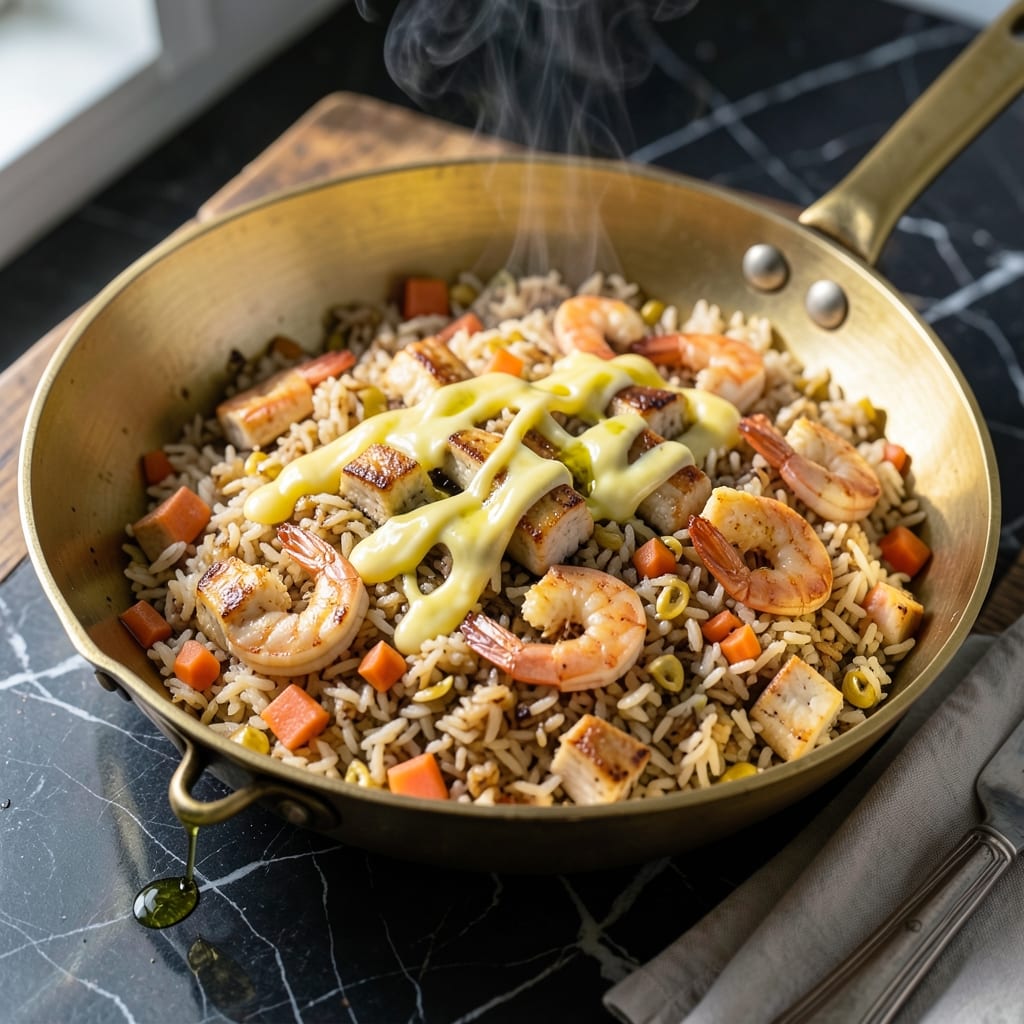
Achieving authentic street food flavor at home starts with this proven technique for wok fried rice. The key lies in high heat and the right sequence of ingredients.
I developed this method after testing countless variations in my small Boston kitchen. Properly cooked rice, fresh vegetables, and quality soy sauce create layers of flavor that rival takeout.
This approach delivers golden, slightly charred rice with tender vegetables and rich umami depth. Each bite captures the essence of street food vendors without leaving your kitchen.
Master the basics first, then experiment with protein additions. The foundation remains simple and foolproof.
Ingredients for Golden Wok Fried Rice
Pantry staples and fresh proteins create that authentic wok hei flavor at home.
| Ingredient | Amount | Notes |
|---|---|---|
| Day-Old Cooked White Rice 🍚 | 4 cups | Cold, preferably refrigerated overnight |
| Vegetable Oil 🫒 | 3 tbsp | High smoke point, divided |
| Large Eggs 🥚 | 2 whole | Lightly beaten |
| Boneless Chicken Thighs 🍗 | ½ lb | Diced into small pieces |
| Medium Shrimp 🦐 | ½ lb | Peeled and deveined |
| Carrots 🥕 | 1 whole | Finely diced |
| Green Onions 🧅 | 3 whole | Thinly sliced, white and green parts separated |
| Frozen Peas 🌱 | ½ cup | Thawed |
| Garlic Cloves 🧄 | 3 cloves | Minced |
| Light Soy Sauce 💧 | 2 tbsp | For seasoning base |
| Dark Soy Sauce 💧 | 1 tbsp | For color and depth |
| Oyster Sauce 🦪 | 1 tbsp | For umami richness |
| Sesame Oil 🫒 | 1 tsp | For finishing aroma |
| White Pepper 🌶️ | ½ tsp | Freshly ground preferred |
| Salt 🧂 | ½ tsp | Adjust to taste |
The rice is non-negotiable—day-old, cold, and dry. Fresh rice turns to mush. I get mine from the leftover takeout container (no shame). Jasmine rice is ideal for that classic texture. For the proteins, chicken thighs stay juicier than breasts, and medium shrimp (not those tiny ones) give you the right bite. Grab them from Whole Foods or your local Asian market for best quality.
No shrimp? Extra chicken or tofu works fine (press and cube firm tofu first). Out of oyster sauce? Hoisin or fish sauce can pinch-hit, but the flavor shifts slightly. The soy sauce balance matters—light for salt, dark for color. If you only have one, use all light and add a pinch of brown sugar for depth. Frozen peas can swap for any veggie you have on hand.
This keeps 3-4 days in the fridge, but honestly it’s best fresh. Reheat in a dry skillet to revive the texture (microwave makes it soggy). Day-old rice means you can prep this the night before—just cook extra for dinner.
Why You’ll Love This Recipe
- One Pan Magic: I toss in the shrimp, chicken, and eggs with the cold rice, and 15 minutes later it’s done—no extra pots, no fuss.
- Umami Bomb: That golden wok sear on the chicken and shrimp with the eggs? Ridiculously good, like takeout but better.
- Weeknight Hero: I meal prep this on Sunday, and it reheats like a dream for lunches all week.
- Budget Stretcher: Honestly, using day-old rice and a handful of thighs keeps costs low while feeding my whole crew.
Step-by-Step Instructions for Golden Wok Fried Rice
Achieve authentic street food texture and flavor with this precise method for perfect wok hei.
Step 1: Prepare Proteins and Aromatics
Dice the 0.5 lb boneless chicken thighs into ¼-inch pieces for quick, even cooking. Peel and devein the 0.5 lb medium shrimp, leaving tails on or off as preferred. Finely dice the carrot and mince the 3 cloves garlic cloves.
Thinly slice the 3 whole green onions, keeping white and green parts separate. Thaw the 0.5 cup frozen peas under warm water and drain well. This prep ensures all components cook at the same rate in the wok.
Lightly beat the 2 whole large eggs with a pinch of the 0.5 tsp salt—this seasons them evenly before cooking.
Step 2: Velouté Proteins and Vegetables
Heat 2 tbsp vegetable oil in a wok over high heat until shimmering. Add the chicken and stir-fry for 2-3 minutes until just cooked through and lightly browned. Remove and set aside.
In the same wok, add the remaining 1 tbsp vegetable oil and cook the shrimp for 1-2 minutes per side until pink and opaque. Transfer to the plate with chicken. Add the diced carrot and cook for 1 minute until slightly softened.
Push the carrot to the side, add the minced garlic and white parts of green onions, and stir-fry for 30 seconds until fragrant. Add the peas and cook for another 30 seconds to heat through.
Step 3: Create the Egg Base
Move all vegetables to one side of the wok and add a bit more oil if needed. Pour in the beaten eggs and scramble quickly over high heat for 30-45 seconds until just set but still slightly runny.
Immediately add the 4 cups day-old cooked white rice, breaking up any clumps with your spatula. The residual heat will finish cooking the eggs as you incorporate them into the rice.
This step creates the signature texture of authentic fried rice, where the eggs coat the individual grains rather than forming distinct curds.
Step 4: Season and Finish with Wok Hei
Return the cooked chicken and shrimp to the wok. Drizzle the 2 tbsp light soy sauce, 1 tbsp dark soy sauce, and 1 tbsp oyster sauce evenly over the mixture. Stir-fry for 2-3 minutes until everything is well combined and heated through.
Season with the remaining 0.5 tsp salt and 0.5 tsp white pepper. The dark soy sauce adds the characteristic golden color while the light soy and oyster sauces build layers of umami flavor.
Remove from heat and stir in the 1 tsp sesame oil and green onion tops. The sesame oil adds the final aromatic note that defines authentic street food flavor.
Step 5: Rest and Serve Immediately
Let the fried rice rest in the wok for 1-2 minutes off heat—this allows the flavors to meld completely. The rice should have a slight sheen from the sauces and a few golden brown bits from the wok hei (breath of the wok).
Serve immediately while hot, garnished with additional green onion tops if desired. The texture should be slightly crispy in spots with each grain of rice distinct yet coated in the flavorful sauce.
This method ensures the authentic texture and depth of flavor that distinguishes true street food fried rice from home-cooked versions.
Pro Tips For Making Golden Wok Fried Rice
- Crank the Heat: High heat is non-negotiable for that golden wok color—I learned this the hard way after too many pale, sad batches. About 2 tablespoons of oil in a screaming-hot wok before anything else touches it.
- Dry Your Rice: Day-old rice works best, but give it a quick spread on a tray for 10 minutes if it’s still damp. Sounds weird, but it works: dry grains fry, not steam.
- Skip the Crowding: Cook chicken and shrimp in separate batches, then set aside. Resist the urge to dump everything in at once—overcrowding kills the sear and turns your fried rice into a soggy mess.
- Scramble Eggs First: Push the eggs to one side of the wok after scrambling, then add the rice. This keeps them soft and distinct instead of disappearing into the mix—my grandmother swore by this, and she was right.
Common Mistakes When Making This Dish
Using Fresh Rice
Never use freshly cooked rice—it’s too moist and will turn mushy. I learned this the hard way in my Boston kitchen. Always use day-old, cold rice from the fridge, preferably jasmine or long-grain. Spread it out on a tray to dry slightly if needed. 💡
Low Heat Cooking
Your wok needs to be screaming hot to get that authentic wok hei flavor. If your heat is too low, the rice will steam instead of frying. Use high heat throughout and work quickly—this dish comes together in 5-7 minutes once the prep is done.
Overcrowding the Wok
Adding too many ingredients at once lowers the temperature and creates soggy rice. Cook proteins in batches if needed. I often start with chicken first, then shrimp, then veggies. This keeps everything at the right temperature for that perfect sear.
Skipping the Egg Base
Pouring eggs directly over the rice leads to rubbery curds. Instead, scramble them first in a clear spot in the wok, then mix with rice while still slightly runny. This coats each grain beautifully. The eggs should be just set, not fully cooked. 🔥
Over-Salting Early
Soy sauces are salty, so go light on the salt until the end. Taste as you go—you can always add more, but you can’t take it out. I wait until the final seasoning step to adjust with the remaining ½ tsp salt and white pepper.
Ignoring the Rice Texture
Break up any clumps in the cold rice before adding to the wok. Use your spatula to press and separate grains. If your rice is still sticking, it wasn’t dry enough. Next time, cook it a day ahead and refrigerate uncovered for 1 hour to dry it out.
Nutrition Facts
Frequently Asked Questions
Can I use fresh rice?
No, fresh rice contains too much moisture. Always use day-old, cold rice for the best texture. Spread it out to dry slightly if needed.
What’s the best oil for high heat?
Use oils with a high smoke point like vegetable, peanut, or avocado oil. Avoid olive oil as it can burn at high heat.
How do I get that smoky wok flavor?
Achieve wok hei by cooking over high heat in small batches. Use a well-seasoned wok and work quickly to prevent steaming.
Can I make this vegetarian?
Replace chicken and shrimp with tofu or extra vegetables. Use all light soy sauce and add a pinch of sugar for depth.

- Jamaican Jollof Rice Recipe: Island Spice in Every Bite - October 18, 2026
- Hamburger Rice Hot Dish Recipe: Midwest Comfort in One Pan - October 18, 2026
- Iranian Cabbage Rice Recipe: Aromatic Herbs and Spiced Layers - October 18, 2026