
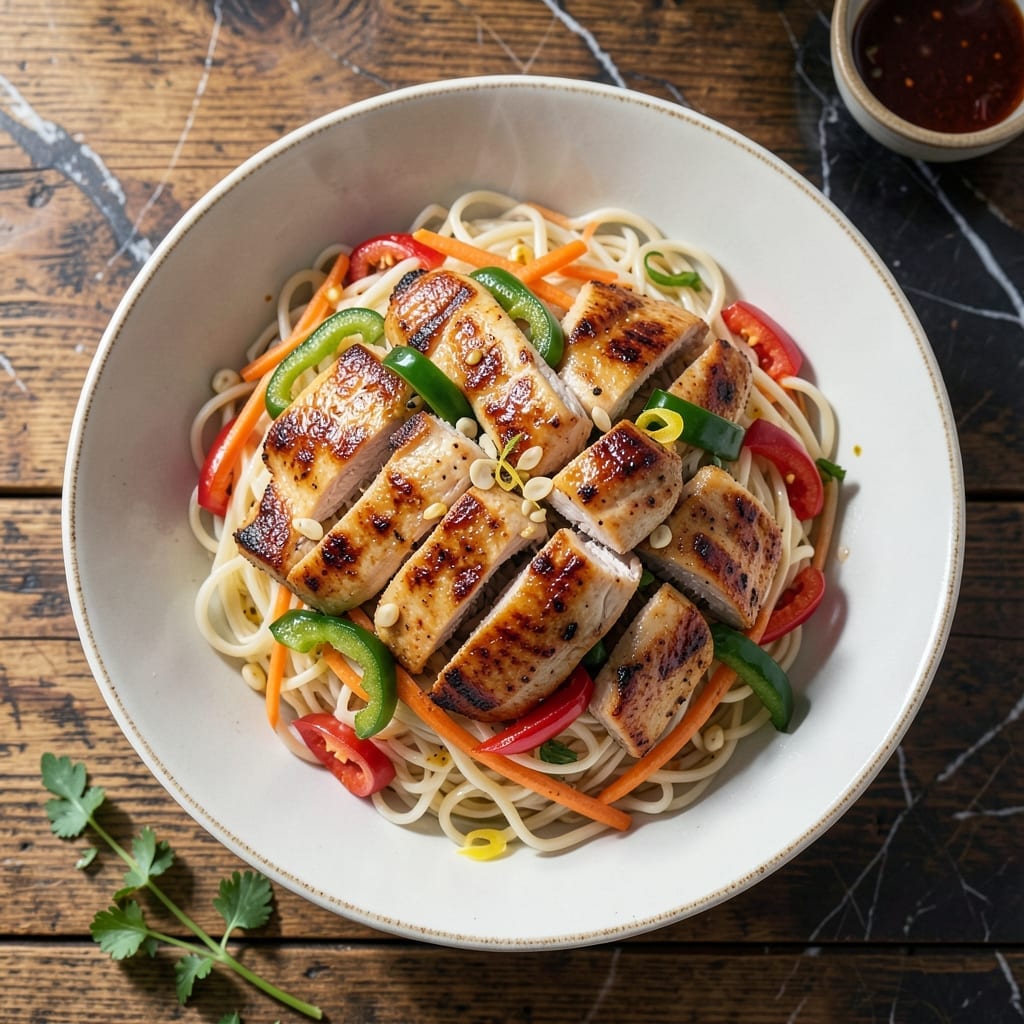
Achieving perfect wok-seared chicken stir fry with rice noodles requires precision and the right technique. This dish brings authentic Asian flavors to your home kitchen without compromise.
The key lies in high heat cooking and proper ingredient preparation. Every element must be ready before the first ingredient hits the wok to ensure perfect execution and timing.
You’ll create a dish with tender chicken, crisp vegetables, and silky rice noodles all coated in a savory sauce. The result is a balanced, restaurant-quality meal that impresses every time.
Master the timing and temperature control, and this stir fry will become your go-to for quick, flavorful dinners that never disappoint.
Ingredients for Gordon Ramsay Chicken Stir Fry with Rice Noodles
Precise ingredients for restaurant-quality wok-seared chicken stir fry with rice noodles at home.
| Ingredient | Amount | Notes |
|---|---|---|
| Boneless Skinless Chicken Thighs 🍗 | 1 ½ lb | Cut into thin strips for even cooking |
| Rice Noodles 🍜 | 8 oz | Dry weight, soaked before cooking |
| Red Bell Pepper 🌶️ | 1 whole | Thinly sliced into strips |
| Green Bell Pepper 🌿 | 1 whole | Thinly sliced into strips |
| Carrots 🥕 | 2 whole | Julienned or thinly sliced |
| Garlic Cloves 🧄 | 4 cloves | Minced finely for maximum flavor |
| Fresh Ginger Root 🌿 | 1 tbsp | Grated or minced finely |
| Green Onions 🧅 | 4 whole | Thinly sliced, whites and greens separated |
| Soy Sauce 🫒 | ⅓ cup | Low-sodium preferred for balance |
| Oyster Sauce 🫒 | 2 tbsp | Vegetarian oyster sauce as alternative |
| Sesame Oil 🫒 | 1 tbsp | Toasted for depth of flavor |
| Neutral Cooking Oil 🫒 | 3 tbsp | High smoke point required for wok-searing |
| Chicken Stock 💧 | ½ cup | Low-sodium preferred |
| Cornstarch 🌾 | 1 tbsp | For velveting chicken |
| Light Brown Sugar 🍚 | 1 tbsp | Balances savory and umami |
The chicken is non-negotiable here. Boneless, skinless thighs stay juicy under high heat—breasts dry out too fast. Source from Whole Foods or a trusted butcher for consistent quality. Rice noodles must be dry weight; Thai Kitchen brand is reliable and widely available. For vegetables, seek vibrant, firm bell peppers and carrots without blemishes. The ginger and garlic should be fresh—pre-minced lacks the necessary punch.
No oyster sauce? Vegetarian oyster sauce works identically (look for Lee Kum Kee brand). Swap chicken stock for vegetable stock if preferred. Green onions can be substituted with shallots for a milder flavor. Neutral cooking oil must have a high smoke point—peanut or avocado oil are ideal. For gluten-free, use tamari instead of soy sauce and ensure rice noodles are certified gluten-free.
Prep all ingredients before heating the wok—mise en place is critical. Store fresh ginger and garlic in a cool, dark place for up to 3 weeks. Rice noodles keep in the pantry for 1 year. Cooked stir fry is best consumed immediately but holds for 2 days refrigerated.
Why You’ll Love This Recipe
- One Pan Wonder: I love that everything cooks in a single wok—chicken, noodles, and veggies all together, minimal cleanup.
- Umami Bomb: The soy-ginger-garlic combo with those juicy chicken thighs? Ridiculously good every time.
- Meal Prep Hero: Honestly, this holds up for three days in the fridge without getting mushy.
- Budget Friendly: A pound of thighs and a bag of rice noodles feeds my family of four with leftovers.
Step-by-Step Instructions for Gordon Ramsay Chicken Stir Fry With Rice Noodles
Master the wok with this refined technique that delivers restaurant-quality results at home.
Step 1: Velvet the Chicken for Tenderness
Cut the 1.5 lb boneless skinless chicken thighs into thin strips against the grain for maximum tenderness. In a bowl, combine the chicken with 1 tbsp cornstarch, 1 tbsp soy sauce, and 1 tbsp light brown sugar. Mix until every piece is evenly coated.
This velveting technique creates a protective layer that keeps the chicken juicy during high-heat cooking. Let it marinate for 15 minutes while you prepare the remaining ingredients. The cornstarch will create a silky texture that absorbs the sauce beautifully.
Step 2: Prepare Vegetables and Noodles for Stir Frying
Soak the 8 oz rice noodles in warm water for 10-15 minutes until pliable but still slightly firm. Drain and set aside. Thinly slice the 1 whole red bell pepper, 1 whole green bell pepper, and 2 whole carrots into uniform strips for even cooking.
Mince the 4 cloves garlic cloves and 1 tbsp fresh ginger root together—they’ll form the aromatic base. Thinly slice the 4 whole green onions, keeping whites and greens separate. This mise en place ensures everything cooks at the right moment without overcrowding the wok.
Step 3: Stir Fry in Batches for Maximum Heat
Heat 2 tbsp neutral cooking oil in a wok over high heat until shimmering. Add half the chicken in a single layer and sear undisturbed for 2 minutes until golden brown. Flip and cook another 1-2 minutes until just cooked through. Remove and repeat with remaining chicken.
In the same wok, add the remaining 1 tbsp neutral cooking oil with the whites of the green onions, garlic, and ginger. Stir fry for 30 seconds until fragrant. Add the bell peppers and carrots, cooking for 3-4 minutes until crisp-tender. The vegetables should retain a slight bite for texture contrast.
Step 4: Combine and Finish with Signature Sauce
Return the chicken to the wok with the drained rice noodles. Add the remaining 0.33 cup soy sauce minus the 1 tbsp used earlier, 2 tbsp oyster sauce, 1 tbsp sesame oil, and 0.5 cup chicken stock. Toss vigorously with tongs for 2-3 minutes until everything is evenly coated.
The sauce should reduce slightly to create a glossy coating on the noodles and chicken. Toss in the green onion greens just before serving for freshness. Each strand of noodle should be perfectly coated with sauce, and the chicken should be tender with a slight caramelization from the wok’s high heat.
Step 5: Rest and Serve Immediately
Transfer to a serving platter and let rest for 2 minutes to allow the flavors to meld. The rice noodles will continue to absorb the sauce slightly during this brief rest, creating the ideal texture.
Serve while hot, with each portion featuring a balance of protein, vegetables, and noodles. The dish should have vibrant color from the peppers and carrots, with a glossy sheen from the sauce. The chicken should be tender and juicy, never dry, with the vegetables maintaining their crispness.
Pro Tips For Making Gordon Ramsay Chicken Stir Fry With Rice Noodles
- Dry the Chicken: Pat the boneless skinless chicken thighs very dry with paper towels before cooking—I learned this the hard way after my stir-fry turned into a sad, soggy mess. The drier the surface, the better the sear.
- Soak Noodles First: Cover rice noodles in hot water for 5-7 minutes until pliable, then drain. Sounds weird, but it works: they’ll finish perfectly in the wok without turning to mush.
- Skip Overcrowding: Cook the chicken in batches if your pan isn’t huge. After burning three batches, I finally figured out that crowding steams the meat instead of browning it.
- Slice Veggies Thin: Cut the bell peppers and carrots into thin, even strips—about 1/8-inch thick. My grandmother swore by this, and she was right: they’ll cook through in the same time as the chicken.
Make-Ahead Tips for This Dish
Prep Ahead Strategy
You can prep all ingredients 8-12 hours in advance—slice chicken, julienne veggies, mince aromatics, and measure sauces. Store chicken in its marinade and vegetables in separate containers, all refrigerated. This makes dinner achievable on busy weeknights. ⏰
Noodle Prep Timing
Soak rice noodles 30 minutes before cooking, but don’t soak them too early—they’ll become mushy. I keep dry noodles in a bowl on the counter until I’m ready to start. For best texture, soak in warm water until pliable but still firm.
Sauce Mixing
Combine all sauce ingredients except sesame oil in a jar the night before. Shake well and refrigerate. The sesame oil stays separate until cooking to preserve its aroma. This ensures consistent flavor without last-minute measuring.
Partial Cook Method
For even faster assembly, partially cook the chicken and vegetables separately, then cool and refrigerate. When ready to serve, finish cooking with noodles and sauce. This works well for meal prep but reduces the dish’s fresh wok-seared quality slightly. 💡
Storage Solutions
Use glass containers for prepped ingredients—they keep flavors fresh and let you see contents easily. I recommend OXO Good Grips for their leak-proof lids. Label containers with prep date to track freshness.
Day-Of Efficiency
On cooking day, have your wok, tongs, and all ingredients within arm’s reach. The entire stir fry process takes 8-10 minutes once you start cooking. Efficiency is key to preventing overcooking and maintaining that perfect crisp-tender texture.
Nutrition Facts
Frequently Asked Questions
Can I use chicken breast instead of thighs?
Thighs are recommended for their juiciness, but breasts work if sliced thinly. Cook for 1-2 minutes less to prevent dryness.
How do I prevent rice noodles from sticking?
Soak noodles in warm water until pliable but still firm. Rinse with cold water after draining and toss with a little oil. This keeps them separate during stir frying.
What if my sauce is too thin?
Let it reduce for 1-2 minutes longer over high heat. For faster thickening, mix 1 tsp cornstarch with water and stir in.

- Jollof Rice Sauce Recipe: West African Tomato and Spice Infusion - September 25, 2026
- Japanese Rice Soup Recipe: Umami-Rich Comfort in a Bowl - September 25, 2026
- Homemade Cream Of Rice Recipe: Silk-Smooth Breakfast in Minutes - September 25, 2026