
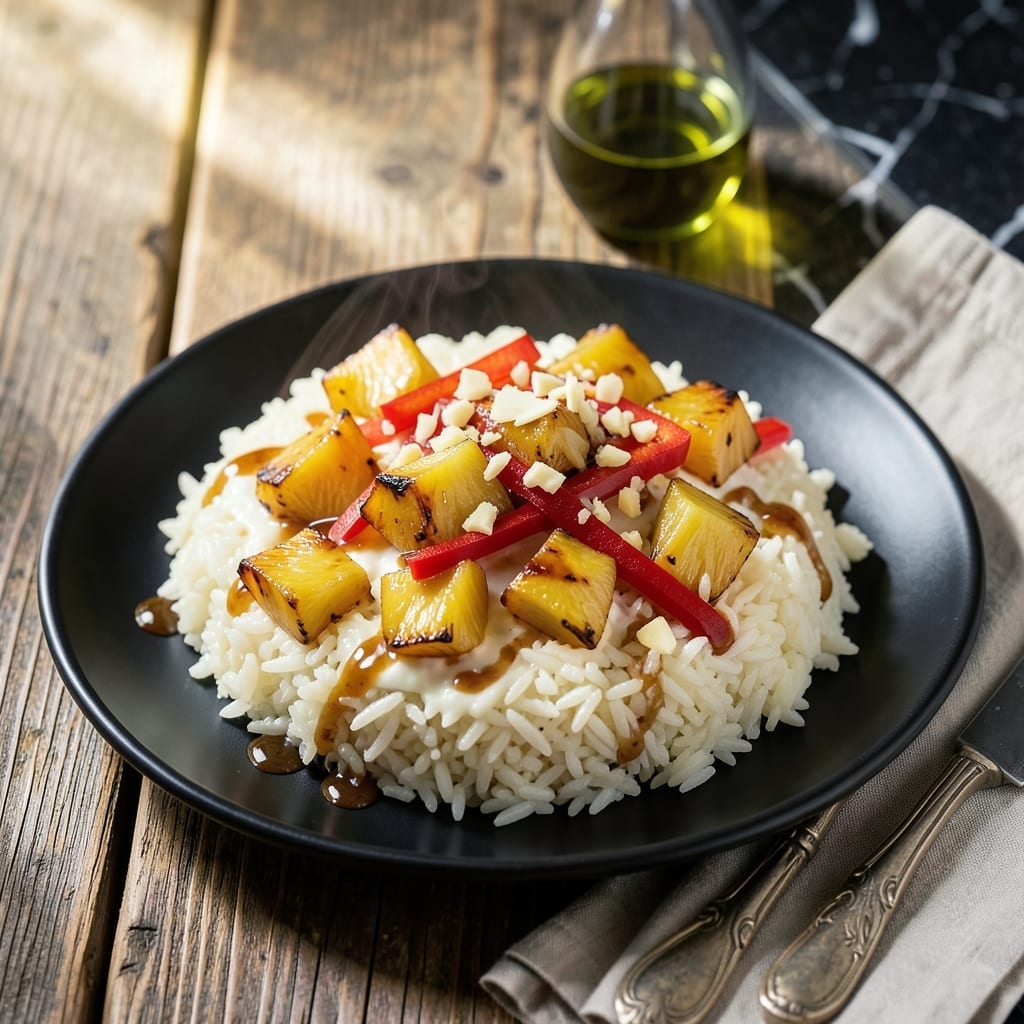
This tropical fusion dish brings restaurant-quality flavors to your home kitchen without the intimidation factor. I developed this method after testing multiple versions in my small Boston apartment, focusing on balance between sweet and savory elements.
The secret lies in properly caramelizing the pineapple to concentrate its natural sugars while maintaining its texture. Fresh ingredients make all the difference here, particularly when combined with the umami depth of soy sauce and the subtle heat of ginger.
What emerges is a vibrant plate of fluffy rice speckled with golden pineapple pieces and bright green herbs. The flavors are complex yet approachable, with each bite delivering a perfect harmony of tropical sweetness and savory richness.
This versatile dish works equally well as a main course or side, and reheats beautifully for meal prep. The technique is straightforward enough for weeknight cooking but impressive enough for guests.
Ingredients for Gordon Ramsay Pineapple Rice
Restaurant-quality tropical fusion with fresh pineapple, ginger, and aromatic herbs comes together beautifully in this dish.
| Ingredient | Amount | Notes |
|---|---|---|
| Jasmine Rice 🍚 | 2 cups | Rinsed until water runs clear |
| Fresh Pineapple 🍍 | 3 cups | Diced, reserve juice for cooking |
| Soy Sauce 🫒 | 3 tbsp | Low-sodium preferred for balance |
| Fresh Ginger 🌿 | 1 tbsp | Peeled and finely grated |
| Garlic Cloves 🧄 | 3 cloves | Minced to fine paste |
| Red Bell Pepper 🌶️ | 1 whole | Diced into small cubes |
| Green Onions 🧅 | 4 whole | Thinly sliced, white and green parts separated |
| Fresh Cilantro 🌿 | ½ cup | Chopped, stems removed |
| Lime 🍈 | 1 whole | Zested and juiced |
| Sesame Oil 🫒 | 1 tbsp | Toasted variety for depth |
| Vegetable Oil 🛢️ | 2 tbsp | Neutral flavor for high-heat cooking |
| Salt 🧂 | 1 tsp | Diamond Crystal kosher preferred |
| Black Pepper 🌶️ | ½ tsp | Freshly cracked for best aroma |
| Red Pepper Flakes 🔥 | ¼ tsp | Adjust to heat preference |
The pineapple quality is non-negotiable here. Fresh pineapple caramelizes better than canned—look for fruit with vibrant green crowns and golden yellow skin at Whole Foods or your local Asian market. Jasmine rice from Trader Joe’s or bulk bins ensures proper texture. The ginger must be fresh (those jars of ground ginger won’t deliver the same bright, zesty punch), and organic when possible for maximum flavor impact.
No jasmine rice? Basmati works at a 1:1 ratio, though the floral notes will differ. Substitute fresh galangal at equal quantity if you want a more authentic Southeast Asian profile. Low-sodium soy sauce can be replaced with tamari for gluten-free needs. The cilantro can be swapped for Thai basil (use half the amount), but avoid dried herbs—they lack the necessary freshness for this dish’s vibrant character.
Cooked rice holds well in the fridge for 4-5 days and actually improves in flavor as the components meld. Store in an airtight container with a paper towel on top to absorb excess moisture. The dish freezes beautifully for up to 3 months, making it perfect for batch cooking.
Why You’ll Love This Recipe
- One-Pan Wonder: I toss everything in a single skillet—jasmine rice, pineapple, and that aromatic ginger-garlic combo—minimal cleanup, maximum flavor.
- Sweet-Savory Magic: The caramelized pineapple with soy sauce hits that perfect balance, and the fresh ginger adds this zing that’s honestly hard to beat.
- Weeknight Hero: Between us, this is my go-to for busy evenings—ready faster than takeout and way more satisfying.
- Budget Stretcher: Fresh pineapple is the only splurge, but it makes 4 generous servings, so it’s kind to the wallet and the taste buds.
Step-by-Step Instructions for Pineapple Rice
Master this tropical fusion dish with precise technique and balanced flavors.
Step 1: Prepare and Cook the Jasmine Rice
Rinse the 2 cups Jasmine Rice under cold water until the water runs completely clear. This removes excess starch that could make the rice gummy. I use a fine-mesh strainer for this process and typically rinse 3-4 times for best results.
Combine the rinsed rice with 4 cups water and 1 tsp Salt in a saucepan. Bring to a boil, then immediately reduce to a simmer, cover, and cook for 15 minutes. Remove from heat and let it steam, covered, for an additional 10 minutes. The grains should be tender and separate easily.
Step 2: Sauté Aromatics and Vegetables
Heat 2 tbsp Vegetable Oil in a large wok or skillet over medium-high heat until it shimmers. Add the 1 tbsp Fresh Ginger and 3 cloves Garlic Cloves, stirring constantly for 30 seconds until fragrant but not browned. Burnt garlic will impart a bitter flavor you want to avoid.
Add the 1 whole Red Bell Pepper (diced) and the white parts of the 4 whole Green Onions. Stir-fry for 3-4 minutes until the peppers soften slightly but retain some crispness. The vegetables should be vibrant in color, not dull or overcooked.
Step 3: Incorporate Pineapple and Seasonings
Add the 3 cups Fresh Pineapple to the wok along with any reserved juice. Cook for 2-3 minutes until the pineapple begins to soften and caramelize slightly at the edges. The natural sugars will start to create a light glaze in the pan.
Pour in the 3 tbsp Soy Sauce, 1 tbsp Sesame Oil, 0.5 tsp Black Pepper, and 0.25 tsp Red Pepper Flakes. Stir well to coat all ingredients evenly. The soy sauce should create a light, glossy coating on the pineapple and vegetables.
Step 4: Combine with Rice and Finish
Add the cooked jasmine rice to the wok, breaking up any clumps with your spatula. Gently fold everything together over medium heat for 2-3 minutes until the rice is evenly coated and heated through. The grains should remain distinct, not mushy.
Remove from heat and stir in the green parts of the 4 whole Green Onions, 0.5 cup Fresh Cilantro, and the zest and juice from 1 whole Lime. Taste and adjust seasoning if needed. The lime adds a bright, citrusy note that balances the sweet and savory elements perfectly.
Step 5: Rest and Serve
Let the pineapple rice rest for 5 minutes off the heat. This allows the flavors to meld together completely. The cilantro will release its aromatic oils, and the lime juice will distribute evenly throughout the dish.
Serve warm, garnished with additional cilantro if desired. The rice should have a beautiful golden color from the soy sauce and pineapple, with visible flecks of green onion and cilantro. Each bite offers a perfect balance of sweet, savory, and citrus notes.
Pro Tips For Making Gordon Ramsay Pineapple Rice
- Toast the Rice First: I learned this the hard way—skip toasting the jasmine rice in the pan before adding liquid and you’ll lose that nutty depth that balances the pineapple’s sweetness. About 2 minutes on medium heat does it.
- Use Ripe Pineapple: Sounds obvious, but underripe pineapple turns this dish sour instead of bright. Smell the base—if it’s fragrant and yields slightly when pressed, it’s ready.
- Don’t Drown the Ginger: After burning three batches, I finally figured out that fresh ginger burns fast. Grate it fine and add it with the garlic, not before, to keep its punch without bitterness.
- Finish with Fresh Herbs: This isn’t in every version, but a handful of chopped cilantro or scallions at the end adds a fresh lift that cuts through the soy’s saltiness. I skip it when I’m lazy, but the dish is noticeably better when I don’t.
Storing and Reheating This gordon ramsay pineapple rice
Refrigerator Storage
Let this dish cool for no more than 2 hours before transferring to airtight containers. I use glass containers from Pyrex for visibility and durability. Store at 40°F or below for up to 4-5 days. The flavors actually deepen as they meld together overnight. ❄️
Freezer Storage
For longer storage, freeze in quart-sized freezer bags with excess air removed. Lay flat to save space and prevent freezer burn. This creation keeps beautifully for up to 3 months without texture degradation. Label with the date—I learned this the hard way after finding mystery bags in my Boston freezer.
Stovetop Reheating
My preferred method is reheating in a skillet over medium-low heat with a splash of water or pineapple juice. Cover and stir occasionally for 5-7 minutes until heated through. This revives the rice texture better than any other method.
Microwave Reheating
For quick meals, microwave individual portions covered with a damp paper towel. Heat on 70% power for 2-3 minutes, stir, then continue in 30-second intervals until reaching 165°F. Add a teaspoon of water if it appears dry.
Reviving Leftovers
If your leftovers seem dry, drizzle with a little sesame oil and a squeeze of fresh lime juice before reheating. This brings back the vibrant flavors and moisture. I always keep extra lime wedges for this exact purpose.
Meal Prep Tip
This dish actually improves in flavor when made ahead, making it perfect for weekly meal prep. Portion into containers and store in the fridge for grab-and-go lunches throughout the week. 💡
Nutrition Facts
Frequently Asked Questions
Can I use canned pineapple instead of fresh?
Fresh pineapple is ideal for texture and flavor, but canned works in a pinch. Use chunks in juice (not syrup) and drain well. The texture will be softer, and the dish may need extra lime juice to balance sweetness.
Why rinse the jasmine rice?
Rinsing removes excess starch to prevent gummy rice. Do it until water runs clear, about 3-4 times. Skipping this step can make your final dish sticky rather than fluffy.
How do I prevent the rice from turning mushy?
Cook rice just until tender, then let it steam off heat for 10 minutes. When combining with other ingredients, fold gently over medium heat for only 2-3 minutes to maintain distinct grains.
What can I substitute for soy sauce?
Tamari works as a 1:1 gluten-free alternative. For lower sodium, use coconut aminos, but reduce other seasonings as it’s sweeter. Avoid fish sauce—it will overpower the dish’s balance.

- Ground Beef Rice and Beans Recipe: Slow-Simmered Savory Harmony - October 17, 2026
- Guyanese Fried Rice Recipe: Caribbean Spice With Wok-Charred Aromatics - October 17, 2026
- Hakka Thunder Tea Rice Recipe: Wok-Charred Herbal Infusion - October 17, 2026