
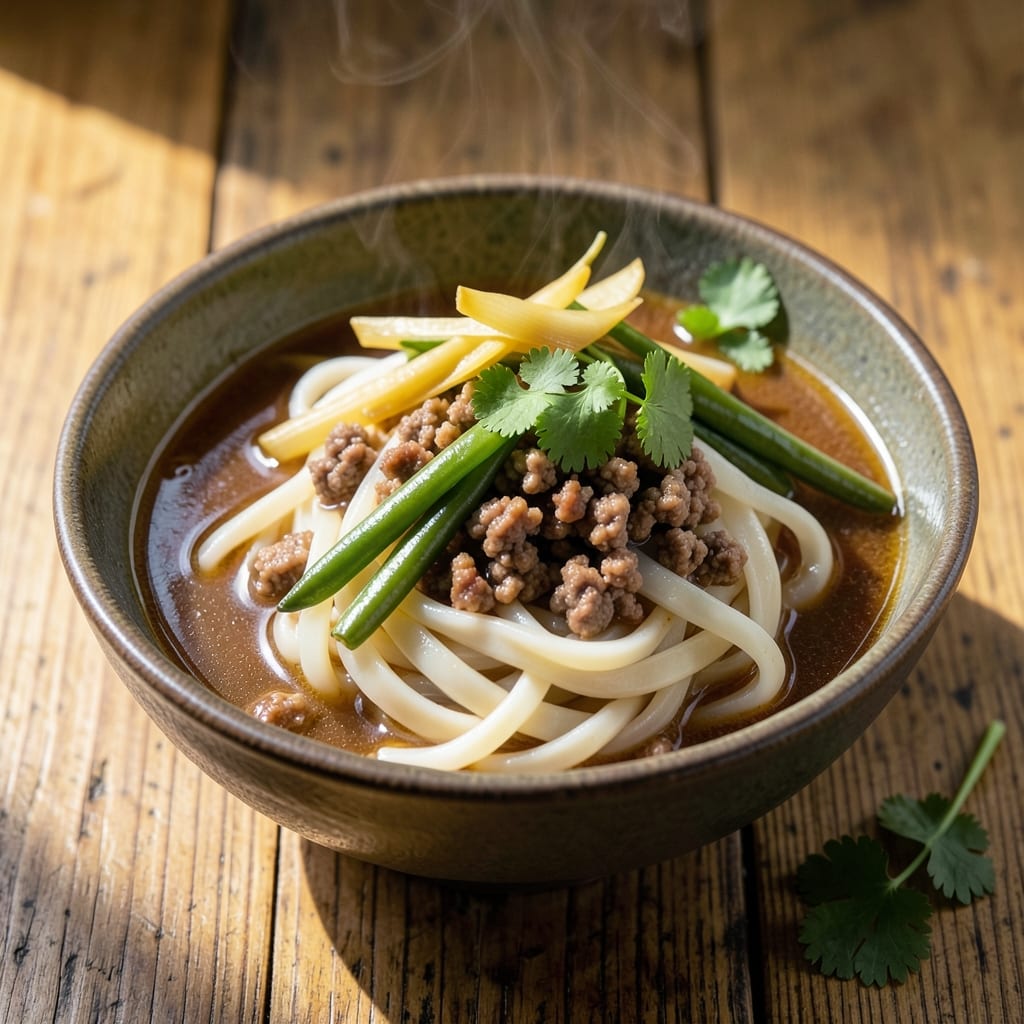
Authentic Guilin rice noodles bring the vibrant street food flavors of Guangxi to your kitchen. After testing multiple versions in my small Boston kitchen, I’ve perfected this traditional method.
This dish features tender rice noodles swimming in a rich, savory broth with pickled vegetables and herbs. The key is balancing the tangy, spicy, and umami flavors that define the original.
The result is a bowl that’s fragrant, deeply flavorful, and true to its Guangxi roots. Every bite delivers the complexity of street food without the travel.
Simple ingredients and precise timing ensure a dish that’s both comforting and authentic. Here’s how to make it.
Ingredients for Guilin Rice Noodles
A handful of authentic ingredients comes together to recreate this Guangxi street food classic.
| Ingredient | Amount | Notes |
|---|---|---|
| Rice Noodles 🍜 | 12 oz | Guilin-style or flat rice noodles |
| Pork Bone Broth 🥣 | 6 cups | Rich, homemade preferred |
| Pickled Mustard Greens 🥬 | 1 cup | Chopped, with liquid |
| Pickled Bamboo Shoots 🌱 | ½ cup | Sliced thinly |
| Pickled Long Beans 🌿 | ½ cup | Chopped into bite-sized pieces |
| Ground Pork 🥩 | ½ lb | Lean or regular variety |
| Garlic Cloves 🧄 | 4 cloves | Minced finely |
| Fresh Ginger 🌿 | 1 tbsp | Grated or minced |
| Dried Chili Peppers 🌶️ | 2 whole | Adjust for heat preference |
| Soy Sauce 🫒 | 2 tbsp | Light or all-purpose |
| Black Vinegar 🍶 | 1 tbsp | Chinkiang vinegar preferred |
| Fried Shallots 🧅 | ¼ cup | For garnish |
| Fresh Cilantro 🌿 | ¼ cup | Chopped, for garnish |
| Peanuts 🥜 | ¼ cup | Crushed, for garnish |
| Salt 🧂 | 1 tsp | Adjust to taste |
The noodles must be Guilin-style—flat, wide, and chewy. Asian markets carry them fresh or frozen (look for brands like Three Ladies). The broth is non-negotiable: pork bone broth gives that deep, meaty base. If you can’t find it, chicken broth with a splash of soy sauce works in a pinch. For the pickled vegetables, freshness matters—avoid cans with preservatives.
No pickled mustard greens? Sauerkraut in a pinch (drain well). Short on time? Use pre-cooked rice noodles but rinse them to remove excess starch. Ground chicken or turkey can replace pork if preferred. The chili peppers can be omitted for a milder dish, but the black vinegar is essential—no substitutions for that tangy depth.
Store pickled vegetables in their brine in the fridge for up to 3 months. The broth can be made ahead and kept for 4-5 days or frozen for 3 months. Garnishes like cilantro and peanuts are best added fresh.
Why You’ll Love This Recipe
- One Pot Wonder: I just dump the rice noodles in the hot pork bone broth and let them soak up all that rich, meaty flavor.
- Tangy Depth: The pickled mustard greens and bamboo shoots give it this bright, funky kick that cuts through the broth perfectly.
- Weeknight Hero: I make a big batch on Sunday and reheat portions all week—those pickled long beans hold their crunch.
- Pantry Friendly: Between us, the pickled ingredients last forever in the fridge, so I’m never scrambling for fresh veggies.
Step-by-Step Instructions for Guilin Rice Noodles
Authentic Guangxi street food requires precise technique and layered flavors to deliver true taste.
Step 1: Prepare the Rice Noodles and Pickled Vegetables
Soak the 12 oz rice noodles in warm water for 10-15 minutes until pliable but still slightly firm. This prevents them from turning mushy when added to the hot broth later.
While the noodles soak, drain and chop the 1 cup pickled mustard greens, 0.5 cup pickled bamboo shoots, and 0.5 cup pickled long beans. Reserve any pickling liquid—it adds depth to the broth. The vegetables should be in uniform, bite-sized pieces for even distribution in each bowl.
Step 2: Cook the Ground Pork Aromatics
Heat a wok or large pot over medium-high heat. Add the 0.5 lb ground pork and cook for 3-4 minutes, breaking it into small pieces with a spatula, until no pink remains and the meat starts to brown lightly.
Add the 4 cloves minced garlic cloves, 1 tbsp grated fresh ginger, and 2 whole dried chili peppers to the pork. Stir-fry for 1-2 minutes until the aromatics release their fragrance and the chili peppers darken slightly. This builds the flavor foundation for the dish.
Step 3: Build the Broth with Pickled Vegetables
Pour in the 6 cups pork bone broth and bring to a gentle boil. Add the chopped pickled vegetables along with their reserved liquid, the 2 tbsp soy sauce, 1 tbsp black vinegar, and 1 tsp salt. Reduce heat to medium and let simmer for 10 minutes to meld the flavors.
The broth should develop a balanced tangy, savory, and slightly spicy profile. Taste and adjust seasoning if needed—the pickling liquid varies in saltiness, so go by flavor rather than exact measurements.
Step 4: Assemble the Noodle Bowls
Drain the soaked rice noodles and divide them evenly among four serving bowls. Ladle the hot broth and pork mixture over the noodles, ensuring each bowl gets an equal amount of the pickled vegetables and meat.
The noodles should be fully submerged in the broth to soften completely. Let the bowls sit for 2-3 minutes so the noodles absorb the flavors and reach the perfect tender texture.
Step 5: Garnish and Serve Immediately
Top each bowl with 0.25 cup fried shallots, 0.25 cup chopped fresh cilantro, and 0.25 cup crushed peanuts. The garnishes add crunch, freshness, and visual appeal to the dish.
Serve while the broth is steaming hot. Each bite should deliver a mix of chewy noodles, tender pork, tangy pickled vegetables, and the rich, aromatic broth that defines authentic Guilin rice noodles.
Pro Tips For Making Guilin Rice Noodles
- Rinse the Noodles: Always rinse the rice noodles in cold water after blanching to stop the cooking process—otherwise they’ll turn to mush in the hot broth.
- Simmer the Broth: Let the pork bone broth simmer low and slow for at least 4 hours; I learned this the hard way when my first batch tasted thin and watery.
- Rinse the Pickles: Give the pickled mustard greens, bamboo shoots, and long beans a quick rinse under cold water to remove excess salt—your noodles won’t taste like a salt lick.
- Prep Ahead: Chop all your pickled ingredients and have them ready before the broth finishes; sounds obvious, but I’ve ruined timing more than once by scrambling last-minute.
Common Mistakes When Making This Dish
Over-Soaking Noodles
Soaking the 12 oz rice noodles for more than 15 minutes makes them gummy. I learned this the hard way in my Boston kitchen—they should be pliable but still firm when you add them to the broth. 💡
Skipping the Pickling Liquid
Discarding the liquid from your pickled mustard greens or other vegetables means losing essential tangy depth. Always reserve it and add 2-3 tbsp to the broth for authentic flavor.
Rushing the Pork
Cooking the 0.5 lb ground pork too quickly results in uneven browning. Let it cook for 3-4 minutes on medium-high heat, breaking it into small pieces as it browns evenly.
Overcrowding the Pot
Adding all the noodles at once to the broth can make them clump together. Divide the noodles into bowls first, then ladle the hot broth over them. This ensures even cooking and flavor distribution.
Ignoring Broth Balance
The 6 cups pork bone broth needs to balance tangy, savory, and spicy notes. Taste after adding the 1 tbsp black vinegar and adjust with more vinegar or soy sauce if needed.
Delayed Garnishing
Adding the fried shallots, cilantro, and peanuts too early makes them soggy. Always garnish right before serving to maintain texture and freshness. ✨
Nutrition Facts
Frequently Asked Questions
What can I use if I can’t find Guilin-style noodles?
Look for wide, flat rice noodles at Asian markets. In a pinch, udon or banh pho noodles work, though texture will differ slightly. Soak for 10-15 minutes regardless.
Can I make this vegetarian?
Substitute pork broth with mushroom broth. Replace ground pork with tofu or mushrooms. Use vegetarian pickled vegetables and add 1 tbsp soy sauce extra for depth.
How do I store leftovers?
Keep noodles and broth separate. Store broth in an airtight container for 4-5 days or freeze for 3 months. Reheat broth, then add fresh noodles.
Why is black vinegar essential?
Its deep, malty tang defines authentic flavor. Substitutes like balsamic won’t replicate the unique taste. Use 1 tbsp for proper balance.

- Ground Beef Rice and Beans Recipe: Slow-Simmered Savory Harmony - October 17, 2026
- Guyanese Fried Rice Recipe: Caribbean Spice With Wok-Charred Aromatics - October 17, 2026
- Hakka Thunder Tea Rice Recipe: Wok-Charred Herbal Infusion - October 17, 2026