
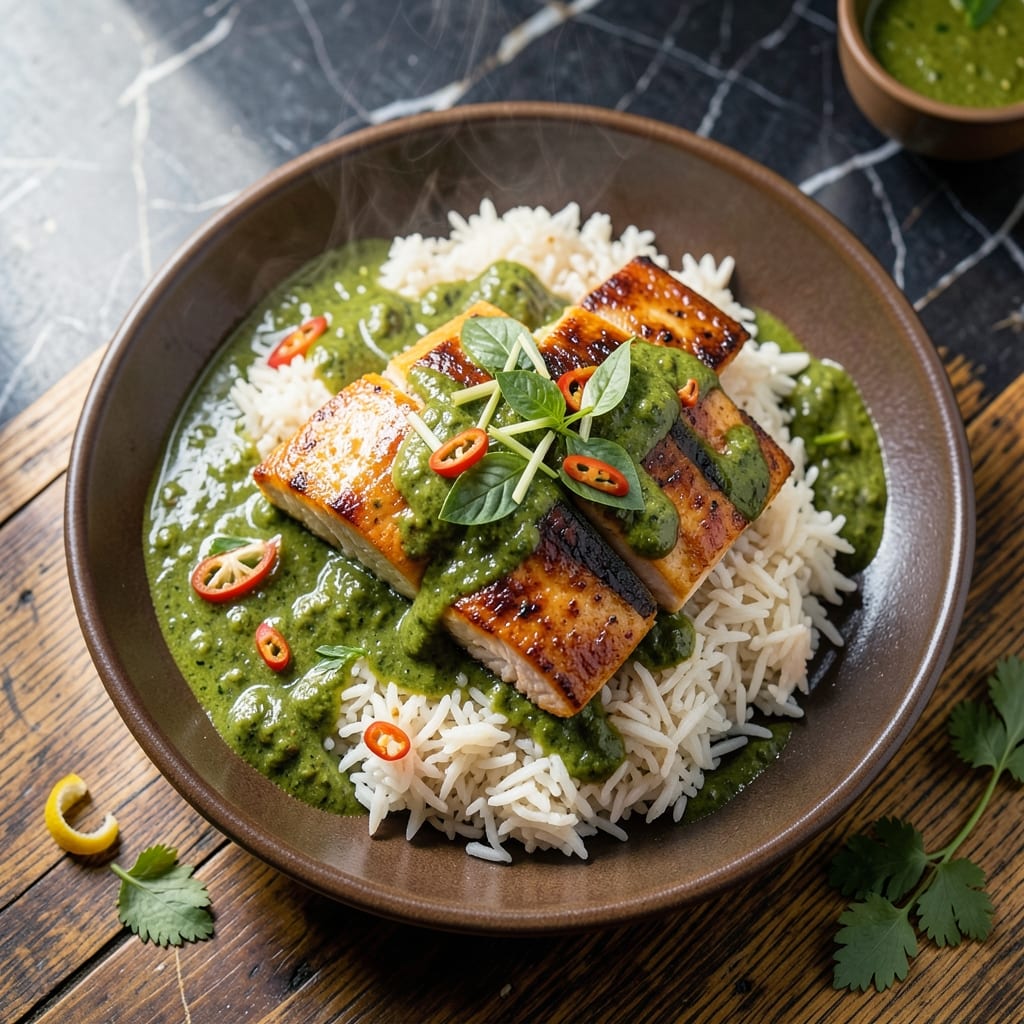
This Thai-inspired dish brings bold flavors to your dinner table without the takeout markup. I developed this recipe after testing three different curry pastes to find the most balanced, aromatic profile.
The salmon cooks in 15 minutes while the coconut rice simmers, infusing every grain with rich, creamy notes. The green curry sauce is restaurant-quality but uses simple pantry staples you can find at any grocery store.
You’ll end up with tender, flaky salmon enrobed in a fragrant curry sauce, served over rice that’s subtly sweet and perfectly sticky. The combination of textures and flavors makes this a complete, satisfying meal.
Plating is effortless: spoon the rice onto a bowl, top with salmon, and drizzle with extra sauce. Here’s how to make it.
Ingredients for Green Curry Salmon with Coconut Rice
Pantry staples meet fresh ingredients for a bold Thai-inspired dinner at home.
| Ingredient | Amount | Notes |
|---|---|---|
| Salmon Fillets 🐟 | 1 ½ lb | Skin-on or skinless, wild-caught preferred |
| Jasmine Rice 🍚 | 1 ½ cups | Rinsed until water runs clear |
| Coconut Milk 🥥 | 1 can | Full-fat for creaminess |
| Green Curry Paste 🌿 | 3 tbsp | Thai kitchen brand recommended |
| Chicken Broth 🥣 | 1 cup | Low-sodium preferred |
| Fish Sauce 🐟 | 2 tbsp | Red Boat or Thai Kitchen brand |
| Brown Sugar 🍚 | 1 tbsp | Light or dark variety |
| Fresh Lime 🍈 | 1 whole | Zest and juice for brightness |
| Fresh Cilantro 🌿 | ½ cup | Chopped, for garnish |
| Red Bell Pepper 🌶️ | 1 whole | Thinly sliced for crunch |
| Shallot 🧅 | 1 whole | Finely minced for depth |
| Garlic Cloves 🧄 | 3 cloves | Minced for aromatic base |
| Fresh Ginger 🌿 | 1 tbsp | Peeled and grated |
| Vegetable Oil 🫒 | 1 tbsp | Neutral flavor for cooking |
| Salt 🧂 | ½ tsp | To taste for seasoning |
The salmon is the star here. Wild-caught if you can swing it—looks for bright, firm flesh at Whole Foods or your local fishmonger. The coconut milk needs to be full-fat (none of that light stuff) for the creamy texture. I grab mine at Trader Joe’s—consistent quality and good price. Green curry paste brands vary wildly; Thai Kitchen or Maesri are reliable and widely available.
No jasmine rice? Basmati works in a pinch but lacks that sticky texture. Out of fish sauce? Soy sauce with a splash of lime gets you 80% there. If cilantro tastes like soap to you (genetics, not pickiness), swap in Thai basil or mint. The red bell pepper can be any color—green works but adds bitterness. Fresh ginger is worth it, but ground ginger at half the amount saves time.
Leftovers keep 3-4 days in the fridge. The curry sauce thickens as it cools—just splash in a bit of water when reheating. Freezes beautifully for up to 3 months (the rice too, though it softens slightly).
Why You’ll Love This Recipe
- One Pot Wonder: I love that the salmon and coconut rice cook in the same pan while I stir in the green curry paste and coconut milk—minimal cleanup, maximum flavor.
- Creamy Heat: The coconut milk mellows the green curry paste’s spice into this rich, velvety sauce that soaks right into the salmon. Honestly, it’s the kind of taste that makes me pause mid-bite.
- Meal Prep Hero: I make a big batch on Sunday and the flavors actually deepen by Wednesday. Between us, it’s even better reheated.
- Budget Stretcher: One can of coconut milk and a few salmon fillets feed my family for two nights, and the jasmine rice bulks it up without breaking the bank.
Step-by-Step Instructions for Green Curry Salmon With Coconut Rice
Here’s how to build layers of Thai-inspired flavor that’ll have you savoring every bite.
Step 1: Cook the Jasmine Rice in Coconut Milk
Rinse the 1.5 cups jasmine rice under cold water until the water runs clear—this removes excess starch and prevents gummy rice. In a medium saucepan, combine the drained rice, 1 can coconut milk, 1 cup chicken broth, and 0.5 tsp salt.
Bring to a boil over medium-high heat, then reduce to low heat, cover, and simmer for 15-18 minutes until the liquid is absorbed and the rice is tender. Turn off the heat and let it sit covered for 5 minutes—this steam time ensures fluffy grains that soak up the coconut richness.
Step 2: Prepare the Green Curry Base
Heat the 1 tbsp vegetable oil in a large skillet over medium heat. Add the finely minced shallot, 3 cloves minced garlic cloves, and 1 tbsp grated fresh ginger. Sauté for 2-3 minutes until fragrant and the shallot turns translucent—don’t let it brown or it’ll taste bitter.
Stir in the 3 tbsp green curry paste and cook for 1 minute to toast the spices and deepen their flavor. This step is key—raw curry paste tastes harsh, but cooking it briefly mellows the heat and brings out its complexity.
Step 3: Simmer the Curry Sauce
Pour in the 1 cup chicken broth, 2 tbsp fish sauce, and 1 tbsp brown sugar. Stir well to combine, then add the thinly sliced red bell pepper. Simmer for 5-7 minutes until the sauce thickens slightly and the bell pepper softens but retains a bit of crunch.
Taste and adjust seasoning if needed—the sauce should balance salty, sweet, and umami. The fish sauce adds depth, while the brown sugar rounds out the heat from the curry paste. Keep the heat at a gentle simmer to avoid reducing the sauce too much.
Step 4: Cook the Salmon in the Curry
Gently place the 1.5 lb salmon fillets into the skillet, skin-side up if they have skin. Spoon some of the sauce over the top to fully coat. Cover and cook for 8-10 minutes on low heat until the salmon flakes easily with a fork and reaches an internal temperature of 145°F.
Avoid boiling the sauce once the salmon is in—this can break the fillets apart. The salmon will finish cooking in the residual heat, so remove it just as it reaches doneness. Squeeze the juice of 1 whole fresh lime over the top for a bright, citrusy finish.
Step 5: Plate and Garnish
Divide the coconut rice among four plates and top with the green curry salmon. Spoon the remaining sauce and red bell pepper over the fish. Garnish with 0.5 cup chopped fresh cilantro for a fresh, herbal note that cuts through the richness of the curry.
Serve immediately while the rice is still warm and the salmon is tender. The coconut rice pairs perfectly with the bold, aromatic curry, creating a harmonious blend of Thai flavors that’s both comforting and exciting.
Pro Tips For Making Green Curry Salmon With Coconut Rice
- Simmer the Curry: Cook the green curry sauce at a gentle simmer for 8-10 minutes after adding the coconut milk—this mellows the paste’s raw edge and lets the flavors meld properly.
- Pat Salmon Dry: Blot the salmon fillets with a paper towel before adding them to the curry. It helps the sauce cling better and prevents the dish from turning watery.
- Use Full-Fat Coconut Milk: Skip the light version; full-fat coconut milk gives the curry its rich, velvety texture and balances the heat from the green curry paste.
- Toast the Rice: Before cooking the jasmine rice in coconut milk and broth, toast it in the pot for 1-2 minutes—it adds a subtle nutty depth that pairs perfectly with the curry.
Dietary Considerations for This green curry salmon with coconut rice
Gluten-Free Friendly
This dish is naturally gluten-free—no wheat, barley, or rye in sight. Just double-check your green curry paste label, as some brands add wheat flour as a thickener. I always grab Maesri or Thai Kitchen for peace of mind. 💪
Dairy-Free Delight
The recipe uses coconut milk instead of dairy, making it perfect for anyone avoiding lactose. Even the fish sauce (typically Red Boat or Thai Kitchen) is dairy-free. No substitutions needed here!
Pescatarian Perfect
With salmon as the protein, this meal fits beautifully into a pescatarian diet. The fish provides quality protein and omega-3s, while the veggie-packed curry sauce adds fiber and vitamins.
Nut Allergy Note
While coconut is technically a fruit, those with tree nut allergies should be cautious. If you’re highly sensitive, check with your doctor. For the curry paste, Maesri is produced in a nut-free facility.
Low-Carb Option
To reduce carbs, swap the jasmine rice for cauliflower rice. Sauté 4 cups of riced cauliflower in 1 tbsp coconut oil until tender, then stir in ¼ cup coconut milk for flavor. 💡
Soy-Free Adaptation
The only potential soy comes from the fish sauce. Replace it with coconut aminos at a 1:1 ratio—it’s slightly sweeter but works well. I’ve tested this swap myself, and the flavor difference is minimal.
Nutrition Facts
Frequently Asked Questions
Can I use a different type of fish?
Yes! Firm white fish like cod or halibut work well. Cook for 6-8 minutes instead of 8-10 since they’re leaner. Avoid flaky fish like tilapia—they may break apart in the sauce.
How do I make the curry less spicy?
Reduce the curry paste to 2 tablespoons and add 1 tablespoon honey to balance the heat. Coconut milk’s creaminess also tempers spice naturally.
Can I prep this ahead of time?
Cook the rice and sauce up to 1 day ahead, but add salmon fresh. Reheat sauce gently, then add fish to avoid overcooking.
What if my sauce is too thin?
Simmer uncovered for 3-5 minutes to thicken. For quick fixes, mix 1 teaspoon cornstarch with water and stir in. Avoid boiling after adding salmon.

- Ground Beef Rice and Beans Recipe: Slow-Simmered Savory Harmony - October 17, 2026
- Guyanese Fried Rice Recipe: Caribbean Spice With Wok-Charred Aromatics - October 17, 2026
- Hakka Thunder Tea Rice Recipe: Wok-Charred Herbal Infusion - October 17, 2026