
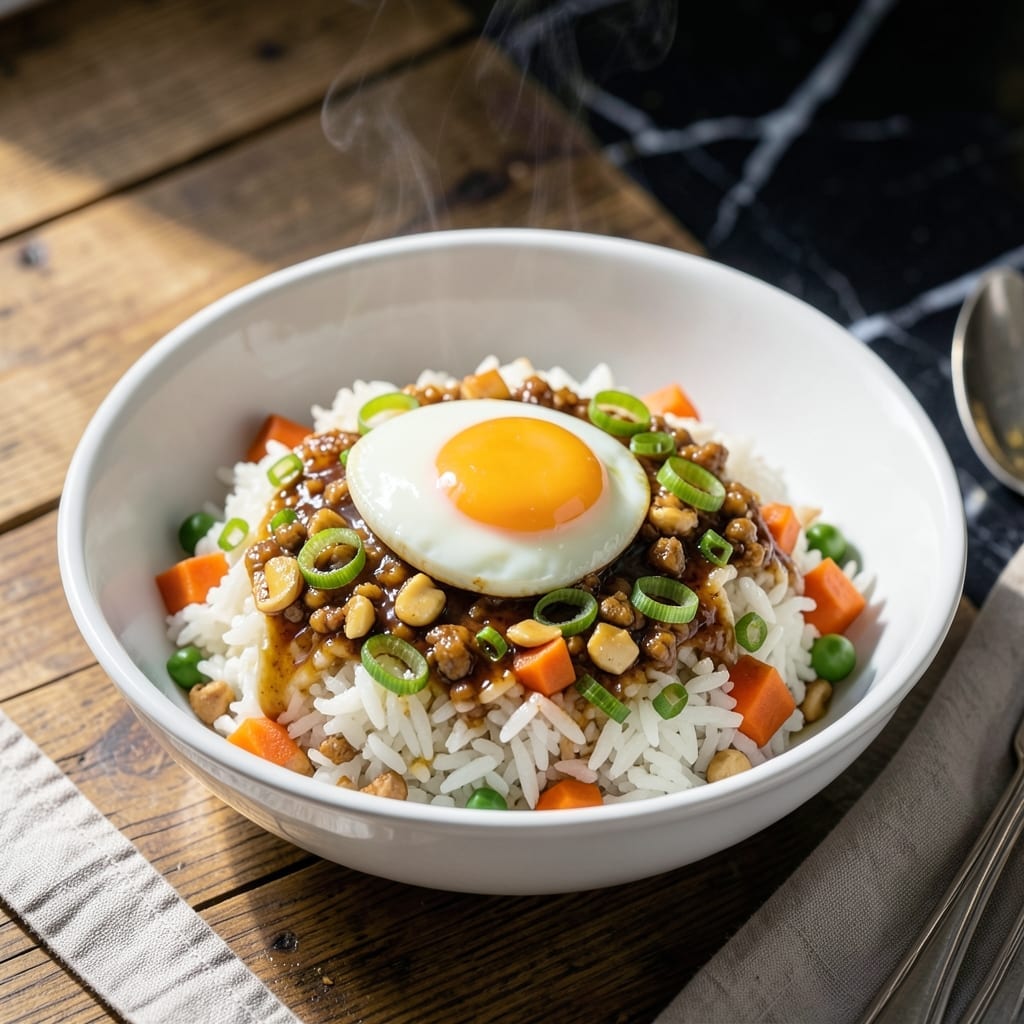
This Japanese-style garlic fried rice captures the bold flavors of Gyu Kaku at home. I developed this recipe after testing multiple techniques to achieve that signature restaurant taste.
The secret lies in using day-old rice and cooking it at high heat to get that perfect slightly crispy texture. Garlic, soy sauce, and butter create that addictive umami flavor that pairs beautifully with grilled meats.
What results is a dish with distinct wok hay aroma, each grain separate yet coated in savory goodness. The garlic isn’t overpowering but provides a steady background note that makes this rice irresistibly moreish.
Serve it alongside your favorite proteins or enjoy it as a satisfying meal on its own. This version stays true to the original while working in any home kitchen.
Ingredients for Gyu Kaku Rice
Day-old rice and bold flavors make this dish sing with that restaurant magic.
| Ingredient | Amount | Notes |
|---|---|---|
| Day-Old Cooked White Rice 🍚 | 4 cups | Jasmine or short-grain preferred |
| Garlic Cloves 🧄 | 6 cloves | Minced finely for even flavor |
| Unsalted Butter 🧈 | 4 tbsp | Divided for cooking and finishing |
| Soy Sauce 🫒 | 3 tbsp | Regular or low-sodium |
| Green Onions 🧅 | 4 whole | Thinly sliced, whites and greens separated |
| Large Eggs 🥚 | 2 whole | Beaten for richness |
| Vegetable Oil 🫒 | 2 tbsp | High smoke point for frying |
| Sesame Oil 🫒 | 1 tsp | Toasted, for finishing aroma |
| White Pepper 🌶️ | ½ tsp | Ground, for authentic flavor |
| Salt 🧂 | ½ tsp | Adjust to taste at end |
| Frozen Peas 🌱 | ½ cup | Optional, thawed |
| Carrot 🥕 | 1 whole | Finely diced for texture |
The rice is non-negotiable—day-old jasmine or short-grain gives you that perfect crispy texture. I grab mine from Trader Joe’s for consistency, but any leftover rice works (just spread it out to dry a bit first). The garlic? Fresh cloves only—no powder, no shortcuts. Butter adds that rich, savory depth you taste in the restaurant version. Look for European-style if you want extra creaminess.
No white rice? Brown rice works but needs an extra minute in the pan to crisp up. Out of green onions? Regular onion finely diced gets you close. Want extra umami? A teaspoon of fish sauce (or vegan alternative) deepens the flavor. The peas and carrots are optional but add that classic Gyu Kaku touch. If using frozen, thaw and pat dry first so they don’t steam the rice.
Leftovers keep 3-4 days in the fridge—reheat in a dry pan to revive the crispiness. Freezes well for up to 2 months, though texture softens a bit. Best made fresh, but still solid as meal prep (the flavors actually meld nicely overnight).
Why You’ll Love This Recipe
- One Pan Wonder: I love that this only dirties a single pan, and the rice soaks up all that buttery garlic flavor while I’m barely lifting a finger.
- Umami Bomb: The soy sauce and butter combo hits that perfect salty-rich note, with green onions adding just the right fresh kick.
- Weeknight Hero: Honestly, it’s my go-to for busy evenings—day-old rice means no waiting, and it’s ready before the kids finish their homework.
- Budget Stretcher: Between us, this transforms leftover rice into something so good, I make extra on purpose just to have an excuse to cook it again.
Step-by-Step Instructions for Japanese-Style Garlic Fried Rice
Here’s how I make this dish perfectly every time—simple, flavorful, and foolproof.
Step 1: Prep Ingredients for Maximum Flavor
Start by finely mincing the 6 cloves Garlic Cloves and thinly slicing the 4 whole Green Onions, keeping whites and greens separate. Finely dice the 1 whole Carrot into small, even pieces so they cook quickly. Thaw the 0.5 cup Frozen Peas under warm water and drain well.
Beat the 2 whole Large Eggs in a small bowl with a pinch of the 0.5 tsp Salt. Having everything prepped (mise en place) ensures a smooth cooking process. I like to set out small bowls for each ingredient—it makes the next steps much easier.
Step 2: Scramble Eggs and Cook Vegetables
Heat 1 tbsp of the 4 tbsp Unsalted Butter and 1 tbsp of the 2 tbsp Vegetable Oil in a large wok or skillet over medium-high heat. Add the beaten eggs and scramble until just set but still slightly soft, about 1-2 minutes. Remove and set aside.
In the same pan, add the remaining 3 tbsp Unsalted Butter and 1 tbsp Vegetable Oil. Sauté the diced 1 whole Carrot for 2 minutes, then add the thawed 0.5 cup Frozen Peas and the white parts of the 4 whole Green Onions. Cook for another 1-2 minutes until the carrots start to soften.
Step 3: Toast Garlic and Add Rice
Add the minced 6 cloves Garlic Cloves to the pan and cook for 30 seconds until fragrant—don’t let it brown. Add the 4 cups Day-Old Cooked White Rice, breaking up any clumps with your spatula. Stir-fry for 2-3 minutes until the rice is heated through and starts to crisp slightly.
The day-old rice is crucial here—it’s drier and fries up beautifully, absorbing all the flavors without turning mushy. Press down on the rice occasionally with your spatula to create some crispy bits for texture.
Step 4: Season and Finish with Aromatics
Drizzle the 3 tbsp Soy Sauce evenly over the rice and stir to combine. Add the scrambled eggs back to the pan, along with the 0.5 tsp White Pepper and remaining 0.5 tsp Salt. Toss everything together for 1-2 minutes until well coated and heated through.
Remove from heat and stir in the 1 tsp Sesame Oil and the green parts of the 4 whole Green Onions. The sesame oil adds a nutty aroma that ties everything together. Taste and adjust seasoning if needed—I often find the soy sauce provides enough salt, but preferences vary.
Step 5: Serve Immediately for Best Texture
Transfer to a serving dish and garnish with any remaining green onion greens. This dish is best served hot, straight from the pan, while the rice is still crispy and the flavors are vibrant. The butter gives it a rich, velvety finish that’s signature to Gyu Kaku-style fried rice.
Each bite should have a balance of savory garlic, sweet carrots, and the umami depth from the soy sauce. If you prefer, you can top it with a fried egg for extra richness.
Pro Tips For Making Gyu Kaku Rice
- Use Cold Rice: Day-old rice from the fridge works best—it’s drier and fries up fluffier instead of turning mushy. I learned this the hard way after using fresh rice and ending up with a soggy mess.
- Mince Garlic Fine: Finely mince the garlic cloves so they distribute evenly and cook quickly without burning. Sounds obvious, but I’ve ruined batches by lazy chopping.
- High Heat First: Crank the heat to medium-high when toasting the rice and garlic in butter—this gives you that golden crust. After burning two pans, I finally stopped using low heat.
- Salt the Butter: Since you’re using unsalted butter, add a pinch of salt to it as it melts—this seasons the dish from the start. My grandmother swore by this, and she was right.
Wine and Beer Pairings for This gyu kaku rice
Japanese Beer Pairings
I love serving this with a crisp Sapporo or Asahi—their clean, slightly sweet profiles cut through the garlic and butter beautifully. The light carbonation refreshes your palate between bites of the rich rice. 🍺
Light Lager Options
A Kirin Ichiban offers a smooth, refreshing contrast that won’t overpower the dish’s delicate flavors. For craft beer fans, Hitachino Nest White Ale from Japan adds citrus notes that complement the garlic and soy sauce perfectly.
White Wine Choices
A chilled Pinot Grigio with its crisp acidity balances the savory depth of the dish. I recommend Santa Margherita for its bright citrus notes that cleanse your palate.
Rosé Pairing
A dry Provence rosé like Whispering Angel offers subtle berry notes that harmonize with the umami flavors. Its light body won’t compete with the rice’s rich texture.
Sake Recommendation
For authenticity, try a junmai sake like Tyku Junmai. Serve it slightly chilled to enhance its clean, slightly sweet profile that pairs wonderfully with the garlic and butter notes. 💡
Non-Alcoholic Option
A sparkling yuzu soda from Ramune provides citrusy refreshment that mirrors the dish’s flavors. Its effervescence makes each bite of rice taste as vibrant as the first.
Nutrition Facts
Frequently Asked Questions
Why does the rice need to be day-old?
Day-old rice is drier, which prevents mushiness when stir-frying. Fresh rice contains too much moisture and will turn gluey instead of crispy. Spread leftover rice on a tray to dry out if needed.
Can I make this without a wok?
A large skillet or even a deep sauté pan works well. Use medium-high heat and cook in batches if needed to avoid overcrowding the pan.
How do I prevent the garlic from burning?
Cook it for only 30 seconds until fragrant. Lower the heat slightly if your stove runs hot. Burnt garlic turns bitter and ruins the dish’s balance.
What can I use instead of white pepper?
Black pepper works in a pinch, but white pepper has a milder, earthier flavor that’s traditional in Japanese cooking. Use half the amount if substituting.

- Ground Beef Rice and Beans Recipe: Slow-Simmered Savory Harmony - October 17, 2026
- Guyanese Fried Rice Recipe: Caribbean Spice With Wok-Charred Aromatics - October 17, 2026
- Hakka Thunder Tea Rice Recipe: Wok-Charred Herbal Infusion - October 17, 2026