
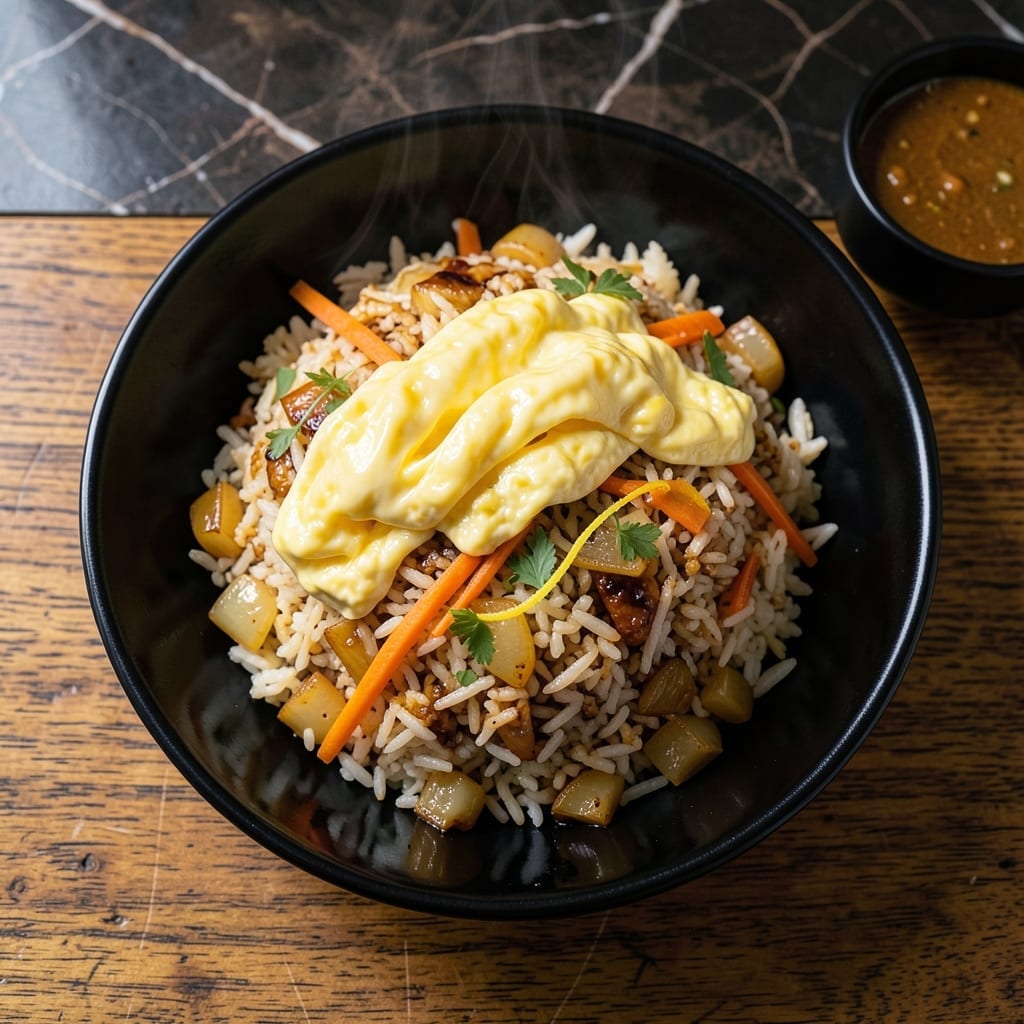
This hibachi-style fried rice delivers restaurant-quality flavor at home with its signature wok-charred taste and delicate egg ribbons. The dish comes together quickly once you master the high-heat cooking technique.
What sets this version apart is the perfect balance of umami from soy sauce and the subtle sweetness of vegetables. The scrambled eggs are cooked separately then folded in to maintain their tender texture throughout the dish.
Ingredients for Habachi Fried Rice
Day-old rice, fresh vegetables, and a few pantry staples create this wok-charred masterpiece at home.
| Ingredient | Amount | Notes |
|---|---|---|
| Jasmine Rice 🍚 | 3 cups | Day-old, chilled for best texture |
| Large Eggs 🥚 | 3 whole | Beaten for egg ribbons |
| Soy Sauce 🫒 | ¼ cup | Low-sodium preferred for control |
| Vegetable Oil 🫒 | 3 tbsp | High smoke point for wok cooking |
| Yellow Onion 🧅 | 1 whole | Small dice for even cooking |
| Carrots 🥕 | 2 whole | Julienned or small dice |
| Zucchini 🥒 | 1 whole | Small dice for texture |
| Garlic Cloves 🧄 | 3 cloves | Minced for aromatic base |
| Fresh Ginger 🌿 | 1 tbsp | Grated for zesty kick |
| Green Onions 🧅 | 4 whole | Thinly sliced for garnish |
| Sesame Oil 🫒 | 1 tsp | Toasted variety for finishing |
| Salt 🧂 | ½ tsp | Diamond Crystal preferred for seasoning |
| Black Pepper 🌶️ | ¼ tsp | Freshly ground for best flavor |
| Butter 🧈 | 2 tbsp | Unsalted for egg cooking |
The rice is critical here. Day-old jasmine rice from the fridge has the perfect dry texture—fresh rice turns to mush. Whole Foods has great organic jasmine, but any supermarket brand works. For the eggs, large, fresh eggs create those delicate ribbons. The vegetables should be crisp—dice them small and uniformly so they cook quickly without burning (that wok char is intentional, burnt is not).
No jasmine rice? Long-grain white rice works nearly as well. Out of fresh ginger? Ground ginger at one-third the amount in a pinch. Vegetable oil can be swapped for peanut or canola oil—just ensure it has a high smoke point. For extra umami, a splash of oyster sauce deepens the flavor. The green onions can be swapped for chives if that’s what you have on hand.
This reheats well but tastes best fresh. Store leftovers in an airtight container for up to 4 days in the fridge. Freeze for up to 2 months (though texture changes slightly). Always cook eggs fresh—don’t add them until reheating to maintain that tender bite.
Why You’ll Love This Recipe
- 20-Minute Meal: I can get this from fridge to table faster than ordering takeout, and the soy sauce does half the flavor work for me.
- Crave-Worthy Bites: That combination of crispy jasmine rice edges, silky scrambled eggs, and the deep umami hit from soy sauce? I make extra just to snack on cold.
- Weeknight Hero: Honestly, it’s my Tuesday lifesaver—equally good as a solo dinner or doubled for feeding the whole family.
- Budget Stretcher: One bag of jasmine rice and a few eggs turn into three meals, and the leftovers taste even better the next day.
Step-by-Step Instructions for Hibachi Fried Rice
Master the technique for restaurant-quality results with perfect char and umami depth.
Step 1: Prepare and Scramble the Eggs
Beat the 3 whole Large Eggs in a small bowl with 0.5 tsp Salt and 0.25 tsp Black Pepper until the yolks and whites are fully combined. I always use a fork for this—it gives better control over the texture than a whisk.
Heat 2 tbsp Butter in a wok or large skillet over medium-high heat until foaming. Pour in the beaten eggs and let them set for 10-15 seconds before gently pushing them with a spatula to create soft, ribbony curds. Cook for 1-2 minutes until just set but still slightly runny—you’ll finish cooking them later. Transfer to a plate and set aside.
Step 2: Stir-Fry the Aromatics and Vegetables
In the same wok, heat 1 tbsp Vegetable Oil over high heat until it shimmers. Add the 1 whole Yellow Onion, 2 whole Carrots, and 1 whole Zucchini, all diced as specified. Stir-fry for 4-5 minutes until the vegetables are tender-crisp and the edges begin to lightly char.
Push the vegetables to one side of the wok and add the remaining 2 tbsp Vegetable Oil. Add the 3 cloves Garlic Cloves and 1 tbsp Fresh Ginger, mincing the garlic and grating the ginger as noted. Stir-fry for 30-45 seconds until fragrant—don’t let them burn, as bitter garlic will ruin the dish.
Step 3: Incorporate the Rice and Seasonings
Add the 3 cups Jasmine Rice to the wok, breaking up any clumps with your spatula. The rice should be day-old and chilled for best texture. Stir-fry for 2-3 minutes until the rice is heated through and begins to develop a slight wok-hei (smoky char).
Drizzle the 0.25 cup Soy Sauce evenly over the rice and stir to coat every grain. Cook for another 1-2 minutes until the rice absorb the sauce and turns a uniform, rich brown color. Taste and adjust seasoning if needed, though the soy sauce should provide enough saltiness.
Step 4: Finish with Eggs and Green Onions
Return the scrambled eggs to the wok, breaking them into smaller pieces as you fold them into the rice. Add the 4 whole Green Onions, thinly sliced, reserving a small handful for garnish. Stir-fry for 1 minute until everything is well combined and heated through.
Remove from heat and drizzle with 1 tsp Sesame Oil, stirring to incorporate. The sesame oil adds a final layer of nutty aroma that ties the dish together. Garnish with the reserved green onions and serve immediately while hot, with extra soy sauce on the side if desired.
Pro Tips For Making Habachi Fried Rice
- Use Day-Old Rice: Fresh rice turns to mush in the wok—spread leftover jasmine rice on a tray and refrigerate overnight to dry it out. I learned this the hard way after ending up with clumpy fried rice more than once.
- Scramble Eggs Separately: Cook the eggs first, then set aside before adding onions. Sounds like an extra step, but it keeps them fluffy instead of rubbery in the final dish.
- High Heat Only: Crank the burner to max and keep the oil smoking hot the whole time. After burning three batches, I finally figured out that lukewarm oil just steams the rice instead of frying it.
- Soy Sauce Last: Add soy sauce at the very end—about 2 tablespoons—so the rice fries properly without turning soggy. My grandmother swore by this, and she was right.
Creative Variations of habachi fried rice
Protein-Packed Upgrade
Add 1 lb shrimp or chicken breast for a heartier meal. Cook the protein first in 1 tbsp oil until just done, then set aside before stir-frying the vegetables. I love using wild-caught shrimp from Trader Joe’s for this variation. 🌟
Vegetarian Delight
Swap in 1 cup edamame and ½ cup mushrooms for a meat-free version. The edamame adds plant-based protein while mushrooms bring that umami depth. Stir-fry both with the vegetables for 3-4 minutes until tender.
Spicy Kick
For heat lovers, add 1-2 tsp sriracha or 1 tbsp gochujang when incorporating the rice. The spice balances beautifully with the soy sauce. I also sprinkle crushed red pepper flakes at the end for extra warmth. 🔥
Pineapple Twist
Include ½ cup diced pineapple with the vegetables for a sweet-tangy flavor. This tropical addition pairs surprisingly well with the soy-based seasoning. Use fresh pineapple when possible for the best texture.
Kimchi Infusion
Stir in 1 cup chopped kimchi just before adding the rice for a fermented, tangy depth. The kimchi juice adds an extra layer of flavor. I recommend Mother-in-Law’s Kimchi from Korean markets.
Sesame Seed Finish
Sprinkle 1 tbsp toasted sesame seeds over the finished dish for added crunch and nuttiness. The seeds also make for a beautiful presentation. Toast them in a dry pan for 1-2 minutes until golden.
Nutrition Facts
Frequently Asked Questions
Why use day-old rice for this dish?
Day-old rice is drier, preventing the dish from becoming mushy. Fresh rice contains too much moisture and will turn to paste when stir-fried.
Can I use a regular skillet instead of a wok?
Yes, but a wok’s high sides and wide surface distribute heat better. Use a large, heavy skillet over high heat and cook in batches if needed.
How do I prevent the eggs from overcooking?
Cook the eggs separately first, then set aside. This keeps them tender and prevents them from turning rubbery when mixed with the hot rice.
What’s the best way to get that smoky char flavor?
Use high heat and don’t stir constantly. Let the rice and veggies sit for 20-30 seconds between stirs to develop that signature wok-hei.

- Jamaican Jollof Rice Recipe: Island Spice in Every Bite - October 18, 2026
- Hamburger Rice Hot Dish Recipe: Midwest Comfort in One Pan - October 18, 2026
- Iranian Cabbage Rice Recipe: Aromatic Herbs and Spiced Layers - October 18, 2026